Introduction
The Unetice culture marks the spectacular, consolidated dawn of the true Bronze Age in Central Europe, flourishing from roughly 2300 BCE to 1600 BCE. Centered primarily in the Czech Republic, central Germany, and western Poland, this powerful archaeological complex is named after the type-site of Únětice, located just north of Prague.
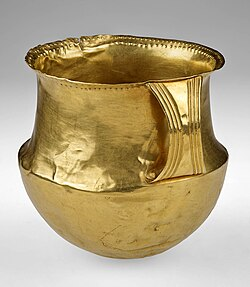
The Unetice culture is renowned for its extraordinary metallurgical sophistication, mass-producing high-grade tin-bronze weapons, heavy neck torcs, and elaborate jewelry. This wealth is most dramatically reflected in their widespread practice of burying spectacular metal hoards, including the famous Nebra Sky Disc—the world's oldest known concrete depiction of cosmic phenomena.
For over a century, historians debated how this metallurgical powerhouse was organized socially and demographically. Did their sudden technological explosion mark the arrival of a brand-new, genetically distinct elite group, or did it represent the social stratification and stabilization of the older, existing prehistoric populations? Through the lens of archaeogenetics, researchers have successfully mapped the genetic landscape of these ancient metal masters.
Genomic Stabilization and Warrior Stratification
To unlock the genetic secrets of Central Europe's first great metal magnates, an international team of scientists conducted genome-wide sequencing on dozens of Unetice skeletons excavated from across the Czech Republic and Germany. The paleogenomic results revealed a highly complex, admixed genetic profile that signaled the end of the chaotic demographic upheavals that characterized the preceding centuries.
The DNA of Unetice individuals demonstrated a thorough, stabilized blend of three distinct ancestral streams: the ancient Anatolian Neolithic Farmers, the indigenous Western Hunter-Gatherers, and the heavy influx of Yamnaya steppe pastoralist ancestry introduced via the Corded Ware and Bell Beaker migrations. Genetically, the Unetice culture represents the final crystallization of the modern European genome.
Crucially, the genetic data combined with mortuary archaeology exposed a deeply stratified, patriarchal social structure. Paternally, the Unetice population was overwhelmingly dominated by specific, highly successful branches of haplogroup I2 and subclades of R1b, demonstrating a direct patrilineal link to the earlier Bell Beaker elites who controlled the region's trade routes.
This lineage continuity indicates that the Unetice culture did not arise from a new external invasion; instead, the existing local elites successfully monopolized the highly lucrative, emerging trade networks of tin and copper. These individuals established a warrior aristocracy, burying their chieftains in monumental clay-lined barrows filled with gold ornaments and bronze daggers, while the broader, working-class population was buried in uniform, modest flat cemeteries. This stark division shows the rise of Europe's first permanent, hereditary class-based societies.
Conclusion
The paleogenomic and archaeological mapping of the Unetice culture redefines our understanding of the socio-economic evolution of prehistoric Europe. It proves that the transition into the full Bronze Age was driven by a stable, highly organized society that had successfully integrated the genetic and cultural expansions of the preceding millennia into a unified, powerful network.
Their mastery of tin-bronze metallurgy and their control over the strategic trade routes connecting the Baltic Sea to the Mediterranean allowed them to accumulate unprecedented wealth and project political power across Central Europe. Although their network eventually fractured around 1600 BCE, giving way to the Tumulus culture, the Unetice people laid down the permanent genetic foundations and structural social hierarchies that would define the European continent for the rest of classical antiquity.