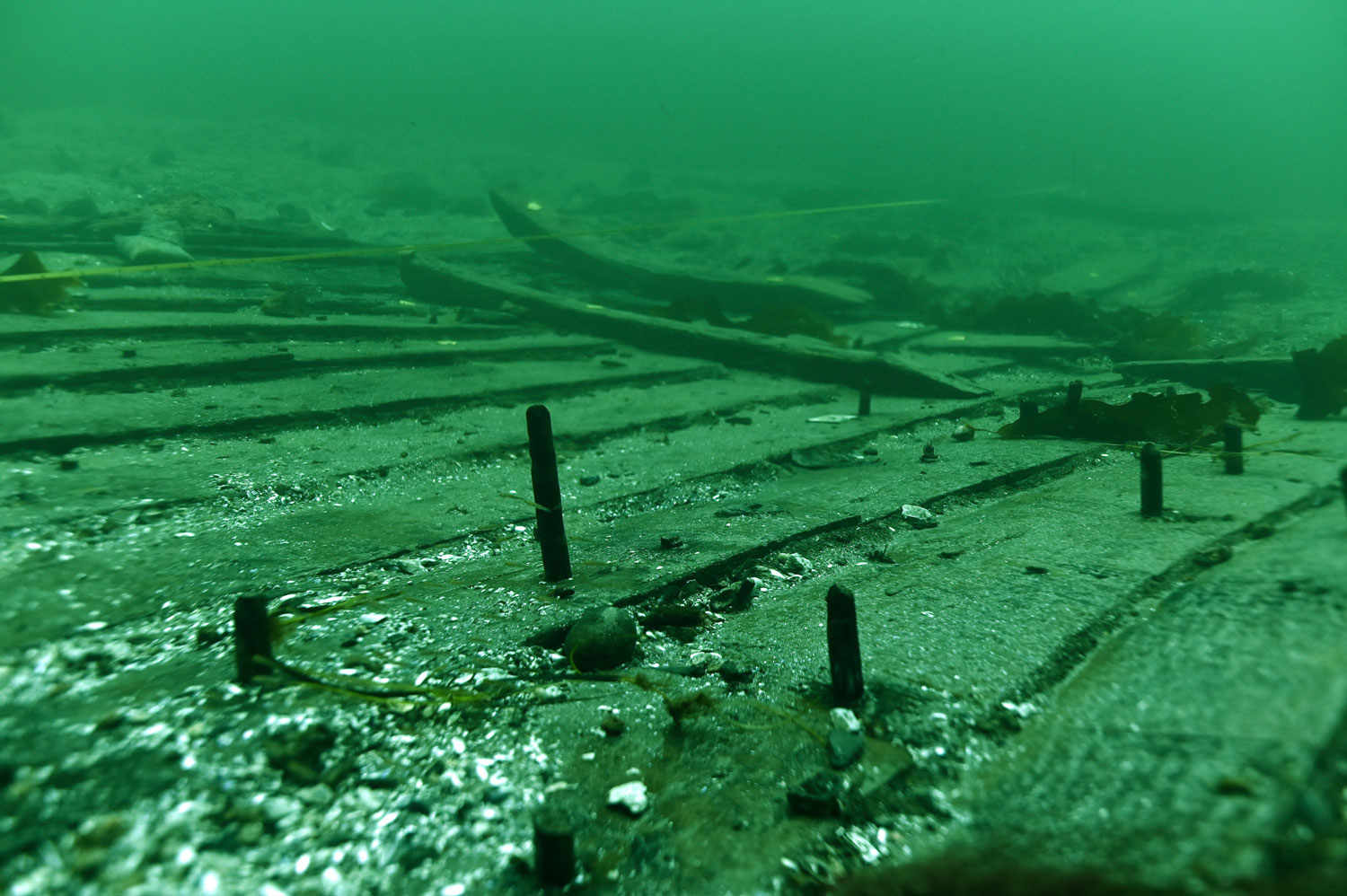
A medieval shipwreck has been discovered in the strait between Denmark and Sweden, according to a report by IFL Science. The find was made by a team of marine archaeologists led by Otto Uldum of Copenhagen’s Viking Ship Museum. The vessel lies in a key waterway linking the Baltic Sea with the Atlantic Ocean, a major trade route during the Middle Ages.
The wreck has been identified as a cog—a large cargo ship with a single mast and square sail. It measures roughly 90 feet in length, 30 feet in width, and 20 feet in height, making it the largest cog ever discovered. Uldum said the ship offers an exceptional opportunity to study both medieval shipbuilding techniques and daily life aboard one of the era’s largest trading vessels.
Tree-ring dating shows the ship was built around A.D. 1410. Its oak planks originated from what is now Poland, while the structural ribs were made from wood sourced in the Netherlands. Remarkably, the ship’s defensive high castle structure has survived, a feature rarely preserved since most wrecks retain only their lower sections. As Uldum noted, while castles are often depicted in historical drawings, physical remains of them have almost never been found.
Artifacts recovered from the site—including shoes, combs, rosary beads, bronze cooking pots, tableware, painted wooden bowls, and traces of fish and meat—provide valuable insight into everyday life on board the ship.

3D model of the shipwreck