Deep within the dense lacandon jungle of Chiapas, along the horseshoe bend of the Usumacinta River, lies the ancient Maya city of Yaxchilán. Accessible primarily by boat, this remote archaeological site holds some of the most sophisticated artistic treasures of the pre-Columbian world: the Yaxchilán Lintels. These carved limestone blocks, positioned above the doorways of major temples, functioned as structural supports and public political manifestos. Commissioned predominantly during the Late Classic period by the city’s powerful dynastic rulers, Shield Jaguar II and his son Bird Jaguar IV, these masterpieces offer an uncompromised window into the esoteric rituals, bloodletting practices, and martial triumphs that legitimized the Maya ruling elite.
The lintels are renowned for their exceptional stylistic depth, high-relief carving technique, and detailed hieroglyphic texts. Unlike the public stelae found in open plazas across the Maya region, these lintels were set within the dark, intimate thresholds of elite architectural structures, creating a spatial transition between the secular world and the sacred interior chambers. The most famous sequence of these carvings, discovered in Structure 23, depicts the domestic and ritual life of Lady K'abal Xook, the principal wife of Shield Jaguar II. Through these reliefs, modern historians have gained an unprecedented understanding of the essential political and spiritual power wielded by royal women within Maya society.
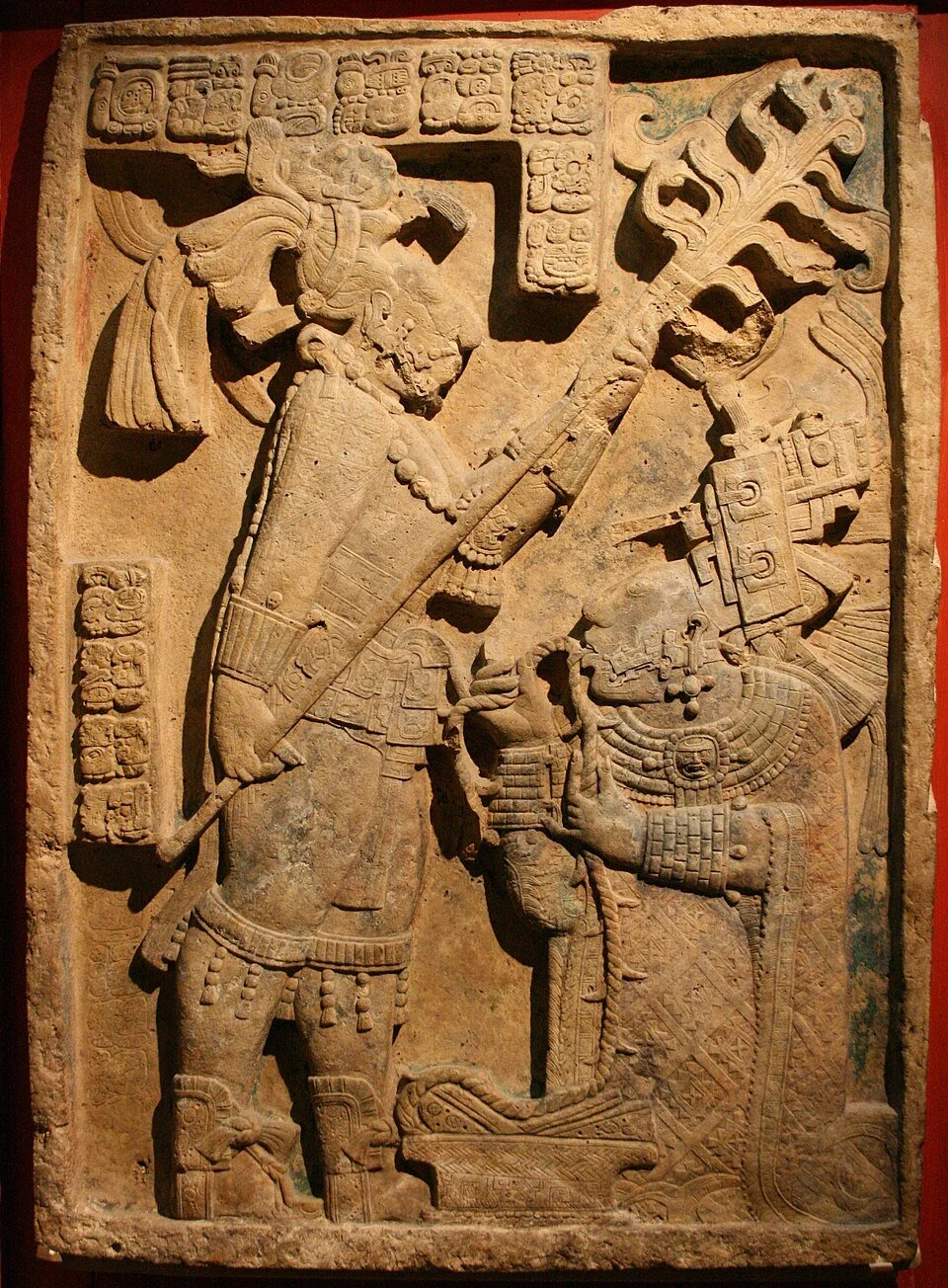
In Lintel 24, one of the undisputed masterpieces of Mesoamerican art, Lady Xook performs a solemn bloodletting ritual. She is shown kneeling, pulling a thick, thorned rope directly through a self-inflicted wound in her tongue. The droplets of her blood fall onto strips of bark paper gathered in a woven basket beneath her feet. Standing over her is King Shield Jaguar II, holding a massive torch that illuminates the subterranean dark of the temple. The sheer detail carved into the limestone is staggering; the intricate woven patterns of Lady Xook’s ceremonial huipil tunic, the individualized facial expressions of pain and meditative focus, and the delicate jewelry underscore the unparalleled skill of the Yaxchilán master sculptors.
This act of self-sacrifice was not a punishment but a profound religious obligation. For the Maya, royal blood was the ultimate cosmic currency required to nourish the gods and maintain the structural equilibrium of the universe. The sequel to this painful ceremony is captured on Lintel 25, which portrays the visionary aftermath of the bloodletting. The blood-soaked bark paper has been burned, and from the rising plumes of sacred copal smoke, an enormous, two-headed Vision Serpent materializes. Emerging from the gaping jaws of this supernatural creature is a warrior ancestor, armed and ready to protect the kingdom, effectively legitimizing Shield Jaguar II’s right to rule.
The political utility of the Yaxchilán Lintels expanded under Bird Jaguar IV, who used these stone narratives to solidify his claim to the throne after an apparent dynastic interregnum. On Lintels 1 through 8, carved for Structure 33, Bird Jaguar IV is repeatedly depicted alongside his allies and subordinates, engaged in ritual dances, holding the majestic K'awiil scepters of divine power, and capturing high-ranking foreign prisoners. These carvings served as permanent historical documents, ensuring that every visitor who crossed the threshold of the building was visually reminded of the king's military prowess, cosmic favor, and unassailable lineage.
Today, while some of these priceless pieces remain in situ at the jungle-choked ruins of Yaxchilán, many of the finest examples are housed in the British Museum and Mexico’s National Museum of Anthropology. As historical documents, the Yaxchilán Lintels shattered the early Western archaeological myth of the Maya as a peaceful, utopian society of stargazers. Instead, they revealed a highly dynamic, competitive, and deeply spiritual civilization where art, statecraft, and blood were irrevocably bound together, ensuring that the legacy of the Jaguar Kings would remain forever etched into the limestone bones of Chiapas.