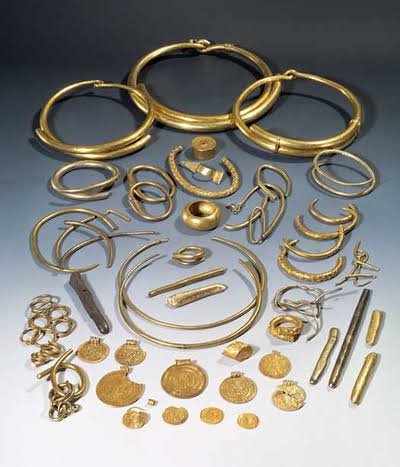
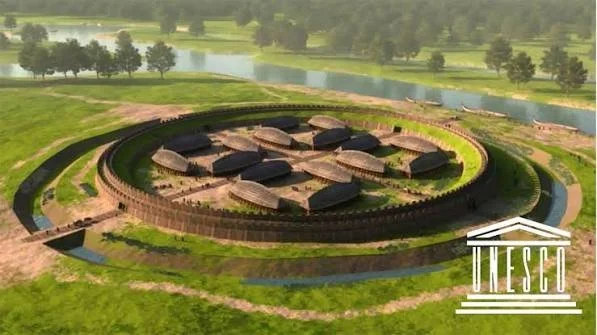
Could this be the discovery of the century? A team of archaeologists has just uncovered what appears to be the legendary temple of Zeus, untouched and hidden for millennia. But what secrets does this ancient site hold? And what clues can it provide about the myths and beliefs of our ancestors? Join us on a journey of discovery as we explore the mysterious temple of the king of the gods and reveal its hidden wonders.
The Terrifying Final Moments of Michael Rockefeller
In the following video we will be talking about the terrifying final moments of Michael Rockfeller. Watch the video to find out more!
5 Unsolved Mysteries That Cannot Be Explained
Today, we take a look at these 5 unsolved mysteries that cannot be explained. Unsolved mysteries have always intrigued people because they represent the unknown and the unexplained, which can be both fascinating and unsettling. Humans are naturally curious creatures, and we are always looking for answers to the questions that intrigue us.
Spinosaurus: The Largest Carnivorous Dinosaur
Spinosaurus was the biggest of all the carnivorous dinosaurs, larger than Tyrannosaurus and Giganotosaurus. It lived during part of the Cretaceous period, about 112 million to 97 million years ago, roaming the swamps of North Africa.
Two Spinosaurus species have been named based on the regions where they were discovered: Spinosaurus aegyptiacus Egyptian spine lizard) and Spinosaurus maroccanus (Moroccan spine lizard).

Spinosaurus means "spine lizard," an appropriate descriptor, as the dinosaur had very long spines growing on its back to form what is referred to as a "sail." The distinctive spines, which grew out of the animal's back vertebrae, were up to 7 feet (2.1 meters) long and were likely connected to one another by skin.
Recent fossil evidence shows Spinosaurus was the first dinosaur that was able to swim, and likely spent most of its life in the water, according to a study published September 2014 in the journal Science. "Spinosaurus had short hind limbs (like early whales and other animals that spent more and more time in the water), dense and compact bones (penguins show a similar bone profile in cross section), wide and flat claws and feet (possibly used in paddling), and a long and slender snout with conical teeth (perfect for catching fish)," said Nizar Ibrahim, a University of Chicago vertebrate paleontologist and lead author of the study.
Function of the sail
There has been much scientific debate regarding the evolution and purpose of Spinosaurus' sail. Because of its size, this dinosaur did not have many predators, but the sail could have been used to ward off enemies, as the dinosaur would have appeared to be twice its size with the sail fully extended. The dinosaur's upper spine was fairly flexible, and its vertebrae had ball-and-socket joints, meaning it was likely able to arch its back to a point. It may have been able to spread the sail when threatened or looking to attract a mate.

In a 1997 study published in the Journal of Paleontology, paleontologist Jack Bowman Bailey proposed that Spinosaurus and the similar Ouranosaurus didn't have sails after all, and instead had large, bisonlike backs. (Ouranosaurus was another spiny dinosaur, which lived in the same general area as Spinosaurus a few million years earlier.) These humps, Bailey argued, would have acted as dissipative "heat shields" that, unlike sails, would have helped the dinosaurs survive in the hot and dry environment they were thought to have lived in (it's now known that their environment was actually a lush swamp).
Other paleontologists have hypothesized that Spinosaurus used its sail to regulate its body temperature by absorbing heat or storing fat. However, Ibrahim and his colleagues found that the spines were composed of dense bones with few blood vessels and were likely wrapped snugly in skin, which doesn't support the thermoregulation idea.
"The sail was likely used as a display structure," Ibrahim told Live Science. "It would have been visible from far away and even when the animal was swimming. This way, the animal could convey information about its age, size and … gender to other animals, in particular other Spinosaurus."
Additionally, some paleontologists, Ibrahim included, have hypothesized that the sails were brightly colored (much like the fins of some modern-day reptiles), making them even better display structures. But, Ibrahim notes, "the sail likely had more than one function."
More gigantic than Giganotosaurus
Spinosaurus was larger than both T. rex and Giganotosaurus, which was previously the largest carnivorous dinosaur known. But it's unclear just how big Spinosaurus was, due to incomplete fossils.
In a 2005 study in the Journal of Vertebrate Paleontology, researchers estimated Spinosaurus was 52 to 59 feet (16 to 18 m) long and weighed 7.7 to 9.9 tons (7 to 9 metric tons), based on extrapolations from skull measurements. However, other scientists took issue with the study's methods, and instead claimed the behemoth was 41 to 47 feet (12.6 to 14.3 m) long and 13.2 to 23 tons (12 to 20.9 metric tons), according to a 2007 study in the same journal.
The partial Spinosaurus skeleton Ibrahim his colleagues analyzed suggests the specimen was 50 feet (15.2 m) long and still growing. The fossils also suggest Spinosaurus' long neck and trunk shifted the dinosaur's center of mass forward. This allowed the animal to move easily in water, but made movement on land nearly impossible unless the dinosaur used all four legs.

Spinosaurus had a long and narrow snout at the end of its skull, and a small crest above its eyes. It had six or seven needlelike teeth on each side of the very front of the upper jaw and another 12 teeth behind those. There were also a few large, slanted teeth that interlocked at the end of the snout. While its jaw was powerful, none of the teeth were serrated, making it unlikely that it could have used them to tear into tough prey. This gives credence to the theory that it mostly survived on fish and carcasses.
What did Spinosaurus eat?
Spinosaurus is thought to have survived primarily on fish, including giant coelacanths, sawfish, large lungfish and sharks, which lived in the dinosaur's river system, according to Ibrahim. "The skull of Spinosaurus has 'fish eating' written all over it, so those are the kinds of animals Spinosaurus would have preyed on," he said.
In addition to anatomical evidence, chemical analyses also suggest Spinosaurus preferred to dine on fish, a 2010 study in the journal Geology shows.
In 2004, researchers found a tooth belonging to Irritator challengeri — a spinosaur, or dinosaur in Spinosaurus' taxonomic family, Spinosauridae — embedded in the remains of a Cretaceous pterosaur (flying reptile). The find, detailed in the journal Nature, suggests the fish-loving spinosaurs also hunted (or scavenged) nonaquatic animals.
Spinosaurus lived in Egypt and Morocco. There is speculation that the Sahara is rich with Spinosaurus fossils, but the harsh environment makes them difficult to unearth.
Sabertooth That Roamed South America 3 Million Years Ago Had Large Canine, Pushing Its Eyes to the Sides of the Head
Sabertooth had extreme canines that extended up to their skulls affecting their eye sockets. The arrangement of their eyes had reportedly affected their eyesight.

Sabertooth's Extreme Canines Forced Their Eyes to the Sides
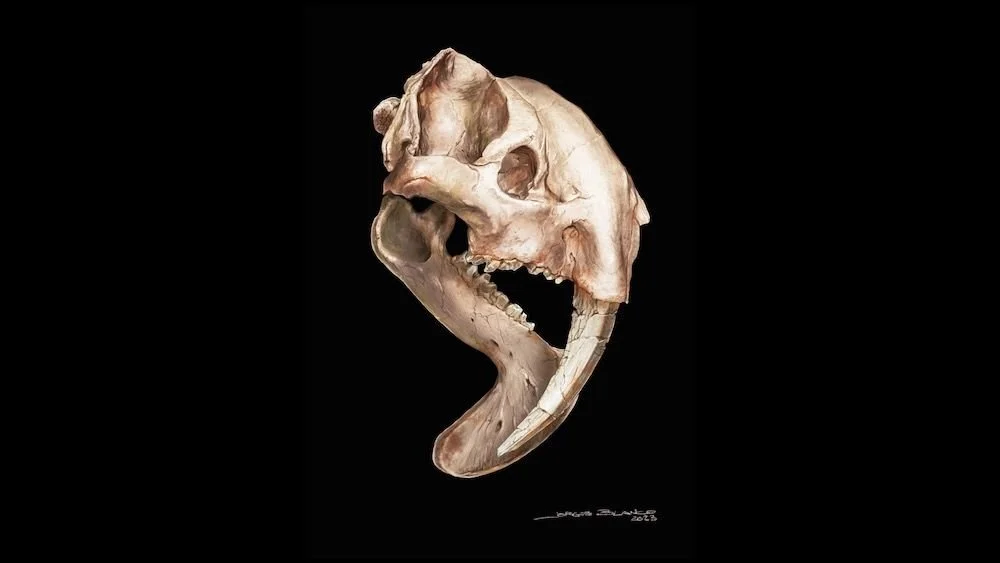
The extinct marsupials had huge teeth forcing their eyes to move to the sides of their heads. Scientists at the Instituto Argentino de Nivología, Glaciología, y Ciencias Ambientales in Argentina modeled the skull of Thylacosmilus - an extinct hypercarnivore that lived in South America three million years ago, Daily Mail reported.
According to the researchers, sabertooth could not see well in 3D because their eyes were positioned far away from each other to allow their huge canines to grow.
The sabertooth's teeth were reportedly "ever-growing." They did not wear down, and their roots extended right up front of the creature's skull and round to its rear.
Despite the position of their eyes, sabertooth was still a successful predator because its eye sockets jutted outwards, giving them a sufficiently wide field of vision.

Thylacosmilus or Thylacosmilus atrox is an extinct genus of sabertoothed metatherian mammals that weighed 220 pounds before they were fully developed. They have to be carried in their mother's pouches while growing up.
They also have eyes on the side of their head like horses and cows, which led researchers to wonder how it affected their eyesight.
The outlet added that if the fields of vision in each eye did not overlap sufficiently, they would have struggled to see the world in three dimensions and determine the position of prey.
New Sabertooth Species With Specialized Teeth for Tearing Discovered
In a previous report from Science Times, paleontologists from San Diego Natural History Museum discovered a sabertooth roaming around California more than 40 million years ago. The team named the new species Diegoaelurus vanvalkenburghae and is declared to be among the earliest known examples of mammals adopting a cat-like approach in their all-meat diet, MailOnline reported.
The fossils found in 1988 at a construction site in Oceanside, California, had a lower jaw like a cat. The team used a modern approach to identify and discovered it belonged to a previously unknown machaeroidine, one of the five now-extinct sabertooth predators.
The early meat-eating predator and its relatives represent a sort of evolutionary experiment of how the first hypercarnivore lived and evolved into modern cats, Mirage News reported. However, the machaeroidines are poorly understood because of the lack of fossil specimens, with only a handful from Wyoming and Asia. Scientists were not sure whether multiple species lived in the same period.
Study co-author Shawn Zack said the analysis of fossils showed that achaeroidines were more diverse than initially thought. They also discovered that the smaller form lived almost simultaneously, raising the possibility that more species were waiting to be discovered.
Ancient platypus-like fossil could rewrite the history of egg-laying mammals
Fossils of a 70 million-year-old platypus relative called Patagorhynchus pascuali found in South America show that egg-laying mammals evolved on more than one continent.

Around 70 million years ago, a small, furry, platypus-like creature shuffled along the banks of an ancient lake. This would not have been a remarkable occurrence, except for one thing: The lake was in present-day Argentina, not Australia.
The creature, dubbed Patagorhynchus pascuali, is the oldest fossil of the egg-laying mammal group known as monotremes ever discovered in South America. The discovery may rewrite the story of where these oddball early mammals evolved. Today, all five species of living monotremes — which include the platypus (Ornithorhynchus anatinus), the short-beaked echidna (Tachyglossus aculeatus) and three species of long-beaked echidnas (Zaglossus) — are found exclusively in Australia and a few of its surrounding islands. So how did a platypus ancestor wind up so far from Down Under?
Millions of years ago, Australia, South America and Antarctica (as well as parts of Africa and Asia) were smooshed together in a supercontinent called Gondwana. This mega landmass began to break up about 180 million years ago, during the Jurassic period, but didn't fully separate until about 66 million years ago, at the end of the Cretaceous period.
Because more recent monotreme fossils have been found in South America, scientists previously speculated that the group evolved on the Australian landmass after this continental breakup and later migrated back to South America across a land bridge. But the fact that P. pascuali existed in Argentina before the continental breakup tells a different story.

"Our discovery clearly demonstrates that Monotremes didn't evolve uniquely in the Australian continent, but also in other parts of southern Gondwana," study co-author Fernando Novas, a paleontologist at the Bernardino Rivadavia Natural Science Museum in Buenos Aires, Argentina, told Live Science in an email.
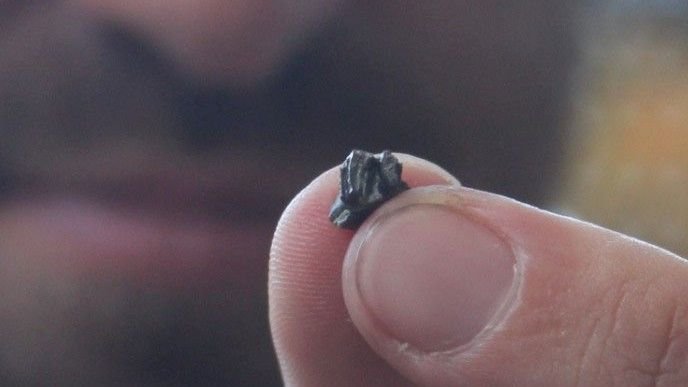
The specimen, which was described in the journal Communications Biology on Feb. 16, was identified by a fragment of a lower jaw containing a molar. When it comes to studying fossilized mammal remains, "teeth give us a huge amount of information," Robin Beck, an evolutionary biologist at the University of Salford in the U.K. who was not involved in the study, told Live Science in an email. In the case of monotremes, though, dental identification is a bit more complicated.
"Living platypuses lack teeth," Novas said. But another extinct platypus relative, the 30 million-year-old Obdurodon, retained teeth in both its upper and lower jaws. The P. pascuali molar closely resembled these teeth, as well as the very small, imperfect teeth that baby platypuses briefly possess.
Based on its teeth and apparent habitat, P. pascuali likely had a diet similar to that of a modern platypus: mainly, small aquatic invertebrates, including insect larvae and snails. The Argentinian fossil bed where it was discovered bears this out; Novas said that they found insects and snail shells in the sediments around P. pascuali. Additionally, the researchers uncovered the fossilized remains of other early mammals, turtles, frogs, snakes, aquatic plants and a variety of dinosaurs.
While the discovery constitutes an important and interesting new piece of the monotreme evolutionary puzzle, researchers are still far from a complete picture. "There are still huge gaps in the monotreme fossil record," Beck said. For instance, although no monotreme fossils have been discovered in Antarctica, given its previous proximity to Australia and South America, there are likely ancient platypus bones deep beneath the ice.
But as a South American paleontologist, Novas said, it's pretty cool to know that "the great grand-father of the Australian Ornithorhynchus was Argentinian."
Scientists make 'disturbing' find on remote island: plastic rocks
There are few places on Earth as isolated as Trindade island, a volcanic outcrop a three- to four-day boat trip off the coast of Brazil.
So geologist Fernanda Avelar Santos was startled to find an unsettling sign of human impact on the otherwise untouched landscape: rocks formed from the glut of plastic pollution floating in the ocean.

Santos first found the plastic rocks in 2019, when she traveled to the island to research her doctoral thesis on a completely different topic—landslides, erosion and other "geological risks."
She was working near a protected nature reserve known as Turtle Beach, the world's largest breeding ground for the endangered green turtle, when she came across a large outcrop of the peculiar-looking blue-green rocks.
Intrigued, she took some back to her lab after her two-month expedition.
Analyzing them, she and her team identified the specimens as a new kind of geological formation, merging the materials and processes the Earth has used to form rocks for billions of years with a new ingredient: plastic trash.
"We concluded that human beings are now acting as a geological agent, influencing processes that were previously completely natural, like rock formation," she told AFP.
"It fits in with the idea of the Anthropocene, which scientists are talking about a lot these days: the geological era of human beings influencing the planet's natural processes. This type of rock-like plastic will be preserved in the geological record and mark the Anthropocene."
Island paradise
The finding left her "disturbed" and "upset," said Santos, a professor at the Federal University of Parana, in southern Brazil.
She describes Trindade as "like paradise": a beautiful tropical island whose remoteness has made it a refuge for all sorts of species—sea birds, fish found only there, nearly extinct crabs, the green turtle.
The only human presence on the South Atlantic island is a small Brazilian military base and a scientific research center.
"It's marvelous," she said.
"So it was all the more horrifying to find something like this—and on one of the most ecologically important beaches."
She returned to the island late last year to collect more specimens and dig deeper into the phenomenon.
Continuing her research, she found similar rock-like plastic formations had previously been reported in places including Hawaii, Britain, Italy and Japan since 2014.
But Trindade island is the remotest place on the planet they have been found so far, she said.
She fears that as the rocks erode, they will leach microplastics into the environment and further contaminate the island's food chain.
'Paradigm shift'
She and her team's study, published in September in the journal Marine Pollution Bulletin, classified the new kind of "rocks" found worldwide into several types: "plastiglomerates," similar to sedimentary rocks; "pyroplastics," similar to clastic rocks; and a previously unidentified type, "plastistones," similar to igneous rocks formed by lava flow.

"Marine pollution is provoking a paradigm shift for concepts of rock and sedimentary deposit formations," her team wrote.
"Human interventions are now so pervasive that one has to question what is truly natural."
The main ingredient in the rocks Santos discovered was remnants of fishing nets, they found.
But ocean currents have also swept an abundance of bottles, household waste and other plastic trash from around the world to the island, she said.
Santos said she plans to make the topic her main research focus.
Trindade "is the most pristine place I've ever seen," she said.
"Seeing how vulnerable it is to the trash contaminating our oceans shows how pervasive the problem is worldwide."

The ancient Greeks arrived in Iceland before the Vikings, according to a new theory
There is currently no conclusive evidence that the ancient Greeks reached Iceland before the Vikings. While there are some interesting similarities between certain aspects of Greek and Icelandic cultures, such as the use of similar symbolism and mythological figures, the archaeological and historical evidence linking the two remains scant.
The idea that the ancient Greeks may have reached Iceland before the Vikings is a relatively recent and controversial theory put forward by a few scholars. However, it is not widely accepted in the academic community, and many archaeologists and historians remain skeptical.
There is certainly evidence that the Vikings were the first Europeans to establish a permanent settlement in Iceland, which they did in the late 9th century AD. They called the island "Ísland," which means "land of ice," and went on to create a unique culture that blended Norse, Celtic, and other influences.

The Slendingabók (The Book of the Icelanders), which was composed around 1130, is the oldest known written work.
Landnámabók is another intriguing source from the 12th century (The Book of Settlements).
According to the Icelandic Book of Settlements the island's first permanent resident was a Norwegian named Ingólfr Arnarson, who arrived there in 874.
At a place called Reykjavk, he constructed a house for himself and his wife, Hallveig Fródadóttir.
He was a farmer when more than 400 settlers arrived in Iceland to claim a portion of the land, bringing with them their family, servants, and enslaved people.
Although some arrived from other Nordic nations and the Norse Viking Age settlements in the British Isles, the majority of the inhabitants came from Norway.
The idea that ancient Greeks arrived in Iceland before the Vikings and Norse people has drawn the attention of more and more academics.

This notion is based on the writings of Pytheas of Massilia (350–285 B.C. ), who wrote about his expedition to the Arctic and mentioned a strange land in the north that is now known as Thule.
Greek adventurer, geographer, and astronomer Pytheas is today regarded as the first scientist to have explored and written about the Arctic, polar ice, and Celtic and Germanic people.
In addition to being an excellent astronomer, Pytheas was the first to describe the Midnight Sun to the world.
The stories of Pytheas were rejected for generations, but the concept of Thule sparked the curiosity of those who yearned to know more about this enigmatic region in the North.
"Since classical times, Thule marked the imaginative horizon of the unknown North, first described by Pytheas of Massalia, who in the third century B.C. reported on a strange place far north ('six days sail north of Orcades') where the sun would never set in the summer and where the ocean was solid frozen. Nobody knows for sure how far north Pytheas went himself and how much he relied on secondary knowledge in his own (lost) descriptions of this place."
Pytheas claimed that people he named the Hyperboreans lived in Thule.
He added that they reside on an island in Britain's north.
It is a location that is "beyond the north wind."
The Hyperboreans were praised by later Greek and Roman writers like Herodotus, Pindar, and Pliny for living pleasant lives and being free from disease.
Thule's exact location is still a mystery.
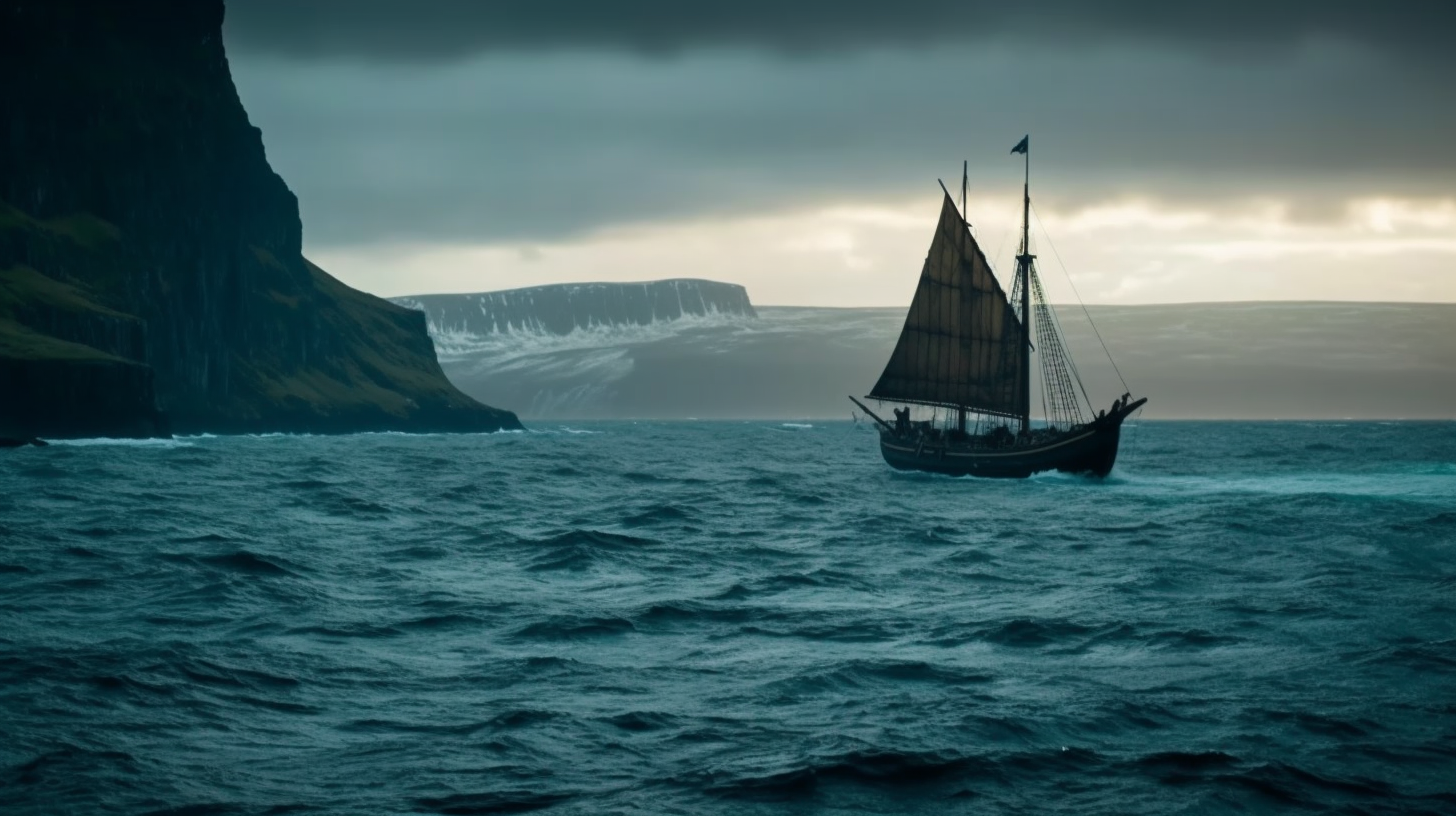
According to Andrew Breeze, an epigrapher at the University of Navarra, the renowned Thule was actually Iceland based on a new linguistic explanation of the Greek word.
"While the name Thule has no meaning in Greek, Breeze suggests that it could be a scribal error for the original name Thymele, which means "altar" in ancient Greek. This name could perfectly fit the southern coast of Iceland."
Breeze claims that if we imagine what Pytheas thought when he first saw Iceland, we can find solutions to the enigma.
Breeze describes his theory in an article for The Housman Society Journal, saying that "the dark volcanic cliffs of the south coast (above beaches of black sand) would have an altar's slab-like appearance; and the resemblance would be the more significant if mist and clouds rising from the island (to say nothing of plumes from its volcanoes, several of which are in its southern part) reminded Pytheas of an altar's reeking sacrifices."
No surprise if he referred to the island as "altar, the altar" or "thymele."
Regrettably, his scribes failed to understand his wonder (and possibly awe) at discovering a new continent.
Hence, it would appear that Thymele to Thoule, Thyle, and Thule were corrupted over a period of three centuries."
"According to Breeze, the idea of Iceland as a massive altar meshes nicely with what is known about ancient Greek altars.
Numerous of these altars were extraordinarily huge; one is supposed to have been 600 feet long and stood 40 feet tall at Syracuse."
Breeze contends "Iceland was without a doubt the location Pytheas discovered, a remarkable accomplishment.
Other applicants may be rejected.

Because of its likeness to a temple's sacrificial altar, he gave it the name "Thymele altar (island)".
It is possible to reject the inaccurate and meaningless "Thule" as the result of scribal corruption.
There is no justification for it, any more than there is for "Boadicea," a queen who was appropriately referred to as "the victorious one, she who is successful," in Tacitus.
Yet, anyone who is familiar with academic culture may be certain that, just as we continue to hear about "Boadica," so too will we continue to hear about "Thule" for years to come.
It will be one of the countless scribal monsters that taint copies of classical texts, ancient world histories, and encyclopedias produced by renowned universities.
While the theory of ancient Greek exploration of Iceland is an intriguing idea, it remains a subject of debate among scholars, and more evidence would be needed to confirm it definitively.
Archaeologists Found a Strange 3,400-Year-Old Ancient City After Tigris River Water Receding
The Mittani Empire's urban center is revealed by a drought.
A 3400-year-old city from the Mittani Empire that was formerly situated on the Tigris River has been discovered by a group of German and Kurdish archaeologists.
Early this year, as a result of the severe drought in Iraq, a town erupted from the waters of the Mosul reservoir.
Ancient Zakhiku, which is thought to have been a significant center in the Mittani Empire, may have been the sprawling city with the palace and other major buildings (ca. 1550-1350 BC).
Iraq is one of the nations most impacted by climate change worldwide.

Particularly the south of the nation has endured months of severe drought.
Large volumes of water have been removed from Iraq's most significant water storage, the Mosul reservoir, in order to keep crops from drying up.
Without any preceding archaeological research, this caused a Bronze Age city that had been drowned decades earlier to resurface.
It is situated in the Iraqi Kurdistan Region in Kemune.
Archaeologists were suddenly under pressure to unearth and document at least some of this vast, important metropolis as soon as possible before it was resubmerged due to this unforeseen event.

Within days, a team for the rescue excavations had been assembled.
The Fritz Thyssen Foundation provided funding for the project on short notice through the University of Freiburg.
There was a great deal of urgency on the part of the German-Kurdish archaeological team because it was unclear when the reservoir's water level would rise again.
The researchers quickly completed a substantial portion of the city's mapping.
A gigantic fortification with wall and towers, a monumental, multi-story storage building, and an industrial complex were discovered in addition to a palace, which had already been identified during a brief campaign in 2018.

The vast urban complex was built during the Mittani Empire (1550–1350 BC), which ruled over a sizable portion of northern Mesopotamia and Syria.
The finding of five ceramic receptacles that held a collection of more than 100 cuneiform tablets is particularly noteworthy.
They were created during the Middle Assyrian era, not long after the disastrous earthquake that ravaged the city.
Even some of the clay tablets' clay envelopes, which may be letters, are still there.
The finding could reveal crucial details about when the Mittani-period metropolis came to an end and Assyrian hegemony over the area began.
According to Peter Pfälzner, "It is almost miraculous that cuneiform tablets made of unfired clay survived for so long beneath water."
As part of a comprehensive conservation project supported by the Gerda Henkel Foundation, the excavated buildings were totally covered with tight-fitting plastic sheeting and topped with gravel fill to prevent additional harm to the significant site from the rising water.
This is done to prevent water from damaging the unbaked clay walls and any other treasures that may still be buried inside the ruins.
Now the area is entirely underwater once more.
Scientists Just Discovered This 3,500 Year Old Box Next to the Pyramids That Contained This Secret
Over the past century, archeology has helped us learn more about our past. Each discovery offers us a new perspective on human history and past civilizations. In this video, we’ll take a look at the most amazing and impactful archeological discoveries in history.
From a tomb guarded by 8,000 soldiers, to a secret underground city, here are the 15 greatest archeological discoveries!
Experts In China Discovered A Perfectly Preserved 2,400 Year Old Weapon
In central China, an archaeology team is looking into a network of underground tombs. The experts then discover an intriguing object: an ancient water-damaged casket. After prying open the object, the group discovers a human skeleton and a sealed wooden box inside.
But there's more. A kind of exquisite instrument that no one has seen in about 2400 years is contained within that box. Additionally, the archaeologists will ultimately discover that the weapon once belonged to a significant figure in the country's history. If archaeologists in china found a weapon that was perfectly preserved for 2400 years, it's perhaps no surprise that the sword is so old.
However, as such blades have long represented power in human societies. For warriors of so many different cultures and dira. The weapons have been seen to symbolize strength, chivalry and masculinity as well as war. And this is reflected in the plethora of hero myths that have survived through the ages from the tale of king arthur and excalibur to the greek fable of perseus. The far east too has much to offer in this arena.
The sword discovered in the chinese tomb in 1965, meanwhile, has proved to be an incredible cultural treasure. The so called sort of gaussian is not just exceptional for its outstanding workmanship, but also for its extraordinary physical properties. And the weapons on near thing in modern times has allowed historians to take a look back into an ancient world. More specifically, the sword was uncovered in the province of hubei, that name translates to north of the lake, a reference to the expansive daunting lake in hunan province during neolithic times, the hue bay area was inhabited by humans, and it is considered to be one of the birthplaces of chinese civilization.
Given its rich history, then naturally hubei province has an intriguing archaeological record, and you bay is geographically significant to at its heart, the province hosts of sprawling ultra fertile alluvial plain called jangan. This stretch of land is itself surrounded by the jing dhaba wu and wu tang mountain ranges with the highest peak among them all climbing to more than 10,000 feet.
Most Incredible Abandoned Ships & Other Mysterious Discoveries
In today’s video we will investigate the most incredible abandoned ships, along with other mysterious discoveries. Enjoy!
When An Italian Guy Went To Repair His Toilet, He Unearthed An Ancient Underground Complex
Yano and his sons look through the floor of their property in the historic Italian city of Lex Luciano faggy for a broken pipe. On the other hand, as the members of the family remove shovels full of debris, they discover something unexpected. A false floor, and the men and the rest of the city will be astonished by what lies beneath this structural layer.
When an Italian man went to fix his toilet, he found an old underground structure. Italy is home to an incredible collection of ancient ruins because the country has been inhabited for approximately 40,000 years. For instance, Rome was founded in 753 BC, and a visit to the eternal city would not be complete without seeing its numerous ancient ruins, which are evidence that the civilization ever existed. The Colossian architectural achievement, which was completed in Ada D., may be the most well-known Roman artifact.
The circular amphitheater hosted audiences of up to 80,000 people at a time in bygone days. In addition, inside, these spectators were able to witness anything from gladiator fights and public executions to battles in which the venue was, yes, occasionally flooded. The forum, which was once the center of daily life in Rome, can be found close to the Colossians. The people of the time could hear public speeches, watch criminal trials, and learn about election results here. Even though many of the monuments and buildings on this site have fallen down over the past two thousand years, millions of tourists still flock to see them and try to imagine how life was there 200 years ago.
However, these types of architectural relics aren't just found in Rome; there are also examples in other Italian cities. Lonely Planet, for instance, ranked Pompeii's ruins as one of the world's most engaging archaeological experiences.
Scientists Examining A Medieval Skeleton Discovered A Rare Pigment That Rewrites History
A community of women flourished in rural germany and a monastery at dal haim 1,000 years ago. After several centuries, a group of researchers at the site are diligently examining medieval artifacts. However, while examining the remains of one former resident, the group uncovers a shocking and incredible secret that has the potential to rewrite human history. A rare pigment that rewrites history was discovered by scientists while studying a medieval skeleton. And for anita rodini and her coworkers, the eye-opening moment is one that few could have predicted when their research began.
Initially, the team planned to study teeth on earth at the location analyzing any buildup of plaque to learn more about the diet and oral hygiene of women who lived so long ago, however, the specialists ended up finding so much more. You see, the researchers discovered something strange when looking at the plaque under the microscope.
The substance was flecked with a brilliant blue pigment. And this flash of color understandably grabbed attention. But what was the cause of this shade? Amazingly, the answer appears to reveal incredible truths about the women who lived at dal haim and their important role in medieval society. Even with all the technology that we have on offer today, the past still contains many mysteries that are yet to be revealed. And while ruined buildings and forgotten texts can tell us much about the world that came before us. There are many other ways to learn what life was like in ancient times. Fascinatingly, one of these avenues is the study of bones. Indeed, we can discern a great deal about people by investigating their skeletal remains.
For example, the position and location of bones can tell us how and where communities lived and worked. A skeleton's condition can also give us valuable insights into an individual's death. Now, though, researchers are applying a different type of analysis to ancient remains with fascinating results, and that takes us back to the ancient monastery that once stood in the Dal Haim region of Western Germany.
Most incredible recent archaeological discoveries
In the following video we will be exploring the most incredible recent archaeological discoveries. Watch the video below to find out more!
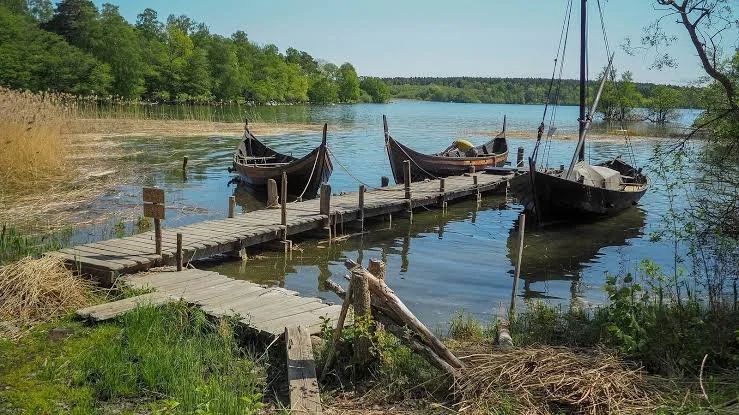
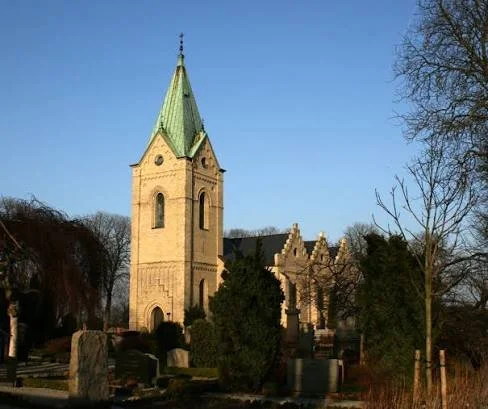
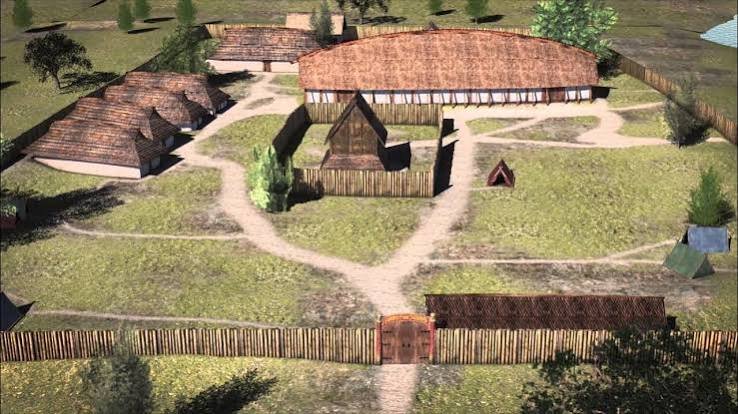
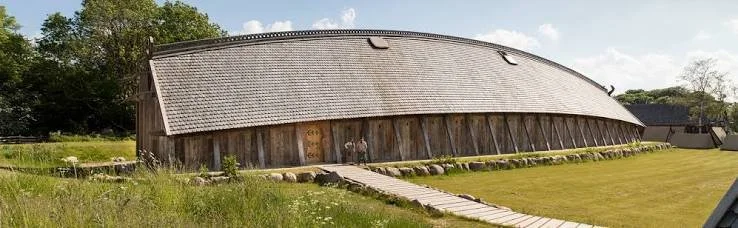
Viking warrior found in Sweden was a woman, researchers confirm
More than a thousand years ago, a Viking woman was laid to rest with the full honors of a mighty warrior, including weapons, armor and two horses. But when researchers discovered her remains in 1880s, the weaponry led them to assume this mighty she was a he. Now, over 130 years later, DNA tests have shown that this high-ranking Viking warrior was actually a woman.

"Though some Viking women buried with weapons are known, a female warrior of this importance has never been determined and Viking scholars have been reluctant to acknowledge the agency of women with weapons," the researcher write in the study published in the American Journal of Physical Anthropology.
Much of the history of women warriors has been passed as legend or myth—mere stories of s0-called "shieldmaidens," or women who fought alongside the men. The warrior Brynhildr, for example, appears in several epic poems and sagas, and was later memorialized in Richard Wagner's "Ring Cycle" operas. Yet many believe that these myths are rooted in some truth. One example is the long-raging debate around the existance of the legendary Amazon women of Greek mythology, who have risen to fame with the Wonder Woman comics and movie.
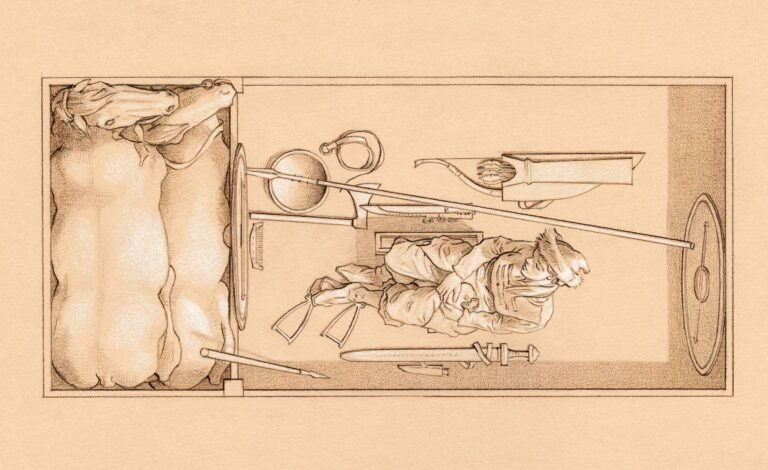
This latest study of the Viking warrior, found in a grave in the Swedish town of Birka, is the first strong evidence that these legendary high-ranking women warriors actually existed, writes Louise Nordstrom for The Local. "What we have studied was not a Valkyrie from the sagas but a real life military leader, that happens to be a woman," archaeologist Charlotte Hedenstierna-Jonson, lead author of the study, says in a statement.
The grave in question contains the trappings of a Viking officer, including a full set of gaming pieces that were used to strategize battle tactics, writes bioarchaeologist Kristina Killgrove for Forbes. The warrior was around 30 years old at death, and relatively tall for the time, standing at five and a half feet. Because of its burial setting, archaeologists had simply long assumed that the skeleton found in this grave was from a man, but Anna Kjellström noticed that the skeleton seemed to have more physical characteristics of a female rather than a male skeleton.

To test the sex of the individual, researchers extracted DNA of the canine tooth and upper arm. Analysis of this genetic material showed that the individual had X chromosomes and lacked a Y chromosome, which indicates the remains belonged to a woman. Analysis of isotopes found in the bones also suggests that the woman likely lived an itinerant lifestyle before settling down in Birka later in life.
More than 3,000 Viking graves are known to exist at Birka, with many yet to be excavated and studied, Killgrove writes. This latest discovery suggests that archaeologists should not let preconceived notions of gender and modern tradition cloud their analysis of future finds.

"Similar associations of women buried with weapons have been dismissed, arguing that the armaments could have been heirlooms, carriers of symbolic meaning or grave goods reflecting the status and role of the family rather than the individual," the researchers write in the study, noting that remains from male individuals with such elaborate burials are often not questioned. "The results call for caution against generalizations regarding social orders in past societies," they write.
Scans Reveal Archangel Michael Tattoo on Mummy's Thigh
In 2014, a team of scientists in London carried out high-tech scanning on eight Egyptian mummies from the British Museum, uncovering fascinating information about them, including the revelation that one of the female mummies apparently has a tattoo symbolizing Archangel Michael on her inner thigh.

Mummies of All Ages and Walks of Life
The eight mummies lived during different eras and came from different walks of life, from royalty to citizens living along the Nile . One of the mummies was only around two years of age when he died, while others lived to see their 50th birthday. The oldest mummy tested is more than 5,500 years old, while the most recent lived around 1,300 years ago.

The mummies underwent computerized tomography scans (CT scans) and infra-red reflectography at London hospital, which revealed what lay underneath their wrappings for the first time. The scans enabled the scientists to build up a 3D image of the ancient remains, revealing bones, tissue, and vital organs.
An Archangel Michael Tattoo
The results revealed that the Egyptians suffered from some of the same health issues that plague us today, including high cholesterol, fatty diets, heart problems , and dental issues . But most fascinating of all was the discovery of a tattoo on a female mummy, aged between 20 and 35, which Dr. David Antoine, curator of physical anthropology at the British Museum, described as “truly a unique and remarkable find”.
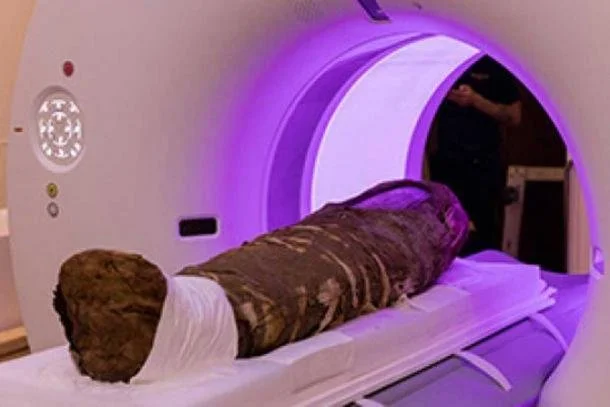
The 1,300-year-old female mummy was different from the others in that her remains were found in Sudan and she had been naturally-preserved by the hot and arid environment. Her tattoo represents the symbol of the Archangel Michael , who features in both the Old and New Testaments, and who was the Patron Saint of medieval Sudan.
“The tattoo on her right inner thigh represents a monogram that spells Michael in ancient Greek,” said Dr Antoine. “We have found other examples of the monogram, but never in the form of a tattoo.”
Who was Archangel Michael?
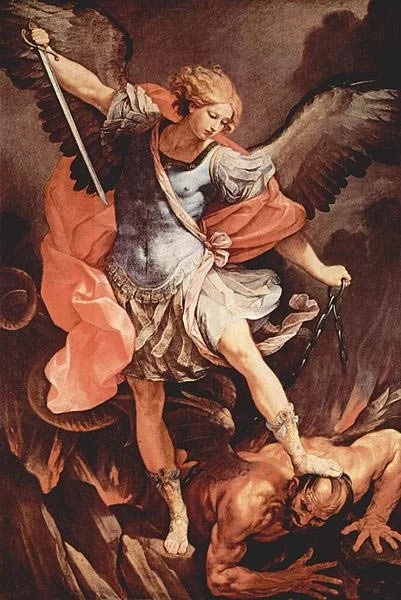
Michael is an archangel in Jewish, Christian, and Islamic teachings. In the New Testament Michael leads God's armies against Satan's forces in the Book of Revelation. He defeats Satan during the war in heaven.

Christian sanctuaries to Michael appeared in the 4th century, when he was first seen as a healing angel. Over time he became regarded as a protector and the leader of the army of God against the forces of evil . By the 6th century, devotions to Archangel Michael were widespread both in the Eastern and Western Churches.
Questions of Respect
The mummies and the detailed results of the scans were displayed in an exhibition titled “Ancient Lives: New Discoveries.” The exhibition drew controversy as many protested that the display of deceased individuals is disrespectful, and not in accordance with what they would have wished.
The issue of respecting deceased individuals has long been associated with the treatment of their mummified remains. One of the biggest examples of what is generally considered the desecration and disrespect of mummies took place during Victorian times in England. A public obsession with ancient Egypt and mummies was at an all-time high and many people gathered and paid to watch the unwrapping of mummies in public or private events. They were told the mummified individuals were princesses or high-ranking officials, but in the end the ‘success’ of unwrapping parties came down to the host’s showmanship skills.

Eventually the macabre practice died out. As Wu Mingren explained in a previous Ancient Origins article :
“One of the reasons for this is the realization that carrying out such an activity in the name of ‘science’ was unjustifiable, and that it would be better to preserve the past. Another reason is provided by John J. Johnston, an Egyptologist, who is of the opinion that the Victorians eventually grew bored of these mummy unwrapping parties, as Pettigrew’s performance was more or less the same each time, and the thrill gradually waned.”
In 1908, Margaret Murray , the first woman appointed as a lecturer in archaeology in the UK, undertook the last known mummy unwrapping ‘party.’
What Historical Figures Might Look Like If They Lived Today
Have you ever wondered what historical figures might look like if they lived today? Well, a digital artist named Hidreley Diao, from Brazil, had a similar question and he used modern AI tools to figure it out. He created a realistic depiction of some of history's most iconic figures, capturing their main facial characteristics, while keeping in mind that if they lived in this day and age, modern lifestyle would have created a slightly twisted version of them. Let's have a look at a few amazing examples of his work, bringing historical figures to life, with a little AI animation thrown in the mix.
Hidden in Plain Sight Series | Ancient Civilizations Documentary Box-set | Mysterious Monuments
There has long been a fascination in Britain with the world of ancient Egypt by some of the world's most flamboyant archaeologists; they make an irresistible package of Egyptian material technology than of any other ancient civilization. This documentary offers proof our ancestors were more than advanced than we can.
Farmer discovers huge hoard of more than 4,000 ancient Roman coins in Switzerland
A Swiss farmer made an incredible find in his cherry orchard when he spotted something shimmering in a molehill and subsequently discovered a trove of 4,166 bronze and silver Roman coins. The hoard has been described as one of the biggest treasures ever found in Switzerland.
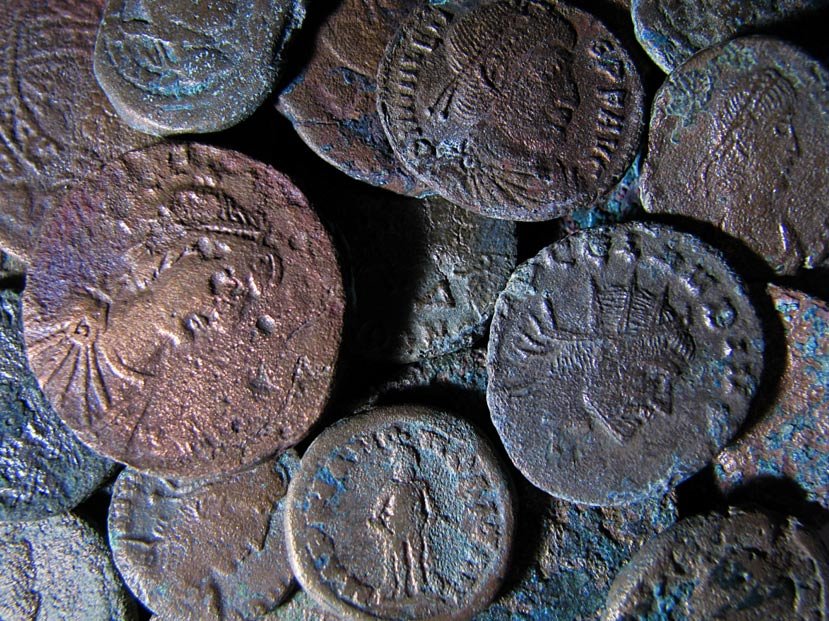
The Agence France Press reports that the finding occurred in Ueken, in the northern canton of Aargau in Switzerland, a short distance away from an ancient Roman settlement in the nearby town of Frick. The Swiss fruit-and-vegetable farmer contacted the regional archaeological service, which took several months to carefully excavate all the coins, some of which were buried in small leather pouches.

In total, the trove weighs an incredible 15kg (33lb) and consists of ancient Roman coins stretching from the reign of Emperor Aurelian (270 – 275 AD), known for restoring the Empire’s eastern provinces after his conquest of the Palmyrene Empire, to the reign of Maximian (286 – 305 AD), who carried out campaigns to relieve the Rhine provinces from the threat of Germanic invasion. The most recent coin discovered in the hoard dates to 294 AD.
"As an archaeologist one rarely experiences something like this more than once in your career," Swiss archaeologist Georg Matter told Spiegel Online .

The coins are in excellent condition with the prints still legible, leading experts to suspect that the coins were taken out of circulation shortly after they were minted, but retained for the value of the bronze and silver.
The region in which the coins were found has a long history, and is believed to have been the location of a large Roman settlement between the 1 st and 4 th century AD. Remains of a 2 nd century Roman estate have been found along the main road in the town of Frick, and a 4 th century fort was discovered below the church hill. The Roman era name for Frick (Latin: Ferraricia) refers to a Roman iron ore mine in the area.

The farmer who discovered the treasure will receive a finder’s fee, but according to Swiss law, the coins will remain public property and are set to go on display at the Vindonissa de Brugg Museum in Aargau.