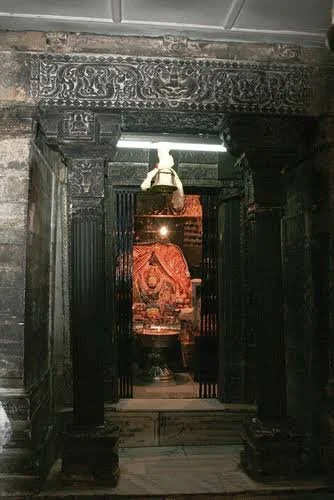
The Grand Canyon is one of the most spectacular natural wonders of the world, attracting millions of visitors every year. However, the canyon has always held a deep mystery that has intrigued archaeologists and explorers for centuries. What is that mystery you ask? Well, you just gotta watch the video to find out!
Evidence of human migrations throughout the cold period from China to the Americas and Japan
Researchers have followed a female lineage from northern coastal China to the Americas using mitochondrial DNA. The team discovered evidence of at least two migrations by combining modern and ancient mitochondrial DNA: one during the last ice age and one during the melting period that followed.

Graphical abstract showing ice age migration routes from northern coastal China to the Americas and Japan. Credit: Li et al.
Another branch of the same lineage may have traveled to Japan about the same time as the second migration, which could account for the parallels in Paleolithic archaeological sites in the Americas, China, and Japan. The work is published online in Cell Reports on May 9 2023.
According to primary author Yu-Chun Li, a genetic anthropology at the Chinese Academy of Sciences, "The Asian ancestry of Native Americans is more complicated than previously indicated." We demonstrate that northern coastal China also contributed to the gene pool of Native Americans in addition to the previously mentioned ancestral sources in Siberia, Australo-Melanesia, and Southeast Asia.
Despite the long-held belief that Native Americans were descended from Siberians who traversed the transitory land bridge of the Bering Strait, more recent genetic, geological, and archaeological data points to the possibility of numerous waves of migration of humans to the Americas from other regions of Eurasia.
A team of researchers from the Chinese Academy of Sciences followed the path of a potential ancestral lineage that connects East Asian Paleolithic-age populations to founding populations in Chile, Peru, Bolivia, Brazil, Ecuador, Mexico, and California in order to shed light on the history of Native Americans in Asia. Mitochondrial DNA, which can be utilized to determine kinship through the female line, contains the questioned lineage.
After examining more than 100,000 modern and 15,000 ancient DNA samples from all around Eurasia, the researchers were able to pinpoint 216 modern and 39 ancient people who belonged to the uncommon ancestry. The researchers were able to determine the lineage's branching history by contrasting each of these individuals' accumulated mutations, geographic locations, and carbon-dated ages.
They were able to pinpoint two migration events from northern coastal China to the Americas, and they believe that in both instances the migrants arrived in America more likely via the Pacific coast than the inland ice-free route (which would not have been open at the time).
During the Last Glacial Maximum, when ice sheet covering was at its highest and conditions in northern China were probably unfavorable for humans, the first radiation event took place between 19,500 and 26,000 years ago. Between 19,000 to 11,500 years ago, during the ensuing deglaciation or melting era, the second radiation took place. At this time, there was a substantial rise in human numbers, perhaps brought on by the improving climate, which may have encouraged migration to new areas.
A surprising genetic connection between Native Americans and Japanese people was also found by the researchers. Another group split off from northern coastal China during the deglaciation and migrated to Japan. We were shocked to see that this ancestor also contributed to the gene pool in Japan, particularly the native Ainus, adds Li.
The Paleolithic populations of China, Japan, and the Americas have many archaeological features, which is explained by this discovery. The three areas were particularly similar in how they made stemmed projectile tips for spears and arrowheads. According to lead author Qing-Peng Kong, an evolutionary geneticist at the Chinese Academy of Sciences, "this suggests that the Pleistocene connection among the Americas, China, and Japan was not confined to culture but also to genetics."
Y chromosomal DNA provides complementary evidence that Native American male ancestors also existed in northern China at about the same period as these female ancestors, despite the study's focus on mitochondrial DNA.
Native American ancestry is now part of the picture, but there are still many unanswered questions. According to Kong, "the origins of several founder groups are still elusive or debatable." Next, in order to get a fuller picture of Native Americans' ancestry, we intend to gather and research more Eurasian lineages.
Terrifying New Discovery Under Antarctica's Ice Changes Everything
Antarctica, the world's southernmost continent, remains one of the most mysterious places on the entire planet. For millennia, its vast, frozen terrain has caught the interest of explorers and scientists, and it continues to reveal secrets that challenge our knowledge of the natural world. In recent years, a team of scientists has been undertaking an important study deep beneath Antarctica's ice surface. Their findings are nothing short of astounding, and they have the potential to change our understanding of the world. Join us as we explore this mysterious world.
Archaeologists are in Disbelief! Ancient Egyptians Found in America
In a groundbreaking discovery that could rewrite history, archaeologists have unearthed enigmatic artifacts at the heart of the Grand Canyon, suggesting an astonishing connection between the majestic natural wonder and the distant world of Ancient Egypt. This unprecedented find raises a million questions, as researchers delve deeper into the mysterious intersection of two vastly different civilizations, separated by oceans and time, yet brought together by the sands of the canyon.
Asking AI how each country looked in the 17th century
In this video we will be exploring various countries during the 17th century, as depicted by AI. Enjoy!
Ancient human DNA discovered in tooth jewelry dating back 25,000 years
Thanks to DNA preserved in the artifact, researchers have determined that a tooth pendant found in southern Siberia's Denisova Cave belonged to a lady who lived between 19,000 and 25,000 years ago.

A top view of the pierced elk tooth discovered in the Denisova Cave in southern Siberia - Copyright MAX PLANCK INSTITUTE FOR EVOLUTIONARY ANTHROPOLOGY/via REUTERS
The DNA of the owner of a deer-tooth jewelry that was buried in a remote Siberian cave for tens of thousands of years has been found by a group of researchers located in Germany.
It is believed that the antique jewelry, which was discovered in southern Siberia's Denisova Cave, belonged to a woman who lived between 19,000 and 25,000 years ago.
The Max Planck Institute for Evolutionary Anthropology's Elena Essel claims that she and her colleagues created and applied a novel method to extract DNA from an artifact.

The entrance to the Denisova Cave in southern Siberia where the tooth was foundCopyright Richard G. Roberts/Handout via REUTERS
Archaeologists are now able to retrieve genetic evidence of ancient humans from the physical artifacts they have left behind after their deaths. This process is inspired by how police solve crimes using "touch DNA," or, to put it another way, utilizing DNA left over after a person touches an object.
Before the development of this new method, scholars could only connect an artifact to a person if they had been buried wearing it. The new technique will make it possible to determine the biological sex and genetic heritage of the person who previously owned or worn a certain item.
However, because teeth and bones are porous enough to absorb human DNA from contact with bodily fluids like blood, sweat, and saliva, the new DNA extraction method can currently only be used to identify who used specific artifacts in daily life. Fortunately for scholars, however, the bones and teeth of animals and, on occasion, humans were commonly employed in ancient times in the construction of ordinary tools, religious objects, and jewelry, like this pendant. This was due to a scarcity of easily available materials thousands of years ago.
According to our hypothesis, the likelihood that a significant amount of DNA is present in the substance increases with the length of intimate body contact... However, we are unsure of whether we are talking about days, months, years, or decades," Essel says.

Scientist Elena Essel of the Max Planck Institute works in their laboratory in Leipzig, Germany on the pierced elk toothCopyright Max Planck Institute for Evolutionary Anthropology/Handout via REUTERS
These researchers, who have been fascinated by the Denisova Cave for decades, have made a significant finding using the information they have gleaned from the tooth pendant.
Along with Homo sapiens, Neanderthals, and another extinct human species known as Denisovans have all lived there in the past. The cave is the key to a wealth of knowledge about our prehistoric predecessors for the study team.
It was discovered that the tooth belonged to a wapiti deer, or an elk, thanks to the novel procedure that allowed the researchers to recover the DNA of the animal. They recovered human DNA from the tooth's pores using the same technique, concluding that the genetic material came from a girl whose ancestry is most akin to Native Americans and Siberians who lived farther east than the cave.
With the use of science, they were also able to estimate the pendant's construction date, which coincided with earlier investigations into the radiocarbon dating of the layer of cave floor silt where the artifact was found.

An artistic interpretation of an ancient pendant made with an elk tooth, found at the Denisova Cave in southern SiberiaMyrthe Lucas/Handout via REUTERS
Archaeologists are now able to comprehend historical cultures with a level of depth that has never before been feasible thanks to the DNA technology, which represents a significant advancement in ancient world studies.
Marie Soressi, a co-author from the Netherlands' Leiden University, explained the significance of the discovery as follows: It's incredible. It implies that we'll be able to respond to really basic queries like what jobs men and women were performing at the time. We'll have concrete evidence to support our claims.
Most Expensive Gemstones In The World
Brilliant and beautiful, every gemstone has value, especially to the owners. But have you ever wondered which of the many beautiful sparklers Mother Nature has gifted the world with are the most valuable?
When Archaeologists Wiped Away The Dust Inside Jesus’ Tomb, They Made An Epic Discovery
In Jerusalem archeologists exhume a burial chamber accepted to be the resting spot of Jesus Christ. The experts reveal a cavity stuffed with dust and debris after cutting through stone. Then at that point after they gather up hundreds of years of grime, the gathering prise open the tomb. Watch the video to find out more!
There Shouldn't Be Monkeys In South America
Primates are super common in South America, living almost anywhere you can find trees. But as it turns out, we don't have a simple explanation for how their evolutionary ancestors got there... except, maybe rafts?
Strange Discoveries From The Bible
In the following video we will investigate some strange discoveries from the Bible. Watch the video to find out more!
Reveling Discovery Of Cleopatra's Tomb At Egyptian Site Changes History
In the world of archaeology, few discoveries are as exciting and monumental as uncovering secrets from the past that rewrite the history books. And that's exactly what happened at Cleopatra's Tomb in Egypt. Join us as we delve deep into the past and uncover the shocking truth behind this discovery. Could this be the missing piece that completes the puzzle of one of history's most fascinating eras?
The Real Reason Sudan’s Dazzling Ancient Pyramids Were Shunned From The History Books
A dazzling civilization flourished in Sudan nearly 5,000 years ago. Why was it forgotten?
On the banks of the Nile River in eastern Sudan, the desert landscape is broken up by an unlikely sight. Towering towards the sky are a series of stone and granite pyramids, some reaching almost 100 feet high. But unlike their counterparts in Egypt, these monuments were largely written out of the history books – and remain relatively unknown to this day.
10 Most Amazing Things Ever Found Underwater
With so much of the Earth’s surface covered in water, it’s no surprise that there are some pretty unbelievable findings beneath the water. Scientists and divers have discovered a bunch of things that would shock you, including entire cities, pyramids, and maybe even a UFO.
One of the most astonishing underwater cities is known as Heracleion. It sunk to the bottom of the Mediterranean Sea and wasn’t discovered until the year 2000. French archaeologists found statues of ancient Pharaohs, works of art, gold coins, and a fleet of ships. Another city was sunk on purpose by the Chinese government, and it wasn’t rediscovered until 1959. Lion City is still in flawless condition, and the water has actually helped to preserve its ancient artefacts and structures.
Hidden cities aren’t the only things that have been found below the water. A river was found with its very own waterfalls, trees, and leaves right below the Black Sea! It's like an entirely different world hidden beneath the surface of the water! There’s absolutely no limit to what you may find the next time you go deep sea diving. But if you don’t have any plans on exploring the abyss of the ocean anytime soon, we have pictures of some of the hidden deep sea and ocean gems that will surely shock you.
If you would like to see the 10 most amazing things ever found underwater, make sure to watch our video. Let us know in the comments section which of these items is the most amazing to you!
Archaeologists Discover a 7,000-Year-Old Road and 'Strange Structures' Underwater
Neolithic people, according to researchers, used the 7,000-year-old road that is now submerged under the water.
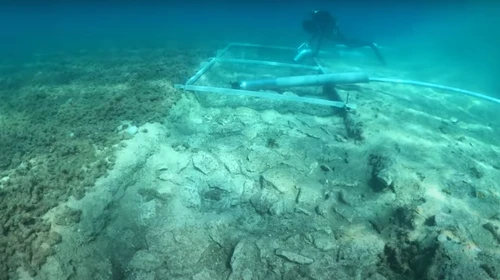
The drowned remains of a 7,000-year-old road that once connected an ancient artificial landmass to the Croatian island of Korčula have been found by archaeologists. The Hvar, an extinct maritime society that lived in this region during the Neolithic Era, left behind the submerged road and various other artifacts.
According to a statement from the university, Igor Borzić, a researcher at the University of Zadar's Archaeology Department who was looking into sites on land, discovered "strange structures" at a depth of around 15 feet in the Bay of Gradina, on the western coast of Korčula. The university published additional video of the submerged passage, which was formed of stacked stones and was around 12 feet broad, over the weekend.
In a statement published on Facebook on May 8, the University of Zadar stated that researchers shocked themselves by discovering remains at the submerged neolithic site of Soline on the island of Korčula. They specifically found a path connecting the coast of the island of Korčula with the drowned prehistoric settlement of the Hvar culture beneath the layers of sea muck.
The researchers also found fragments of millstones, flint blades, and stone axes among the underwater remains. The relics provided information on the enigmatic Hvar peoples, who arrived in the northeast Adriatic Sea some 7,000 years ago and resided on its islands and beaches.
According to the university, various experts and organizations are working together on the underwater research, which is being directed by archaeologist Mate Parica, who has been studying the location for a while.
Underwater excavations have uncovered numerous Hvar remains and artifacts, including a village built atop a man-made island. The announcement claimed that the recently found route connected this island to the shore of Korčula. In addition to ceramics and decorations, the Hvar people also left behind signs of subsistence farming and burial customs.
Archaeologists are excavating historic sites on land in addition to underwater studies, such as a cave in the adjacent town of Vela Luka that has been inhabited for at least 19,000 years by numerous cultures, including the Hvar.
Geoglyphs called Blythe Intaglios in California's Desert
Aside from being works of art, what else are the Blythe Intaglios?
The Blythe Intaglios (also known as Blythe Geoglyphs) adorn the desert floor in the Colorado Desert, close to the boundary of California and Arizona. One of the long-lasting historical puzzles in American history is these vast ground designs. Nobody is certain of when or who exactly built them. What is known, though, is that it took a lot of time and effort to produce these incredible works of nature art. This illustrates how significant the geoglyphs were to the people who created them.

Blythe Intaglios. Geoglyphs in the Colorado Desert, California. Source: Google Earth 2017.
Their age ranges from 450 to 2000 years. The Mohave and Quechan people who live along the lower Colorado River believe that the human figures stand for Mastamho, the One who created all life.
Discovering the Desert Giants
On the morning of November 12, 1931, Army Air Corps pilot George Palmer flew from the Hoover Dam region to Los Angeles. When Palmer observed odd figures below him on the arid Colorado Desert landscape, the flight changed from ordinary to the unexpected. Beyond the cockpit loomed what appeared to be images of a mountain lion, horses, and a serpent with huge boulders for eyes.
Palmer's attention must have been drawn to the giants, though. Anthropomorphic human figures could be found among the assortment of animals and geometrical patterns. big ones. The desert giants also appeared to be male. One of them had a clear representation of its manhood on display. While the Sun and a serpent looked on from above, another person held a spear poised over two fish. A third person was standing with his arms and legs extended as though he were taking part in a summoning or ancient rite.
There were a total of six figures. They stood for three people and three animals, according to Palmer's interpretation. Upon landing in Los Angeles, the pilot relayed his observations, but there wasn't much curiosity right away. The Great Depression was gripping America. Few people were interested in these desert giants unless they could perform a unique form of magic that would satisfy their hunger and enable them to resume their task. The first investigation into Palmer's discovery near Blythe, California, wouldn't happen for more than 20 years.
Geoglyphic War Casualties
A new threat was developing in Europe as the Great Depression destroyed lives and tore apart families from coast to coast. The ascent of Adolf Hitler will soon drag America into a conflict far more expensive than the struggle for domestic survival. Bread queues and aid payments were overshadowed by the more tangible grief of having a family member go to war.
For training, General George S. Patton called up recruits to the Colorado Desert. He was clearly unaware that the Blythe Intaglios found under army vehicles' tires were one of the first casualties of the war effort. Some of the desert geoglyphs had tire tracks visible on them by the time National Geographic and the Smithsonian sent a team of scientists to investigate the intaglios in 1952. Before American park authorities built walls, five more years would pass.
The Blythe Intaglios currently fall under the State Historic Monument No. 101 classification. Although the intaglios are still enclosed by fences, anyone wishing to view them up close is free to do so whenever they like. Some tourists go out of curiosity, while others try to unravel the mysteries that archaeologists have never been able to solve with absolute certainty. Who built these enormous desert creatures, and why?

Anthropomorphic geoglyph at Blythe Intaglios. Wikimedia Commons, credit: Rons Log.
Intaglios are used in the US
Intaglio is an Italian word. It speaks of the engraving procedure. This is how the Blythe geoglyphs were created. Native Americans created intaglios using a time-consuming procedure that involved removing layers of the desert floor. As rocks and pebbles are removed, the top, black layer quickly gives way to the lighter tones below. The shapes created by the process are traced by these rocks and pebbles. Anyone may see the effect, which resembles a 3-D effect, from the air, as Palmer did on his flight.
In the US, intaglios are common. In Needles, California, there is an extensive maze that was built using the same technique as the Blythe Intaglios. The Topock Maze's creators and precise age are likewise still a bit of a mystery. The American Southwest is home to the majority of intaglio examples, which serves to focus conjecture on the several Native American tribes who once called these regions home.
Numerous suggestions have been put forth by researchers to explain who made the Blythe Intaglios. The majority of people concur that they were created by Native Americans who lived along the Colorado River. However, efforts to pinpoint the precise tribes at fault have been ineffective. One widely accepted explanation holds that they were created by the Patayan people who lived in the region from roughly 700 to 1550 AD.

Animal and human form geoglyphs, Blythe Intaglios. Source: Google Earth 2017.
Iconography for religion or merely art?
It is challenging to argue that these geoglyphs in the desert are merely works of art. Although they are undoubtedly visible from the ground, viewing them from the air offers the greatest perspective. It makes sense to assume that their makers intended for them to please immortal eyes.
On two mesas, there are the Blythe Intaglios. The intaglios in Blythe are by far the largest of the about 600 found in the Southwest of the United States. More over half of a football field long, or 171 feet, is one of the enormous human figures. Although the other human figures are somewhat smaller, they are all longer than 100 feet.
Creation Figures
These large sizes may be a reflection of the Native American peoples' typical veneration for deity beings. The human figures are thought to be depictions of a supernatural creator, according to members of tribal societies that are still present in the area. The depictions of animals serve to tell a creation myth. They range in age from 450 to 2000 years old. The Mohave and Quechan people who live along the lower Colorado River believe that the human figures stand for Mastamho, the One who created all life. The animal representations are of Hatakulya, one of the two mountain lions/creators. The region used to host religious ceremonial dances in the past to celebrate creation (Recreation.gov). But why did they make them so that they could be seen best from above?

Anthropomorphic figure. Source: Google Earth 2017.
There are various rationales that could apply. One of the more logical explanations is that the Blythe Intaglios are a form of homage or offering to the Native American Creator or God. In this setting, the geoglyphs would be used to characterize the locals as submissive and devoted servants. A good god would undoubtedly be pleased to see such an amazing spectacle from the heavens. Extreme ideas, on the other hand, contend that the intaglios were a landmark or beacon for a long-extinct alien culture. In the distant past, this would have facilitated their trip to the mesa.
Intaglios as Cultural Identity
All scientists and archaeologists appear to agree on one thing. The potential of the Blythe Intaglios to maintain the cultural identity of the Native American peoples may be their greatest value. Ironically, the conquering of America's first inhabitants happened in a procedure quite similar to how these amazing geoglyphs were made. The Native American way of life has slowly been erased, leaving behind just a lighter version of a once-vibrant and colorful society.
5 Mysteries About The Aztecs That Cannot Be Explained
In today’s video we take a look at these 5 mysteries of the Aztecs that cannot be explained.
We don't know why the tunnel under the Temple of the Sun was forcibly sealed with massive boulders 1,800 years ago. As of right now, archaeologists don't know why the deep tunnel under the Temple of the Sun in Cusco, Peru was forcibly sealed with massive boulders one thousand eight hundred years ago.
However, there are several theories that have been proposed by archaeologists and historians. One theory suggests that the tunnel may have been sealed to prevent looting or desecration of the temple by invaders or rival factions.
A Secret Room Was Discovered Under the Bermuda Triangle
Most of our planet is underwater, which is a fact it can be easy to forget. And the amount we really know about what goes on below the surface is actually not a whole lot. The watery world around us is still a huge mystery and there are plenty of strange things being discovered as technology improves that are just blowing our minds. From the ancient submerged city to the water that turns into milk, here’s 20 Bizarre Things Found Underwater Nobody Can Explain.
East China's neolithic remnants site launches its culture forum
The second Lingjiatan culture forum began on May 7, 2023, and included presentations of the most recent archeological discoveries and talks about the preservation and excavation of the Lingjiatan relics site in the Anhui Province in east China.

Aerial photo taken on Oct. 29, 2021 shows a view of the Lingjiatan relics site in Hanshan County, east China's Anhui Province. (Xinhua/Zhou Mu)
In Maanshan City of Anhui, where the Lingjiatan relics site is situated, more than 200 people from all over China, including government officials, archeologists, experts, and intellectuals, have been invited to take part in the conference.
There will be an opening ceremony, a major forum, two panel discussions, and a site inspection during the event, which runs from May 6 to May 8.
The celebration will also feature the debut of a documentary and the inauguration of the Lingjiatan National Archeological Park, according to regional authorities.
A Neolithic habitation site with a total area of around 1.6 million square meters, the Lingjiatan relics site dates back 5,300 to 5,800 years. The 5,000-year-old Liangzhu Culture, which has evidence of Chinese civilization, is thought to be a direct descendant of Lingjiatan, according to archaeologists.
Over 7,000 square meters of the site have been excavated in total over the 14 excavations that have been done there since it was discovered in 1985. The excavation has yielded more than 3,000 priceless artifacts, including pottery, jade wares, and stone objects.
Scientists Reveal That Canada Is Not What We're Beeing Told
Here's a map showing Canada, a vast and diverse country located in the northern part of North America. It shares borders with the United States and is the second-largest country in the world by land area. Canada is home to over 37 million people, with a rich history and culture that spans back thousands of years to its Indigenous peoples.
In today’s video we will reveal 15 of the most fascinating discoveries that have emerged from the depths of Canada's past and present and let us show you that Canada is not what we're being told. Enjoy!
It's Finally Happening: Africa Is Splitting Into Two Continents
New photographs have shown how Africa is physically splitting apart. Scientists say that this will eventually lead to the formation of a new ocean and give rise to a new continent. In today's video, we will explore what will happen to the world we know, after Africa splits.