Before Portugal, Before Lisbon: The Ancient Secrets Hidden Beneath Castelo de São Jorge
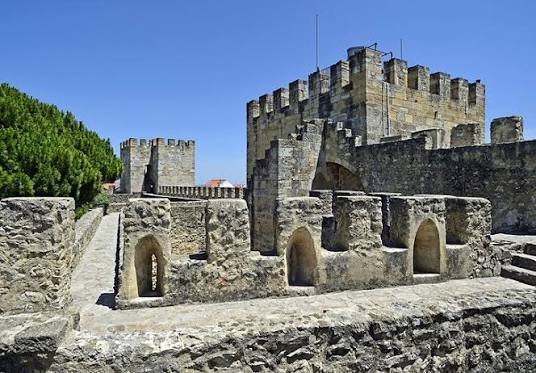
Castelo de São Jorge stands on one of Lisbon's most strategically important hills.
The castle visible today is associated strongly with Portugal's medieval history, but the hill itself contains archaeological layers reaching much further into the past.
Phoenician-related activity, Iron Age communities, Roman occupation, Islamic Lisbon, and Christian Portugal all form part of the wider archaeological story.
The castle is therefore not simply a medieval monument.
It is an archaeological archive.
Why the Hill Was Important
Elevation provides advantages.
From the hill, inhabitants could observe surrounding territory and the Tagus River.
This made the location valuable for defense and settlement.
For thousands of years, communities recognized this strategic importance.
Roman Lisbon
Roman Olisipo developed into an important settlement connected with Atlantic and Mediterranean networks.
The region's relationship with trade, river transport, and imperial administration influenced its growth.
Archaeological remains demonstrate the long urban history beneath the modern city.
Islamic Lisbon
After the Islamic conquest of the Iberian Peninsula, Lisbon became known as al-Ushbuna.
The fortified hill formed an important part of the Islamic city.
Walls and defensive structures protected the settlement.
The later Portuguese castle therefore stands partly within a landscape shaped by Islamic military architecture.
The Christian Conquest
In 1147, Lisbon was captured by forces associated with Portugal's first king, Afonso I, with the assistance of crusading forces.
This event became a defining moment in Portuguese history.
The fortified hill was subsequently incorporated into the political world of the emerging Portuguese kingdom.
Why It Is Called São Jorge
The castle's association with Saint George reflects later Christian traditions.
Saint George was an important military and chivalric symbol in medieval Europe.
The naming demonstrates how monuments can acquire new identities after political change.
Archaeology Beneath the Castle
Modern archaeological investigation has demonstrated that the site contains remains from multiple periods.
This makes excavation especially complex.
Researchers must distinguish between:
Ancient occupation.
Roman material.
Islamic structures.
Medieval Portuguese construction.
Later modifications.
A wall is not automatically medieval simply because it is located beneath a castle.
Context matters.
Lisbon's Earthquake and the Transformation of the Castle
The devastating earthquake of 1755 transformed Lisbon.
The castle and surrounding city experienced major damage.
Later restoration and reconstruction changed the monument again.
The structure visible today therefore reflects both medieval history and modern conservation.
National Identity and Restoration
During the twentieth century, the castle underwent major restoration.
Such restoration raises important questions.
Should a monument be returned to an imagined medieval appearance?
Or should later historical layers remain visible?
Heritage conservation is often shaped by national identity.
The castle became an important symbol of Portuguese history.
Why São Jorge Matters
The monument tells a much larger story than the history of Portugal alone.
It reveals:
Ancient settlement.
Roman urban development.
Islamic Iberia.
Medieval conquest.
Portuguese monarchy.
Modern nationalism.
Archaeological conservation.
Few castles demonstrate so clearly how one location can remain strategically important across thousands of years.