Portugal's Red Castle Was Once a Powerful Islamic Capital: The Forgotten Story of Silves
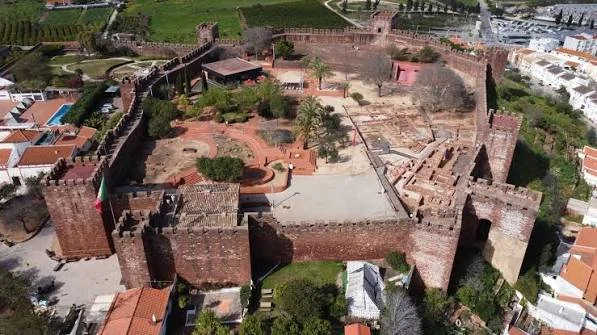
Silves Castle rises above the Algarve as one of Portugal's most impressive surviving fortifications.
Its distinctive reddish stone walls immediately separate it visually from many later European castles.
But Silves was not originally a Portuguese royal fortress.
During the Islamic period, the city—known as Shilb—became one of the most important urban centers in the western Iberian Peninsula.
The castle preserves the memory of this forgotten political and cultural world.
Silves Under Islamic Rule
Following the Islamic conquest of the Iberian Peninsula, the Algarve became integrated into the political and cultural world of al-Andalus.
Silves developed into a major urban center.
Its importance was connected with:
Agriculture.
River access.
Trade.
Political administration.
Strategic defense.
The castle protected the city.
The Red Sandstone Fortress
One of the most distinctive characteristics of Silves Castle is its use of local red sandstone.
The material gives the fortress its remarkable color.
But the stone was not chosen simply for beauty.
Builders used locally available materials.
The castle's appearance is therefore directly connected to the geology of the region.
Almohad Fortification
The fortress reached an important phase of development during the Almohad period.
The Almohads were a powerful North African and Iberian Islamic dynasty whose political influence extended across large parts of the western Islamic world.
Their period of control was marked by major defensive construction and architectural activity.
The surviving fortress reflects this wider military culture.
Towers, Walls, and Defense
The castle's defensive system included powerful walls and towers designed to control movement.
A medieval fortress depended on multiple defensive principles:
Height.
Thick walls.
Controlled entrances.
Towers for observation.
Interior storage.
Water access.
The design made use of the natural elevation of the site.
Water and the Great Cistern
Perhaps one of the most important features of any fortress is its water supply.
Silves Castle contains a major cistern system.
During a siege, access to water could determine whether a fortified city survived.
Rainwater and other sources had to be collected and stored.
The cistern was therefore not a secondary feature.
It was essential infrastructure.
Silves as a Cultural Center
Islamic cities were centers of more than military power.
Silves developed as an urban and cultural center.
The wider civilization of al-Andalus produced achievements in:
Literature.
Philosophy.
Agriculture.
Science.
Architecture.
Trade.
Silves participated in this broader world.
The Christian Conquest
Silves became a major target during the expansion of Christian kingdoms into southern Iberia.
The city changed hands during periods of conflict before eventually becoming incorporated into the Portuguese kingdom.
Political conquest transformed the fortress.
But, as at many Iberian monuments, new rulers did not erase everything that came before.
They inherited the city.
They reused its walls.
They adapted its structures.
The Archaeological Layers of Silves
The castle and surrounding city contain evidence from multiple historical periods.
Archaeological investigation can reveal:
Islamic occupation.
Later medieval Portuguese activity.
Domestic structures.
Defensive modifications.
Water infrastructure.
The monument is therefore not a single historical object.
It is a layered landscape.
Why Silves Castle Is So Important
Silves demonstrates the importance of remembering that Portugal's history did not begin with the Portuguese kingdom.
Before the medieval Christian monarchy, the region was part of the Roman world.
Before that, it was occupied by earlier communities.
And for centuries, southern Portugal was part of al-Andalus.
Silves Castle remains one of the most visible reminders of that Islamic past.
Its red walls have survived dynasties, conquests, religious transformations, and political revolutions.
Today, they stand above the Algarve as a reminder of a forgotten capital.
And perhaps that is the castle's greatest secret:
the fortress most visitors see as a Portuguese monument is also one of the most powerful surviving witnesses to Portugal's Islamic history.