The 1,000-Year-Old Fortress Above Almería: Inside the Alcazaba Built to Control an Entire Coast
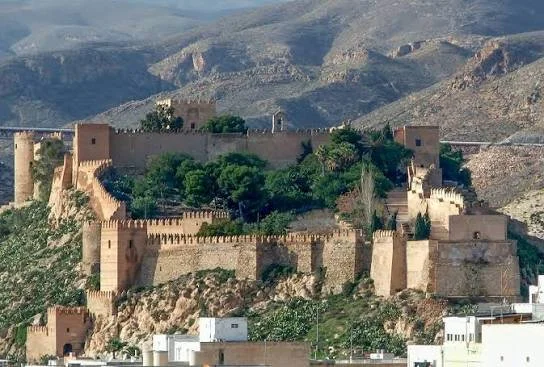
The Alcazaba of Almería dominates the city from its elevated position, reminding visitors that medieval Mediterranean history was shaped as much by fortifications as by palaces.
Built during the Islamic period of al-Andalus and later transformed under Christian rule, the fortress represents centuries of political change.
Its walls do not tell one story.
They preserve layers.
The Foundation of Almería
Almería became an important port and military center during the Umayyad period.
Its location provided access to Mediterranean trade routes.
A major fortress was therefore essential.
The Alcazaba developed as a defensive and administrative complex connected with the growth of the city.
The Meaning of Alcazaba
The word “alcazaba” derives from the Arabic al-qasaba, referring broadly to a fortified urban citadel.
Such structures were not merely military castles.
They could contain:
Administrative buildings.
Residences.
Storage areas.
Water systems.
Religious spaces.
Defensive towers.
The Alcazaba of Almería functioned as the fortified heart of the city.
Walls and Military Engineering
Medieval fortification required careful understanding of terrain.
The builders used elevation to increase defensive advantage.
Walls followed the contours of the landscape.
Towers allowed surveillance.
Gateways controlled access.
Defense was layered.
An attacker might breach one barrier only to encounter another.
Water and Survival
A fortress could not survive a long siege without water.
Therefore, water storage and management were essential.
Cisterns allowed communities to store water.
This was especially important in the dry climate of southeastern Spain.
Islamic Almería and Mediterranean Trade
Almería was not simply a military outpost.
It became an economically important Mediterranean city.
Trade networks connected the region with other parts of the Islamic world and the Mediterranean.
The fortress protected a prosperous urban center.
The Christian Conquest and Architectural Change
When political control changed, the fortress changed with it.
Christian rulers added and modified defensive structures.
This produced a layered monument.
Islamic architecture remained.
Later European military architecture was added.
The result reflects changing technologies of warfare.
Why the Alcazaba Survived
The survival of the complex reflects both its scale and its continued importance.
Because later rulers reused the site, it was not simply abandoned.
Reuse can destroy earlier structures, but it can also preserve them by keeping the location relevant.
A Fortress of Layers
Walking through the Alcazaba is effectively walking through political history.
One section may reflect Islamic rule.
Another may represent later Christian modifications.
The walls preserve the transition.
Why Almería's Alcazaba Matters
The fortress demonstrates that Mediterranean history cannot be reduced to simple narratives of conquest.
Every new ruler inherited an existing landscape.
They reused it.
Modified it.
Adapted it.
The Alcazaba therefore became a physical record of continuity through political change.