The Himalayan Temple Hidden in Baspa Valley: Sangla's Sacred Link to Kinner Kailash
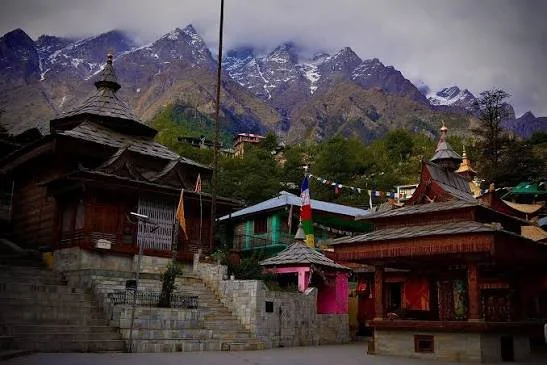
Sangla, located in the Baspa Valley of Kinnaur, is known today for dramatic scenery, traditional villages, and mountain tourism.
But the valley also preserves a deep religious history.
Temples and sacred spaces reflect the interaction of Hindu, Buddhist, and local Himalayan traditions.
Descriptions that assign a single seventeenth-century date to an entire “Kinner Kailash Temple” tradition should be treated carefully, because Himalayan temples often contain multiple construction phases, repairs, and layers of religious history.
The deeper story of Sangla is therefore not about a single building.
It is about an entire sacred landscape.
The Baspa Valley as a Cultural World
The valley provided:
Water.
Agricultural land.
Forest resources.
Routes through the mountains.
Settlements developed where these resources could be managed.
Communities built temples and houses using local stone and timber.
Kinnauri Architecture
Traditional architecture in the region is remarkable for its combination of practical engineering and decorative craftsmanship.
Timber and stone could be integrated to produce strong structures.
Wood carving added artistic and religious detail.
Temples became expressions of local identity.
Local Deities and Himalayan Religion
Religious life in Kinnaur cannot be reduced exclusively to either Hinduism or Buddhism.
Local deities and community traditions play important roles.
A village temple may therefore represent layers of belief accumulated over centuries.
Kinner Kailash as Sacred Geography
The presence of Kinner Kailash shapes the spiritual identity of the region.
Sacred mountains create relationships between people and landscape.
Pilgrimage routes, stories, and religious practices transform geography into heritage.
Temple Architecture as Historical Evidence
Studying a temple involves examining:
Construction materials.
Carving styles.
Structural techniques.
Renovation phases.
Religious imagery.
These features can help historians reconstruct changing cultural influences.
The Seventeenth-Century Himalayan World
The seventeenth century was a period of significant political and religious activity across the Himalayas.
However, assigning a temple entirely to one century can oversimplify its history.
Earlier traditions may survive.
Later communities may rebuild structures.
Therefore, a “seventeenth-century temple” often represents a longer cultural sequence.
Sangla Today
Modern tourism has brought Sangla into wider national and international awareness.
This provides economic opportunities but also creates pressure.
Traditional buildings may be replaced.
Land use can change.
Cultural practices can become commercialized.
Sustainable heritage management is therefore essential.
Why Sangla Matters
Sangla's greatest historical significance lies in its cultural continuity.
The valley is not simply beautiful.
It is inhabited.
Its communities continue to maintain traditions developed through generations of interaction with one of the world's most demanding environments.
The temples, mountains, rivers, and villages form one connected historical landscape.