In the following video we will be talking about the secret missions into the Great Pyramids. Enjoy!
4 Craziest Roman Bridges that Actually Existed
This video covers some of the most impressive bridges constructed by the Ancient Romans. Whether it was to make war or trade, no river was deep or wide enough to act as a barrier for the great Empire. The Romans not only possessed some of the most skilled engineers and architects of their time, but also the sheer man power of the disciplined legions to make their creations come to life!
Scientists New Discovery In The Sahara That Changes Everything
The Sahara is an inhospitable place since its one of the driest and hottest places on earth, it covers an area larger than the USA yet it has one of the lowest population densities with roughly 1 person per square mile. Approximately 25 percent of the Sahara's surface is covered by sand sheets and dunes. Other geographical features include, salt flats, gravel planes and plateaus.
There are numerous rivers that originate outside of the Sahara but then enter the Sahara through underground waterways or by contributing to sources of surface water such as an oasis. This allows for hardy plants, animals and people to survive in this region, particularly in the Sahel where there are a further 44 million inhabitants. The Sahel literally means the Shoreline where the desert in the north transitions between the humid savannas to the south.
During the dry season, this region becomes extremely arid and barren, however in the wet season, the desert blooms, allowing for people to be able grow crops and feed their livestock, these seasonal changes were regular and predictable for centuries however since the 1950s there has been a 30% decrease in rainfall which reached record lows during the droughts of the 1970s and 80s ever since droughts have become more frequent.
This land loss has been the main driver of many other problems such as hunger, poverty, unemployment, forced migration, conflict and an increased risk of extreme weather events related to climate change.
Restoring degraded land back to productive good health is a huge opportunity. It brings big social and economic benefits to rural farming communities. This is why the country Niger, with 80% of its territory in the Sahara desert has been making some astonishing Agriculture developments turning large areas suffering from desertification into agricultural fields.
They have been using innovative water harvesting techniques allowing them to restore over 200 million trees over 5 million hectares of land benefiting over 2.5 million people.
This transformation can be called a major accomplishment for a country especially when a country only receives an average of 6.5 inch of rainfall a year.
In today's video we are going to tell you how and why Niger is turning its deserts into huge farmlands.
10 Dangerous Islands You Should Never Set Foot On
Islands are usually associated with breathtaking scenery and tranquil beaches, but some islands have a dark side that makes them too dangerous to explore. In this video, we'll take you on a journey to some of the most hazardous islands in the world, where natural disasters, deadly creatures, and human activity have made them unsafe for travelers.
Stonehenge-like building discovered beneath Lake Michigan that dates back 9,000 years
Archeologists were looking for shipwrecks in Lake Michigan when they stumbled onto something much more fascinating than they had anticipated.

Archaeologists were looking for shipwrecks in Lake Michigan when they came across something much more remarkable than they had anticipated: a boulder with a mastodon carving on it and a group of stones stacked like Stonehenge.
Οbserving the Water
In contemporary archaeology, remote sensing techniques are frequently used; researchers constantly search lakes and the ground for undiscovered buildings. Archeologists unearthed a prehistoric surprise when searching for shipwrecks in Lake Michigan's Grand Traverse Bay at a depth of roughly 40 feet. A trained eye can identify what it is by looking at the sonar scan photographs in this article. They also found sunken boats, automobiles, and even a pier from the Civil War.
During a news conference in 2007 with images of the boulder on display, Mark Holley, a professor of underwater archaeology at Northwestern Michigan University College who made the find, remarked, "When you see it in the water, you're inclined to say this is totally real." "But, we need the professionals to visit and confirm that.

The marked boulder measures roughly 5 feet in length and 3.5 to 4 feet in height. A surface with multiple fissures is visible in photos. The ones resembling what might be a petroglyph stood out, even though some might be natural and others seem to be human-made, according to Holley.
When taken as a whole, they, according to him, resemble the outline of a mastodon, complete with back, hump, head, trunk, tusk, triangular-shaped ear, and sections of legs.
According to Greg MacMaster, head of the underwater preservation council, "We couldn't believe what we were seeing."

Before certifying the marks are an ancient petroglyph, experts who have seen images of the boulder with the mastodon markings have requested more proof, according to Holley.
He stated, "They want to actually see it. However, he continued, "Petroglyph experts typically don't dive, so we're hitting into a bit of a stumbling block there."
If confirmed, the would-be petroglyph could date back as far as 10,000 years, which would put it in line with the presence of both humans and mastodons in the upper Midwest during the post-Ice Age. If the formation were real, it wouldn't be totally out of the ordinary. There are stone circles and other petroglyph sites nearby.
The discovery was made a few years ago, and surprisingly, there isn't much information online about it. But, I'll make sure to update this piece as soon as I can get my hands on more details. Who is from Michigan, then?
The $1 Trillion Padmanabhaswamy Temple Treasure
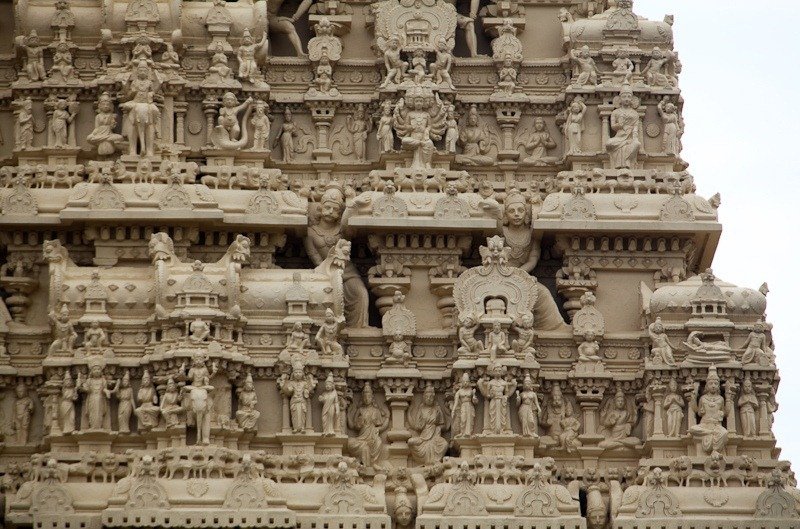
India has long been intrigued by the renowned Padmanabhaswamy temple in Thiruvananthapuram, in the state of Kerala, which is devoted to Lord Vishnu, the universe's creator. In the past, kings and dynasties have donated wealth and jewels to the temple, and they have even been known to weigh crown princes who are becoming older and donate the same amount of gold. These artifacts are allegedly still concealed within cavernous underground chambers of the old temple.
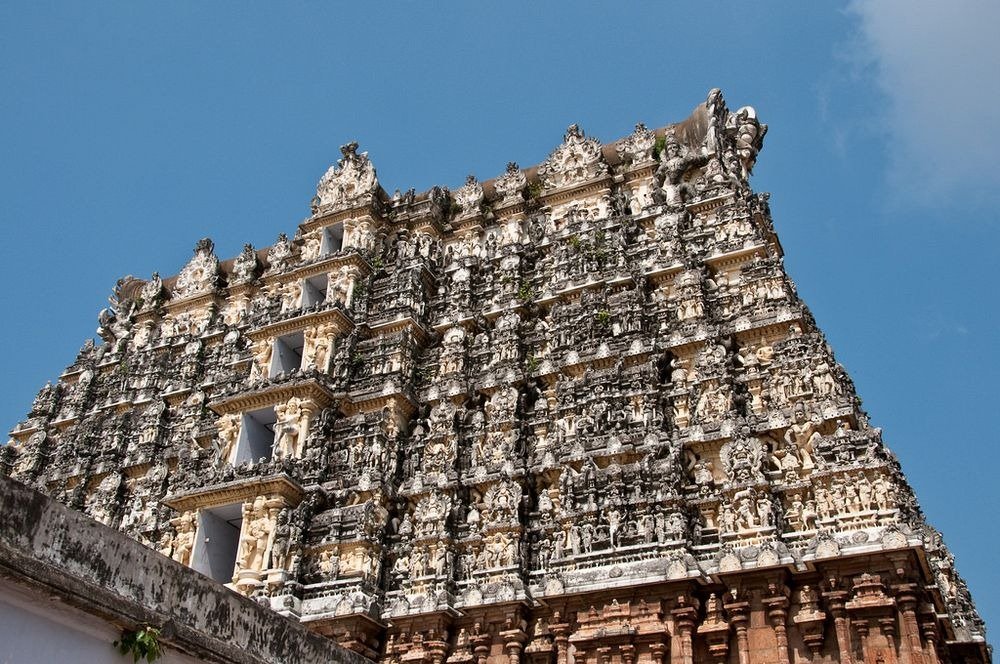
The actual age of the temple is unknown. According to some academics, it was founded more than 5,000 years ago. The Padmanabhaswamy temple was well-known for its incredible richness even 2,500 years ago. The temple is referred to as the "Golden Temple" in various Hindu manuscripts that date from the time between 500 BC and 300 AD. The temple and even the city are described as having walls made of pure gold in early Tamil literature and poetry.
The artifacts were amassed over the course of many thousand years and were given to the Deity by a number of Indian dynasties, as well as by traders and kings from Mesopotamia, Jerusalem, Greece, Rome, and other places. Also, during invasions, several smaller temples in the region of Kerala and the extreme South transferred and deposited their treasure there at the Padmanabhaswamy Temple for security.

The Travancore Royal family-led trust has long-term authority over the temple and its assets. But, the Royal Family was ordered by the Supreme Court in 2011 to unveil the temple's underground chambers and divulge its hidden treasure. Five of the six vaults have been unlocked.
There were 800 kilograms of gold coins, an 18-foot pure gold chain, a 500 kilogram gold sheaf, more than 2,000 gold ornaments, a pure golden throne studded with hundreds of diamonds and fully precious stones, several golden idols, and several sacks full of golden artifacts, necklaces, diadems, diamonds, rubies, sapphires, emeralds, gemstones, and other precious metals. The treasure's estimated value exceeds $20 billion, even after taking into consideration its historical value, which is likely at least ten times greater.

The New Yorker's account of the vaults' opening reads like the plot of an Indiana Jones film.
“Varma and the present CEO of the temple, V. K. Harikumar, had been entrusted with various keys that opened the doors to vaults A and B. The observers found a solid wooden door right behind the metal-grille door of Vault B after using the keys to unlock it. They found a third iron door that was wedged shut when they opened this door as well. Hence, they focused on Vault A. They once more opened the two wooden and metal exterior doors. They entered a small space with what appeared to be a toppled tombstone: a large rectangular slab on the floor. The slab was moved by five guys in more than thirty minutes. They discovered a short flight of steps leading down a small, dark passageway barely large enough for an adult to slip down beneath it. It resembled the "hole concealed by a stone" that the British missionary had described. A group of firefighters arrived and used specialized equipment to pump oxygen into the enclosure before the observers entered. The vault was located at the bottom of the steps.”
One of the witnesses remembered his first sighting of the riches as follows:
With the exception of a tiny amount of light entering through the doorway behind us, it was almost completely dark when they removed the granite stone. I could see what appeared to be stars twinkling in a moonless night sky as I peered into the vault's pitch-black interior. The little light that was present was reflected by the flashing diamonds and stones. A large portion of the treasure had been first kept in wooden boxes, but as time went on, the boxes began to split and fill with dust. The gold and stones were simply piled up on the dusty floor. It was incredible.
That, however, is just the tip of the iceberg.
According to a calculation by the Travancore Royal Family, the treasure in the unopened Vault B alone could be worth at least one trillion dollars in present value. If true, this could be by far the largest undiscovered treasure find in the history of the world. Beyond the still unopened sixth vault, Vault B, legend has it that there is a hidden chamber with thick walls made of solid gold containing immeasurable riches.
Who should oversee the fortune and how it should be spent, if at all, is the question that now needs to be answered. To satisfy the nation's insatiable need for gold, the Indian government intends to melt the gold and lend it to jewelers. Reusing the gold, according to government and business sources, may reduce India's annual gold imports by 25%. Yet, campaigners and followers of the religion insist that the gold belongs to the temple and should not be touched.

The government has tightened security in the temple as India debunks who is entitled to this riches. A cutting-edge security system, including an aerial monitoring system, blast-proof perimeter walls, seismic sensors to prevent burrowing into the vaults, surveillance cameras, luggage scanners, burglar alarms, and a visitor tracking system, has been erected to safeguard the enormous treasure.
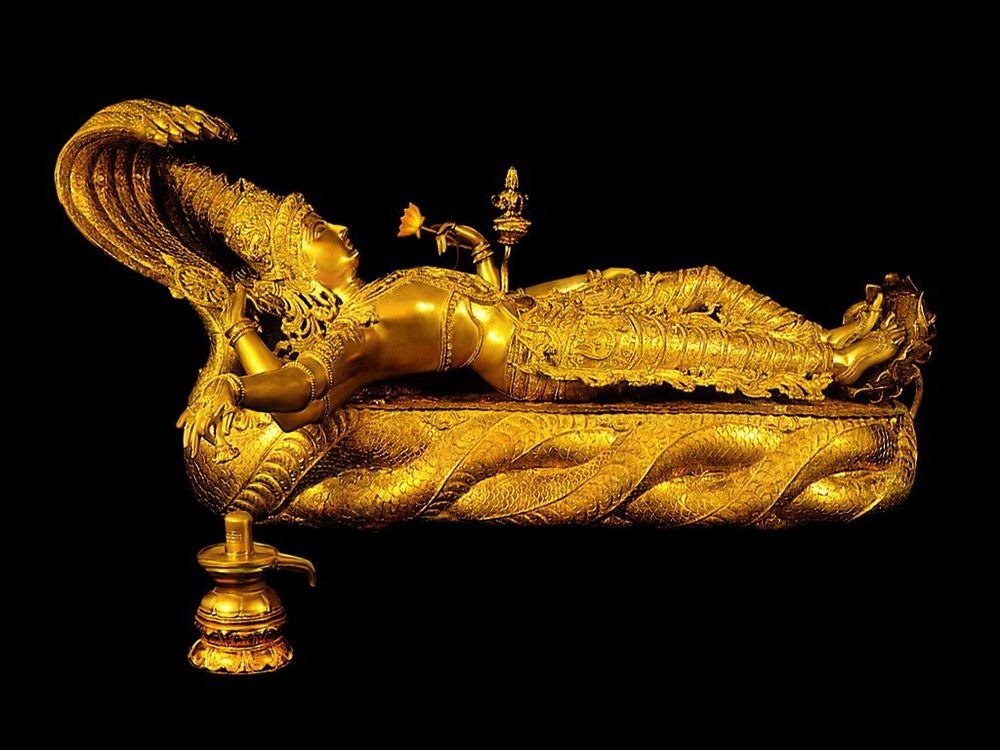
An idol of Lord Vishnu found in the Padmanabhaswamy Temple's secret vaults, consisting of 32 kg of pure gold.
Mysterious find of archaeologists in Russia turns the mind around
In this video, you will find giant statues, mysterious sarcophaguses, mummies and much more. There was a sleeping princess in one of the sarcophaguses! And its age, according to some estimates, reaches 800 million years! These are unrealistic numbers, you might say. That's why so little information can be found on this topic. It is constantly being removed from all sources; there are practically no photographs on the network, and even more so videos from the excavations. And even the people who were present during the excavations in the Kemerovo region disappeared.
The Gruesome Truth About Gibbeting: Explored
Gibbeting was a particularly gruesome form of punishment that aimed to serve as a deterrent to others. The bodies of the executed were often left hanging in the gibbet for weeks or months as a warning to the public.
Over time, the use of gibbets declined, and they were eventually replaced by more humane methods of execution. Today, gibbets are primarily used as historical landmarks or tourist attractions, reminding us of a dark chapter in our history.
Tomb Of 800,000 Year Old Queen Found In Egypt?
In the following video we will investigate whether a tomb of 800,000 year old queen has been found in Egypt. Enjoy!
15 Tribes You Won't Believe Exist
In the following video we will be talking about 15 tribes you won’t believe they exist. Watch the video to find out more!
This Aztec Whistle Is One Of The Scariest Sounds You'll Ever Hear
This Aztec whistle is one of the scariest sounds you'll ever hear. We take a look at the Aztec whistle and the chilling sound it makes.
When odd, skull-shaped grave items were found by archaeologists decades ago at an Aztec temple in Mexico, they were assumed to be mere toys or ornaments, and were catalogued and stored in warehouses. However, years later, experts discovered they were creepy ‘death whistles’ that made piercing noises resembling a human scream, which the ancient Aztecs may have used during ceremonies, sacrifices, or during battles to strike fear into their enemies.
Medieval Traditions Not Taught in History Class
In today’s video we will be exploring medieval traditions that are not taught in History class. Watch the video to find out more!
15 Creepy Things That Were Normal in Ancient Rome
In the video below we will analyze 15 creepy things that were normal in Ancient Rome. Watch the video to find out more!
Newly Colorized Images Of 1922 Tutankhamun Tomb Discovery Reveal Incredible Detail
During the early twentieth century, Howard Carter, a British Egyptologist, excavated for many years in the Valley of the Kings—a royal burial ground located on the west bank of the ancient city of Thebes, Egypt.
When Carter arrived in Egypt in 1891, he became convinced there was at least one undiscovered tomb–that of the little-known Tutankhamen, or King Tut, who lived around 1400 B.C. and died when he was still a teenager.
First osteological evidence of severed hands in Ancient Egypt
Twelve severed hands were found in Egypt as part of a horrifying “trophy-taking” practice that was just made revealed by a ground-breaking study.
The severed right hands have been discovered in three pits within a courtyard in front of the throne room of a 15th Dynasty Hyksos palace at Avaris/Tell el-Dab‘a in north-eastern Egypt.
This discovery is the first physical evidence of hand amputations in ancient Egypt, shedding new light on the civilization’s dark past.
Although the practice of placing severed hands is documented in tomb inscriptions and temple reliefs dating back to the New Kingdom, this is the first instance of an osteological analysis based on physical evidence.
Anatomical markers indicate that the hands belong to at least 12 adults, 11 of whom are male and one of whom is female. Once the attached parts of the forearm were removed, the hands were deposited in the pits with the fingers wide-splayed, primarily on their palm-facing sides.
Orpheus and Eurydice: One of the Top Trаɡіс Love Tales in Greek Mythology
The most tragic love story ever told is that of Orpheus and Eurydice. One of the most well-known Greek tales, it served as an inspiration to many notable artists, including Peter Paul Rubens and Nicolas Poussin. In addition, numerous operas, songs, and plays have been written in their honor to remember these two wonderful lovers who tragically died before they could experience their love. There are a few minor variations among the various versions of the Orpheus and Eurydice narrative. The earliest record is from the Greek lyric poet Ibycus, who lived around 530 BC. Here, we offer you a combination of these several variants.

Orpheus, talented at playing music
The greatest skilled musician of ancient times is thought to have been Orpheus. He is claimed to have inherited his exceptional musical aptitude from the god Apollo and the Muse Calliope. He was residing in Thrace, in Greece's northeast. Everyone who heard Orpheus' divinely endowed voice was charmed. He quickly grasped the lyre when it was initially introduced to him as a youngster. No god or mortal, according to the tale, could withstand his song, and even the rocks and trees would move to be close to him.
Orpheus is credited with teaching agriculture, writing, and medicine to humanity, according to some ancient sources. He is also credited as being a seer, an astrologer, and the creator of numerous mystic rites. People's minds would be piqued by Orpheus' weird and ecstatic music, which also had the ability to open people's minds to novel, unconventional theories.
Orpheus had a musical talent, but he also had a spirit of adventure. He was thought to have taken part in Jason's and his fellow Argonauts' journey to Colchis in order to steal the Golden Fleece, known as the Argonautic expedition. In reality, Orpheus was crucial to the success of the voyage because, via the use of his music, he was able to put to sleep the "sleepless dragon" that was guarding the Golden Fleece, allowing Jason to successfully capture it. In addition, the Argonauts were protected by Orpheus' song from the mysterious, female-like creatures known as Sirens, who lured men with their seductive voices before killing them.

Love at first sight
The ideal pursuits of music and poetry used to occupy a significant portion of Orpheus' formative years. His skill was far more impressive than his music's notoriety and regard. It would enchant both humans and animals, and frequently even the most inanimate objects would wish to be close to him. He had mastered the lyre by the time he was still a young man, and people came from far and wide to hear him sing. He first noticed a wood nymph at one of these gatherings of people and animals.
Eurydice was the name of the shy, beautiful girl. She had been attracted to Orpheus because of his voice, and neither could tear their gazes away due to the enchantment established by the music and his presence. The two young people's hearts were pulled inexplicably, and before long they were deeply in love and unwilling to be apart. They eventually made the decision to get married.
The morning of their wedding was sunny and clear. A huge feast then ensued when Hymenaios, the deity of marriage, sanctified their union. There was a lot of laughter and joy all around. The wedding guests soon dispersed from the newlyweds, who were still seated hand in hand and with starry eyes, as the celebration that had lasted for most of the day came to an end as the shadows became enormous. Soon after, they both realized it was time to leave and set off for home.
The snake-bite
But things will soon change, and joy would follow sadness. There was one man who hated Orpheus and wanted Eurydice all to himself. A shepherd named Aristaeus had devised a strategy to subdue the lovely nymph. He was standing there in the underbrush, watching for the young pair to pass by. He meant to leap on the lovers and murder Orpheus when he saw them approaching. Orpheus grabbed Eurydice by the hand and began fleeing pell-mell across the forest as the shepherd made his move.
Aristaeus didn't appear to be slowing down or giving up despite the prolonged pursuit. They continued to run, and then all of a sudden, Orpheus felt Eurydice trip and fall, her hand sliding from his. He hurried to her side, unable to fathom what had just transpired, but he had to stop short in shock when he noticed the deathly pallor that covered her cheeks. Because Aristaeus had seen the incident and departed, when he turned to look around, he could find no sign of the shepherd. Eurydice had stumbled on a snake nest nearby and was bitten by a poisonous viper. Aristaeus had given up his attempt after realizing there was little possibility of survival and was angry with Orpheus and his bad luck.
A supernatural plan
Orpheus was no longer the same carefree individual he had been before the death of his cherished wife. His life without Eurydice seemed to go on forever, and he was only able to weep for her. At this point, he had a brilliant but insane idea: he would travel to Underworld and attempt to get his wife back. His father, Apollo, would approach Hades, the god of the underworld, to request that he take the boy and hear his cries.
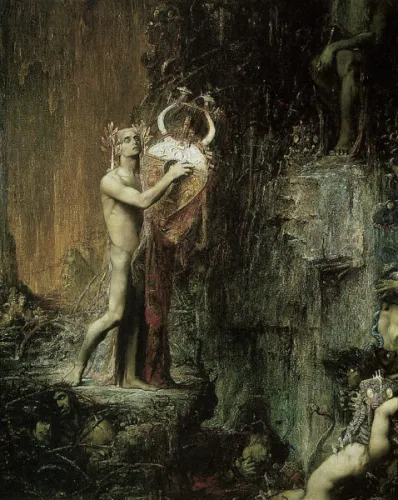
With his voice, lyre, and weapons in hand, Orpheus approached Hades and demanded admission to the underworld. Nobody pressed him. Orpheus explained his purpose for being there as he stood in front of the dead kings and queens in a voice that was both sweet and unsettling. He sung and played his lyre before King Hades and Queen Persephone, pleading for Eurydice to be brought back to him. Even the most heartless of individuals or Gods could not have ignored the hurt in his voice.

Even Cerberus, the enormous three-headed hound manning the entrance to the underworld, covered his many ears with his paws and howled in agony as Hades sobbed openly, Persephone's heart broke, and all of these events occurred. Hades made a last-ditch promise to this desperate man that Eurydice would accompany him to the Upper World, the world of the living, after hearing Orpheus' voice. But he cautioned Orpheus not to look back while his wife was still unaware since doing so would negate all of his previous good intentions. He ought to hold off on looking at Eurydice until she entered the light.
Orpheus set out from the underworld with tremendous faith in his heart and joy in his song, glad that he would meet his love once more. Orpheus heard the footsteps of his wife coming toward him as he was approaching the entrance to the Underworld. He was able to restrain himself from quickly turning around and hugging her. His heart was thumping more quickly and quicker as he got closer to the exit. He turned to give his wife a bear hug as soon as he stepped onto the living side of things. Eurydice was unfortunately only briefly visible to him before she was dragged back into the abyss.
Eurydice had not yet seen the sun when Orpheus turned his head, and as Hades had forewarned him, his beloved wife had been submerged back into the shadowy realm of the dead. He was overcome by waves of agony and sorrow, and trembling with sadness, he once more made his way to the Underworld. However, this time, he was refused access because the gates were closed and the god Hermes, who had been sent by Zeus, would not open them for him.
The death of Orpheus
The singer was left in complete sorrow and began to wander aimlessly day after day and night after night. Nothing offered any solace to him. His misfortune tortured him, pushing him to avoid all interaction with women, and gradually but surely he came to utterly hate their presence. His tunes were quite depressing rather than happy anymore. His sole solace was to lie on a large boulder and enjoy the breeze; the only thing he could see were the clear skies.

Because of his contempt for them, a group of enraged women happened to come across him. In his desperation, Orpheus did not even attempt to thwart their advances. He was murdered by the women, who then dismembered him and dumped him, along with his lyre, into a river. According to legend, his head and lyre floated to the island of Lesvos while traveling downstream. The Muses discovered them there and performed an appropriate funeral for Orpheus. People thought that music, sad but lovely, came from his grave. His soul traveled to Hades, where he met his beloved Eurydice once more.
The allusion to a scene from the Bible
If you carefully examine the aforementioned myth, you will notice a parallel between it and a scene from the Bible. The tale of Lot and the myth of Orpheus and Eurydice are comparable. The metaphor of "not looking back" is crucial to both tales.
In the Book of Genesis, God commanded a good man named Lot to take his family and leave the area when he planned to destroy Sodom and Gomorrah, two cities that were drowning in sin. God commanded them to flee to the mountains and not to turn around to see the city being destroyed. Lot's wife couldn't help herself and turned around as they were leaving the city to view the burning cities. She changed right away into a pillar of salt! This might be seen as the immediate, frightening result of disobedience to God.
15 Most Unique Beaches In The World
The most unique beaches in the world! Nature is capable of creating some truly beautiful things. Watch the video below to find out more!
12 Most Incredible And Unexpected Ancient Military Finds
Almost every type of military activity leaves behind a trace. Some of those traces are easier to spot than others, but they’re all there if you know where to look for them. We do know where to look, and we’ve found them in some very unexpected places. From the stunning and poignant to the strange and unsettling, here’s a video collection of incredible military finds.
Inside The TERRIFYING Truth Of The Arab Slave Trade
What could be more horrific to mankind than the curse of slavery?
Slavery has very deep roots in the history of mankind and the African Slaves Trade has been going on for more than 13 centuries. It is still considered a common norm in Arabs because of its history in Arab culture, however, what seems so “normal” actually lays the foundation of terror that surrounds slavery! The shocking revelations made in this video will truly leave you questioning humanity!
The Arab Slave Trade started before the advent of Islam and continued for more than a Millenium. People usually connect slavery with Islam but it has less to do with theology. However, the Islamic texts don’t decline slavery. In fact, some people believe that Muslims can enslave any non-Muslim but it is not permissible to enslave Muslims. In this video, we will show you the history of the Arab slave trade.
Giant Footprints Left By Ancient Giants?
In the following video we will investigate whether giant footprints have been left by ancient giants. Watch the video for more!