Native American tribes across the vast expanse of North America developed their own distinct cultures, customs, and traditions. Within these rich tapestries of indigenous life, sexuality held a prominent place, intertwining with spirituality, community dynamics, and individual experiences.
What Russia Just Discovered In Antarctica Is TERRIFYING!
In today’s video we will be talking about what Russia just discovered in Antarctica that scares the world. Watch the video to find out more!
12 Most Amazing Ancient Egypt Artifacts That Change History
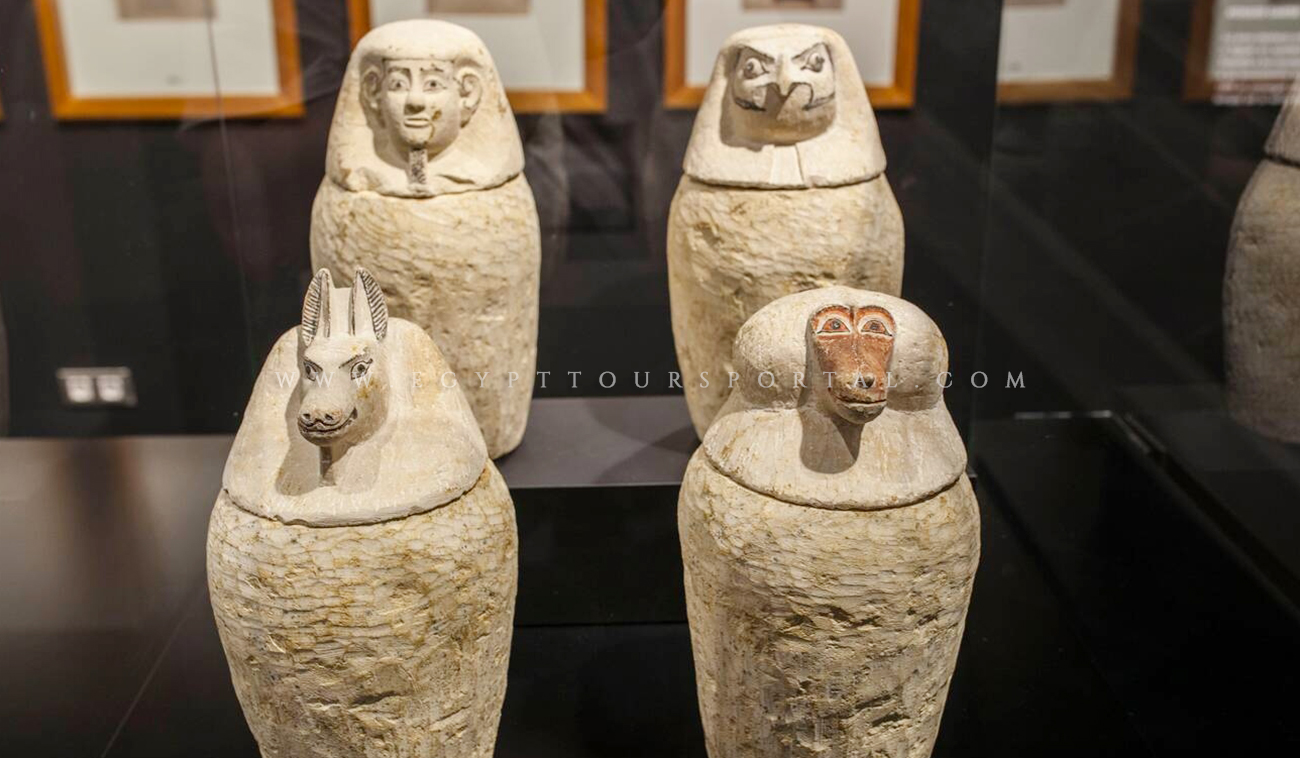
Few races in human history have been studied as much as the ancient Egyptians, but it often feels like the more we study them, the more mysteries we uncover. It wouldn’t be an exaggeration to say that some of the things that have been found in Egypt over the years have changed our understanding of human history. In fact, we’ve put this video together to prove that very point!
The BEST Stories of Greek Mythology - Everything You Need to Know
In the following video we will go through the best stories of Greek Mythology. Watch the video to find out everything you need to know!
12 Most Mysterious Archaeological Artifacts Finds Scientists Still Can't Explain
Experts can’t explain every archaeological artefact that they come across, and we shouldn’t want them to. If they could, we wouldn’t have any ancient mysteries left to solve - and that would be a very boring world to live in! We love a good ancient mystery, and we’ve got plenty of them for you to consider in this video. Be sure to let us know your thoughts in the comments!
Debunking Neanderthal Caveman Misconceptions
In this video, scientists and archaeologists are discussing the Neanderthal debate and debunking some common misconceptions about Neanderthals.
Neanderthals are a controversial topic, and there is a lot of misinformation circulating about them. In this video, scientists and archaeologists are discussing the evidence and discussing the implications of the Neanderthal debate. They're debunking some of the most common misconceptions about Neanderthals and providing the latest information about this complex species.
Neanderthals are one of the most commonly misunderstood human species, but this isn't because they were a bad people. In this video, we'll dispel several popular Neanderthal misconceptions, including the idea that Neanderthals were violent and aggressive, and that they only lived in cold climates.
Neanderthals are one of the oldest human species, and yet they've long been shrouded in mystery. But thanks to the work of scientists and archaeologists, we now know a lot more about these mysterious primates. In this video, we're debunking some of the most common myths about Neanderthals, and revealing the truth behind their story.
Monsters and Mythical Creatures of Chinese Mythology
In the following video we will go through a list of 50 monstrous mythical creatures from Chinese Mythology! Enjoy!
25 Unsettling Pictures From History You Weren't Meant To See
In today’s video we will analyze 25 unsettling pictures from history you weren't meant to see. Watch the video to find out more!
Aztec Ancient Artifacts Still Missing In The Amazon
Join us on our journey through ancient Aztec history. We'll dive into the various artifacts that have been found, the different sound technologies they used. And the various Temples lost to the Amazon Rainforest. Stick around, stay tuned and stay awhile to enjoy!
Disturbing Secrets of the Spanish Inquisition
Discover the shocking truths behind the Spanish Inquisition in this eye-opening video. Unearth the disturbing secrets that were concealed during this dark period of history. Explore the ruthless methods, torturous interrogations, and harrowing stories that will leave you astonished and captivated.
Incredible Recent Underwater Discoveries Found By Divers
In the following video we will analyze some incredible recent underwater discoveries found by divers. Watch the video to find out more!
17th Century Bishop's Remains Solve An Ancient Mystery
Mummification wasn’t limited to ancient Egypt. This practice has been recorded in numerous parts of the world, including the south of Sweden, where, in the 1600s, Bishop Peder Winstrup was preserved. Archaeologists gained major historical insights when they later studied his corpse, but they got more than they bargained for when they looked between his feet.
Top 10 Greatest Archeological Discoveries Ever
Unearthing the secrets of our past, this video takes us on an extraordinary journey through time. From Tutankhamun’s Tomb to Dead Sea Scrolls, this captivating exploration unveils the most awe-inspiring and greatest archaeological finds that have reshaped our understanding of history. Delve into the mysteries of the past as each discovery reveals a remarkable tale of human ingenuity, cultural achievements, and the quest for knowledge. Embark on an adventure as we witness breathtaking artifacts and monumental structures that have withstood the test of time, leaving us in awe of the indelible footprints left by our ancestors. Join us on this mesmerizing voyage of discovery as we celebrate the remarkable achievements that continue to inspire and amaze us today.
The Lost City of Petra: An Ancient Wonder Rediscovered
Journey with us to rediscover Petra, a hidden gem in Jordan's desert. This documentary unfolds the city's rich history, marvel architecture, and the innovative Nabateans who crafted it. Traverse through the Siq to the iconic Treasury, explore Royal Tombs, the Theatre, and the Monastery. Dive into an unforgettable adventure into the past, in the heart of the desert. The Lost City of Petra awaits.
11 Discoveries of the Most Amazing Ancient Artifacts
The world is full of ancient artifacts that have captivated people's imaginations for centuries. From mysterious statues to intricate jewelry, these artifacts have provided insights into the lives and cultures of our ancestors. In this video, we will delve into the most amazing discoveries of ancient artifacts and explore the fascinating stories behind them. We will travel through time and space, from the Terra-Cotta Warriors to the Mask of Tutankhamun. We will examine the intricate details of these artifacts and discover how they shed light on ancient societies' beliefs, practices, and customs.
Best preserved buildings in the Roman Empire
The Pantheon, Colosseum, Curia, and more, in Rome. Then, we'll travel throughout the Empire: amphitheater in Tunisia, "Trajan's Kiosk" in Egypt, a castrum in Jordan, a sanctuary in Lebanon, Hagia Sophia in Turkey, Odeon in Athens, Diocletian's villa in Split, the emperor's audience hall in Trier! 14 of the best preserved buildings from Ancient Rome!

Illustration by Dimosthenis Vasiloudis
A Mycenaean Pirate Ship in Egypt?: Understanding Bronze Age Greek-Egyptian Maritime Relations through the "Gurob Ship Model"
The Gurob Ship Model: An Insight into Bronze Age Maritime Technology and Greek-Egyptian Interactions
Known as the Gurob Ship Model, or alternatively as 'Odysseus' Boat', this striking ancient artifact has been instrumental in shedding light on the maritime culture and technology of the Bronze Age civilizations. Discovered at the archaeological site of Gurob in Egypt, this intricate ship model provides an insight into the relationship between the Bronze Age Greeks and Egyptians, symbolizing the interconnectedness and shared technological advancements of these ancient societies.
The Gurob Ship Model: A Prototype of Ancient Galleys
Unearthed in the late 19th century, the Gurob Ship Model dates between the mid-13th and mid-11th centuries BC, during Egypt’s New Kingdom period. Measuring 28 inches in length, this wooden model encapsulates the advanced maritime technology of the time, exhibiting features that were later prominent in Greek and Egyptian galleys.
It was found in a shallow tomb in Gurob, Middle Egypt, close to the Faiyum oasis, in 1920. The model was incorrectly assembled twice, but Flinders Petrie, who oversaw its excavation, perceptively named it a "Pirate Boat" because it had been paired with a pavois and a wheeled cart in antiquity, probably indicating that it had been used as a cult object.

A possible Aegean Type VI ship is also represented in an Egyptian wooden model from a tomb at Gurob dated between the 13th and 12th centuries BC. University College London, Petrie Museum of Egyptian Archaeology, UC16044 Images Courtesy of the J. Paul Getty Museum and the Petrie Museum of Egyptian Archaeology
The small model was "rediscovered" in the Petrie Egyptological Museum around the turn of the millennium and published by Shelley Wachsmann in 2013. Wachsmann identified the model as representing a Helladic oared galley of the type known from the Late Bronze and Early Iron Age Aegean and Eastern Mediterranean. Petrie had made two brief mentions of the model (in 1927 and 1933), after which it was largely forgotten.
The invention of the galley was a turning point in ship architecture because it gave sailors a level of mobility on the water never before possible. The Helladic galley, which spread throughout the Eastern Mediterranean and eventually gave rise to both the Phoenician bireme and the Greek dieres, played a crucial role in the Iron Age exploration, expansion, and colonization of these societies.
The Gurob model, which spans the mid-13th and mid-11th centuries BC, is the only polychromatic representation discovered to date and the most thorough three-dimensional evidence we have for this significant vessel form. As a result, it confirms a lot of what has been hypothesized about these vessels while also offering new information about their construction and decoration, such as the use of color, which previously could only be gleaned from Homeric epithets like "black" and "dark-prowed" as well as the less well-known "red-cheeked" and "purple-cheeked" descriptors. The latter are solely employed in the Homeric epics to identify Odysseus's ships, and the Gurob ship-distinctive cart's polychromatic character makes it possible to comprehend them much more fully than in the past. We can clearly see what Homer meant when he described his ships as "black": he is referring to the pitch seen on the model's ship hull.

Building a virtual 3D model of the Gurob model revealed many secrets. Manipulate the 3D virtual model here, and see more virtual models of the Gurob ship-cart here.
The Gurob model is discussed in this article, along with its importance for our comprehension of Mycenaean sailing and Homeric ship descriptions. A special focus is placed on framing Odysseus' maritime journey to Egypt, which is vividly described in the hero's "second Cretan Lie," within the larger context of the epic's fictive date in the Late Bronze-Early Iron Age transition. The design, spread, and influences of the Helladic oared galley are also discussed in their internationalist Eastern Mediterranean context.
The ship model portrays a vessel with a high sternpost and stempost, both terminating in volutes, a characteristic of later Mycenaean ship designs. With a large single mast, a steering oar, and 17 rows of oar holes on each side, the model offers a glimpse into the construction of oared ships, which eventually evolved into the galleys that were widely used by ancient Mediterranean civilizations. It can be related to European cultic prototypes because it was discovered with four wheels and other traces of a wagon-like support structure. The model might be based on a galley from that culture, according to contemporaneous written evidence that Sherden—one of the Sea Peoples—settled in the area. Hence, despite being discovered in Egypt, the Gurob model's prototype was unmistakably an Aegean-style galley of the kind that both the Mycenaeans and the Sea Peoples utilized.

The four wheels. Courtesy of the Petrie Egyptological Museum. Photo: S. Wachsmann
Scholars have established the significance of the Sea Peoples as a driving force behind maritime innovation in Egypt in a number of significant publications. While a number of novel features, such as the loose-footed, brailed sail and the top-mounted crow's nest, were already well known in the Levant by the fourteenth century BC, it appears that the Sherden were the first to fully appreciate their military potential, particularly when combined with the new (Aegean?) type of war galley, such as that represented by the ship model from Gurob. Early in Ramesses II's reign, the first Sea Peoples were encountered, and it wasn't until then that Egyptian shipwrights began to see the importance of innovations and begin incorporating them into their own designs.
Many Egyptian reliefs from the 19th Dynasty show the transition. While Egyptian ships at the time of Ramesses II's first encounters with the Sherden were typically Egyptian, those used by Ramesses III (as depicted on the walls of his temple at Medinet Habu) are remarkably similar to those of their enemies, featuring a top-mounted crow's nest and a loose-footed, brailed sail, despite still being based on Egyptian riverine ships rather than the Aegean galley. So, despite the destruction the Sea Peoples caused, their entrance in Egypt is also linked to a number of incredible advances in ship construction that greatly influenced the shipbuilding traditions in Greece and Phoenicia in the millennia that followed.
Gurob Ship Model and the Mycenaean Type VI "Tragana Cluster" Ship
The vessels on the pyxis from Tragana and the larnax from Gazi are the best examples of the innovative hull-form the Achaeans devised by continuing the keel into a spur extending beyond the straight sternpost. The shape is largely that of a Skyros vessel, with the addition of a spur. Both types share the loose-footed sail that was popular at the end of the Late Bronze Age but not attested for Minoan ships.

A typical Type VI Late Achaean ship is represented on a pyxis from the Tragana Tholos tomb near Pylos, dated LH IIIC (about 1200 BC). It is a long, lean ship with a low gunwale, equipped with a ram as on the Middle Helladic Iolkos fragments but more swift-looking and narrow. It is probably meant to represent a warship or one suited to pirate raids, not a merchantman. The mast is centered, with an oval sail whose form is more influenced by the filled concentric arcs on the ornamental panels of the pyxis than by marine facts.
The keel is flat, and the sterpost is normally straight with a minor curve at the connection. This must have amounted to a total redesign of the bow, a process that, given the conservatism typical of shipbuilders, was undoubtedly conducted with a specific goal in mind, with an eye toward a net improvement in performance. One possible explanation for this development is the ability to beach quickly without harming the bow. Any argument that the spur can be used as a ram is false since, in each instance, the stempost extends past the spur, raising the possibility of the ramming ship suffering damage.

A Type VI large ship with large sail and several oars is represented in this larnax from Crete dated around 12th century BC.
The Gurob Ship Model and the Mycenaean Type VI "Tragana Cluster" ship share several striking similarities. Both vessels feature a high sternpost and stempost, terminating in volutes. This detail not only serves an aesthetic purpose but also illustrates the advanced naval technology of the time.
Additionally, the presence of multiple rows of oar holes on both models suggests the use of oars for propulsion, a key characteristic of Mediterranean galleys. The oars allowed these ships to navigate independently of the wind, enabling more predictable sea voyages and greater control during warfare.

A possible Type VI large ship could be also the one visible in few fresco fragments from the Orchomenos Palace dated LH IIIB
The similarities extend to the single mast found on both ship types, indicating the use of sails for long-distance travel. This blend of oar and sail power reflects the dual utility of these vessels for both warfare and trade.
Tracing the Evolution of Galleys in the MEDITERRANEAN
While the classic Greek galleys only emerged around the 8th century BCE, the Gurob Ship Model serves as a prototype, showcasing key elements of galley design nearly seven centuries earlier. Galleys, propelled primarily by oars and recognized for their elongated hulls, became a common sight across the Mediterranean, utilized by both Greek and Egyptian societies.

Hull shapes in Bronze Age Aegean
The development from the Gurob design to the Greek galleys likely occurred through gradual adaptations that catered to the needs of different cultures and maritime environments. This evolutionary process highlights the interconnectedness and shared technological advancements of the ancient Mediterranean civilizations.

Bronze-Age Aegean Sea Power
The Aegean Sea was a hub of powerful civilizations during the Bronze Age, particularly the Minoans and Mycenaeans. The Minoans, centered on Crete, are widely considered the first advanced civilization in Europe. They constructed a formidable fleet of ships, controlling the maritime routes in the Aegean Sea and engaging in far-reaching trade networks that extended to Egypt, the Levant, and beyond.
The Mycenaeans, who emerged after the Minoans, continued this tradition of maritime power. The rugged and fragmented terrain of their homeland in mainland Greece led them to rely heavily on the sea for commerce, conflict, and exploration. The Mycenaean ships, which are thought to be represented in the Gurob Ship Model or the so-called 'Odysseus' Boat', were central to their military prowess and economic prosperity.

Bronze Age Fresco in Akrotiri, Santorini
This Aegean sea power played a significant role in the widespread cultural interactions of the Bronze Age, connecting the distant corners of the Mediterranean world. The resulting exchange of goods, ideas, and technology not only facilitated the evolution of shipbuilding techniques but also influenced several aspects of these societies, including their art, architecture, and religion. The sea was not just a route for transportation; it was the lifeblood of these vibrant, interconnected civilizations.

Recreation of a ship from the Minoan fleet sailing in the high seas.
Alessandro Berio
Greek-Egyptian Interactions in the Bronze Age
The Gurob Ship Model, or 'Odysseus' Boat, offers valuable insights into the complex relationship between the Bronze Age Greeks and Egyptians. The two societies enjoyed robust connections, engaging in extensive trade and diplomatic exchanges and sharing various elements of their cultures, including religious beliefs, art, and maritime technology.
Evidence of these interactions is visible not only in the design of the Gurob Ship Model but also in the archaeological findings of Mycenaean pottery in Egypt and Egyptian artifacts in Greece. Textual evidence further corroborates this, with references to Keftiu (believed to be ancient Crete or the Aegean) in Egyptian records, signifying an active network between these civilizations.
Navigating the Past
Not only does the Gurob Ship Model, or 'Odysseus' Boat', exemplify the advanced seafaring capabilities of the ancient civilizations, it also presents a tangible connection to our shared global heritage. As we unravel the intricate details of this model, we step into the past, a time when the Mediterranean was a vibrant hub of cultural and technological exchanges.
The Gurob Ship Model mirrors the maritime evolution of Bronze Age societies, reflecting their ingenuity and resilience. It tells us of the explorations and journeys made across vast, treacherous seas, paving the way for the spread of ideas and commodities. Its existence underscores the importance of intercultural dialogue, even in ancient times, as it was these exchanges that led to significant advancements in shipbuilding and navigational techniques.
Moreover, the similarities between the Gurob Ship Model and the Mycenaean Type VI "Tragana Cluster" ship hint at a shared vision of seafaring between these ancient societies. This interconnectedness further strengthens the model's status as a symbol of unity and mutual growth in a time characterized by isolation due to geographical boundaries.
In essence, the Gurob Ship Model is more than a historical artifact—it is a gateway to the past, a testament to human ingenuity, and a symbol of the age-old spirit of exploration and exchange that continues to shape our world today. Through this model, we are reminded of our collective roots and the remarkable history of maritime civilizations whose legacy still lingers in the vessels that navigate our seas today.

The Minoan Double Axe Symbol: Origins, Archaeological Evidence, and Religious Context
The Minoan civilization, one of the earliest known civilizations of the Bronze Age, flourished on the island of Crete from around 3000 to 1100 BCE. Known for their advanced urban planning, stunning frescoes, and fascinating symbolic scripts, the Minoans are particularly remembered for their potent and compelling symbolism. One of the most recognized symbols of the Minoan civilization is the double axe, also known as the "Labrys." This article will delve into the intricacies of the Minoan double axe symbol, exploring its archaeological findings, ritualistic use, and significance within the Minoan religion.

↖️ Gold double axe, 1700-1450 BCE. Ephorate of Antiquities of Heraklion. © Hellenic Ministry of Culture and Sports / Hellenic Organization of Cultural Resources Development
↗️ Bronze and iron double axe, 1700-1450 BCE. Ephorate of Antiquities of Heraklion. © Hellenic Ministry of Culture and Sports / Hellenic Organization of Cultural Resources Development
↙️ Silver double axe, 1700-1450 BCE. Ephorate of Antiquities of Heraklion. © Hellenic Ministry of Culture and Sports / Hellenic Organization of Cultural Resources Development
↘️ Golden Ax, between 3500 and 3550 BC. Found in a cave in Arkalochori, on the island of Crete, Greece. Now in Boston Museum of Fine Arts. On the left side is a linear inscription that could be dedicated to Demeter.
The Minoan Double Axe: An Introduction
The Labrys, or double axe, is a symbol consisting of a handle and two symmetrical blades extending in opposite directions. The word 'labrys' is of Lydian origin, and it was adopted by Greeks to describe the double-bitted axe. It is a common artifact found in Minoan Crete, and it holds a significant position within the iconography of the civilization.

Photo by: Dimosthenis Vasiloudis
Archaeological Evidence of the Labrys
The Minoan double axe was typically made of metal—bronze, in most instances—and varied in size, with some examples small enough to be held in one hand and others large enough to necessitate two. Archaeological sites such as Knossos, Malia, and Phaistos have yielded a wealth of these artifacts, including small votive double axes and larger versions. The Labrys is also frequently depicted in Minoan frescoes, seals, and other forms of artistic expression.
Perhaps the most iconic archaeological discovery related to the Minoan double axe is the Palace of Knossos. Sir Arthur Evans, who led the excavation of Knossos in the early 20th century, referred to certain chambers within the palace as 'Labyrinthos,' comparing its complex layout to the mythological labyrinth housing the Minotaur. He believed the term 'labyrinth' was etymologically derived from 'labrys,' strengthening the connection between the double axe and the palace.

Photo by: Dimosthenis Vasiloudis
The Labrys in Minoan Rituals and Religious Practices
Evidence from numerous sites indicates that the Labrys had significant ritualistic or religious use in Minoan society. The double axe is often found in contexts that suggest it was used in religious ceremonies, such as in the sanctuaries of peak sanctuaries and cave sanctuaries or in association with altars.
Specifically, Labrys is prominently featured in the frescoes of the 'House of the Double Axes' at Knossos, where it is associated with an apparent sacrificial bull. This ties in with the theory that the double axe was used in Minoan bull worship, possibly in rituals involving the sacrifice of bulls.
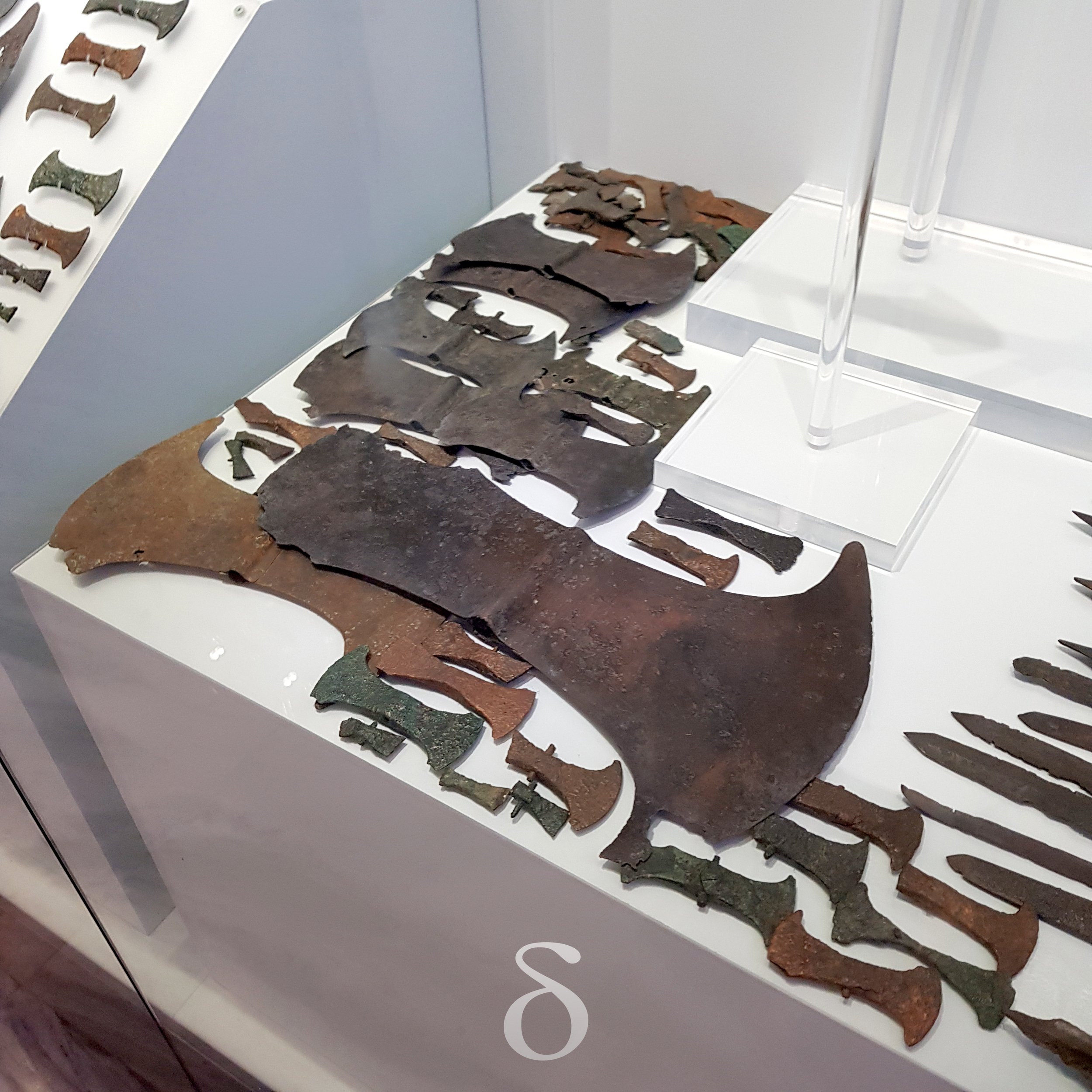
Photo by: Dimosthenis Vasiloudis
The Minoan Double Axe within the Minoan Religion
Though the details of the Minoan religion remain somewhat mysterious due to the still-undeciphered Linear A script, a combination of archaeological evidence and later Greek myths allows some interpretation. The double axe, as a religious symbol, appears to have been associated with the Minoan Goddess, often called the 'Mistress of Animals.' This goddess is frequently depicted holding a double axe in either hand, suggesting that the Labrys had a divine or supernatural connotation.
The association of the Labrys with the bull sacrifice and the Minoan Goddess might point to the double axe symbolizing a form of divine authority or intervention. Given the Minoan civilization's hypothetical apparent matrifocal nature, the Labrys may also symbolize female power or fertility, especially if associated with the goddess figure.
In conclusion, the Labrys, or Minoan double axe, provides a fascinating glimpse into the ancient civilization's cultural, religious, and ritualistic practices. As a symbol, it pervades Minoan iconography, serving as a reminder of Crete's rich past and its vital role in the wider narrative of human history. Its precise meaning within Minoan society may never be fully known, but its profound influence continues to capture the imagination of scholars, historians, and enthusiasts alike.

Photo by: Dimosthenis Vasiloudis
Scientists Finally Cracked the Code of the Mayan Calendar
Did you expect the world to end in 2012 because it was supposed to happen, according to the Maya? Not really, and it looks like the scientists finally cracked the mystery of the Mayan calendars The Mayan cycle was much longer than our year: 819 days. And this is where the mystery begins. 819 days compared to what? When does this calendar begin, and when does it end?
Join us as we explore one of the most fascinating puzzles of ancient civilization - the intricate Mayan calendar system. Did you know this ancient timekeeping method had cycles that puzzled scientists for decades?
From colorful glyphs representing celestial bodies to the perplexing 819-day cycle and the infamous 2012 end-of-world prophecy, we're delving into the stunning complexity of Mayan astronomy and mathematics. Scientists John Linden and Victoria Bricker have made a groundbreaking discovery, revealing the Mayans' understanding of astronomical periods through their calendars.
Did you know that the Mayan calendar is far more than just a tool for tracking days? With its ability to chart the heavens and mark the passage of time in unique and intricate ways, the Mayan calendar provides a captivating glimpse into the sophisticated world of this ancient civilization.
Archaeologists Unearth Lost Minoan Civilization That Mysteriously Vanished Without A Trace
Join us on an extraordinary journey as we delve into the captivating mysteries of the Minoan civilization. Buried deep beneath the sands of time on the sun-drenched island of Crete, the Minoans left behind a legacy of intrigue and fascination that continues to captivate archaeologists, historians, and explorers.
In this video, we unearth the secrets of the Minoan civilization, a thriving culture that emerged over 5,000 years ago. Discover their advanced society, prosperous economy, and impressive architecture that set them apart as one of the earliest advanced civilizations in Europe.
We explore the enigmatic Palace of Knossos, the center of Minoan civilization, delving into its unique architecture and intricate frescoes. Join us as we navigate through its labyrinthine corridors and uncover the ongoing debates surrounding its purpose and function.
Immerse yourself in the world of Minoan art and culture, where their artistic achievements in pottery, sculpture, and frescoes showcase their vibrant creativity. Explore the portrayal of women in Minoan art and uncover their significant societal roles, hinting at a level of equality ahead of its time.
We delve into the religious beliefs of the Minoans, their nature worship, and the fascinating fertility cults that shaped their spiritual practices. Witness their maritime power as we explore their extensive trade network that spanned the Mediterranean, fueling their prosperity and influencing neighboring regions.
Yet, like whispers carried by the wind, the Minoan civilization eventually vanished from history, leaving behind enduring mysteries. We present theories on their mysterious decline, including natural disasters and potential invasions, inviting you to ponder the ultimate fate of this ancient culture.
Discover the lasting impact of the Minoan civilization on subsequent cultures and the ongoing research that continues to shed light on their rich legacy. Journey with us as we uncover their secrets and unlock the wonders of a lost world.