Remarkably Preserved Bronze Age Well Discovered in England
A routine excavation ahead of a housing development in southwest England has uncovered an extraordinary find: a 3,500-year-old wooden well, offering a rare and detailed glimpse into daily life during the Middle Bronze Age.
The structure was discovered just south of Gloucester by archaeologists from Cotswold Archaeology.
From Fragments to a Complex Structure
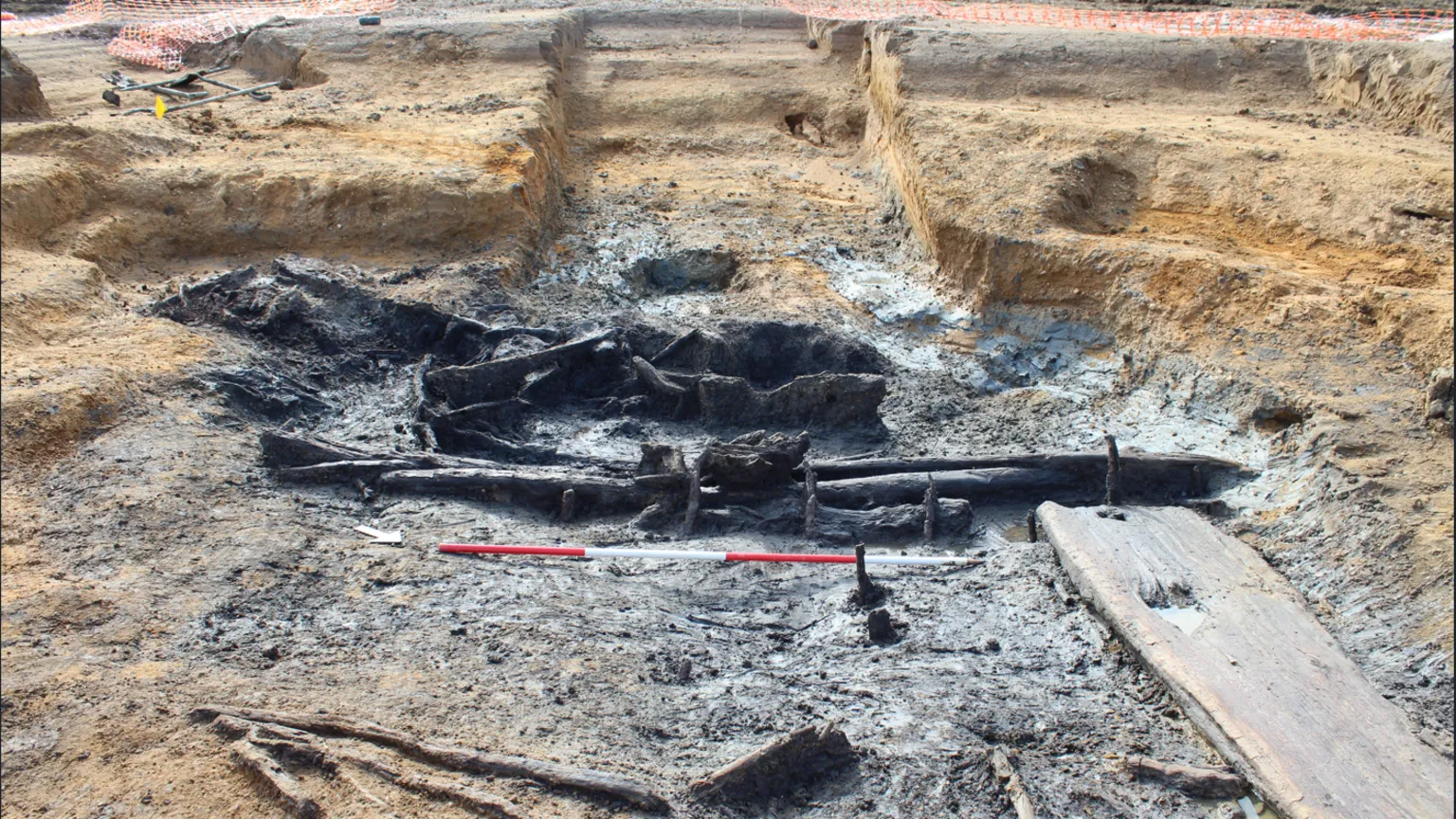
At first, the site appeared to contain only scattered wooden remains buried in wet soil. However, as excavation progressed, archaeologists revealed a carefully constructed system, showcasing advanced design and resource management.
The well features a wooden platform made of fitted planks and rounded beams at ground level. From there, a timber ladder leads down into a lower chamber where water was collected and stored—demonstrating thoughtful engineering for its time.
A Rare Example of Organic Preservation
Wooden structures from ancient periods rarely survive, making this discovery particularly significant. Its remarkable condition is due to waterlogged soil, which limited oxygen exposure and slowed the natural decay of organic material.
According to archaeologist Paolo Guarino, such preservation is extremely uncommon. Waterlogged environments are among the few conditions where materials like wood can remain intact for thousands of years.
Why Build a Well in a Water-Rich Area?
One of the most intriguing questions is why this well was built in a region that today has abundant natural water sources, including rivers and streams.
Researchers believe the answer lies in ancient environmental conditions. Pollen analysis suggests that during the Middle Bronze Age, the region experienced a warmer climate, which may have reduced the reliability of surface water.
In response, communities likely constructed wells near their settlements to ensure a consistent and controlled water supply.
Evidence of Climate Adaptation
This discovery highlights how prehistoric communities adapted to environmental changes. Similar wells found elsewhere in Britain suggest that this was a widespread strategy rather than a one-time solution.
As Guarino explains, these findings reveal that ancient populations were more responsive to climate shifts than previously believed, actively modifying their surroundings to meet their needs.
Preserved by Changing Conditions
Interestingly, the well’s survival may be due to environmental changes that occurred long after it was abandoned. Rising groundwater levels likely submerged the structure, creating the oxygen-poor conditions that preserved it for over three millennia.
A Window Into the Bronze Age
This discovery provides valuable insight into how people lived, engineered solutions, and adapted to their environment thousands of years ago. More than just a structure, the well represents a sophisticated response to changing conditions—offering a rare and tangible connection to life in the Bronze Age.