New Discoveries Reveal Early Urban Life in Nea Paphos
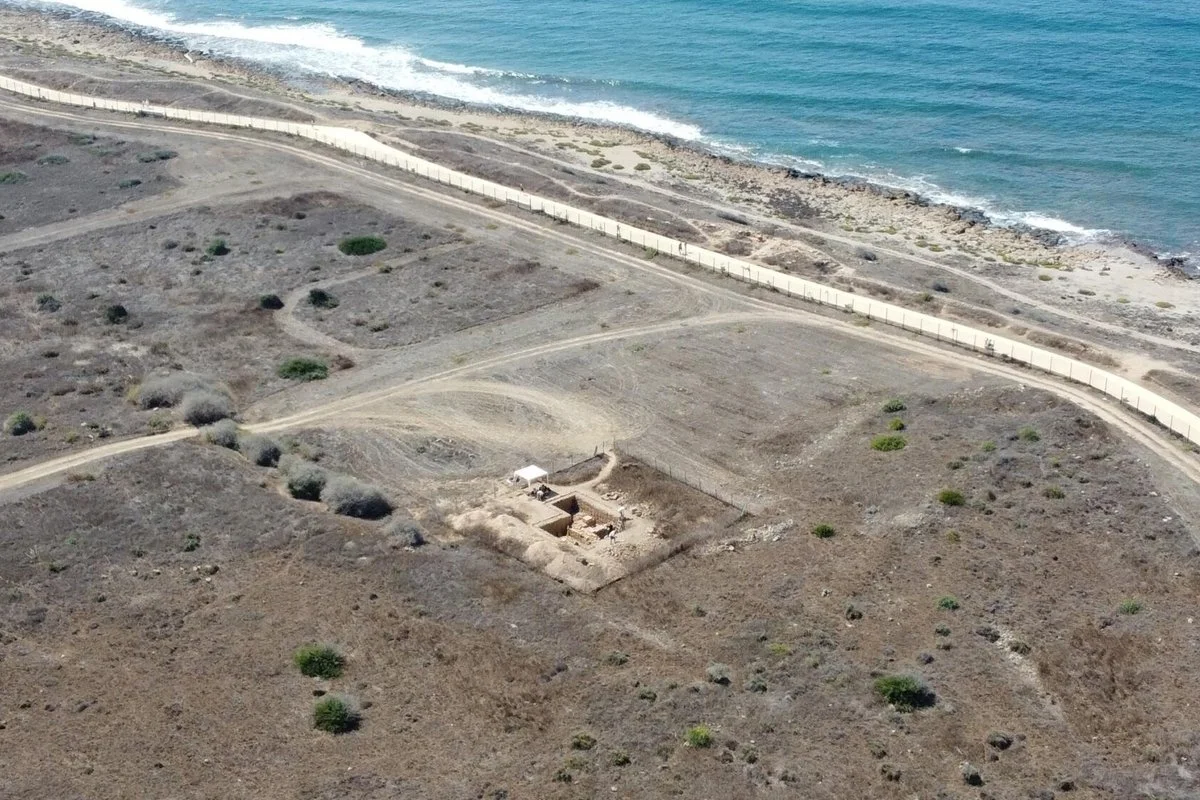
Recent findings from the 2025 excavation season in Nea Paphos are offering valuable new insights into the city’s earliest development, dating back to the late Hellenistic period. These discoveries are helping archaeologists better understand how the city evolved during its formative years.
An International Research Effort
The work is part of an ongoing project led by Ewdoksia Papuci-Władyka of University of Warsaw, in collaboration with Jagiellonian University. The project also includes experts from institutions across Poland and Germany, highlighting its collaborative and interdisciplinary nature.
In 2025, the team combined excavation work with detailed analysis of previously uncovered materials. A smaller group focused on preparing findings for publication earlier in the year, while the main excavation took place in September with around 30 participants, including researchers, students, and volunteers.
Key Areas of Investigation
Excavations concentrated on two major parts of the city: the Maloutena district and the Agora.
Maloutena District: Streets and Industry
In the Maloutena area, located west of Fanari Hill, archaeologists continued exploring layers first identified in 2022. These deposits are remarkably well preserved, lying just below the surface despite past earthquakes and later Roman construction.
Among the key discoveries was a section of a stone-paved street, along with evidence of small-scale industrial activity. Researchers found crucibles made from fragments of amphorae, suggesting that metalworking took place in the area.
Nearby, a structure believed to be residential yielded a stamped amphora handle from Rhodes bearing the name Aristombrotidas. This find provides a clear date for the building—around 117 BC.
The Agora: Infrastructure and Architecture
Work in the Agora—the city’s main public space—revealed new details about ancient infrastructure.
In the eastern portico, archaeologists uncovered a shallow water reservoir connected to an older well through a ceramic pipe. This indicates that a managed water system was already in use during the 2nd century BC.
Elsewhere in the Agora, fragments of an earlier colonnade were discovered, including parts of a stylobate and sections of columns. While their exact date is still uncertain, they likely belong to an earlier construction phase, before later Roman modifications.
Ongoing Analysis and Preservation
Beyond excavation, the team carried out extensive study and conservation work. Around 350 decorative architectural elements were catalogued, while specialists carefully preserved coins, metal artifacts, and ceramics recovered from the site.
A Deeper Understanding of the Past
These findings provide a clearer picture of daily life, infrastructure, and craftsmanship in early Nea Paphos. From streets and homes to water systems and workshops, the discoveries highlight a well-organized urban environment already taking shape during the Hellenistic period.
As research continues, Nea Paphos is proving to be an increasingly important site for understanding the development of ancient cities in the Mediterranean world.