In the classical world, child-rearing was a serious civic and cultural responsibility. The primary goal of raising children in ancient Greece and Rome was to mold them into responsible citizens who could maintain the social, religious, and political order of the city-state (polis).
While the early years were spent in the home, the paths of boys and girls soon diverged to reflect their distinct roles in society.
1. Infancy and Early Childhood
For the first few years of life, children—regardless of gender—remained in the women's quarters (the gynaikon in Greece) under the care of their mothers and enslaved wet nurses.
Swaddling: Newborns were tightly wrapped in bands of cloth for several months, a practice Greeks and Romans believed kept the limbs straight and protected the baby from injury.
The Amphidromia: In Greece, five to ten days after birth, the family celebrated a ritual where the father ran around the hearth with the child, welcoming them into the household and formally naming them.
Nurses’ Tales: Enslaved nurses played a significant role in early childhood, responsible for singing lullabies (katabauklesis) and telling the fables and myths that formed the child's first cultural education.
2. Toys and Playtime
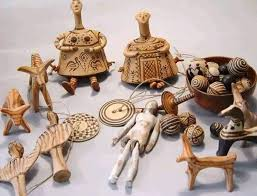
Ancient children enjoyed many of the same playful activities as children today. Archaeologists have uncovered a wide variety of toys made from terracotta, wood, and animal bones.
Dolls (Plangones): Girls played with articulated terracotta dolls with movable arms and legs. When a girl reached the age of marriage, she would dedicate these toys to a goddess like Artemis to mark her transition to adulthood.
Knucklebones (Astragaloi): Played with the ankle bones of sheep or goats, this game was similar to modern jacks or dice. Both children and adults used the bones to play strategy games, gamble, or tell fortunes.
Active Play: Children enjoyed spinning tops (strobilos), rolling hoops, and playing games like "blind man's buff" (chytinda).
3. The Education of Boys: Paideia
By the age of seven, the lives of boys and girls separated completely. In Athens and many other city-states, a boy's formal education was called Paideia and was divided into three main branches:
Grammata (Literacy): Boys were taught reading, writing, and basic arithmetic by the grammatistes. They learned using wax tablets and a stylus, memorizing passages from great epic poets like Homer.
Mousike (Music and Poetry): Music was considered essential for cultivating harmony in the soul. Boys learned to play the lyre and sing lyric poetry, which was believed to instill moral restraint and rhythm.
Gymnastike (Physical Education): As discussed previously, boys spent their afternoons at the palaestra, training under a paidotribēs in the pentathlon, wrestling, and boxing.
4. The Education of Girls
The education of girls was almost entirely domestic and practical, designed to prepare them to manage a household (oikonomia).
Domestic Skills: Girls remained indoors, where their mothers, grandmothers, and enslaved staff taught them how to spin wool, weave, sew, and manage domestic finances.
Literacy: Some elite girls learned to read and write, but formal schooling in philosophy or politics was generally reserved for boys.
The Spartan Exception: In Sparta, girls received a state-mandated education that included athletics (running, wrestling, and javelin) alongside boys, as the Spartans believed healthy, strong mothers were necessary to produce strong warriors.
5. Coming-of-Age Rituals
The transition to adulthood was marked by official public and religious recognition.
In Athens: Upon turning 18, young men were registered in their local deme (district) and entered the Ephebeia, a two-year state-sponsored program of military training and border patrol.
In Rome: Around the same age, a young man removed the purple-bordered toga praetexta and donned the white toga virilis (toga of manhood) during the festival of the Liberalia, accompanied by an offering to the household gods.
Childhood in the classical world was brief. The rigorous educational and training expectations ensured that children transitioned quickly from the freedom of play to the distinct, lifelong duties of adulthood.