Ancient Egyptian Medicine: Papyrus Records of Surgical Procedures
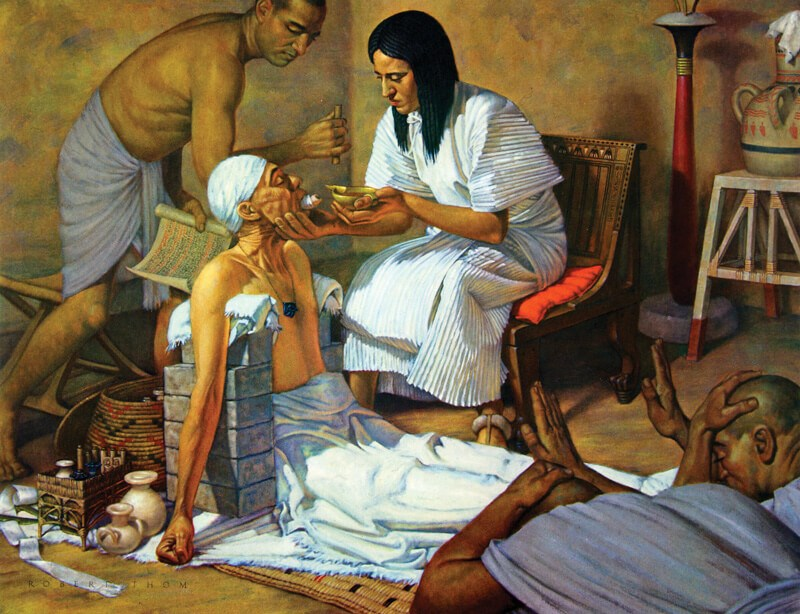
Ancient Egyptian medicine was a unique blend of empirical observation, practical surgical techniques, and spiritual rituals. The survival of several medical papyri provides modern scholars with a clear view into how ancient Egyptian physicians examined, diagnosed, and treated trauma and illnesses long before the rise of classical Greek medicine.
1. The Edwin Smith Papyrus: The First Surgical Treatise
The Edwin Smith Papyrus (c. 1600 BCE) is widely regarded as the world's oldest surviving surgical textbook. While it dates to the Second Intermediate Period, historians believe it is a copy of much older texts from the Old Kingdom (c. 3000–2500 BCE), potentially written by the famous polymath Imhotep.
A Rational Approach: Unlike many other Egyptian texts that relied heavily on incantations and magic, this papyrus is remarkable for its scientific and practical approach to trauma.
Forty-Eight Cases: The text is structured as a teaching manual, detailing 48 cases of injury. It is organized anatomically, beginning at the head and moving downward to the neck, shoulders, and spinal column.
Clinical Protocol: Every case follows a rigorous, standardized format:
Title: The nature of the injury.
Examination: What the physician should look for.
Diagnosis: The physician's evaluation of the trauma.
Prognosis: One of three verdicts: "An ailment which I will treat," "An ailment with which I will contend," or "An ailment not to be treated."
Treatment: The recommended medical or surgical intervention.
2. The Ebers Papyrus: Remedies and Minor Surgery
The Ebers Papyrus (c. 1550 BCE) is the most voluminous medical document to survive from ancient Egypt, measuring over 20 meters in length. It acts as a comprehensive medical encyclopedia.
Surgical Applications: The text includes instructions for the surgical treatment of abscesses, cysts, tumors, burns, and the setting of broken bones.
The Channel Theory: The Ebers Papyrus describes the mtw (vessels), a network of channels carrying blood, air, urine, and tears. The heart is identified as the center of this vascular network.
Integration of Magic: Unlike the Edwin Smith text, the Ebers Papyrus combines empirical remedies with magical incantations designed to drive away disease-causing spirits.
3. Surgical Techniques and Practices
The Egyptian approach to surgery was surprisingly advanced, featuring practical methodologies to prevent infection and promote healing.
Wound Closure: Physicians used linen sutures to close deep flesh wounds on the lips, throat, and shoulders.
Infection Control: Honey was applied to open wounds due to its natural antibacterial properties. Raw meat was often used to stop bleeding in the early stages of trauma.
Immobilization: For fractures and spinal injuries, the Egyptians used splints and linen bandages stiffened with paste to immobilize the area, allowing the bones to set properly.
Anatomy: The texts contain the earliest known descriptions of cranial sutures, the brain's surface, meninges, and cerebrospinal fluid.
4. Other Notable Medical Papyri
Beyond the two most famous texts, several smaller papyri provide insight into specialized medical fields in ancient Egypt:
Kahun Gynaecological Papyrus (c. 1825 BCE): Focuses on women's health, fertility, contraception, and pregnancy.
Hearst Papyrus (c. 1600 BCE): A practical recipe book for snakebites and ailments of the digestive and urinary tracts.
Berlin Papyrus (c. 1350 BCE): Contains prescriptions for maternal and pediatric care, including early pregnancy tests.