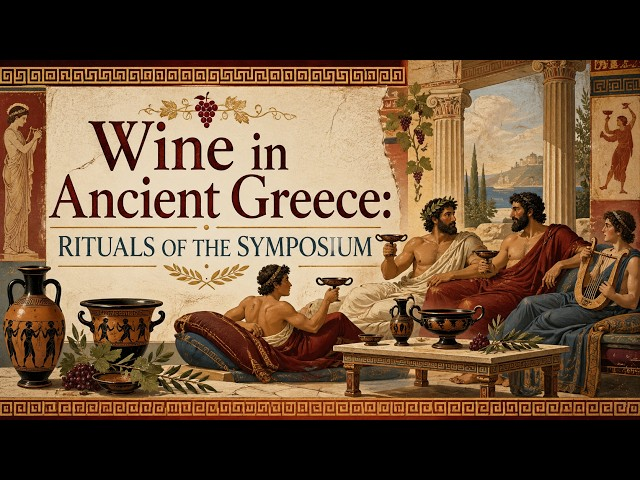
Ancient Greek Wine: The Additives and Aging Processes of the Symposium
In ancient Greece, wine was not just a beverage; it was a medium for social cohesion, philosophical debate, and religious ritual. However, the wine consumed at a Symposium (a formal drinking party) would be unrecognizable to most modern palates. Because ancient Greek wines were often high in alcohol and prone to oxidation, they were rarely consumed "neat" and were frequently altered with various additives to improve flavor and shelf life.
1. The Cultivation and Harvest
The Greeks took viticulture seriously, often planting vines in volcanic soil or near the sea to imbue the grapes with specific mineral qualities.
Sun-Drying: To increase sugar content and create a more potent, syrupy wine, Greeks often practiced "passito"—leaving the grapes to dry in the sun after picking. This resulted in wines with high residual sugar and alcohol levels.
The Press: After treading the grapes by foot, the juice was fermented in large terracotta jars called pithoi, which were often buried in the ground to maintain a cool, stable temperature.
2. Additives: Enhancing Flavor and Stability
Ancient Greek wine was frequently thick, pungent, and sometimes harsh. Additives served two purposes: masking spoilage and creating complex flavor profiles.
Seawater: A famous practice, particularly on the island of Chios, involved adding seawater to the must. This was believed to smooth out the wine, act as a preservative, and improve the "nose."
Resin and Pitch: To seal the porous terracotta jars and prevent oxygen from turning the wine into vinegar, the Greeks coated the insides with pine resin. This gave birth to Retsina, a style of wine still produced in Greece today.
Spices and Aromatics: For special occasions, wine was infused with honey, herbs (like thyme or mint), cinnamon, and even perfumes to create "mulled" varieties.
Gypsum or Lime: These minerals were sometimes added to clarify the wine or reduce its acidity.
3. The Aging Process
While many everyday wines were consumed young, the Greeks were among the first to appreciate the value of aged wine.
Long-Term Storage: High-quality wines, such as those from Chios, Thasos, or Lesbos, were aged in pointed amphorae. The pointed bottom allowed the sediment to settle into a small area, keeping the rest of the wine clear.
The Smoke House: Some wines were placed in rooms called fumaria, where they were intentionally exposed to heat and smoke. This accelerated the aging process, giving the wine a darkened color and a toasted, smoky flavor similar to modern Madeira.
Maturity: A wine was considered "old" (palaios) after four to five years, though some exceptional vintages were reportedly kept for decades until they reached a consistency like honey.
4. The Art of the Mix: The Krater
The defining characteristic of Greek wine culture was the dilution of wine with water. To drink "unmixed wine" (akratos) was considered the mark of a barbarian or a drunkard.
The Ratio: The Symposiarch (leader of the party) decided the ratio of water to wine based on the desired "vibe" of the evening. Common ratios were 3:1 (water to wine) for long conversations or 2:1 for more boisterous celebrations.
The Mixing Vessel: The mixing took place in a large, wide-mouthed vessel called a Krater.
Temperature Control: In the summer, snow was often brought down from the mountains and placed in a psykter (a mushroom-shaped cooler) that floated inside the Krater to chill the wine.