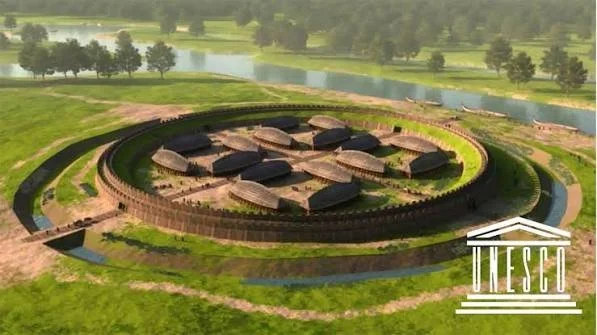
Deep in the windswept steppes of the southern Ural Mountains in Russia sits Arkaim, a monumental, circular fortified settlement belonging to the Bronze Age Sintashta culture (dating to roughly 2000 to 1800 BCE). Discovered by Soviet scientists in 1987 just before the valley was scheduled to be flooded for a reservoir, Arkaim is often dubbed "Russia’s Stonehenge" due to its striking circular geometry and advanced astronomical alignments. However, unlike the open stone circles of Britain, Arkaim was a highly sophisticated, densely populated, and heavily industrial nuclear fortress.
                  [ THE ARKAIM CIRCULAR CITADEL ]
                                 │
        ┌────────────────────────┴────────────────────────┐
        ▼                                                 ▼
[ THE OUTER WALL RING ]                         [ THE INNER RESIDENTIAL RING ]
* 35 domestic apartments                        * 25 elite apartments
* Internal metallurgical foundries               * Central public / ritual plaza
* Integrated drainage channels                  * Communal fresh water wells
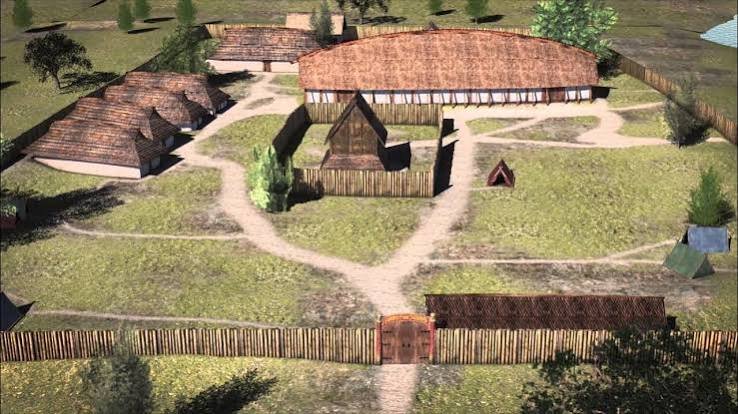
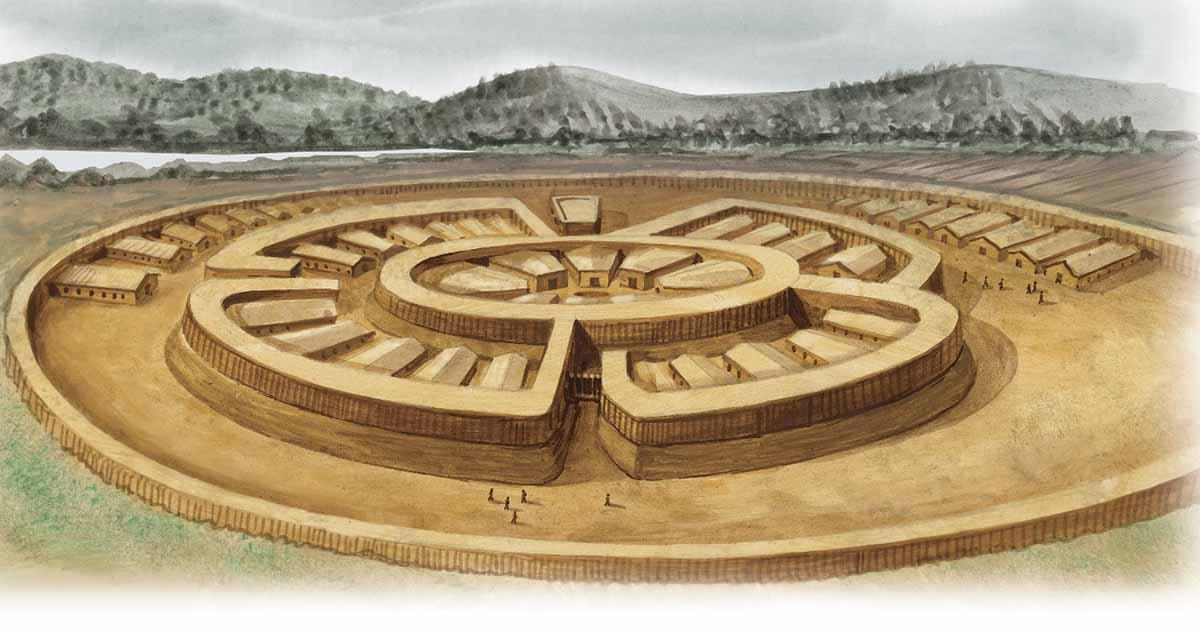
The architecture of Arkaim is a masterclass in prehistoric urban engineering. The entire site is perfectly circular, measuring roughly 160 meters in diameter, and is constructed out of a sophisticated mix of timber, sun-dried mudbrick, and soil reinforced with local clay. The settlement is split into two concentric ringed walls that protect an integrated cluster of domestic apartments.
The Industrial Apartments and the Chariot Revolution
The outer ring contains 35 individual dwellings, while the inner ring contains 25 houses, all radiating inward like spokes on a wheel toward a central square plaza. What makes these apartments astonishing is their high-level industrial infrastructure:
The Smelting Furnaces: Nearly every single home in Arkaim featured its own integrated metallurgical forge and clay smelting furnace connected to a central chimney system. The Sintashta people were the ultimate metalsmiths of the Eurasian steppe, manufacturing high-grade bronze weapons, axes, and spears on an industrial assembly line.
The Water and Ventilation Matrix: The furnaces were engineered with a dual-well system. One well provided fresh water to the home, while a connected air shaft channeled cool, pressurized subterranean air directly into the base of the smelting furnace, acting as a natural, continuous bellows to elevate forge temperatures.
The Drainage Highways: Beneath the wooden-paved streets of the fortress, the builders carved a continuous drainage ditch that collected rainwater and waste, directing it out of the fort's main gates.
The Cosmic Wheel Alignment
Arkaim was not just a factory; it was a cosmic calendar. Archaeoastronomers have mapped the entire architecture of the fort to specific celestial events with a precision that equals or exceeds Stonehenge. The main outer walls, defensive towers, and internal gates are precisely aligned with the sunrise and sunset points of both the summer and winter solstices. Furthermore, the fort maps the extreme rising and setting points of the Moon across its long-term cycles.
This celestial mapping was critical for the Sintashta culture. As the inventors of the spoke-wheeled war chariot—the remains of which have been excavated from nearby Sintashta burial mounds alongside prized horses—tracking the seasons was an existential necessity to coordinate massive nomadic cattle migrations across the harsh Eurasian steppe. Arkaim served as a permanent, fortified winter sanctuary, industrial factory, and cosmic temple, acting as the technological launchpad for Indo-Iranian migrations that would eventually sweep southward into Persia and India.