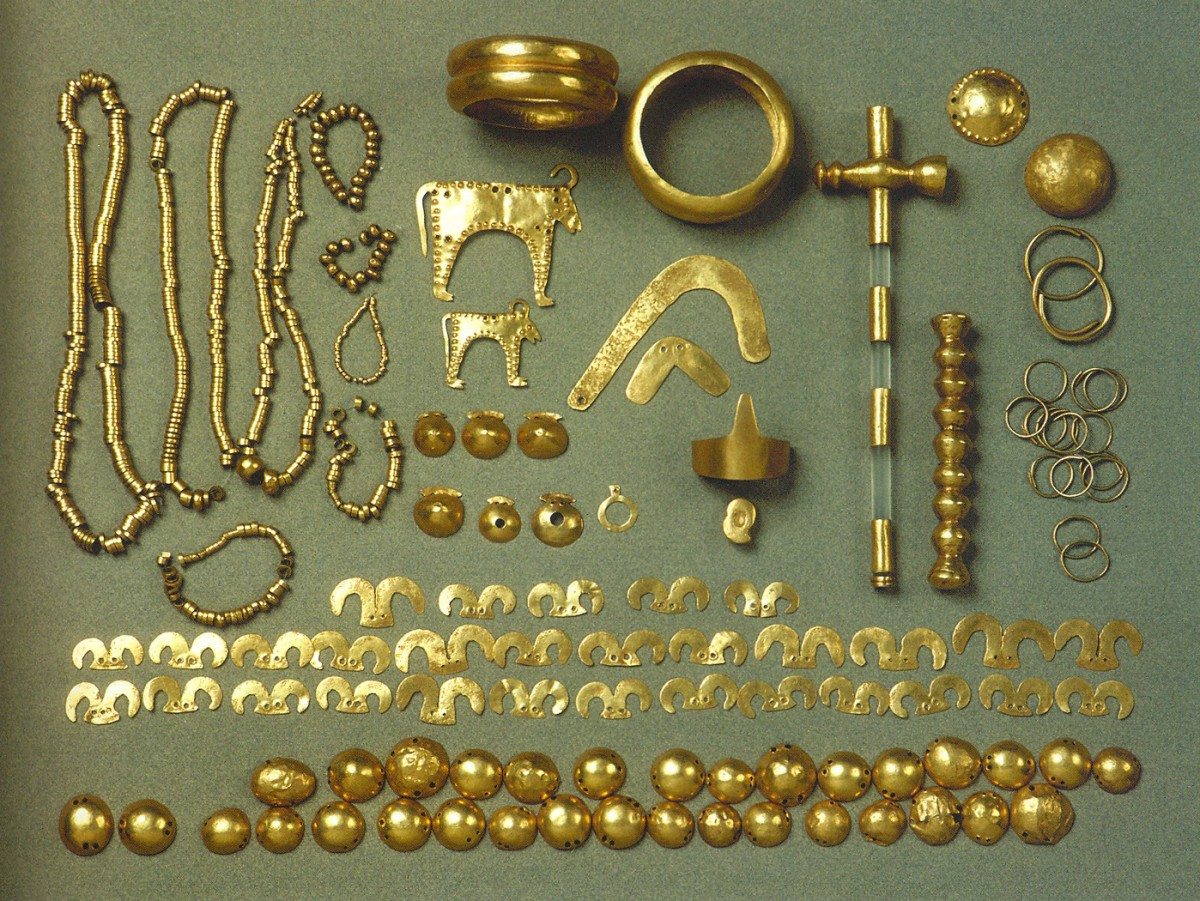
Discovered accidentally in 1972 by a tractor driver digging a trench near the Black Sea coast of Bulgaria, the Varna Necropolis represents one of the most astonishing turning points in human prehistory. Dating back to the Late Chalcolithic period (approximately 4600 to 4200 BCE), this prehistoric cemetery contains the absolute oldest gold artifacts ever manufactured by humankind. Before Varna, archeologists believed that complex, stratified human societies with extreme wealth disparities did not emerge until millennia later in Mesopotamia and Egypt. Varna shattered that timeline completely.
   [ THE NEOLITHIC EGALITARIAN MODEL ] ──► Uniform Burials, Shared Resources
                                                  │
                                      (The Varna Excavations)
                                                  │
                                                  ▼
   [ THE CHALCOLITHIC METALLURGICAL SHIFT ] ◄── Chiefdoms, Extreme Wealth Disparity
The site consists of nearly 300 graves, but the distribution of wealth within them is radically unequal. While the vast majority of burials contain simple pottery or basic flint tools, a tiny handful of elite graves contain an unimaginable volume of precious metals. The most famous of these is Grave 43, the burial of an elite male aged 45 to 50, widely considered the oldest documented king or high-level chieftain in human history.
The Anatomy of Grave 43
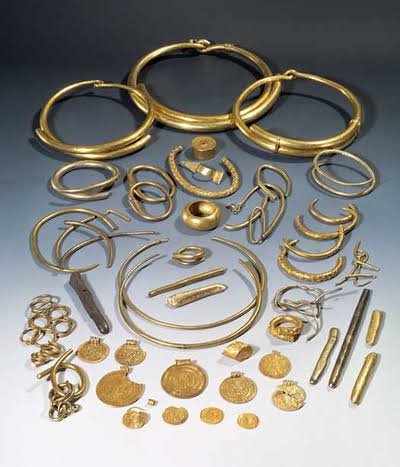
The male skeleton in Grave 43 was literally buried in a sea of gold. Archeologists recovered over 990 distinct gold artifacts from this single grave alone, weighing more than 3.3 pounds (1.5 kilograms). This single burial contained more gold than has been found from that entire era across the rest of the world combined.
The artifacts form an intricate toolkit of prehistoric political and spiritual power:
The Scepter: The chieftain held a heavy stone axe-head fitted to a wooden shaft completely encased in cylindrical gold tubes, creating the world's first royal scepter.
The Phallic Sheath: A prominent, conical gold sheath was placed over the individual's groin, symbolizing the divine, masculine fertility of the royal lineage.
The Regalia: The body was adorned with massive gold armbands, heavy solid-gold pectorals, over thirty gold beads wrapped around the neck, and intricate gold appliques sewn directly onto the burial shroud.
Symbolic Cenotaphs and the Birth of Currency
Equally mysterious are the "symbolic graves" found at Varna. Several of the richest burials contain absolutely no human bones. Instead, archeologists discovered life-sized clay masks of human faces decorated with gold earrings, gold diadems, and eyes made of gleaming gold disks. These cenotaphs were likely created for elite leaders who died far from home, in battle or at sea, ensuring their souls could still be anchored to the sacred cemetery.
The gold of Varna was not just for show; it marks the invention of currency and structured value. Metallurgical analysis shows that the Varna artisans possessed an incredibly sophisticated understanding of casting, hammering, and alloying gold with copper. They created standardized gold rings and disks that possessed a fixed weight and geometry. By establishing a universal medium of exchange backed by the spiritual power of the metal, the Varna culture established a vast trading network that stretched from the shores of the Black Sea deep into continental Europe, transforming metallurgy into the primary engine of human social hierarchy.