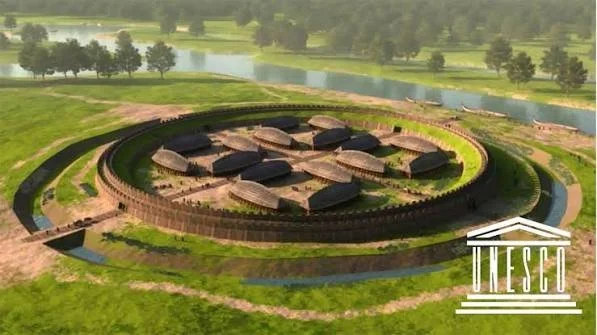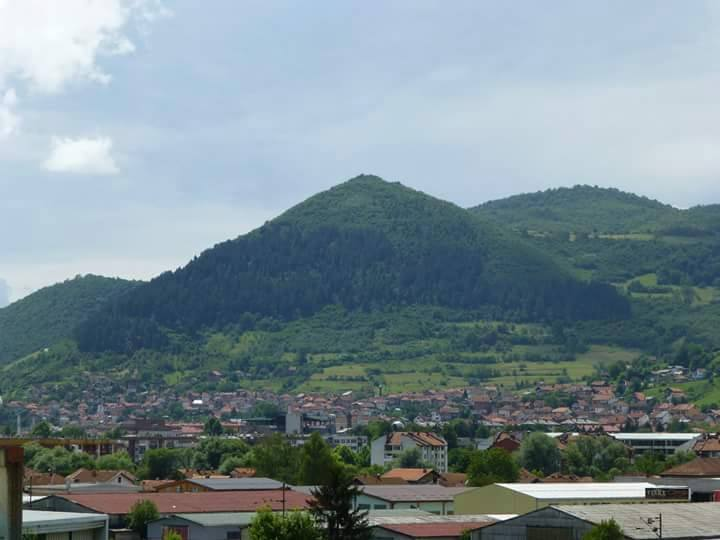
Nestled in the green hills surrounding the town of Visoko, Bosnia and Herzegovina, sits a cluster of landforms that became the center of one of the most persistent archaeological debates of the 21st century: The Bosnian Pyramids.
In 2005, Semir Osmanagić (an entrepreneur and alternative history author) announced that the town’s prominent, angular hills were actually a complex of 12,000-year-old stepped pyramids. Dubbing them the Pyramids of the Sun, Moon, and Dragon, he claimed they were built by a lost European civilization at the end of the last Ice Age, making them far older and larger than the Great Pyramid of Giza.
Despite the immense tourism boom and popular allure surrounding the site, the global scientific community reacted with overwhelming condemnation. In 2006, the European Association of Archaeologists issued a formal declaration labeling the project a "cruel hoax." The true story of Visoko does not involve prehistoric stonemasons, but rather a fascinating collision of tectonic geology, natural sedimentary fracturing, and deep medieval history.
1. The Pro-Pyramid Argument: "Laser-Straight" Geometry
The Bosnian Pyramid of the Sun Foundation, led by Osmanagić, points to several distinct features across Visoko's hills as definitive material proof of human engineering:
The Symmetrical Facets: Visočica Hill features four distinct, triangular faces that align remarkably well with the cardinal directions (North, South, East, West).
The Interlocking Slabs: Excavations on the hillside exposed vast, multi-layered pavements of flat, rectangular blocks that resemble poured concrete or fitted stone pavers.
The Ravne Tunnel Network: A labyrinth of subterranean passages located kilometers away from the hills, which alternative theorists claim was an ancient ventilation and transport network connecting the pyramid complex.
2. The Geological Reality: Flatirons and Conglomerate
When international geologists, sedimentologists, and mining engineers conducted independent structural analyses of Visoko, they concluded that the "pyramids" were entirely natural formations created by the Earth's standard geomorphological forces.
The Physics of Flatirons
The striking, triangular symmetry of Visočica Hill is a well-known geological feature called a flatiron. Millions of years ago, the region sat beneath a massive Miocene-era lake basin. As rivers emptied into the lake, they deposited flat, horizontal layers of sediment over generations.
Later, intense tectonic activity associated with the collision of the African and Eurasian plates buckled the earth, tilting these horizontal sedimentary beds upward at an angle. Over millennia, rainfall and wind eroded the soft, exposed edges of the tilted rock, leaving behind a series of triangular, steep-sloped ridges that mimic the shape of a pyramid entirely naturally.
Nature's Concrete: Breccia and Conglomerate
The "interlocking stone blocks" uncovered by excavators are not prehistoric masonry; they are natural, sedimentary rock formations known as conglomerate and breccia.
As the ancient lake dried up, layers of rounded river pebbles, gravel, and sand were subjected to immense underground pressure. Minerals dissolved in the groundwater acted as a natural glue, cementing the loose stones into massive, horizontal sheets of natural rock.
Because sandstone and conglomerate contract and fracture along clean, perpendicular lines of stress (joints) as they dry and settle, the rock naturally splits into neat, rectangular blocks. To an untrained eye, this looks like a paved stone street or poured concrete. In reality, it is a textbook example of natural geological fracturing.
3. The Ravne Tunnels: Natural Caves Adapted by History
The underground Ravne Tunnels are frequently used by alternative history proponents as proof of a subterranean network. However, British geologist Anthony Harding and local mining experts confirmed that these tunnels are entirely natural.
The tunnels are hollow channels carved out by ancient underground rivers flowing through the soft, loose gravel layers of the conglomerate rock. Furthermore, archaeologists discovered that many sections of the tunnels featured genuine historical artifacts—but they did not date back 12,000 years.
Instead, the tunnels contain remnants from the Middle Ages and the Roman era, when local populations used the natural cave networks for mining, emergency shelter, and military defense.
4. The True Historical Wonder: Stari Grad Visoki
Dismantling the 12,000-year-old pyramid myth does not mean Visoko lacks historical significance. By focusing entirely on a pseudo-scientific fantasy, the project inadvertently overlooks and damages a genuine, incredibly important archaeological site resting on the very peak of the hill: Stari Grad Visoki (The Old Town of Visoko).
   [ THE HILLTOP SUMMIT ] ───► Stari Grad Visoki (14th-Century Medieval Castle)
                                          │
                              (The Cultural Core)
                                          │
                                          ▼
   [ RECEPTION OF CHARTERS ] ◄─── Heart of the Kingdom of Bosnia / Court of King Tvrtko I
During the 14th century, the summit of Visočica Hill was the absolute political and cultural heart of the independent Kingdom of Bosnia. It housed a heavily fortified royal castle where the first Bosnian King, Tvrtko I, signed critical state charters and hosted foreign dignitaries.
The slopes beneath the castle were home to Mile, one of the most important administrative and religious centers of medieval Bosnia, serving as the coronation and burial place of Bosnian kings. Tragically, some early, unregulated volunteer excavations looking for the "pyramid" accidentally cut through and compromised medieval strata, drawing fierce criticism from professional historians fighting to preserve Bosnia’s actual medieval heritage.
5. Summary of the Visoko Controversy
The Phenomenon: A viral claim that Visočica Hill is a 12,000-year-old stepped pyramid, serving as the foundation for a lost, prehistoric European empire.
The Scientific Verdict: Total rejection by the European Association of Archaeologists, classifying the hills as natural geomorphological structures.
The Geomorphology: Natural flatiron ridges formed by tectonically tilted sedimentary rock beds that eroded into sharp, triangular faces.
The Lithology: Natural Miocene conglomerate and breccia sheets that fractured along orthogonal joint lines, mimicking artificial concrete blocks.
The Authentic History: A vital 14th-century medieval stronghold at the summit (Stari Grad Visoki), acting as the seat of royal power for the Kingdom of Bosnia.
The controversy of the Bosnian Pyramids highlights a powerful sociological phenomenon: the human brain’s natural tendency to find familiar, structured patterns in the chaotic shapes of nature (a psychological trait known as pareidolia). While Visoko's hills are a masterpiece of tectonic tilting and natural rock fracturing rather than ancient engineering, the site remains a deeply compelling landscape. Stripping away the fantasy exposes a rich history, showing how a unique, naturally grand hill served as an inspiring high point of defense, identity, and royalty for the medieval Kingdom of Bosnia.