Archaeologists from the University of Bradford will carry out cutting-edge work at Scotland’s biggest Roman complex after being selected as a pilot for a national funding scheme.
The University’s project, “Romans at the Tweed: Returning to Trimontium to examine a crossing point at the northern edge of the Roman Empire,” is one of five initiatives selected under the Research Infrastructure for Conservation and Heritage Science (RICHeS) Access Fund Catalyst Projects.
This spring, scientific investigations will take place at Trimontium, an important Roman frontier site. Using advanced survey methods, the team aims to deepen understanding of how the Romans managed movement across the River Tweed at the empire’s northern boundary. The project is being carried out in collaboration with the Trimontium Trust and AOC Archaeology.
Dr Kayt Armstrong, Facility Manager of the RICHeS-supported mobile laboratory “From Land to Sea”—a University of Bradford facility focused on prospection, landscapes, and communities—said she was pleased that their partnership with AOC Archaeology and the Trimontium Trust had been chosen for the Access Fund Catalyst Project. She explained that this opportunity will allow the team to apply state-of-the-art geophysical technology to investigate key questions about the fortifications at Trimontium and the connections between the Romans, local populations, and the River Tweed.
More on Romans at the Tweed
In 2022, the Trimontium Trust and AOC Archaeology introduced ground-penetrating radar (GPR) at the fort for the first time, training volunteers and reviving on-site research.
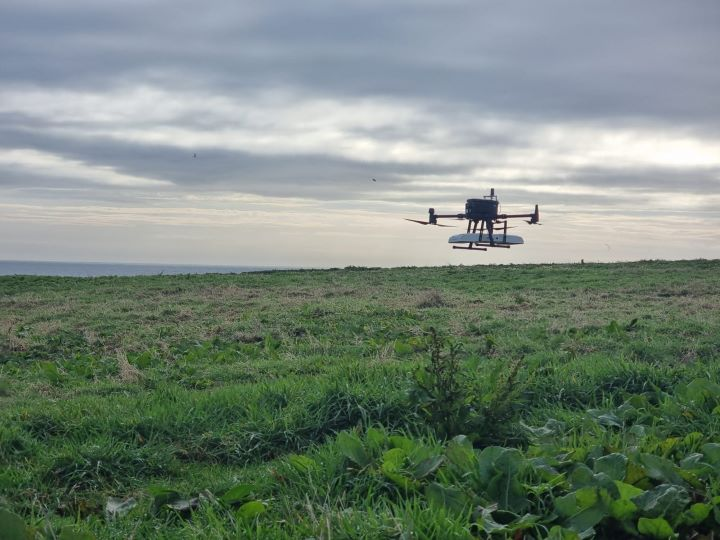
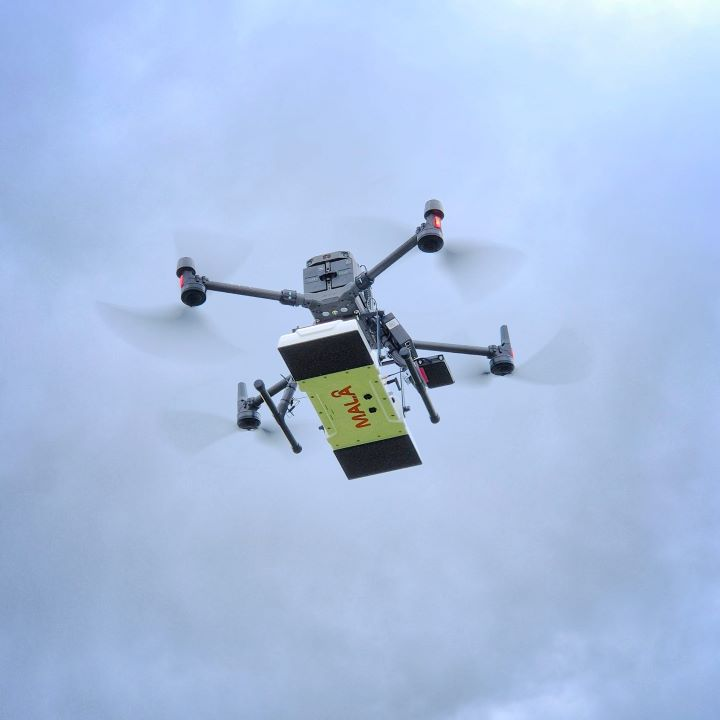
That survey used a high-resolution Mala MIRA system—the first deployed at a Roman fort in Scotland. However, the equipment is no longer available in the UK, leaving sections of the site unexplored. To move the research forward, the University of Bradford will use its compact Mala MIRA unit along with new RICHeS-funded technology, including drone-mounted GPR, to finish surveying the fort and locate the Roman crossing point along the River Tweed.
Conducted as part of the Uncovering the Tweed project, the initiative unites technical experts, archaeologists, and volunteers. It places strong emphasis on community involvement in frontier research while ensuring that newly gathered data is openly shared.
More on Trimontium
Situated in the Scottish Borders, Trimontium is Scotland’s largest Roman fort and settlement and holds one of the UK’s richest collections of Roman military artifacts.
Spanning 370 acres, the site includes a combined military and civilian complex featuring a fort, a bridge over the River Tweed, roads, shrines, and a cemetery. It is also home to the northernmost amphitheatre in the Roman Empire.
Heritage science support
Five projects have recently secured funding through the RICHeS Access Fund Catalyst scheme to examine how heritage science can enhance research, conservation, and public engagement throughout the UK.
These initiatives aim to improve access to advanced facilities and expertise, supporting the preservation of nationally significant heritage sites.
Running until March 2026, the Catalyst Projects represent the first phase of the RICHeS Access Fund. Beginning 28 January 2026, the program will offer researchers and eligible users access to specialized equipment, collections, and expert support.
This initiative aligns with the University of Bradford’s strategy by highlighting innovation, partnership, and social impact. By combining advanced heritage science technologies with meaningful public participation, the project contributes to safeguarding and understanding an important historical landscape.
Through collaboration with national organizations and local volunteers, the University reinforces its commitment to generating knowledge that benefits communities and strengthens cultural heritage—supporting its mission to create positive change both locally and globally.