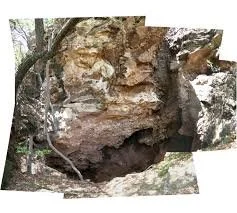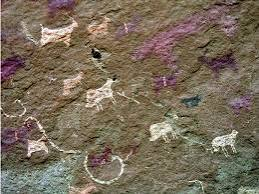
Dhambalin is an important prehistoric rock-art site in Somaliland's arid interior. Its name has been translated as “half, cut vertically” in connection with the distinctive rock formation, while popular descriptions sometimes associate the site with spider-like motifs.
The site contains prehistoric paintings and engravings representing humans, animals, and symbolic forms.
Dhambalin is particularly important because it adds to the archaeological evidence for ancient pastoral communities in the Horn of Africa.
The Discovery of Dhambalin
Dhambalin was documented during archaeological surveys of Somaliland's rock-art landscapes.
The discovery demonstrated that prehistoric art was far more widespread across the region than previously recognized.
Rock shelters such as Dhambalin preserve evidence of human activity that can be difficult to identify through ordinary archaeological excavation.
Images of Animals
The paintings include representations of animals associated with pastoral life and hunting.
Among the most significant are:
cattle;
sheep or goats;
wild animals;
and other creatures.
Animal representations provide clues about both the environment and human economic practices.
The Development of Pastoralism
Pastoralism transformed life across the Horn of Africa.
Instead of relying exclusively on wild resources, communities could maintain herds that moved between grazing areas.
This required knowledge of:
water sources;
seasonal rainfall;
pasture;
animal reproduction;
and migration routes.
The Importance of Cattle
Cattle were valuable beyond their role as food.
They could serve as:
wealth;
exchange objects;
symbols of identity;
and sources of social prestige.
The artistic emphasis placed on cattle at Dhambalin and other regional sites suggests that livestock occupied a central position in prehistoric society.
Human Figures
Human representations provide another layer of evidence.
Artists could depict:
hunters;
herders;
ceremonial figures;
or symbolic beings.
Some images may represent people wearing distinctive clothing or carrying objects.
However, identifying these details is often difficult because prehistoric paintings have faded or been damaged.
The “Spider” Connection
The popular association of Dhambalin with spiders should not be taken to mean that the site consists primarily of literal spider depictions.
Some unusual motifs have been interpreted in different ways.
As with many prehistoric images, researchers must distinguish between what can be observed directly and what remains speculative.
Rock-Art Chronology
Establishing the exact age of rock art is challenging.
Archaeologists combine:
artistic style;
archaeological context;
environmental evidence;
and regional comparisons.
Dhambalin is generally associated with early pastoral periods in the Horn of Africa.
A Changing Environment
The prehistoric landscape of Somaliland was not identical to the modern one.
Climate fluctuations influenced:
vegetation;
water availability;
wildlife;
and pastoral movement.
Communities adapted by moving between seasonal resource zones.
Rock art may therefore represent snapshots of different ecological periods.
The Wider Rock-Art Network
Dhambalin is one component of a much larger collection of rock-art sites across Somaliland.
Together, these sites reveal regional traditions in which communities repeatedly returned to prominent rock formations.
Such locations may have functioned as:
ritual spaces;
meeting places;
navigation landmarks;
or places where communities expressed collective identity.
Why Dhambalin Matters
Dhambalin contributes to our understanding of:
prehistoric pastoralism;
rock-art traditions;
human-animal relationships;
and environmental change in the Horn of Africa.
Conclusion
Dhambalin's paintings preserve the visual record of communities living thousands of years ago in a landscape very different from modern Somaliland.
Its human and animal imagery demonstrates that pastoral societies possessed rich symbolic traditions and carefully observed the world around them.
The site is another piece of evidence showing that the Horn of Africa was home to sophisticated communities long before the emergence of written kingdoms.