Ten thousand years ago, a human traveler could walk from the rolling hills of modern-day Yorkshire in Great Britain across a vast, fertile plain all the way to the coastlines of Denmark and the Netherlands without ever catching a glimpse of the ocean. This lost heartland of prehistoric Europe is known to modern archaeologists as Doggerland, a sprawling landmass that once covered over 180,000 square kilometers beneath what is now the cold, turbulent waters of the North Sea.
                  [ THE MESOLITHIC EVOLUTION OF DOGGERLAND ]
                                      │
                                      ▼
   [ UN-DAMMED PARADISAL STEPPE ] ──► Rich Estuaries, Rivers, & Mammoths (c. 9000 BCE)
                                      │
                                      ▼
   [ SEA LEVEL INUNDATION ] ───────► Glacial Melt Shrinks Land Into Islands (c. 7000 BCE)
                                      │
                                      ▼
   [ THE STOREGGA SLIDE ] ─────────► Massive Submarine Tsunami Seals the Basin (c. 6200 BCE)
Doggerland was not a secondary land bridge; it was the absolute ecological paradise of Mesolithic Europe. Fed by the prehistoric channels of the Rhine and Thames rivers, Doggerland was a rich tapestry of winding estuaries, massive freshwater lagoons, dense oak forests, and sweeping marshlands. It supported an immense concentration of wildlife, including herds of woolly mammoths, reindeer, wild boar, and red deer, making it the premier hunting and fishing ground for nomadic Mesolithic hunter-gatherers.
The Treasures of the Trawlers
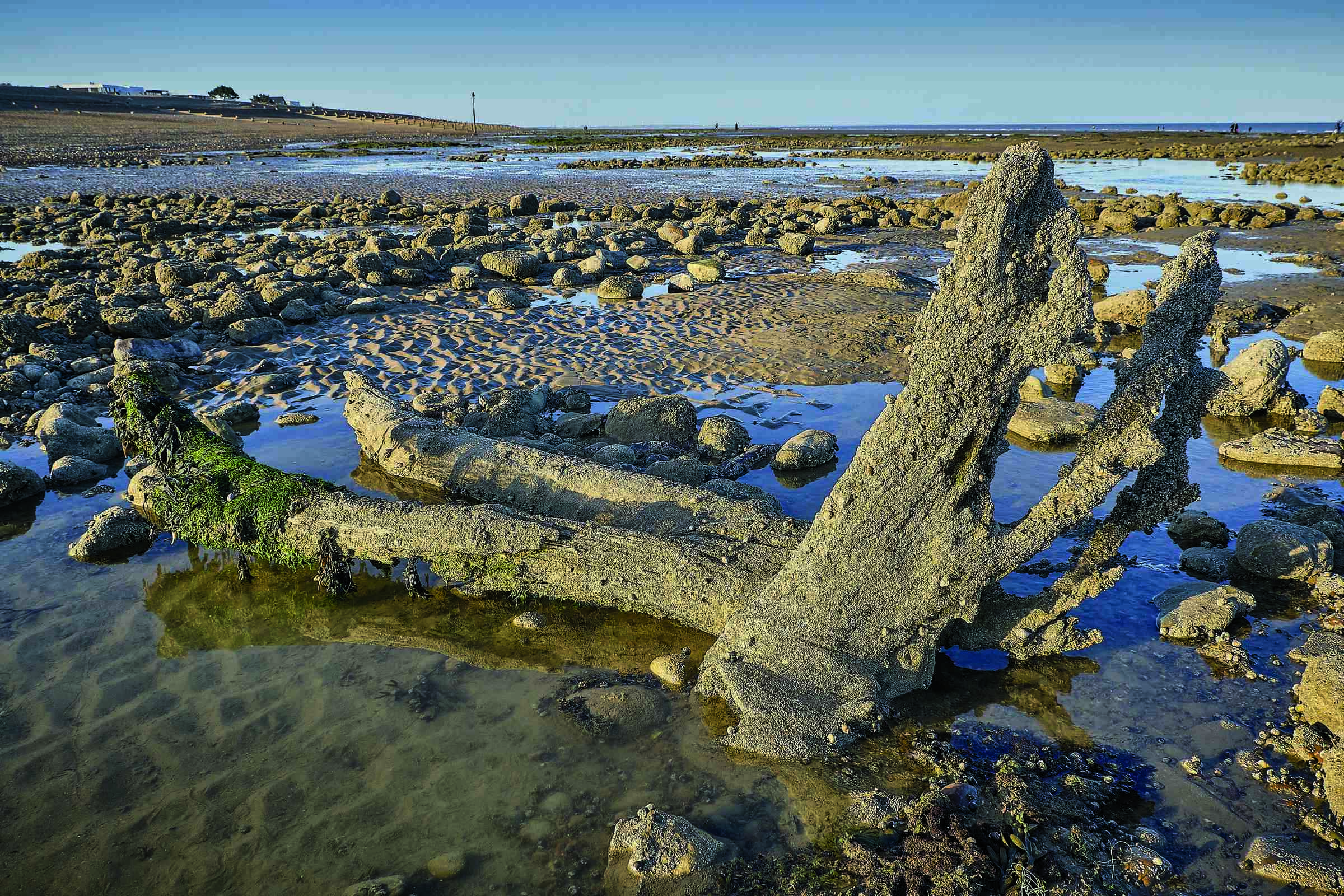
For over a century, the primary archaeologists of Doggerland were not scuba divers, but commercial North Sea fishermen. Since the late 19th century, deep-sea trawlers dragging heavy nets along the shallow sandbanks of the Dogger Bank have hauled up an astonishing collection of prehistoric artifacts from the ocean floor:
The Megafauna: Trawlers have recovered thousands of fossilized bones belonging to mammoths, woolly rhinoceroses, and cave lions.
The Tools: Fishermen have pulled up beautifully preserved Mesolithic flint tools, barbed harpoons carved from stag antlers, and polished bone tools wrapped in prehistoric plant fibers.
Human Remains: Several fossilized human skull fragments, dating back over 9,000 years, have been recovered, showing direct isotopic evidence of a diet rich in marine and wetland resources.
The Storegga Cataclysm
The destruction of Doggerland was a long-term tragedy punctuated by a sudden, apocalyptic climax. As the global climate warmed at the end of the last Ice Age, the massive Laurentide and Fennoscandian ice sheets melted, causing global sea levels to rise at a terrifying rate. Doggerland was systematically eaten away, transforming from a vast continental plain into a series of shrinking, low-lying islands.
The final death blow struck around 6200 BCE. Deep beneath the Norwegian Sea, a catastrophic submarine landslide known as the Storegga Slide occurred, causing over 3,000 cubic kilometers of coastal shelf to collapse into the deep ocean.
This massive displacement triggered a colossal tsunami that ripped across the North Sea. Waves exceeding 20 feet in height tore through the low-lying wetlands of remaining Doggerland, instantly drowning the remaining Mesolithic communities and permanently sealing this prehistoric paradise beneath the ocean, creating the modern English Channel and altering European human history forever.