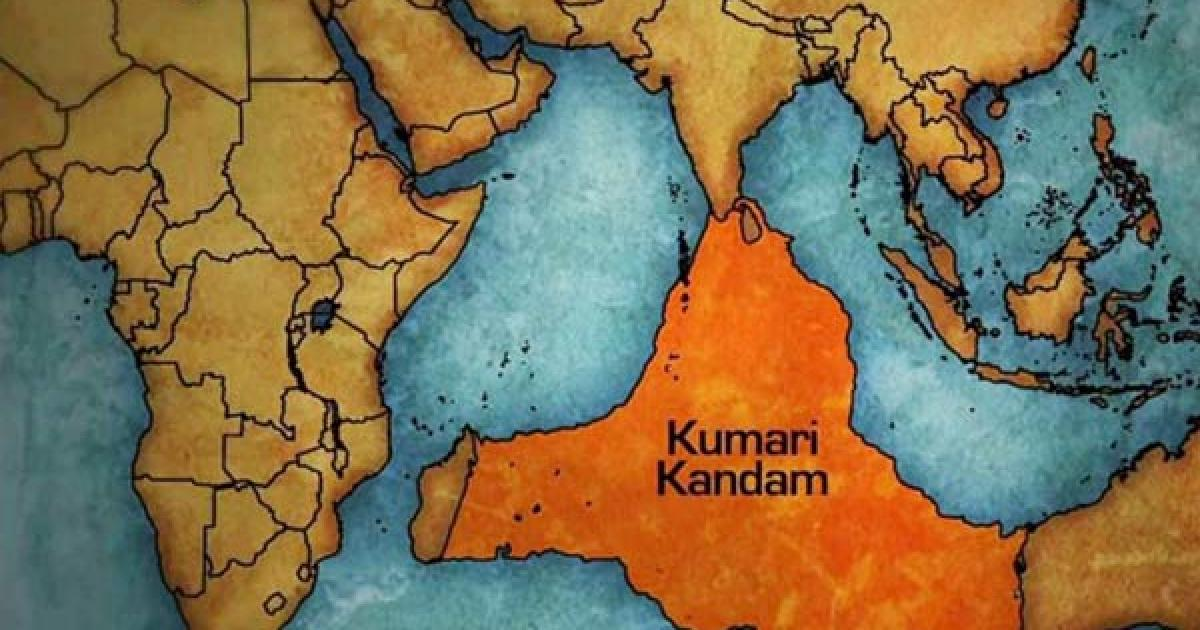
The narrative of Kumari Kandam sits at a fascinating, complex crossroads where 19th-century Western scientific missteps collided with ancient Tamil literary traditions and modern cultural identity. According to classical Tamil Sangam literature dating back over two millennia, there once existed a massive, sprawling landmass extending south from the tip of modern India into the Indian Ocean.
This land, known as Kumari Kandam, was said to be the absolute cradle of Tamil civilization, home to legendary academies of poets (Sangams) and ruled by the ancient Pandyan dynasty for tens of thousands of years before it was completely devoured by a series of catastrophic ocean deluges (kadalkol).
   [ 19th-CENTURY Western Zoogeography ] ──► Sclater's "Lemuria" Land Bridge Hypothesis
                                                    │
                                        (The Tamil Cultural Fusion)
                                                    │
                                                    ▼
   [ MODERN GEOLOGICAL PARADIGM ] ◄────── Plate Tectonics Disproves Sunken Continent
The Western Origin: Sclater’s Lemuria
To understand the modern evolution of Kumari Kandam, one must analyze a defunct 19th-century scientific theory. In 1864, English zoologist Philip Sclater was puzzled by the presence of identical lemur fossils in Madagascar and India, but their complete absence in Africa and the Middle East. Before the discovery of plate tectonics and continental drift, Sclater hypothesized that a massive, sunken continent must have once connected India to Madagascar across the Indian Ocean. He named this theoretical land bridge Lemuria.
When Sclater’s hypothesis reached British-occupied India, Tamil scholars and revivalists noticed a striking correlation between the Western scientific concept of Lemuria and their own ancient literary records of the lost landmass swallowed by the sea. They adopted the term, mapping Lemuria directly onto Kumari Kandam, elevating it into a foundational narrative of their cultural history.
The Scientific Clarification
While Kumari Kandam remains a powerful cultural symbol of cultural pride, modern earth sciences have gently but firmly corrected the concept of a giant, sunken continent in the middle of the Indian Ocean:
Modern plate tectonics has definitively proven that a massive, intact continent could not have sunk into the Indian Ocean during human history. Satellites and oceanographic floor-mapping show no continental crust beneath the Indian Ocean basin—only basaltic oceanic crust, confirming that India and Madagascar separated via tectonic drift over 80 million years ago, long before the evolution of humans.
However, stripping away the pseudoscientific elements reveals a fascinating kernel of archaeological truth. While a whole continent did not sink, massive localized sea-level rises did occur at the end of the last Ice Age.
The shallow shelf connecting India to Sri Lanka—known historically as Adam’s Bridge or Ram Setu—was completely exposed dry land during the Last Glacial Maximum. As the ice sheets melted, this land bridge was inundated by rising water.
The ancient Tamil memories of kadalkol (ocean deluges) were likely highly accurate, generational eye-witness accounts of real, localized coastal flooding that swallowed early prehistoric settlements along the shallow Indian shelf, demonstrating how deep historical truths can transform into epic cultural legends over millennia.