Introduction
Drimolen, located in the Cradle of Humankind in South Africa’s Gauteng Province, is an important fossil site for investigating early human evolution. Its fossil-bearing deposits have produced remains of ancient hominins and other mammals, contributing to debates about the diversity of early human relatives and the emergence of the genus Homo.
The title “South Africa's Earliest Homo” highlights the site’s significance in research on early representatives of our own genus. However, the word “earliest” must be used carefully. The earliest known fossil of a particular group is not necessarily the first individual of that group to have existed. Fossil preservation is incomplete, and new discoveries can change the currently accepted chronology.
Drimolen is especially valuable because it contributes evidence to a period when several hominin lineages existed in Africa. Rather than documenting a simple progression from one species to another, the site helps researchers examine the complexity of human evolution.
Geological Setting and Fossil Preservation
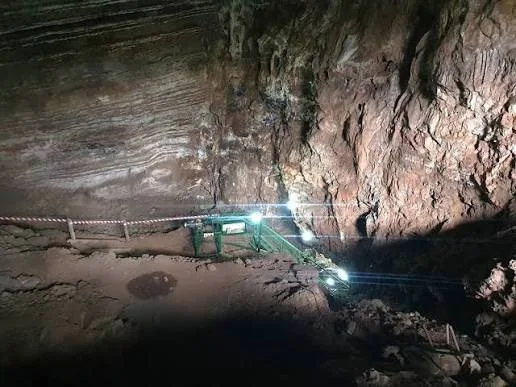
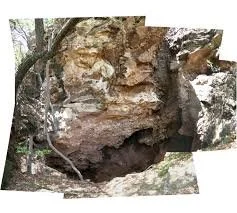
Drimolen lies within the dolomitic landscapes of the Cradle of Humankind. Groundwater gradually dissolved portions of the bedrock, producing cavities and underground passages. Sediment, animal remains, and other materials accumulated in these spaces over time.
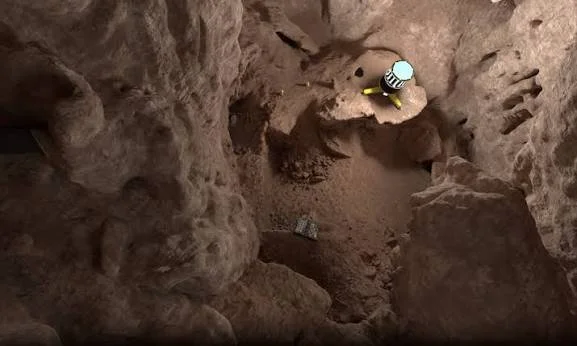
Fossils can enter caves in several ways. Animals may fall through natural openings, predators may carry prey remains into sheltered spaces, and water may transport bones and sediment. Subsequent mineralisation can cement the accumulated material, preserving fossils within breccia.
The resulting deposits require careful investigation because cave systems can contain several distinct episodes of accumulation. A fossil’s age cannot be established simply by identifying the cave in which it was found. Researchers must examine its stratigraphic position and determine how the deposit formed.
At Drimolen, the relationship between geological evidence and hominin fossils is essential for establishing the chronology of early Homo and other hominin groups.
Early Homo and the Evolutionary Landscape
The genus Homo includes modern humans and several extinct species. Its early members are associated with important evolutionary changes, although the timing and significance of these changes remain debated.
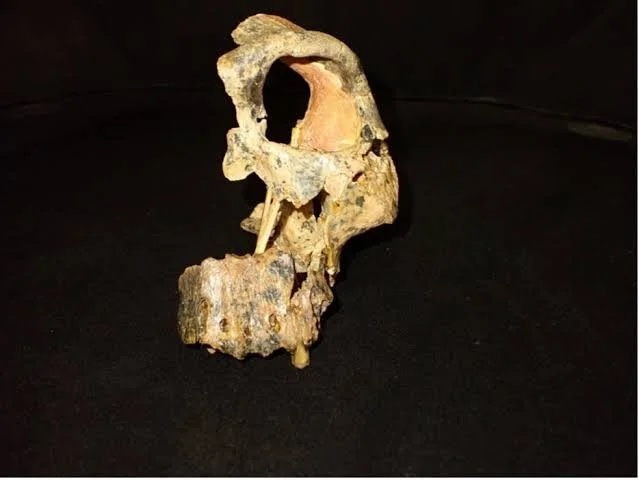
Researchers studying early Homo examine features such as cranial shape, dental anatomy, brain size, and the proportions of different parts of the skeleton. These characteristics can help distinguish fossils from other hominin groups, including Australopithecus and Paranthropus.
Yet the boundaries between early species are not always clear. Fossils may be incomplete, and individuals within a species can vary in size and anatomy. Researchers therefore compare multiple specimens and consider whether observed differences reflect species-level distinctions, individual variation, age, or sexual dimorphism.
Drimolen contributes to this research through its hominin fossils and their geological context. It helps scientists examine which hominin groups existed in southern Africa and how their evolutionary histories may have overlapped.
Paranthropus and the Diversity of Hominins
One of Drimolen’s important contributions is its evidence for Paranthropus robustus, a hominin with a distinctive combination of robust cranial features, large molars, and powerful chewing anatomy.
The existence of Paranthropus alongside early Homo raises questions about how different hominin populations used their environments. Did they consume different foods? Did they occupy different habitats? Did they compete for resources, or did they coexist through differences in diet and behaviour?
Dental morphology provides clues, but it does not offer a complete answer. Researchers also study microscopic tooth wear, chemical signatures in dental tissues, associated animal fossils, and the environmental conditions represented by sediments.
The relationship between anatomy and diet is particularly complex. Large teeth and strong chewing muscles may indicate adaptations to demanding food-processing tasks, but they do not mean that a species ate only one kind of food. Diets could vary with season, habitat, and the availability of resources.
Dating the Earliest Homo Evidence
Chronology is central to interpreting Drimolen. Researchers combine geological observations with dating methods suitable for the age and composition of the deposits. These may include palaeomagnetic analysis, uranium-series methods applied to appropriate materials, and comparisons with fossil assemblages from other sites.
Each technique has limitations. Some methods date the formation of minerals rather than the death of an animal. Others provide age ranges rather than exact dates. Researchers must therefore evaluate whether a result applies directly to a fossil or only constrains the surrounding deposit.
The chronology of early Homo also depends on discoveries beyond Drimolen. Fossils from other parts of Africa provide important comparisons, and different sites may preserve evidence of different species at different times.
Consequently, Drimolen should be understood as a major source of evidence within a wider African record, rather than as a place that independently settles the question of where or when the genus Homo first appeared.
What Drimolen Reveals About Human Evolution
Drimolen helps challenge the idea that human evolution followed a single, straightforward path. Several hominin groups existed in Africa during the Pleistocene, and their anatomical differences suggest that evolution involved branching lineages rather than a simple ladder of progress.
The site also demonstrates the importance of distinguishing biological evolution from technological development. A fossil assigned to Homo does not automatically prove that its owner manufactured a particular tool or practised a specific behaviour. Such claims require archaeological evidence that can be securely connected to the relevant period and context.
The same caution applies to intelligence and social behaviour. Cranial anatomy can inform discussions of brain evolution, but it cannot by itself reconstruct the full cognitive abilities or social organisation of an extinct population.
Conclusion
Drimolen is a significant locality for understanding early Homo and the diversity of hominins in southern Africa. Its fossils, geological deposits, and associated animal remains help researchers investigate evolutionary relationships and establish a more detailed chronology of the early Pleistocene.
The description “earliest Homo” captures the importance of the questions raised by the site, but it should not be treated as an absolute statement that all early human evolution began there. The fossil record remains incomplete, and the history of our genus must be reconstructed through comparisons among multiple localities.
Through continued excavation, dating, and anatomical analysis, Drimolen will remain an important part of the scientific effort to understand the origins and early diversification of the human genus.