Introduction
Sprawled across the hyper-arid floor of the Gregory Rift Valley escarpment in northern Tanzania, the abandoned ruins of Engaruka represent an extraordinary pinnacle of precolonial African agricultural engineering. Inhabited from at least the 14th century to the early 18th century CE, this massive stone-built settlement supported a dense population of several thousand people in an environment where conventional farming is entirely impossible today. For decades, colonial-era researchers viewed Engaruka as an un-African anomaly, attributing its sophisticated hydrology to fictitious lost civilizations; modern landscape archaeology has completely dismantled these myths, proving that Engaruka was an indigenously developed, highly intensive agricultural system designed to conquer a fragile ecosystem.
Hydrological Engineering and Soil Conservation
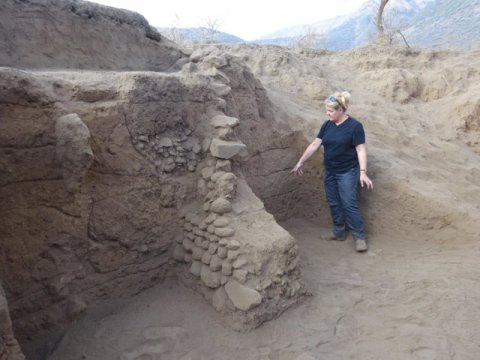
The agricultural power of Engaruka has been mapped across more than 20 square kilometers of beautifully preserved stone masonry. To secure a reliable water supply in the desert basin, the ancient engineers intercepted perennial meltwater streams flowing down from the volcanic heights of the Crater Highlands, channeling the water into a vast, interconnected network of primary and secondary stone-lined irrigation canals. These canals carefully guided the water using gravity, flowing into hundreds of individual stone-walled grid plots that served as cultivation terraces.
Excavations within these gridded plots have unearhed sophisticated soil-management signatures, including deliberate silt-traps, stone clearance mounds, and thick layers of organic manure, proving that the farmers practiced intensive, continuous multi-cropping to feed the urban center. The domestic architecture was equally well-engineered: hundreds of stone-walled residential enclosures were constructed along the rocky, uncultivable slopes of the escarpment, ensuring that not a single square meter of fertile, irrigated valley soil was wasted on housing. This total customization of the landscape demonstrates an advanced, multi-generational understanding of hydrology, soil mechanics, and civil planning.
Conclusion
The systematic unmasking of Engaruka fundamentally rewrites the history of intensive agriculture in East Africa. It provides irrefutable proof that highly complex, large-scale irrigation systems could develop and flourish indigenously within the African interior without external intervention. The masterful adaptation to a hyper-arid environment documented at the site stands as a pristine example of landscape sustainability and collective social labor. Today, the enduring stone canals and abandoned terraces of Engaruka serve as a powerful monument to African technological ingenuity, demonstrating a deep, sophisticated history of environmental mastery.