Introduction
Gondolin, a fossil-bearing locality in South Africa’s Cradle of Humankind region, is significant for the study of ancient mammals and the evolutionary history of hominins. The site is particularly relevant to research on the diversity of Pleistocene and earlier mammalian communities, including extinct carnivores whose anatomy and ecological roles differed considerably from those of modern predators.
The title “South Africa's Sabertooth Den” evokes the image of a cave inhabited by sabertooth cats. Although sabertooth carnivores are an important part of the region’s prehistoric fauna, the phrase should not be interpreted as proof that Gondolin was a permanent den occupied by a single species. Fossil caves can accumulate remains through several processes, including animal deaths, predator activity, water transport, and sediment movement.
Gondolin’s scientific value comes from the fossils it preserves and the questions those fossils raise about ancient ecosystems, carnivore behaviour, and the environments in which early hominins lived.
The Geological Setting
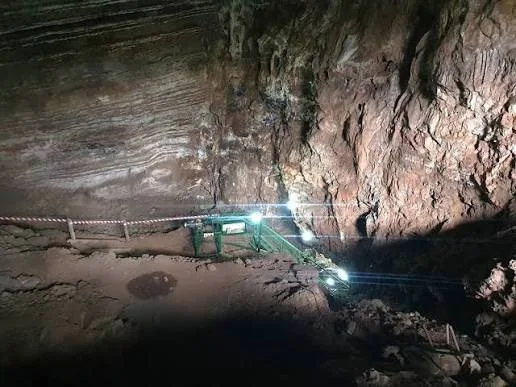
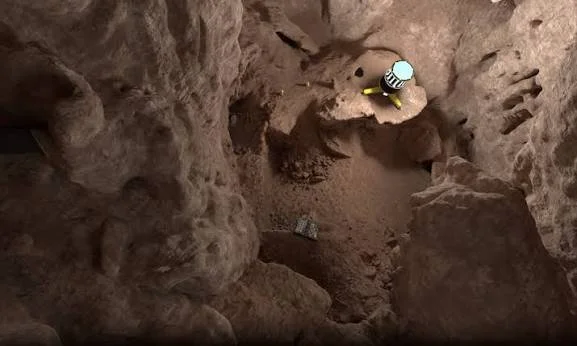
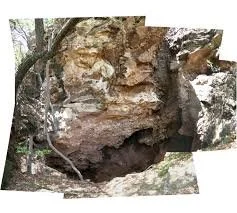
The Cradle of Humankind is known for its extensive dolomitic formations. Groundwater gradually dissolved parts of the bedrock, creating caves and underground cavities. These openings changed through time as water movement, erosion, and collapses modified their structure.
When animals died in or near these cavities, their bones could become trapped beneath sediment. Predators might also have carried prey remains into sheltered spaces. Minerals in groundwater sometimes cemented the accumulated sediment and bone fragments, creating fossil-bearing breccia.
The resulting deposits can preserve an unusual combination of species. However, the presence of a carnivore’s remains does not necessarily establish that the animal lived in the cave. Researchers must examine bone damage, skeletal representation, spatial distribution, and the relationship between fossils and sediments to determine how an assemblage formed.
This distinction is especially important when interpreting sites described as dens. A genuine carnivore den may preserve repeated patterns of prey remains and characteristic bone damage, but these patterns must be demonstrated rather than assumed from the cave’s appearance or the presence of predator fossils.
Sabertooth Cats and Their Anatomy
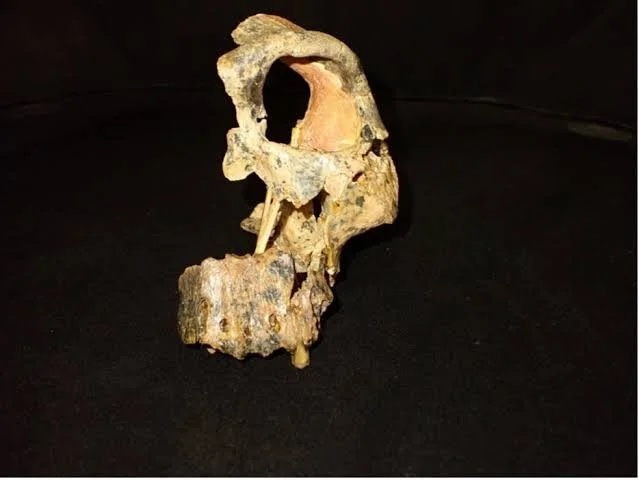
Sabertooth cats were members of extinct carnivore lineages characterised by enlarged upper canine teeth. These animals were not simply oversized versions of modern lions or tigers. Their skulls, necks, forelimbs, and feeding mechanics varied among species, reflecting different evolutionary histories and hunting strategies.
The best-known sabertooth cats belonged to groups such as Homotherium and Megantereon. Other extinct carnivores also possessed enlarged canine teeth, and not all such animals were closely related to modern cats. Their classification depends on anatomical evidence, not merely on the appearance of their teeth.
Long canines were potentially useful in delivering deep wounds, but their use imposed mechanical constraints. The effectiveness of a bite depended on jaw movement, head position, neck musculature, and the degree to which prey was restrained. Researchers therefore investigate the entire skull and skeleton rather than treating the canines as sufficient evidence of a specific hunting method.
Fossils of large carnivores also help reconstruct the ecological relationships of ancient mammals. Predators depended on the availability of prey and competed with other carnivores for resources. Their presence can indicate aspects of the ecosystem, but a single fossil does not reveal how common a species was or how often it occupied a particular landscape.
Gondolin and the Broader Fossil Record
Gondolin’s importance is connected to the wider range of fossil sites in the Cradle of Humankind. These localities preserve evidence of mammals that lived under changing environmental conditions, making it possible to compare faunal communities across time.
Researchers use animal remains to investigate the relative abundance of different ecological groups. Some mammals were adapted to open grasslands, while others depended on woodland, rocky terrain, or mixed habitats. Changes in the composition of fossil assemblages may reflect environmental shifts, although preservation and sampling differences must also be considered.
Carnivore fossils are especially informative when studied alongside herbivore remains. The body size, age, and species of prey animals can help researchers assess the structure of ancient food webs. Tooth marks, fractures, and digestion damage may provide clues about whether bones were processed by predators, scavengers, or other agents.
Nevertheless, interpreting fossil assemblages is difficult. A cave can accumulate remains over an extended period, and species found together in a deposit may not have lived at precisely the same time. The geological sequence must therefore be established before researchers reconstruct a particular ecosystem.
Hominins and Carnivore Competition
The Cradle of Humankind is internationally important because it preserves fossils associated with human evolution. Ancient hominins lived in landscapes shared with large carnivores, and their survival depended on acquiring food while avoiding danger.
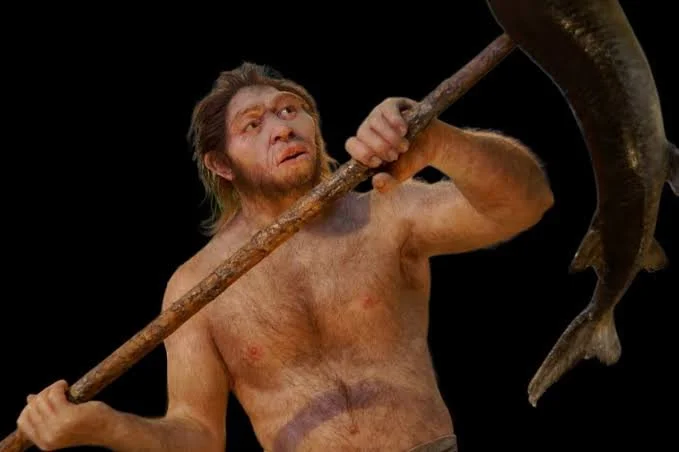
The relationship between hominins and carnivores was not necessarily one of constant direct competition. Depending on the species and circumstances, hominins might have hunted animals, scavenged carcasses, avoided predators, or competed with them for access to shelter and food.
Evidence of carnivore activity on fossil bones can help investigate these relationships. Researchers examine cut marks made by stone tools, tooth marks left by predators, and the order in which these traces were produced. If tooth marks overlie cut marks, for example, that may suggest carnivores accessed the bone after human processing, although the interpretation depends on the specific context.
Such evidence can illuminate the risks and opportunities faced by early hominins. However, it is important not to assume that the presence of a sabertooth fossil proves that a particular hominin group was hunted by that animal at the same site.
How Researchers Interpret a Fossil Cave
Modern palaeontological research combines excavation, geological mapping, comparative anatomy, microscopy, and chronological analysis. Each fossil is documented in relation to its position and surrounding sediment. Researchers also record the condition of bones and the extent to which their surfaces have been altered.
This detailed approach helps separate the original biological history of an animal from the later history of its remains. A bone may have been exposed to weathering, transported by water, damaged by a predator, or altered by mineralisation. These processes can overlap, making careful analysis essential.
The term “den” is therefore best treated as a hypothesis when discussing Gondolin. To establish denning behaviour, researchers would need evidence of repeated use or a distinctive accumulation pattern, not simply the discovery of carnivore bones.
Conclusion
Gondolin provides an opportunity to investigate the ancient mammalian communities of South Africa and the ecological setting in which early hominins evolved. Sabertooth carnivores are compelling because their anatomy reveals evolutionary solutions to predation that differ from those of living animals. Yet the interpretation of Gondolin must rest on fossil evidence and geological context rather than the dramatic image of a sabertooth den.
By studying the site alongside other fossil localities, researchers can develop a more complete understanding of ancient food webs, environmental change, and the interactions between early hominins and the carnivores that shared their world.