Coffee and social life during the Ottoman period
Coffee became an important part of social life across Ottoman territories. Coffeehouses and domestic coffee preparation created spaces for conversation, hospitality, storytelling, business discussions, and social interaction.
Coffee was not merely a beverage. Its preparation and serving could be connected with etiquette, household customs, social relationships, and shared cultural practices.
In communities such as Kavala, which experienced centuries of Ottoman cultural influence, coffee traditions form part of the broader historical context of everyday life.
Coffee-ground divination
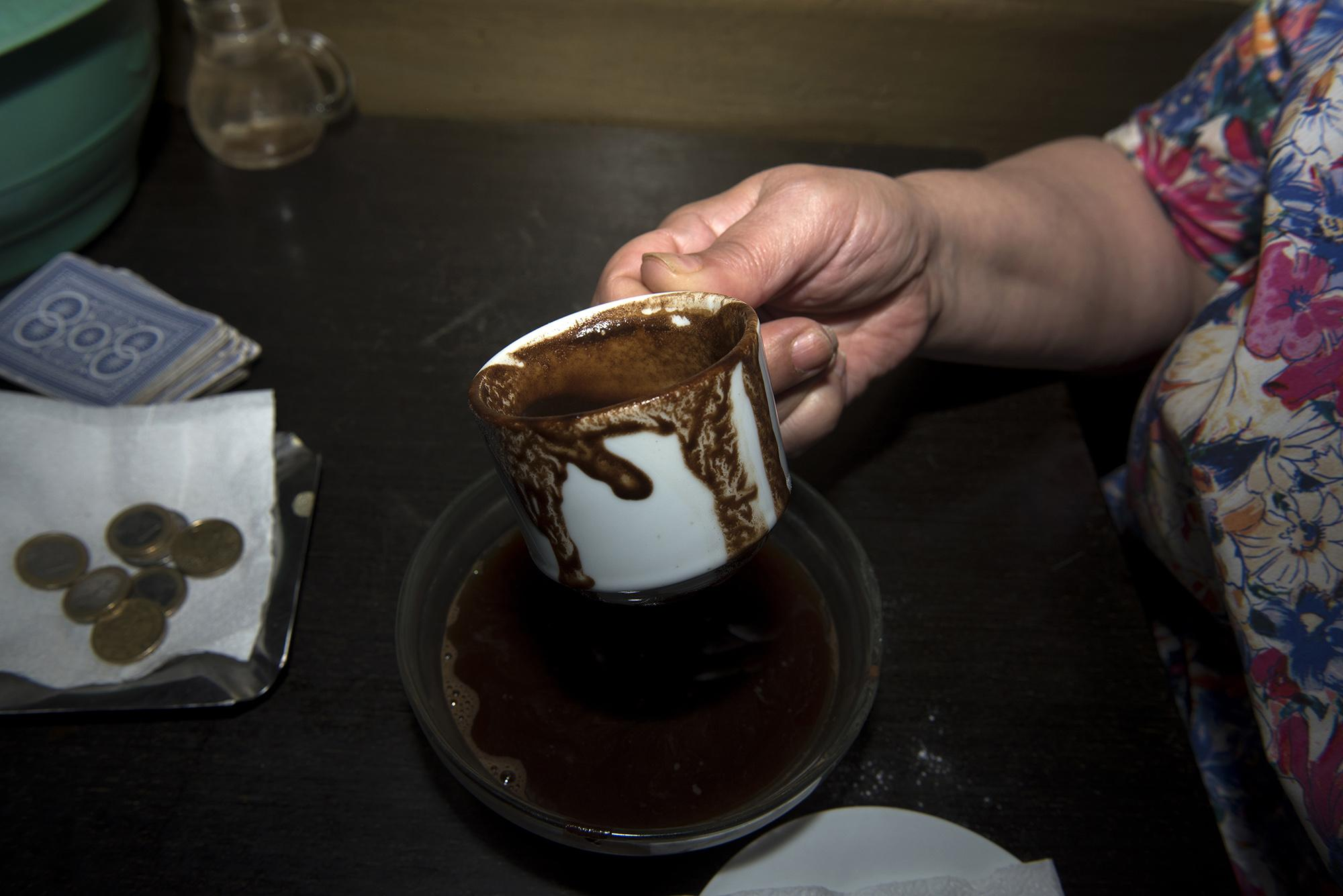
Coffee-ground divination, often known as tasseography, involves interpreting the patterns left by coffee grounds in a cup. People may look at shapes, lines, symbols, or arrangements of grounds and associate them with future events, personal concerns, or symbolic meanings.
The interpretations are generally informal and can vary among individuals and cultural settings. Symbols may be associated with travel, relationships, opportunities, obstacles, or changes in life.
Coffee divination is a form of folk belief rather than a scientifically established method of predicting the future.
Coffee, conversation, and social relationships
The act of preparing and drinking coffee can create a setting for personal conversation. Fortune-telling may become a form of social interaction in which participants discuss their concerns, hopes, fears, and expectations.
The ritual can be meaningful even when the predictions are not taken literally. It may provide entertainment, emotional reassurance, or an opportunity to discuss personal experiences.
In some social settings, coffee reading can also function as a way of strengthening relationships and creating a sense of familiarity.
Kavala and cultural exchange
Kavala has a complex history shaped by ancient, Byzantine, Ottoman, and modern developments. Its architecture, food traditions, and social customs reflect multiple historical influences.
A hypothetical study of Ottoman coffee divination in Kavala would examine the relationship between coffee culture, household traditions, social interaction, and cultural exchange.
It would also explore how practices associated with the Ottoman period have been preserved, adapted, or reinterpreted within modern Greek society.