Introduction
Mercur occupies a distinctive place in Utah mining history because its gold deposits became economically significant through innovative processing methods involving mercury. Located in the Oquirrh Mountains region of Tooele County, the town became an important mining center during the late nineteenth century.
Its history illustrates a fundamental principle of industrial archaeology: sometimes technological innovation matters as much as the mineral deposit itself.
The Discovery of Gold
Gold-bearing ores in the Mercur area attracted prospectors during Utah's mining expansion.
Initially, however, not all mineral deposits were easy to exploit.
Gold could occur in forms that were difficult to recover using conventional techniques.
The economic future of the district changed when processing technology improved.
The Role of Mercury
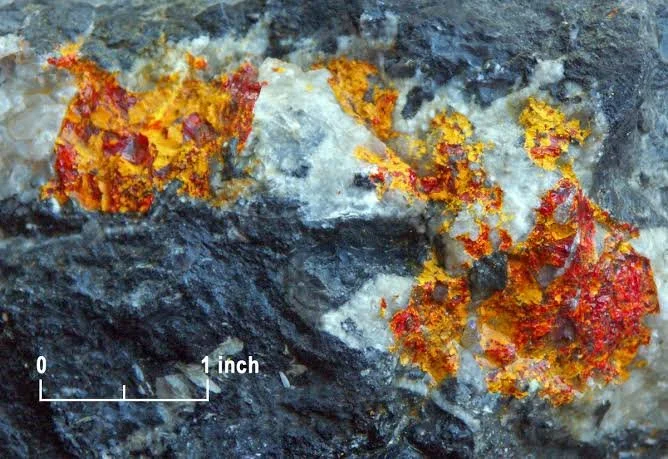
Mercury has a long history in gold extraction.
One traditional technique, amalgamation, uses mercury to combine with gold particles, forming an amalgam that can later be separated and heated to recover the gold.
The method was particularly useful for certain types of finely distributed gold.
However, mercury processing had serious environmental and health consequences.
Mercury is toxic, and historical mining practices could contaminate soil, sediment, water, and industrial areas.
The Mercur Milling Problem
The ore associated with Mercur presented technological challenges.
Gold was not necessarily visible as large nuggets.
Instead, valuable material could be distributed through the ore in microscopic or otherwise difficult-to-recover forms.
Processing engineers therefore experimented with crushing, concentration, roasting, and chemical techniques.
Mercur became notable because technological innovation helped transform an apparently difficult ore deposit into a profitable resource.
Industrial Organization
The town's growth followed the logic of industrial mining.
Large-scale extraction required:
shafts and tunnels;
hoisting machinery;
ore transportation;
crushing facilities;
mills;
furnaces or roasters;
water systems;
housing;
administrative buildings.
The resulting landscape was an integrated industrial complex.
Workers
Mercur's industrial operations depended on a large workforce.
Underground miners extracted ore while surface workers operated mills and processing facilities.
Other workers handled transportation, maintenance, construction, cooking, cleaning, retail, and administration.
The town's economy therefore extended well beyond mining itself.
Mercury and Environmental History
Mercury makes Mercur especially important to environmental historians.
Historical mining landscapes can preserve residues from industrial processing long after communities disappear.
Mercury contamination can persist in ecosystems and create difficult questions about preservation and remediation.
This creates a paradox.
A historic mining site can simultaneously be:
an important archaeological resource;
an environmental contamination site.
Modern conservation must therefore balance historical preservation with public health and ecological responsibility.
Decline and Abandonment
Like other western mining communities, Mercur experienced changes in profitability.
When production declined, the population contracted.
Commercial establishments closed.
Residential buildings disappeared or deteriorated.
The landscape became increasingly dominated by archaeological and industrial remains rather than active community life.
Historical Importance
Mercur demonstrates how technological innovation could reshape the economic value of mineral deposits.
A resource that was difficult to exploit under one technological system could become highly profitable under another.
This principle remains important in modern mining economics.
Conclusion
Mercur is significant not simply because gold was discovered there but because the district illustrates the relationship between geology, metallurgy, industrial organization, and environmental consequences.
Its history demonstrates how mercury-based processing helped create an important mining economy while leaving behind environmental legacies that modern society must carefully manage.