Introduction
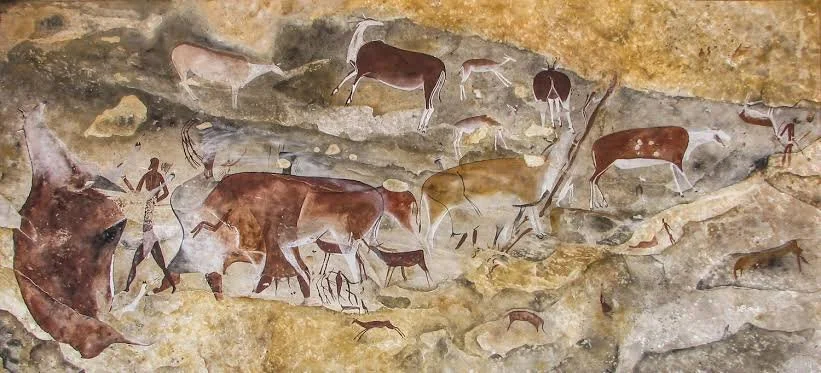
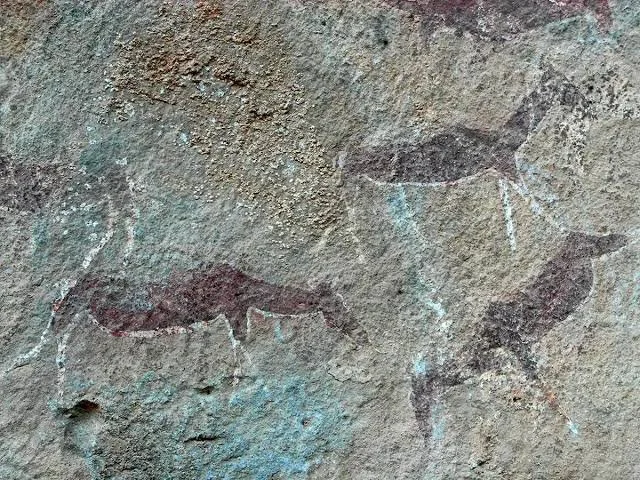
Moyeni is associated with the historical and cultural landscape of southern Lesotho. The title “Hunter Scenes” points to an important subject in the study of southern African rock art: images that appear to depict people, animals, and activities related to hunting.
Hunting scenes can provide insight into how artists represented animals and human movement. However, the interpretation of a particular image requires care. A group of human figures near animals may depict a hunt, a symbolic narrative, or another activity. The visual resemblance alone cannot establish its original purpose.
For Moyeni specifically, claims about particular paintings should be connected to documented archaeological evidence. The wider regional history of rock art provides context, but it cannot substitute for a verified record of the individual site.
The Southern Lesotho Landscape
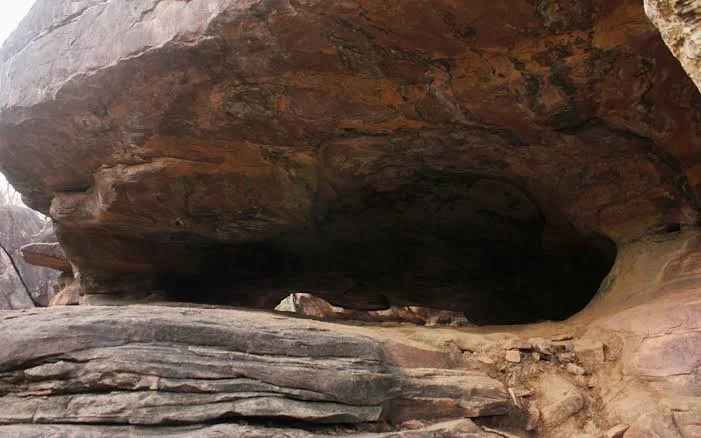
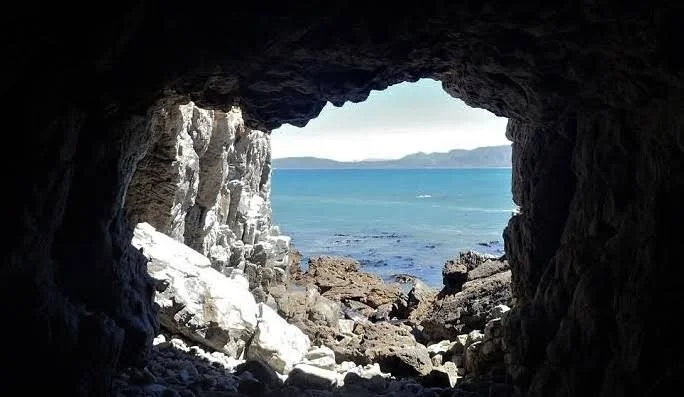
Southern Lesotho contains mountain slopes, river valleys, grasslands, and rocky shelters. These environments supported a range of human activities and provided access to wild animals, plants, and water.
A shelter could offer protection and serve as a stopping point during movement through the landscape. Its location near a valley or route might have made it useful for activities associated with hunting or resource gathering.
The environment also influenced the preservation of rock art. Sheltered rock surfaces can protect pigment from direct rainfall, although moisture and mineral growth may still damage paintings over time.
Hunting in the Archaeological Record
Hunting required detailed knowledge of animals and their environments. Hunters needed to understand where animals gathered, how they moved through the landscape, and how their behaviour changed according to season and weather.
Archaeological evidence for hunting can include animal bones, stone tools, projectile points, and traces of processing. Cut marks and other modifications on bones may help researchers determine whether animals were butchered by people.
Rock art provides a different kind of evidence. It records images selected and arranged by artists, potentially preserving aspects of how people understood animals and hunting. Yet the paintings do not necessarily document a particular hunt in the same way that a collection of butchered bones might document animal processing.
Identifying a Hunting Scene
A composition may be interpreted as a hunting scene if it contains figures carrying apparent weapons, animals positioned in relation to human figures, or body postures that suggest pursuit.
Even these features require careful assessment. Objects that resemble weapons may be difficult to identify, and human figures may represent activities other than hunting. Artists may also have used symbolic conventions that are not immediately obvious to modern viewers.
Researchers compare the composition with other paintings and examine the archaeological context. When possible, they also consider Indigenous knowledge and relevant historical accounts.
The interpretation should explain which features support the hunting hypothesis and which aspects remain uncertain.
Hunting, Symbolism, and Spiritual Meaning
Hunting was a practical activity, but animals could also have cultural or spiritual significance. In some San traditions, particular animals held symbolic roles associated with healing, potency, or ritual practice.
Consequently, an image of an animal and a human figure may have meanings that extend beyond the act of hunting. A scene could combine observation of wildlife with cultural beliefs about the relationship between humans and animals.
This possibility does not mean that every hunting-like image is spiritual. The purpose of a painting must be evaluated from the full composition and available contextual evidence.
Dating the Artwork
The age of a hunting scene can be difficult to determine. Pigments may not be suitable for direct dating, and the same type of scene could be produced during different periods.
Researchers may study pigment composition, the relationship between images and archaeological layers, and similarities with paintings from other sites. Overlapping images can sometimes establish relative order, but they do not necessarily provide an absolute date.
Any specific claim about the age of the Moyeni paintings should therefore be supported by documented research.
Conservation and Cultural Respect
Rock paintings are vulnerable to natural deterioration and human damage. Touching the surface, applying chemicals, or adding new marks can destroy evidence.
Conservation involves recording the artwork, managing access, and working with heritage authorities and local communities. Interpretive material should acknowledge uncertainty and avoid presenting Indigenous traditions as though they were uniform across all places and periods.
Conclusion
Moyeni Rock Art provides a useful subject for exploring the relationship between hunting and artistic representation in Lesotho’s wider cultural landscape. Hunter scenes, when securely documented, can reveal how artists represented animals, movement, and human activity.
However, the meaning of a particular composition cannot be established from appearance alone. Archaeological context, careful dating, and relevant cultural knowledge are necessary to distinguish a likely hunting scene from other possible interpretations.