Prehistoric communities interacted with plants in many ways, from gathering wild fruits and seeds to cultivating crops and managing useful vegetation near their homes. While large agricultural fields and established settlements often receive the most attention in archaeological research, smaller cultivated spaces may also have played an important role in prehistoric life. Sheltered recesses, protected courtyards, rock overhangs, and small areas near dwellings could have provided opportunities to grow herbs, edible plants, medicinal species, or other useful vegetation. The concept of prehistoric micro-gardens offers a way to investigate these localized practices through environmental evidence, particularly pollen and phytoliths.
A micro-garden can be understood as a small, intensively managed growing area rather than a large agricultural field. Such spaces may have been useful where land was limited, soil conditions were difficult, or people needed convenient access to particular plants. A sheltered recess might offer protection from strong winds, excessive sunlight, or some forms of animal disturbance. Depending on local conditions, it could also retain moisture or collect organic material that improved the soil. These advantages would not have been universal, however, because a sheltered location could also suffer from poor drainage, limited sunlight, or insufficient space for plant growth.
Identifying prehistoric micro-gardens is challenging because small cultivated plots rarely leave obvious structural remains. Unlike fields marked by extensive boundaries, irrigation channels, or repeated plowing, a tiny growing area might have consisted of disturbed soil, scattered plant remains, and simple arrangements that disappeared after abandonment. Archaeologists must therefore rely on multiple lines of evidence to determine whether a small area was deliberately cultivated or simply contained naturally growing vegetation.
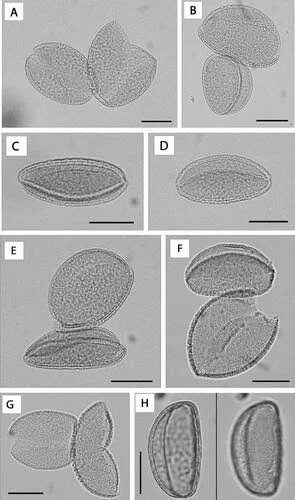
Pollen analysis is one method for investigating ancient plant communities. Plants release pollen grains that may become trapped in sediment, soil, waterlogged deposits, or other materials. Because pollen from different plant groups often has distinctive microscopic characteristics, specialists can identify many grains and estimate which types of vegetation were present in a particular environment. Changes in pollen abundance through successive layers can reveal shifts in plant communities, climate, and land use.
However, pollen is not a direct map of a garden. Some plants produce large amounts of pollen that can travel considerable distances, while others release relatively little. Wind direction, insect activity, water movement, and the shape of the surrounding landscape all influence where pollen accumulates. A high concentration of a particular plant's pollen could indicate nearby vegetation, but it does not necessarily prove that the plant was deliberately cultivated in that exact location.
Phytoliths provide another source of evidence. These microscopic silica structures form within certain plant tissues and can remain in soil long after the original plant material has decomposed. Different plant groups may produce phytoliths with recognizable shapes, making them useful for studying vegetation in environments where pollen preservation is poor. Phytoliths can sometimes survive in archaeological deposits associated with food preparation, plant processing, and cultivated soils.
The strongest evidence for a micro-garden would emerge from the combination of these botanical remains with soil characteristics and archaeological context. Researchers might investigate whether a small recess contains unusual concentrations of plant remains, traces of repeated soil disturbance, evidence of organic enrichment, or residues associated with particular cultivated species. Nearby grinding stones, storage containers, or plant-processing tools could help explain how people used the vegetation, although such artifacts would not independently establish that gardening occurred at the site.
Microscopic soil analysis can be especially valuable. Soil micromorphology examines undisturbed blocks of sediment under a microscope, revealing the arrangement of particles, organic residues, ash, and other components. Repeated cultivation may disturb natural soil structures, while the addition of plant matter or other materials may produce distinctive patterns. Even so, these patterns must be compared with alternative explanations, including natural sediment accumulation, animal activity, and ordinary domestic waste.
The distinction between cultivation and plant management is also important. Prehistoric people may have encouraged useful plants to grow near their homes without planting them in formally prepared plots. They might have cleared competing vegetation, protected seedlings, scattered seeds, or repeatedly harvested plants from a convenient location. Such practices can represent intentional environmental management even when the evidence does not support the existence of a conventional garden.
Small growing areas could have served several purposes. Edible herbs and vegetables might have supplemented gathered foods, while medicinal plants could have been maintained near dwellings for practical use. Fibers, dyes, and aromatic plants might also have been valuable for crafts, clothing, or household activities. The plants selected would have depended on local ecology, cultural knowledge, seasonal availability, and the needs of each community.
Interpreting these spaces requires caution because modern assumptions about gardening may not match prehistoric behavior. A cluster of useful plants near a dwelling might have grown naturally, and a concentration of pollen could reflect regional vegetation rather than human intervention. Researchers need secure dating and several independent indicators before describing a deposit as evidence of a cultivated micro-garden.
The study of prehistoric micro-gardens broadens our understanding of how people managed plants at a small scale. Pollen, phytoliths, soil analysis, and archaeological context can help reveal forms of plant use that would otherwise remain invisible. Although proving the existence of a particular garden may be difficult, these methods offer valuable insight into the close relationships between prehistoric households, local vegetation, and the gradual development of plant management practices.