Introduction
Ribe is one of the earliest and most significant urban settlements in Scandinavia.
Founded during the early eighth century in southwestern Denmark, Ribe developed into a major center of commerce, craftsmanship, and cultural exchange.
Its importance is particularly significant because it emerged before the conventional beginning of the Viking Age in 793.
Ribe therefore demonstrates that the commercial and technological foundations of the Viking world existed before the famous raids associated with Viking history.
The Birth of a Trading Center
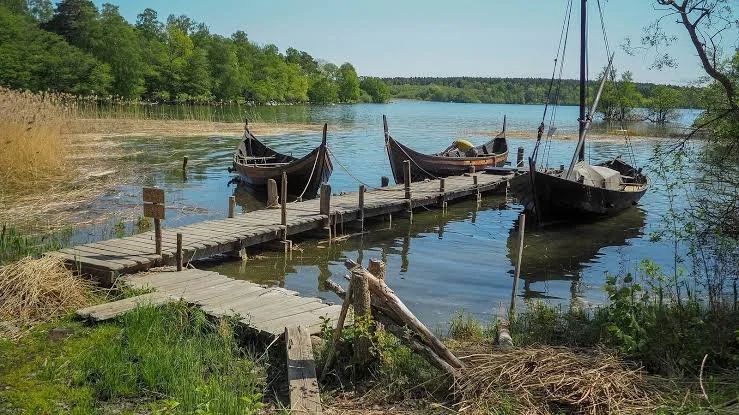
Ribe was established near the River Ribe and close to the North Sea.
The location provided access to maritime transportation while also connecting the settlement to inland communities.
Its position made it suitable for trade between Scandinavia and western Europe.
Merchants could bring goods to Ribe, exchange them, and continue onward through regional networks.
Early Urban Development
Ribe was not initially a large city.
It began as a specialized marketplace.
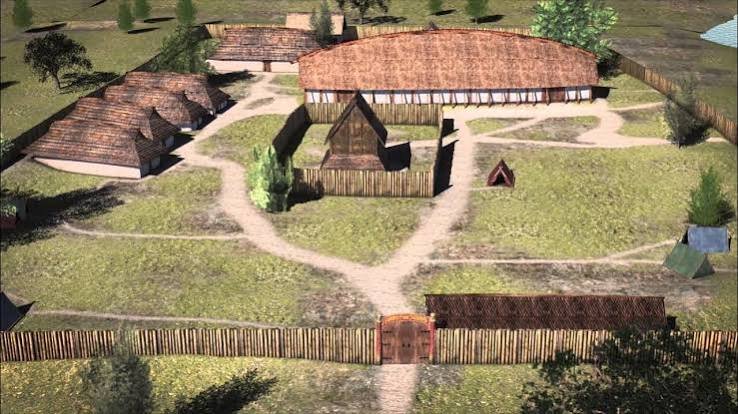
Temporary market stalls and workshops gradually developed into a more permanent settlement.
This process represents one of the earliest examples of Scandinavian urbanization.
Archaeological Discoveries
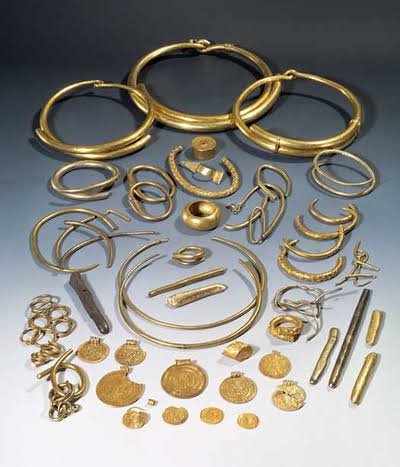
Ribe has produced an extraordinary archaeological record.
Excavations have uncovered:
coins;
beads;
imported ceramics;
glass;
bronze objects;
iron tools;
animal bones;
textile equipment;
craft debris;
building remains.
Because some occupation layers preserved organic materials unusually well, archaeologists have been able to reconstruct many aspects of daily life.
International Trade
Ribe was connected to a broad trading network.
Merchants interacted with communities from the North Sea and continental Europe.
Objects from distant regions demonstrate that Ribe's inhabitants were not economically isolated.
The exchange of goods also meant the exchange of ideas, technologies, artistic traditions, and religious practices.
Beadmaking
One of Ribe's most famous archaeological signatures is evidence for bead production.
Glass was melted and shaped into colorful beads.
The presence of manufacturing debris demonstrates that beads were not simply imported finished products.
Specialized craftspeople produced them locally.
Metalworking
Metalworkers also operated at Ribe.
Iron and non-ferrous metals could be transformed into tools, ornaments, fittings, and other objects.
Metalworking required specialized knowledge and access to fuel and raw materials.
Its presence indicates a sophisticated craft economy.
Coins and Commerce
Coins provide another important source of information.
Early Scandinavian trade did not depend entirely on coins.
Silver could be weighed and exchanged.
Nevertheless, coins from different regions demonstrate contact with foreign economic systems.
Weights and scales allowed merchants to conduct transactions efficiently.
Daily Life
Ribe was populated by people from many social backgrounds.
Merchants and craftspeople interacted with farmers, sailors, laborers, and political authorities.
The archaeological record reveals household activities, food consumption, manufacturing, clothing, and personal adornment.
This makes Ribe one of the best places to study ordinary life in early medieval Scandinavia.
Ribe and the Viking Age
Ribe's early foundation changes how the Viking Age should be understood.
The Viking Age did not suddenly begin when Scandinavian warriors attacked monasteries.
Long-distance trade, shipbuilding, specialized craftsmanship, and political organization were already developing.
Ribe represents part of this earlier transformation.
Christianity
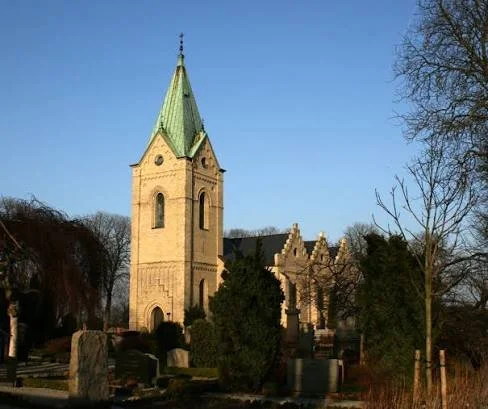
Christianity eventually became increasingly important in Ribe.
The establishment of ecclesiastical institutions reflected the broader Christianization of Denmark.
Religious transformation affected burial practices, architecture, artistic styles, and political organization.
Urban Continuity
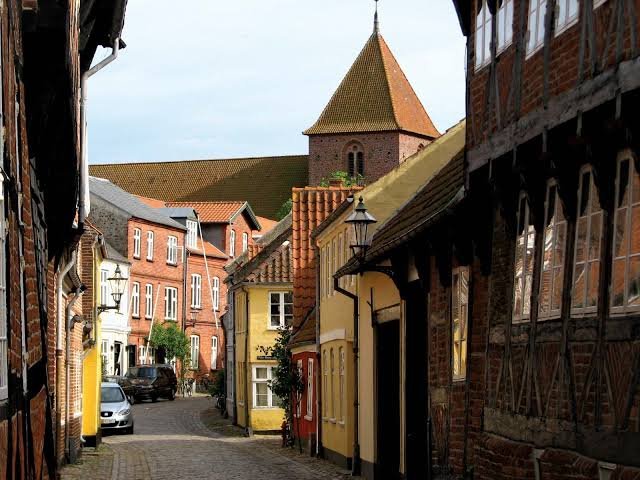
Unlike many Viking Age settlements that disappeared, Ribe continued developing through the medieval period.
This continuity makes it especially valuable.
Archaeologists can compare earlier Viking-period activity with later medieval urban development.
Conclusion
Ribe was one of Scandinavia's earliest trading towns and an important precursor to the mature Viking Age commercial world.
Its archaeological evidence reveals long-distance trade, specialized crafts, monetary exchange, international contacts, and emerging urban life.
Ribe reminds us that the Viking Age was not simply an age of raiding.
It was also an age of commerce and innovation.
The marketplace established at Ribe helped create the economic environment in which later Viking expansion became possible.