Introduction
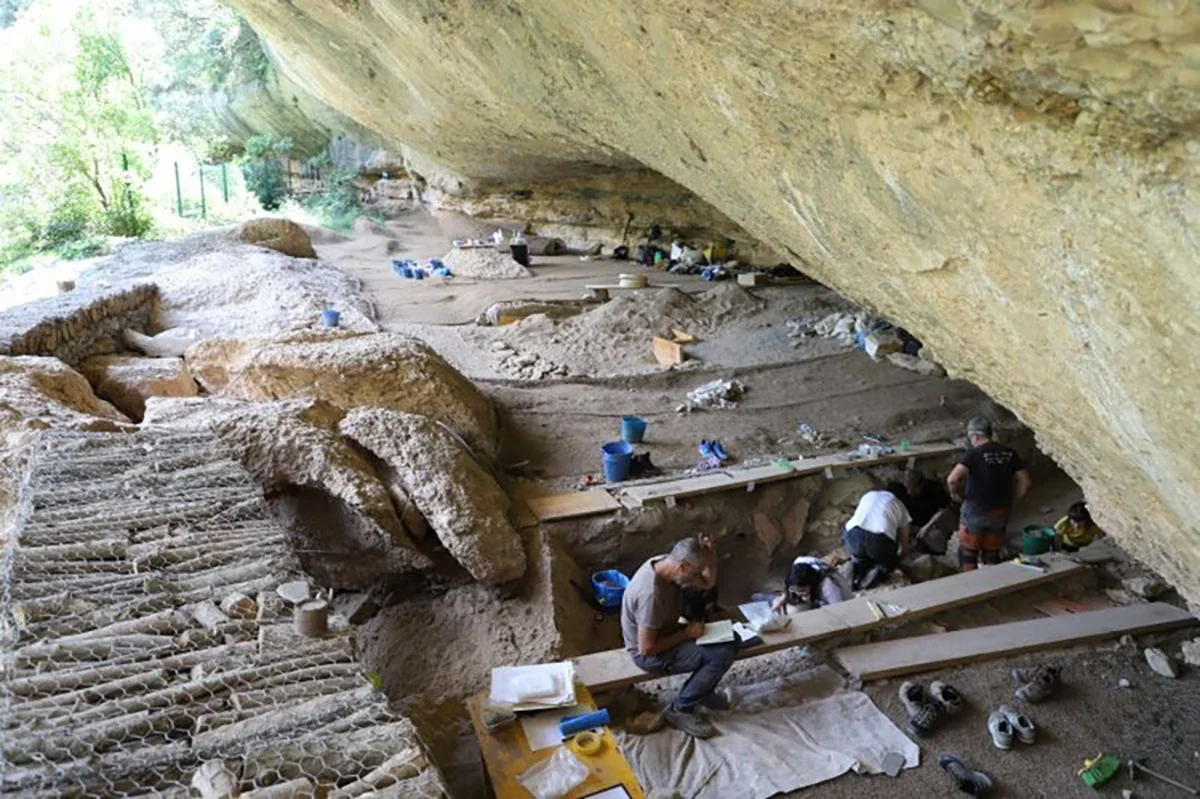
Rock shelters provided prehistoric communities with protection from rain, wind, and extreme temperatures. They also offered convenient locations for temporary camps, food preparation, toolmaking, and the storage of useful materials.
A more unusual possibility is that some shelters contained small cultivated plots or deliberately maintained plant-growing areas. These microgardens may have supported medicinal plants, herbs, edible species, or seedlings intended for transplantation.
The concept requires careful archaeological investigation. Plant remains inside a shelter do not automatically indicate cultivation. Seeds may have arrived through natural processes, animal activity, food preparation, or human occupation.
Understanding whether a rock shelter functioned as a small garden therefore requires evidence that goes beyond the discovery of ancient seeds.
Why Cultivate Plants Inside a Shelter?
Rock shelters offered several advantages for managing plants.
Their overhangs could provide partial protection from heavy rainfall, while nearby openings might allow enough sunlight for certain species to grow.
People could also control access to plants and protect valuable specimens from grazing animals.
A sheltered area might have been used to keep medicinal plants, maintain seedlings, or grow species requiring particular environmental conditions.
However, many rock shelters receive limited sunlight. This would restrict the kinds of plants that could grow successfully inside them. Cultivation may have occurred near the entrance or in adjacent patches rather than deep within the shelter.
What Is a Microgarden?
A microgarden is a small, deliberately managed growing area.
In archaeological contexts, the term can describe a compact plot maintained for household or camp use.
It does not necessarily imply intensive agriculture. A microgarden might contain only a few useful plants, maintained through watering, soil preparation, transplanting, or protection from animals.
Possible purposes include the cultivation of herbs, medicinal plants, edible greens, or plants used in craft production.
The term should be applied cautiously when direct evidence for deliberate cultivation is incomplete.
Archaeobotanical Evidence
Archaeobotany examines plant remains recovered from archaeological sites.
Researchers study seeds, fruits, wood, pollen, phytoliths, and other microscopic plant materials.
In a rock shelter, these remains can reveal what plants were present during different periods of occupation.
Carbonized seeds may survive because they were exposed to fire. Waterlogged deposits can preserve delicate plant remains, while dry caves and shelters may preserve seeds under favorable conditions.
The difficulty lies in determining whether the plants grew at the site, were collected from the surrounding landscape, or arrived through other processes.
Distinguishing Cultivation from Gathering
Evidence for cultivation is strongest when several indicators occur together.
These may include concentrations of plant remains in prepared soil, repeated deposits of the same useful species, traces of irrigation or water management, and evidence of deliberate soil disturbance.
A change in plant size or seed morphology may also indicate domestication, although such changes often develop gradually.
The presence of a useful plant alone is not enough. Gathered wild plants can be stored, processed, and consumed in shelters without ever being cultivated there.
Soil and Microstratigraphic Analysis
Micromorphology allows researchers to examine undisturbed soil samples under a microscope.
It can reveal whether sediments contain signs of digging, trampling, burning, organic enrichment, or repeated watering.
A deliberately prepared growing bed might contain a distinctive mixture of soil, decomposed organic material, and other amendments.
Researchers can compare these deposits with natural sediments from nearby areas.
Chemical analysis may also identify elevated nutrients associated with repeated organic inputs, although animal activity and waste disposal can produce similar signals.
Water and Light Management
Plant cultivation requires suitable environmental conditions.
Water may have been carried into a shelter in containers, collected from dripping rock surfaces, or directed from nearby sources.
Small channels, basins, or modified surfaces could potentially indicate water management.
Light is another important factor. Some plants tolerate shade, while others require direct sunlight.
A likely cultivation area would therefore be expected near a shelter opening or in an adjacent protected zone.
Archaeologists must reconstruct ancient sunlight and moisture conditions rather than assume that the modern environment is identical to the prehistoric one.
Plants and Traditional Knowledge
Small cultivated areas could have supported plants used for healing, food, fragrance, or practical activities.
Medicinal plants may have been particularly valuable because they could be difficult to locate at certain times of year.
Maintaining useful species close to a shelter would reduce the need for repeated collection journeys.
Nevertheless, identifying a plant as medicinal does not prove that prehistoric occupants understood or used it for that purpose. Such interpretations require supporting evidence from residues, associated artifacts, or repeated patterns of use.
The Limits of the Evidence
Rock shelters are complicated archaeological environments.
Seeds can be transported by birds, rodents, insects, wind, and flowing water.
Animal droppings may introduce plant remains from distant feeding areas.
Human occupation can also create concentrations of seeds through food processing and waste disposal.
For this reason, claims of prehistoric microgardens should be based on multiple independent lines of evidence.
A particularly convincing case would combine prepared growing surfaces, botanical remains, evidence of water management, and a clear chronological relationship with human activity.
Conclusion
Rock-shelter microgardens offer an intriguing possibility for understanding how prehistoric people managed useful plants on a small scale.
They may have provided convenient access to herbs, medicinal species, seedlings, and edible plants near temporary or seasonal settlements.
However, the discovery of seeds inside a shelter does not establish that cultivation took place there.
Archaeobotanical identification, soil micromorphology, environmental reconstruction, and careful excavation are necessary to distinguish deliberate gardening from gathering and natural plant deposition.
If securely identified, such microgardens would reveal a form of plant management that existed between wild gathering and larger-scale agriculture.