Introduction
Ancient human bones preserve evidence of disease, injury, healing, and medical intervention. Among the most significant discoveries are skeletal remains showing signs of deliberate surgical procedures.
Examples include trepanation, the intentional opening of the skull, and other interventions involving bone cutting, scraping, drilling, or removal.
Detecting ancient surgery is a forensic challenge, especially when only a small number of skeletons are available. A single damaged bone may be difficult to interpret, and natural disease can sometimes produce changes resembling deliberate medical treatment.
The study therefore combines forensic anthropology, paleopathology, archaeological context, and scientific imaging to distinguish surgery from injury and disease.
What Counts as Ancient Surgery?
Ancient surgery refers to deliberate physical intervention intended to treat an injury, disease, or bodily condition.
Procedures could involve removing damaged tissue, opening the skull, setting fractures, or treating wounds.
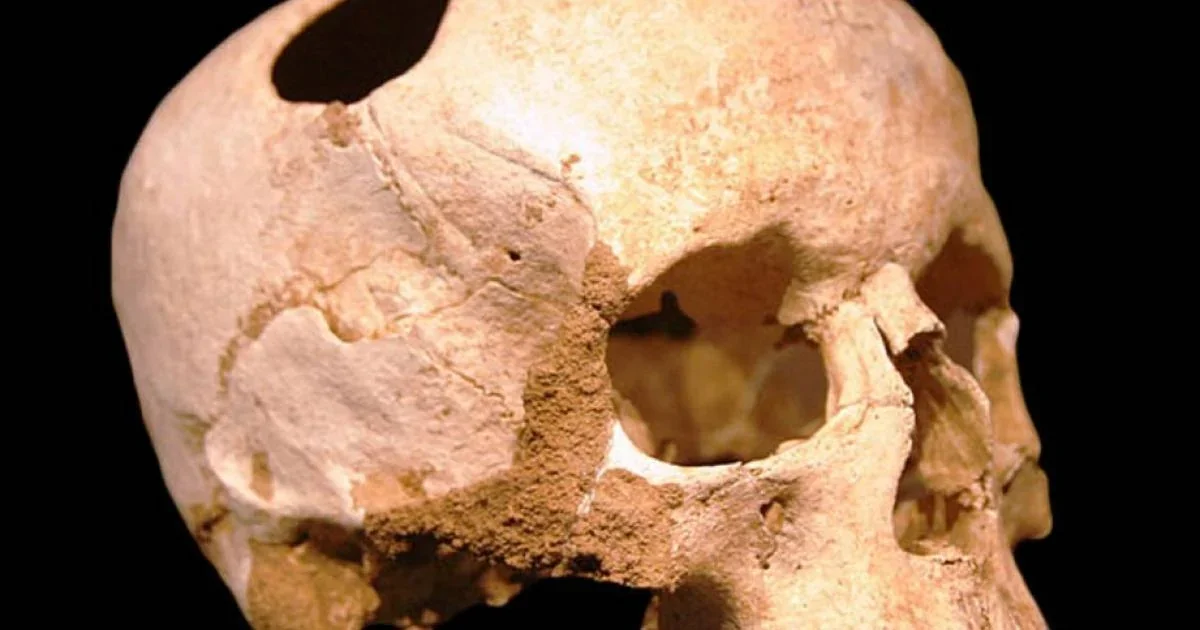
The most widely recognized archaeological example is trepanation, in which an opening was intentionally created in the cranial bone.
Evidence of other procedures is more difficult to identify because many ancient interventions involved soft tissue, which rarely survives.
It is also important to distinguish surgery from postmortem modification, ritual treatment of the dead, and accidental damage.
Trepanation and Cranial Evidence
Trepanation is among the best-known forms of prehistoric and ancient surgery.
Archaeologists have identified skulls with openings produced through scraping, cutting, or drilling techniques.
Some examples show evidence of bone healing around the opening.
Healing is especially important because it suggests that the individual survived the procedure for at least some period.
A skull opening without healing may represent a procedure performed shortly before death, an injury, or damage that occurred after burial.
Identifying Surgical Modification
Researchers examine the shape, edges, location, and surface characteristics of bone modifications.
A deliberately created opening may display regular cutting marks or a pattern consistent with repeated scraping.
Natural fractures often have different surface characteristics, although damage can become difficult to interpret after burial.
Microscopic examination can reveal tool marks and bone remodeling.
Imaging techniques, including computed tomography, can help researchers inspect internal structures without damaging fragile remains.
Distinguishing Surgery from Trauma
One of the main challenges is separating medical intervention from accidental injury.
A sharp-force injury may create a cut or hole resembling a surgical opening.
Blunt-force trauma can produce fractures that later heal.
Researchers consider the geometry of the damage, the direction of force, associated fractures, and signs of healing.
A surgical interpretation becomes more convincing when the modification has a deliberate shape and is located in a position consistent with a known procedure.
However, the absence of a familiar pattern does not automatically rule out ancient medical intervention.
Paleopathology and Bone Healing
Paleopathology examines disease and injury in ancient human remains.
Bone responds to damage through processes such as inflammation, remodeling, and new bone formation.
These biological responses can help establish whether an individual survived an injury or operation.
Forensic researchers examine changes around the affected area to determine whether healing occurred.
The extent of healing may provide an approximate indication of survival time, although it cannot usually establish an exact number of days or weeks.
Why Small Skeletal Series Are Difficult
A small skeletal series contains limited individuals.
This creates problems of statistical interpretation.
If one skull displays evidence of trepanation, researchers cannot confidently conclude that the procedure was common throughout the population.
The individual may represent an unusual case, a person with special social status, or a patient whose remains were preserved under exceptional conditions.
Small samples also make it difficult to identify patterns related to age, sex, occupation, or social group.
Context and Archaeological Interpretation
The location of a skeleton matters.
A burial from a settlement cemetery may provide different information from remains discovered in a medical context, battlefield, or ritual deposit.
Associated objects can contribute to interpretation, but they rarely prove that surgery occurred.
Researchers also need to consider whether the remains were moved or disturbed after burial.
A surgical-looking mark could have been produced during excavation, historical disturbance, or earlier handling.
Scientific Techniques
Several methods can strengthen the identification of ancient surgery.
High-resolution microscopy can reveal tool marks and surface modification.
CT scanning can document internal bone structure and healing without destructive sampling.
Radiographic analysis can help identify fractures and changes in bone density.
Histological examination may reveal microscopic evidence of remodeling.
Radiocarbon dating and archaeological stratigraphy can establish chronology, while chemical analysis may help assess preservation conditions.
No single technique is sufficient in every case. The strongest conclusions emerge from combining several methods.
Interpreting Ancient Medical Knowledge
Evidence of surgery demonstrates that ancient communities sometimes attempted deliberate physical treatment.
It does not necessarily reveal the exact medical theory behind the procedure.
A person who underwent trepanation may have been treated for trauma, pain, neurological symptoms, or a condition understood through religious or cultural beliefs.
Researchers should avoid assuming that ancient practitioners understood anatomy in the same way as modern medicine.
At the same time, successful healing demonstrates practical knowledge of bodily response and the ability to perform technically demanding procedures.
Conclusion
The forensic detection of ancient surgeries in small skeletal series requires careful differentiation between deliberate intervention, traumatic injury, disease, and postmortem damage.
Bone healing, tool marks, imaging, microscopic analysis, and archaeological context all contribute to interpretation.
Small samples impose serious limits on broader conclusions, but individual cases can still provide valuable evidence of ancient medical practice.
When interpreted cautiously, skeletal remains reveal not only the injuries and illnesses experienced by past populations but also the efforts people made to treat them.