The Ancient Trading City Hidden Beneath Modern Algeria's Capital
Long before modern Algiers became one of North Africa's major cities, the coastline around it was already connected to Mediterranean trade.
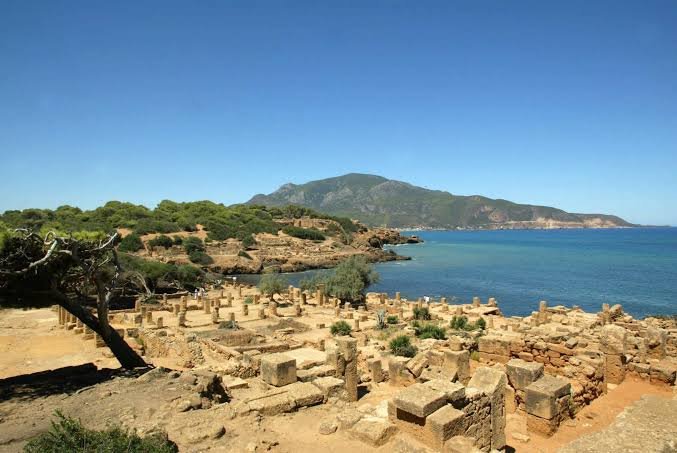
One ancient settlement associated with this landscape was Rusguniae, located east of the historic center of modern Algiers.
Today, much of its ancient environment has been transformed by urban development.
But archaeological evidence and historical references reveal that this coastal area was once part of a much older network of commerce and settlement.
The Phoenician and Punic Mediterranean
The earliest trading communities of the central North African coast participated in networks connected with Phoenician maritime activity.
The Phoenicians established commercial links across the Mediterranean.
Their settlements and trading stations connected distant regions.
Later, Carthage became the dominant Punic power in North Africa.
Rusguniae developed within this broader commercial environment.
Why Coastal Trading Posts Were Important
A trading post did not need to become a massive city to be historically significant.
Its importance could depend on location.
A useful harbor could connect:
Local agricultural communities.
Inland populations.
Mediterranean merchants.
Goods could move between land and sea.
Roman Control
When Rome expanded into North Africa, existing settlements were incorporated into the Roman political system.
Rusguniae became part of Roman Mauretania.
The settlement developed under Roman administration.
Roman roads and maritime networks connected it with other coastal cities.
Urban Development
Like other Roman settlements, Rusguniae contained elements of urban life.
Archaeological evidence may include:
Architectural remains.
Funerary monuments.
Inscriptions.
Ceramics.
Religious structures.
However, modern urban development makes the archaeological study of such sites particularly difficult.
The Problem of Archaeology Beneath Modern Cities
A famous archaeological site like Timgad can be extensively excavated because much of the ancient city remained outside modern urban development.
Rusguniae faced the opposite problem.
Modern construction covered or disturbed portions of the ancient landscape.
Archaeologists may have only fragments.
This makes interpretation difficult.
A broken inscription.
A buried wall.
A group of ceramics.
Each may represent a surviving fragment of a much larger lost city.
Christianity and Late Antiquity
Like many Roman settlements in North Africa, Rusguniae later became connected with Christian institutions.
The growth of Christianity transformed the social and religious landscape.
Bishops, churches, and Christian communities became increasingly important.
Why Rusguniae Matters
Rusguniae demonstrates that modern cities often sit directly on top of ancient ones.
The development of Algiers did not begin with the modern era.
The coastline had been inhabited, traded through, and politically controlled for centuries.
The ancient port may be difficult to see today.
But its historical significance remains.
Beneath roads, buildings, and modern neighborhoods lies the memory of a Mediterranean world that existed long before the modern capital.