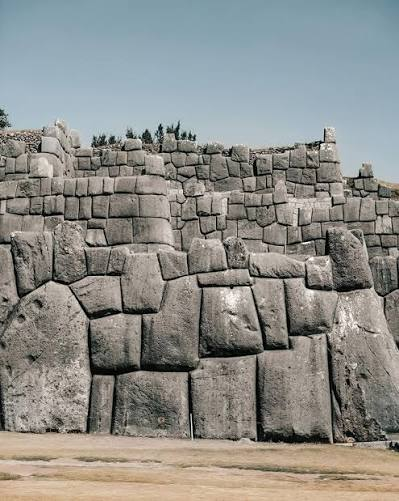
Towering over the northern outskirts of Cusco, Peru, the historic capital of the Inca Empire, sits the monumental fortress-temple complex of Sacsayhuamán (pronounced sack-say-wah-man). Constructed during the 15th century under the direction of the visionary emperor Pachacuti, this architectural wonder features a series of three tiered, zigzagging defensive walls.
In alternative history circles, Sacsayhuamán is frequently cited as definitive proof of lost high technology, ancient astronauts, or "laser cutting." When viewers look at the massive stones—some weighing over 120 tons—fitting together so tightly that a piece of paper cannot be slid between them, it is easy to see why.
However, the reality of how the Inca built Sacsayhuamán does not rely on lasers or extraterrestrials. The true story is far more impressive: a triumph of experimental geology, massive human logistics, and an absolute mastery of stone-on-stone friction mechanics.
1. The Myth of the Laser Cut: Dispelling the Pseudo-Science
The theory that the Inca possessed an advanced thermal or chemical technology capable of melting or laser-cutting solid rock falls apart under geological and physical examination.
No Heat Signature: Laser or thermal cutting requires melting rock, which vitrifies the stone's surface into a glossy, volcanic glass-like finish. Microscopic and chemical analyses of the limestone and andesite blocks at Sacsayhuamán show absolutely no signs of thermal alteration or vitrification. The stone retains its native crystalline structure.
Tool Marks Exist: When looked at under raking sunlight, the faces and joints of the blocks are not perfectly smooth like machine-sawn slabs. They are covered in thousands of microscopic impact fractures and dimples—the unmistakable physical signature of manual pounding with stone hammers.
2. The Mechanics of Ashlar Masonry: How It Was Actually Done
The Inca achieved their famous, mortarless fit using a highly systematic, labor-intensive process known as Ashlar Masonry or Cyclopean Polygonal Masonry. They did not cut the stones into uniform squares; instead, they allowed the stones to retain their natural, irregular shapes, custom-fitting each block to the contours of the ones around it.
   [ QUARRY INCLINE ] ────► Rough Block Extracted using Bronze Chisels & Wooden Wedges
                                             │
                                 (The Friction Fit Loop)
                                             │
   [ INSTALLATION SITE ] ─► Lower Block with Ropes ──► Pound Joints ──► Lift ──► Repeat
                                             │
                                             ▼
                        [ COMPERFECT INTERLOCKING GEOMETRY ]
The construction sequence relied on a repetitive, brilliant trial-and-error method:
1. Extraction and Transport
Workers quarried the massive limestone blocks from nearby outcrops using bronze levers, wooden wedges soaked in water (which expanded to crack the stone), and heavy stone axes.
They then dragged these multi-ton blocks to the construction site using massive braided grass ropes and wooden rollers. The largest stone at Sacsayhuamán stands over 28 feet tall and weighs an estimated 128 metric tons; moving it required the coordinated muscle power of thousands of draft laborers working under the mit'a (forced state labor tax) system.
2. The Hammer Stone Dressing
The absolute secret weapon of the Inca mason was the hiwaya—a dense, heavy orb of black olivine basalt or hematite sourced from riverbeds. These hammer stones were significantly harder than the limestone they were shaping.
Masons did not swing these hammers blindly; they used a fracturing technique. By systematically dropping or striking the heavy hiwaya against the limestone, they caused the stone to fracture off in small, controlled flakes, slowly sculpting the joint faces.
3. The Copier-Inversion Fitting Loop
To get two multi-ton irregular stones to lock together perfectly, the Inca used a scribe-and-fit technique. A rough block was suspended by ropes over the lower, already-set stones.
Masons would carefully look along the seam, marking the exact high points where the rocks touched. They would then swing the top stone out of the way, use their hammer stones to pound down the high spots on both faces, and lower the top stone back down to check the fit.
This exhausting cycle of lower, mark, lift, pound, and re-test was performed dozens of times for a single block until the two faces matched perfectly across their entire internal surface area.
3. Structural Geopolitics: Built to Survive Earthquakes
Sacsayhuamán’s tight, mortarless, polygonal joints were not born out of pure aesthetic vanity. They were a critical, life-saving structural adaptation designed to combat Peru's violent seismic activity.
The Andes mountains sit directly on top of highly volatile tectonic fault lines. When a major earthquake strikes Cusco, a traditional, rigid European-style brick-and-mortar wall will crack and collapse as the ground shifts.
Inca walls, however, are engineered to dance:
Energy Dissipation: Because the stones are mortarless and possess curved, pillow-like faces, they can independently vibrate, slide, and shift against one another during an earthquake, absorbing and dissipating the seismic energy.
Self-Centering Geometry: The irregular, interlocking polygonal joints act like puzzle pieces. As the ground shakes, the stones lift slightly, but their unique geometry naturally channels them back down into their original, perfectly locked configurations the moment the tremors stop.
4. Summary of Inca Architectural Paradigms
The Material: Rejection of machine-cut uniform shapes; utilization of massive, natural polygonal limestone and andesite blocks custom-fit to one another using hard basalt hammer stones (hiwayas).
The Process: A highly repetitive, manual trial-and-error fitting process involving scribing high points, lifting blocks via ropes, pounding down contact spots, and re-testing until achieving complete surface-to-surface friction cohesion.
Seismic Design: Engineering walls to be flexible rather than rigid; utilizing mortarless, interlocking joints that shift independently during earthquakes and settle back into position via gravity.
Tactical Layout: Arranging the main megalithic walls in a three-tiered, sharp zigzagging configuration to force attackers to expose their unshielded flanks to defenders stationed on the projecting bastions.
Sacsayhuamán stands as a monumental testament to what human organization, patience, and experimental physics can achieve. By completely dispensing with the need for modern lasers or ancient aliens, we expose something far more inspiring: an empire that looked at the raw, volatile chaos of the Andes and developed a structural language that worked with the earth rather than against it. Through the muscle of thousands of workers and the rhythmic strike of river stones, the Inca successfully built a stone fortress so perfectly integrated that time, war, and the violent shaking of the earth have failed to move it a single millimeter.