Possible Discovery of the Real d’Artagnan in Maastricht
The remains of a French nobleman believed to have inspired The Three Musketeers may have been uncovered beneath a church floor in Maastricht. This intriguing find has sparked renewed interest in one of history’s most iconic literary figures.
A Hidden Grave Beneath the Church
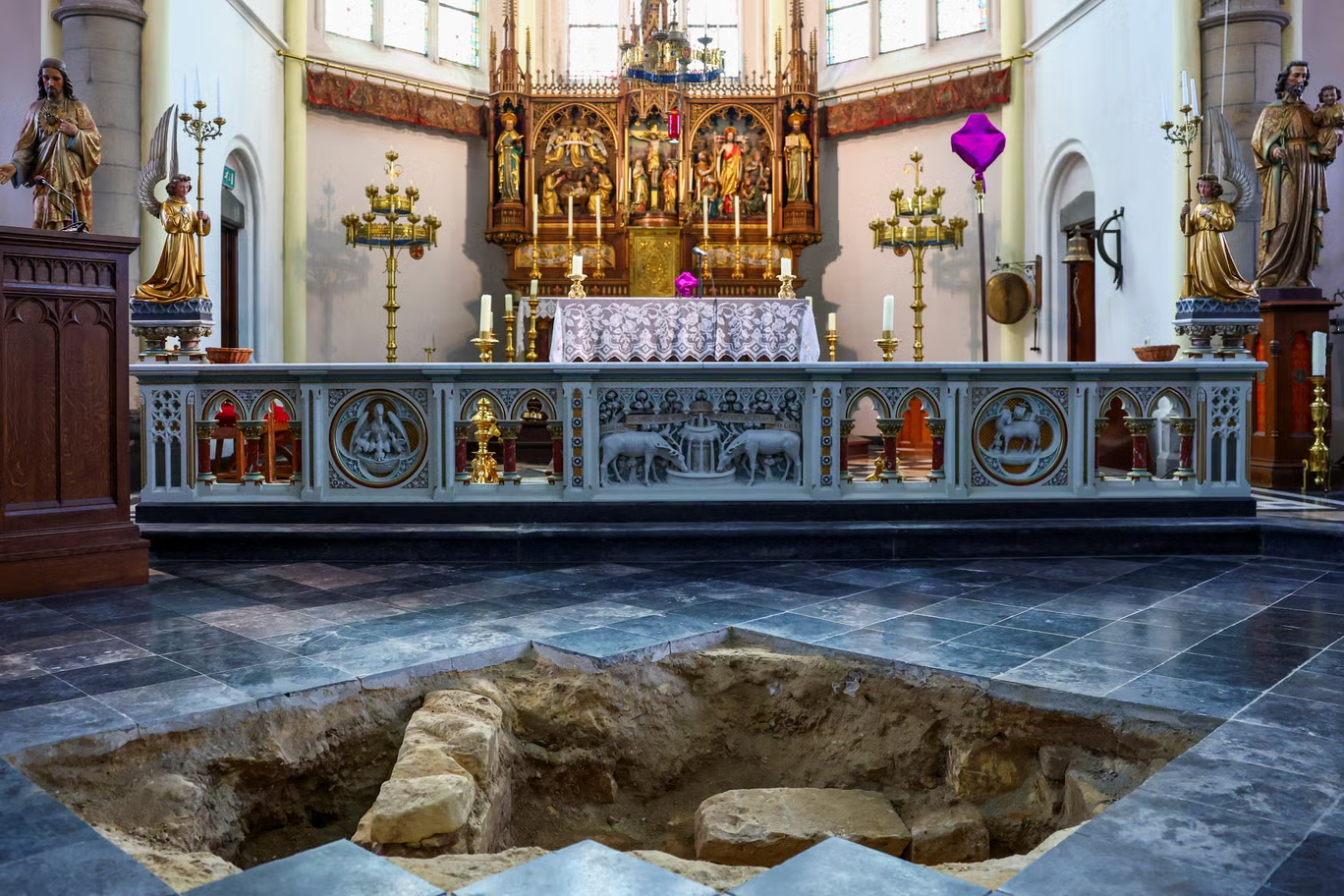
The discovery occurred at St Peter and Paul Church after part of the floor unexpectedly gave way. During repairs, workers found a grave containing human remains beneath the tiles.
Experts now believe the skeleton could belong to Charles de Batz de Castelmore, widely known as d’Artagnan—the real-life figure behind the legendary musketeer in Dumas’s 1844 novel.
The Historical d’Artagnan
Unlike his fictional counterpart, the real d’Artagnan served as a soldier and spy under Louis XIV, often called the “Sun King.” He died in 1673 during the Siege of Maastricht after being struck in the throat by a musket ball.
The church where the remains were found stands close to the area where French troops were once stationed. Given the distance and the summer conditions at the time, transporting his body back to Paris would have been extremely difficult—making a local burial likely.
Scientific Investigation Underway
Researchers are now working to confirm the identity of the remains through DNA analysis. Samples taken from the jawbone will be compared with living descendants of d’Artagnan in hopes of reaching a definitive conclusion.
Archaeologist Wim Dijkman described the effort as a high-level investigation, emphasizing the importance of certainty in identifying such a historically significant figure.
Clues That Strengthen the Case
Several details found within the grave strongly support the theory that the skeleton belongs to d’Artagnan:
A coin dating back to around 1660
A fragment of a lead bullet discovered near the chest
The burial location beneath the altar, indicating consecrated ground
According to church deacon Jos Valke, these findings closely match historical records describing d’Artagnan’s death and burial circumstances, making the evidence particularly compelling.
From History to Legend
The fictional d’Artagnan, as portrayed in The Three Musketeers, is a bold and impulsive young man who befriends three elite soldiers and eventually joins their ranks as the fourth musketeer. The story, written by Alexandre Dumas, has captivated readers for generations.
The character has also been brought to life in film by actors such as Douglas Fairbanks and Michael York, further cementing his place in popular culture.
A Discovery That Bridges Fact and Fiction
If confirmed, this discovery would offer a rare and exciting link between real history and literary legend. It not only deepens our understanding of d’Artagnan’s life but also highlights how historical figures can inspire stories that endure for centuries.