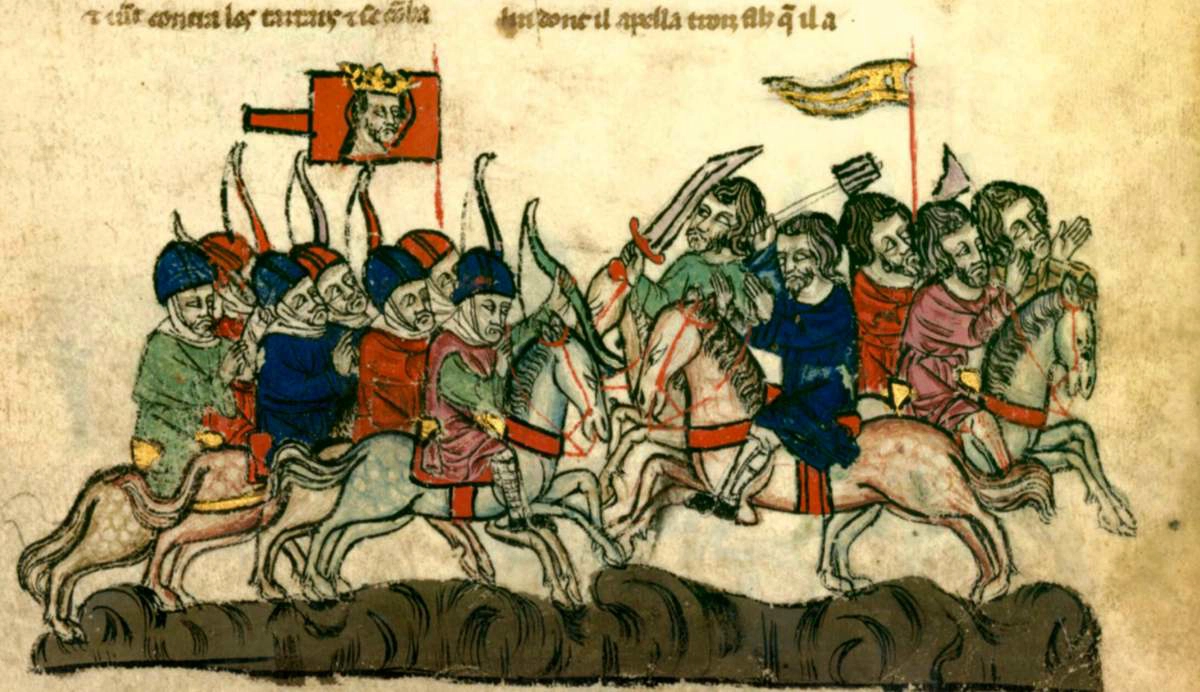
One of the most revolutionary developments in ancient warfare occurred when humans combined two powerful technologies: the domesticated horse and the composite bow. This combination gave rise to mounted archers—warriors capable of shooting arrows while riding at high speed.
The vast grasslands of the Eurasian Steppe provided the perfect environment for this innovation. Nomadic communities living in these open landscapes depended heavily on horses for transportation, hunting, and herding livestock.
Over time, steppe cultures developed extraordinary riding skills. Children learned to ride from an early age, and horses became central to both daily life and warfare.
The earliest mounted archers may have emerged during the Bronze Age. However, it was later nomadic groups such as the Scythians who perfected the technique.
Scythian warriors carried short composite bows made from layers of wood, horn, and sinew. These bows were powerful yet compact, allowing archers to shoot accurately from horseback.
Mounted archers possessed enormous tactical advantages. They could move quickly across open terrain, launch sudden attacks, and retreat before enemies could respond. They also developed advanced tactics such as the “Parthian shot,” where riders turned backward while retreating to fire arrows at pursuing enemies.
This style of warfare proved extremely effective against slower infantry armies. For centuries, steppe nomads dominated the battlefields of Eurasia using mobility and ranged combat.
Their influence spread widely. Mounted archery later became a core component of Persian, Chinese, and eventually Mongol military strategies. The innovation fundamentally reshaped warfare and enabled the rise of powerful steppe empires.