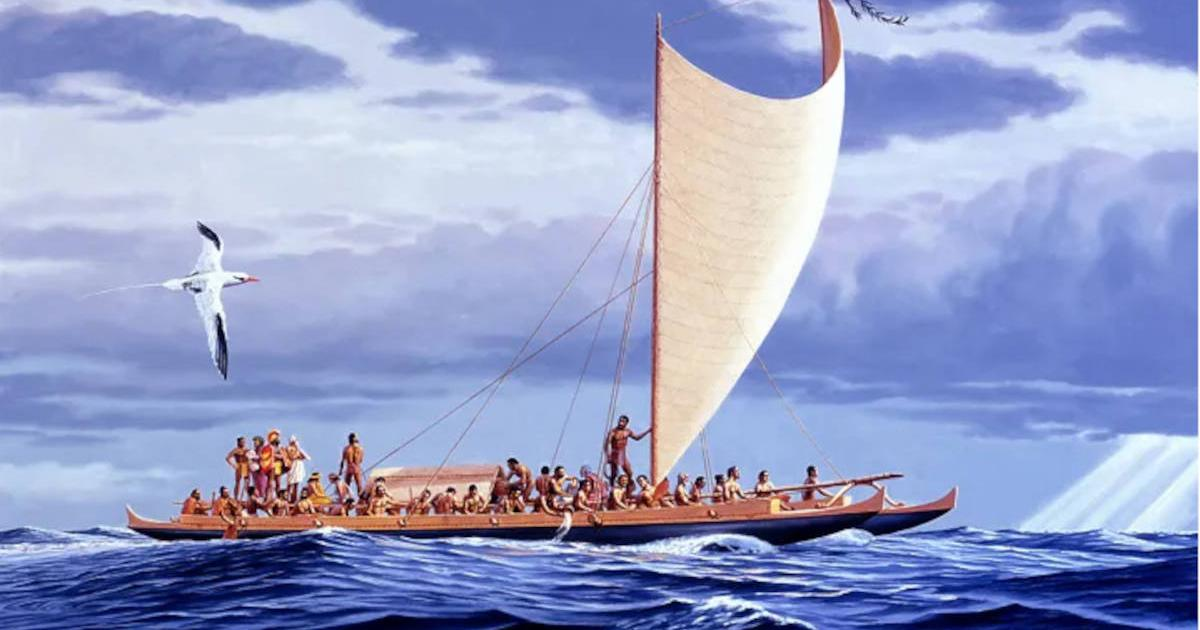
The islands of Oceania are scattered across one of the largest expanses of water on Earth. Yet long before modern navigation tools existed, ancient seafarers successfully traveled across these immense distances using sophisticated watercraft and remarkable navigational knowledge.
Early vessels used by Pacific voyagers likely included large rafts and canoes constructed from logs, bamboo, and lashed planks. These boats were designed to be both flexible and resilient, capable of surviving rough ocean conditions.
Among the most important innovations was the development of double-hulled canoes. These vessels consisted of two parallel hulls connected by a platform, providing stability and allowing the boat to carry supplies, animals, and multiple passengers during long voyages.
Navigators relied on a deep understanding of the natural environment rather than instruments. They memorized patterns of stars, ocean swells, wind directions, bird migrations, and even the color of the water.
Some Pacific cultures developed complex oral traditions that encoded navigation knowledge into chants and stories. These teachings were passed down from master navigators to apprentices over generations.
The ability to travel across the Pacific allowed ancient voyagers to colonize remote islands thousands of kilometers apart. Over centuries, these seafarers spread languages, crops, animals, and cultural traditions throughout the region.
The maritime technology of prehistoric Oceania represents one of humanity’s most extraordinary achievements. Without metal tools or written maps, ancient navigators explored and settled vast ocean territories that modern sailors still find challenging.