The search for the final resting place of Queen Nefertiti remains one of the most tantalizing quests in Egyptology. Despite her status as one of the most powerful women in history, her tomb has never been definitively identified. However, recent technological leaps in the Valley of the Kings have sparked a modern-day detective story involving hidden chambers, disputed scans, and the "heretic" history of the Amarna Period.
1. The Nicholas Reeves Hypothesis
In 2015, British Egyptologist Nicholas Reeves published a groundbreaking theory that sent shockwaves through the archaeological community.
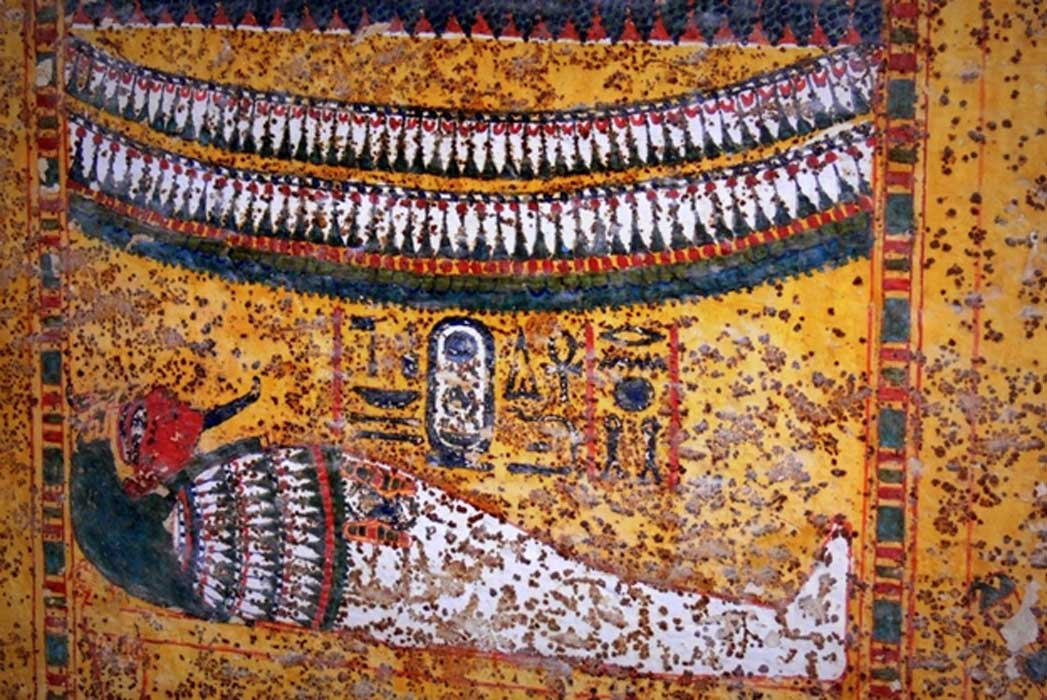
The Hidden Doorways: While examining high-resolution 3D laser scans of Tutankhamun’s tomb (KV62), Reeves noticed faint linear traces beneath the painted plaster of the north and west walls.
The Theory: He proposed that KV62 was originally a "corridor tomb" designed for Nefertiti, and that Tutankhamun was buried in the outer chambers as an emergency measure after his early death. He suggests Nefertiti lies undisturbed in a hidden room directly behind the boy king’s burial chamber.
2. Ground-Penetrating Radar (GPR): The Great Debate
Since 2015, multiple teams have entered the tomb with sophisticated GPR equipment to "see" through the walls without damaging the priceless murals.
The "Yes" Scans: The initial radar survey by Hirokatsu Watanabe claimed a 90% certainty of "voids" and even metal or organic materials behind the walls.
The "No" Scans: A subsequent, more extensive survey by the National Geographic Society was inconclusive.
The Politecnico di Torino Survey (2018): This was the most rigorous scan to date. Using three different radar systems, the team concluded that there are no hidden chambers adjacent to the tomb, dealing a blow to the Reeves hypothesis.
3. The Search Moves Beyond KV62
While the "tomb-within-a-tomb" theory has lost momentum, the search for Nefertiti has shifted to other locations in the Valley of the Kings.
The West Valley (KV21 and KV23): Some archaeologists, including former Antiquities Minister Zahi Hawass, believe Nefertiti might be hidden in the West Valley, an area less explored than the main cluster of royal tombs.
The DNA Connection: Hawass has been leading a massive project to analyze the DNA of "unidentified" mummies found in the Valley. Two female mummies found in KV21 are currently under intense scrutiny to see if they are Nefertiti or her daughter, Ankhesenamun.
4. Why is she so hard to find?
Nefertiti’s disappearance from the record is tied to the Amarna Period, a time of religious revolution when she and her husband, Akhenaten, replaced the traditional gods with the worship of the sun disk, the Aten.
Damnatio Memoriae: After the Amarna Period ended, later pharaohs attempted to erase Akhenaten and Nefertiti from history. Their names were hacked off monuments, and their city was leveled.
A Hidden Pharaoh? A growing theory suggests Nefertiti didn't just disappear; she may have ruled as a solo pharaoh under the name Neferneferuaten after her husband died. If she was buried as a king, she might be hidden in a tomb designed for a male ruler, further confusing archaeologists.
5. The "Younger Lady" Mystery
One of the most famous unidentified mummies is the "Younger Lady," found in a cache in KV35.
The Discovery: DNA testing confirmed this mummy is the biological mother of Tutankhamun.
The Identity Debate: While some believe this is Nefertiti, many Egyptologists argue the DNA suggests she was a sister of Akhenaten, whereas Nefertiti is traditionally thought to have been a non-royal noblewoman. The search continues for a mummy that matches Nefertiti's specific historical profile.
The hunt for Nefertiti represents the "New Age" of archaeology—one where shovels are replaced by muon tomography and DNA sequencing. Whether she is hidden behind a wall in Tutankhamun's tomb or lying in an unmarked pit in the West Valley, her discovery would be the greatest archaeological find of the 21st century.