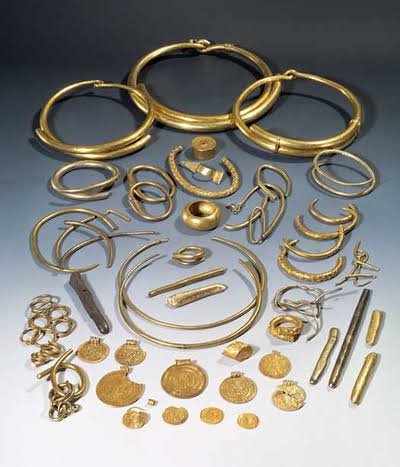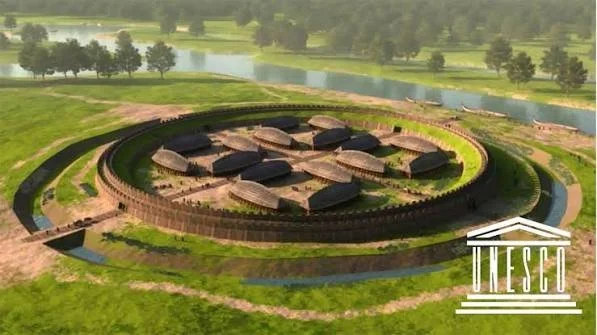
The Rose Valley of Bulgaria, anciently known as the Valley of the Thracian Kings, has yielded a continuous stream of elite burial wealth that fundamentally challenges our understanding of ancient European metallurgy and ritual sophistication. While the Kazanlak Tomb has long been world-renowned for its stunning 4th-century BCE Hellenistic frescoes, deep-trench excavations around the wider necropolis complex have unearthed a series of royal shaft graves containing unprecedented gold artifacts.
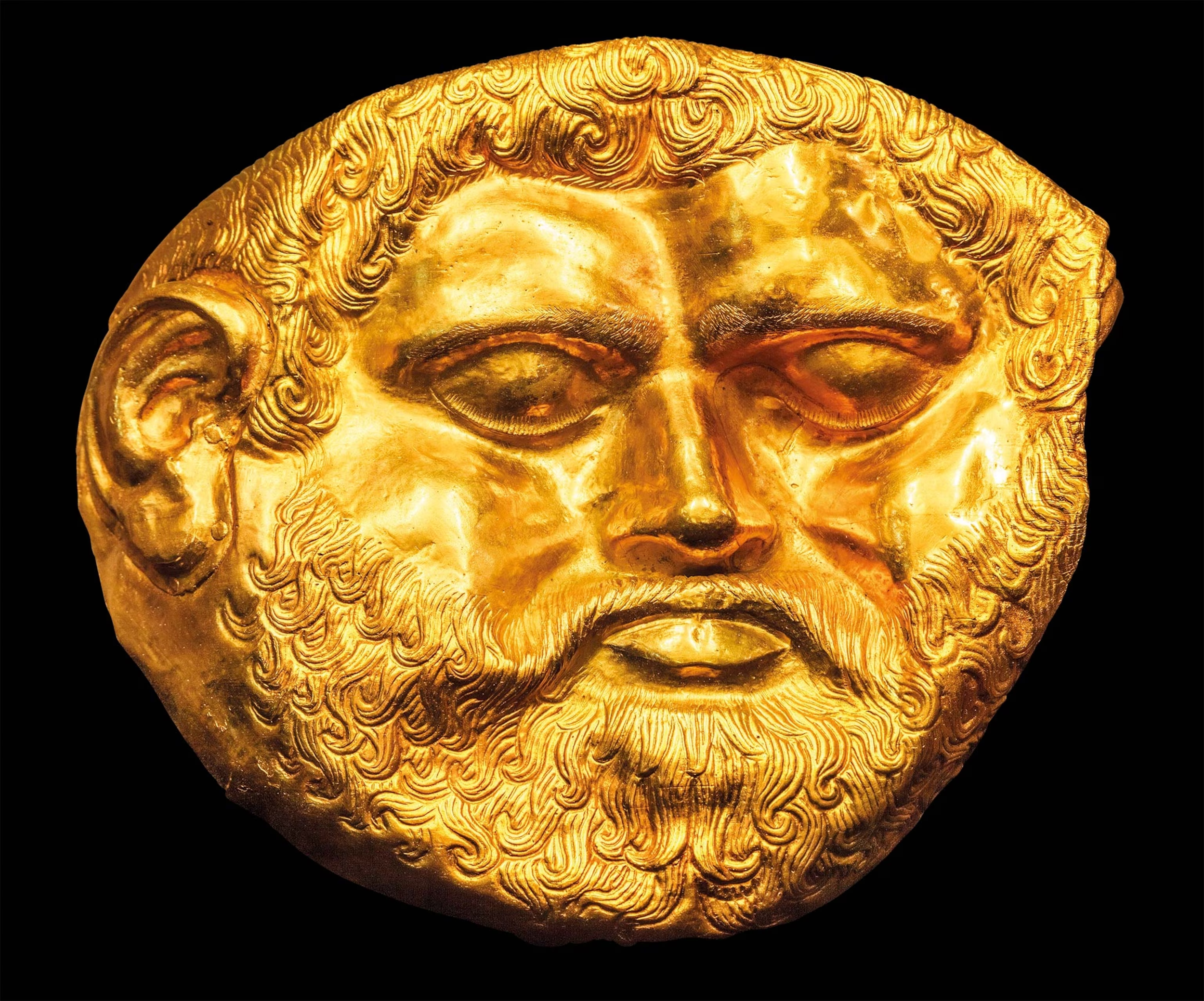
Chief among the discoveries is a massive, solid-gold death mask weighing over 1.5 pounds (nearly 700 grams), found alongside intricate gold signet rings, heavy pectoral plates, and a breathtaking ceremonial laurel wreath featuring lifelike gold leaves and olive berries. Unlike the idealized, glassy, and smooth features of Egyptian pharaonic masks like Tutankhamun's—which were manufactured to transition the deceased king into an unchanging, sterile celestial icon—the Thracian gold masks utilize a raw, visceral, highly realistic repoussé technique that captures raw individualistic portraiture:
Anatomical Realism: The masks exhibit deep-set facial wrinkles, heavy, asymmetrical brows, localized facial scars, and highly stylized, realistic beards belonging to specific, historical kings.
Cosmic Symbology: The outer borders are stamped with intricate geometric circles, rosettes, and solar rays, symbolizing a continuous cycle of cosmic energy.
The Orphic Deification Ritual
Laboratory data confirms that these gold masks were not manufactured simply as passive funereal decorations to cover a corpse. Microscopic wear analysis along the eye slits and inner bands reveals that these heavy masks were worn by living kings during complex Thracian Orphic mystery rituals. Through these rituals, the living king would descend into a subterranean chamber, experience a symbolic death, and emerge wearing the gold mask to declare himself a living god-king to his people.
The staggering volume of pure gold underscores the immense wealth of the Thracian Odrysian kingdom, a sophisticated, militarized society that controlled vast mountain gold mines and traded on equal economic footing with the Persian Empire and classical Athens. The Thracians, long dismissed by classical Greek writers as illiterate warriors addicted to warfare and unwatered wine, are revealed by the Kazanlak discoveries to be master artisans possessing a deep, esoteric understanding of the afterlife.
The gold utilized in these graves was extracted from the heavy alluvial deposits of the Sredna Gora and Balkan mountains. The Thracian metallurgists possessed an advanced knowledge of pyrotechnology, capable of purifying gold to over 23 carats and hammering it into gossamer-thin sheets that could form both delicate olive leaves for royal wreaths and heavy, load-bearing armor plates.
The architectural context of these finds is equally monumental. The tombs are constructed as sacred stone beehives (tholoi), featuring narrow, corbelled entrance dromoi that open into circular chambers. The frescoes within the main Kazanlak chamber, depicting a royal funeral banquet with high-spirited horses, weeping servants, and a king holding his queen’s wrist in a tender, final gesture of farewell, create an immersive spiritual theater.
When the sun aligned with the narrow entranceway on specific ritual days, it illuminated the gold artifacts within the dark interior, flashing a blinding, divine light out into the valley. This intentional manipulation of light and precious metal demonstrates that the Thracian kings used gold not as a stagnant hoarding mechanism, but as a dynamic spiritual technology designed to conquer mortality itself, rewriting the history of ancient European religion and art.