Zeila, also known as Zayla or Zeila, is one of the most historically important ports in the Horn of Africa.
Located on the Gulf of Aden in present-day Somaliland, Zeila participated in commercial networks connecting the Horn of Africa with Arabia, the Red Sea, Persia, and the Indian Ocean.
During the medieval period, the city became closely associated with the Adal Sultanate, an Islamic state whose political and military history played a major role in the Horn of Africa.
An Ancient Maritime Gateway
Zeila's importance came primarily from geography.
Its location placed it near the maritime routes linking:
East Africa;
Yemen;
the Red Sea;
Egypt;
and the Indian Ocean.
Ships could use the port as a stopping point and trading center.
Medieval Trade
Zeila participated in a large commercial network.
Merchants exchanged goods such as:
livestock;
hides;
ivory;
aromatic products;
salt;
textiles;
and imported manufactured goods.
The precise importance of each commodity changed over time.
The Islamic Character of Zeila
Islam became deeply established in Zeila.
Mosques, Islamic burial grounds, and Arabic inscriptions reflect the city's participation in the wider Muslim world.
Religious scholars and merchants helped connect Zeila to Islamic intellectual and commercial networks.
The Adal Sultanate
Adal emerged as an important Muslim political power in the Horn of Africa.
Its territory and influence changed over time.
The sultanate's political center was associated with several settlements, including Zeila as an important coastal hub.
Ahmad ibn Ibrahim al-Ghazi
The history of Adal is closely associated with Ahmad ibn Ibrahim al-Ghazi, often called Ahmad Gragn.
During the sixteenth century, he led major military campaigns against the Ethiopian Empire.
These conflicts dramatically transformed the political landscape of the Horn of Africa.
Firearms and Warfare
The Adal-Ethiopian conflicts also demonstrated the growing importance of firearms.
Adal forces obtained firearms and military support through connections with the wider Islamic world.
The introduction of firearms altered military strategy.
Zeila and International Commerce
Zeila's political importance was closely connected to commerce.
A successful port could generate wealth through:
taxation;
customs;
trade;
and control of goods moving inland.
The port also connected maritime traders with caravan routes.
Archaeological Remains
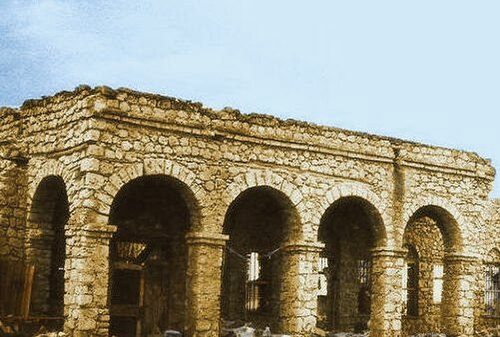
Today, archaeological remains around Zeila include:
ruined buildings;
mosque remains;
tombs;
walls;
and scattered ceramics.
These remains demonstrate the city's long occupation.
Imported Ceramics
Ceramic fragments are particularly important.
Archaeologists can sometimes identify pottery from:
Arabia;
Persia;
India;
China;
and other regions.
Imported ceramics demonstrate that Zeila participated in long-distance commerce.
Decline and Transformation
The importance of Zeila changed as political and commercial systems evolved.
Competition among regional powers, changes in trade routes, and the development of other ports affected the city's role.
The Portuguese presence in the western Indian Ocean also transformed regional maritime politics.
Why Zeila Matters
Zeila is one of the clearest examples of the Horn of Africa's integration into the medieval Islamic and Indian Ocean worlds.
It demonstrates that Somali coastal societies were not isolated.
They were active participants in international commerce and regional politics.
Conclusion
Zeila's history combines maritime trade, Islamic scholarship, political power, and military conflict.
As an important port associated with the Adal Sultanate, it became a gateway through which goods, people, religious ideas, technologies, and political influence moved between Africa and the wider Islamic world.
Its ruins preserve the physical evidence of a city that once stood at the crossroads of some of the most important commercial routes of the medieval Indian Ocean.