Egypt finds a mummy inside a tomb that is 4,400 years old

In the dunes of the Western Desert in Egypt, Auguste Mariette discovered a mastaba, or substantial tomb, belonging to an ancient official nearly 160 years ago.

Archaeologists unearthed a massive ancient tomb near Cairo in Egypt. Screengrab from Facebook

When Mariette first started digging, he was able to effectively uncover a fake door with ornate decoration and a supporting beam, but the mastaba was covered in sand before he could continue. Since that time, the objects have been preserved at The British Museum, and experts have discovered that Ptahshepses, who is thought to be the first non-royal in Egyptian history to marry a royal, was the owner of the tomb.

After years of looking, Czech archaeologists have now uncovered Ptahshepses' tomb, according to a Facebook post from the Czech Institute of Egyptology at Charles University in Prague on September 25.

"The tomb of a man who changed the course of Egyptian history has thus been rediscovered, representing one of the expedition's greatest recent discoveries," Miroslav Barta, head of research, wrote in the post. Further findings to shed new light on his family and era are likely to be made while the research is still ongoing.

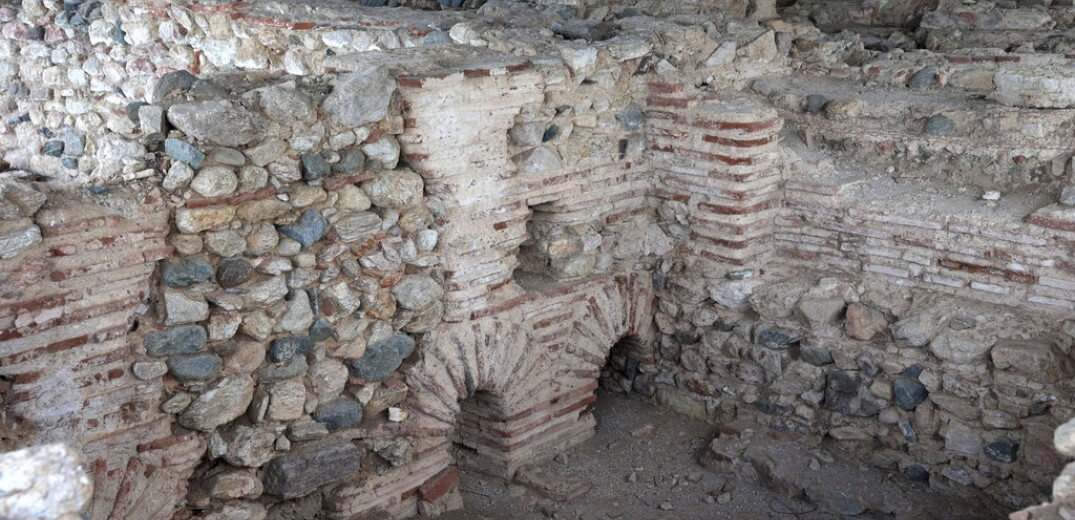
The tomb, which is thought to date to the end of the 25th century B.C., is estimated to be around 138 feet long, 72 feet wide, and 13 feet tall. They found a chapel that had been kept, painted decorations, two rooms for statues, and a lengthy hallway within.

Researchers have discovered a burial room inside the mastaba. Even though the room was looted in antiquity, it still held pottery, fragments of offerings, and mummified fish from the initial burial.

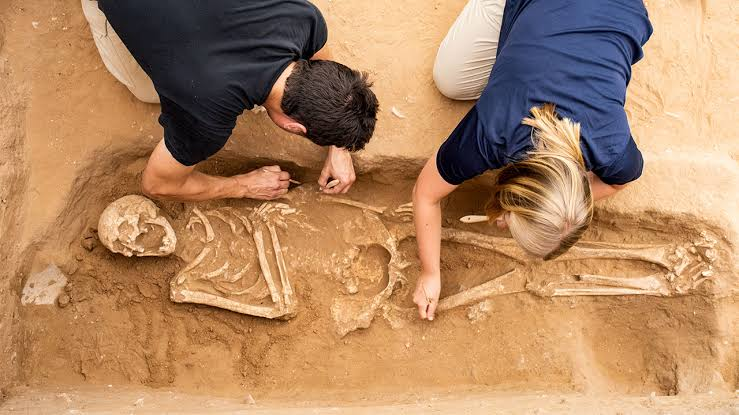
Ptahshepses' sarcophagus, which still contained his full mummy laying on his back, was also found by experts. The official lived to be 65 years old, significantly longer than was typical for people in that era, according to the mummy's analysis.

South of Cairo, between the pyramid fields of Abusir and Saqqara, the mastaba was found.

Source: https://www.kansascity.com/news/nation-wor...

What Was Earth Like in the Age of Giant Insects?

Earth in the Age of Giant Insects: A Fascinating Glimpse into the Carboniferous Era

The Earth has witnessed a remarkable history of life, with its inhabitants evolving and adapting to the ever-changing environmental conditions. One of the most intriguing chapters in our planet's story is the Carboniferous period, during which Earth was home to giant insects the size of crows and millipedes as long as cars.

In this article, we'll delve into the astounding world of Earth during the age of giant insects, exploring key insights into this captivating era.

Gigantic Insects and the Meganeura

Imagine a world where insects ruled the skies, and among them, the meganeura, a giant carnivorous insect with a wingspan of up to 75 cm, soared majestically. The Carboniferous period, which lasted from approximately 358 to 298 million years ago, was marked by the presence of these massive creatures.

These giant insects would have been a terrifying sight in the sky, far different from the insects we encounter today. Oxygen Levels and Gigantism One of the driving factors behind the gigantism observed in insects during the Carboniferous era was the extraordinarily high oxygen levels in the atmosphere, estimated to be as high as 35%.

This surplus of oxygen allowed insects to grow to such massive sizes because it enabled them to deliver oxygen directly to their tissues through a network of tubes called trachea. In essence, the high oxygen levels acted as a natural booster for insect growth.

Ecosystem Evolution

The Carboniferous period also marked a crucial turning point in Earth's ecosystems. It was during this time that the first seed-bearing plants evolved, leading to the creation of more diverse ecosystems than ever before. These plants played a significant role in shaping the habitats and food sources available to the giant insects of that era.

Continental Drift and Climate Change

The movement of landmasses during the formation of the supercontinent Pangea had a profound impact on ocean currents, wind patterns, and the global climate during the Carboniferous period. These changes in climate and geography likely influenced the distribution of habitats for giant insects, driving them to adapt or perish.

The Decline of Giant Insects

As intriguing as the age of giant insects may be, it eventually came to an end. The decline in rainforests and a reduction in oxygen levels led to the extinction of these colossal creatures. The changing environment favored smaller insects that could thrive in the new conditions.

This shift marked the end of an era that had seen insects grow to unparalleled sizes.

Environmental Awareness and Restoration

While we can only imagine the sights and sounds of the Carboniferous era, it's crucial to draw connections to our modern world. Understanding Earth's history can inspire us to take better care of our planet. Platforms like Planet Wild's videos not only raise awareness about environmental issues but also provide actionable ways for viewers to help restore global ecosystems.

By learning from Earth's past, we can work towards a more sustainable and balanced future.

The age of giant insects during the Carboniferous period offers a captivating glimpse into Earth's prehistoric past. The combination of high oxygen levels, evolving ecosystems, and changing climates created an environment where insects reached astonishing sizes.

However, as the world transformed, so did its inhabitants, ultimately leading to the extinction of these gigantic creatures. Today, we can reflect on this remarkable era and use it as a source of inspiration for our ongoing efforts to protect and preserve our planet's delicate ecosystems.

Exploring The Nazca Lines & Searching For Atlantis: The Lost City

Unlocking the Enigma of Peru's Nazca Lines: A 2,000-Year-Old Mystery

Nestled within the arid Peruvian coastal plain, approximately 250 miles south of Lima, lies a remarkable testament to ancient creativity and ingenuity—the Nazca Lines. These colossal geoglyphs, etched into the Earth's surface over 2,000 years ago, continue to captivate the imagination of researchers, historians, and adventurers alike. Despite more than 80 years of study, these enigmatic designs, consisting of straight lines, geometric shapes, and representations of various animals and plants, continue to baffle experts.

What are the Nazca lines?

The Nazca Lines can be broadly categorized into three distinct types: straight lines, geometric designs, and pictorial representations. The coastal plain boasts over 800 straight lines, some stretching up to an astonishing 30 miles in length. Among the geometric designs are triangles, rectangles, trapezoids, spirals, arrows, zig-zags, and wavy lines, showcasing the Nazca people's geometric prowess.

However, it's the pictorial representations that truly astound. More than 70 animals and plants have been meticulously etched into the ground, some spanning an incredible 1,200 feet in length. These include a spider, hummingbird, cactus plant, monkey, whale, llama, duck, flower, tree, lizard, and dog. Moreover, researchers have unearthed other intriguing forms, such as a humanoid figure affectionately known as "The Astronaut," as well as hands and several unidentifiable depictions.

Recent discoveries have only deepened the mystery. In 2011, a Japanese team uncovered a new geoglyph resembling a scene of decapitation, shrouded in smaller dimensions and harder to spot from aerial views. Notably, the Nazca people were known to collect "trophy heads," and research in 2009 revealed these trophies were often from the same populations as the individuals they were buried with, not outsiders.

Intriguingly, in 2016, the same team stumbled upon a 98-foot-long mythical creature with multiple legs and spotted markings, gleefully sticking out its tongue. This finding further underscores the cultural richness of the Nazca civilization. And in 2018, Peruvian archaeologists employed drone technology to uncover more than 50 previously unknown geoglyphs, providing unprecedented insights into the ancient Nazca culture.

How the Nazca Lines Were Created

Scholars posit that the Nazca culture, which emerged around 100 B.C. and thrived from A.D. 1 to 700, is primarily responsible for these magnificent creations. However, it's likely that the Chavin and Paracas cultures, predating the Nazca, may have contributed to some of the geoglyphs. The Nazca Lines occupy the desert plains of the Rio Grande de Nasca river basin, an archaeological site spanning over 75,000 hectares and renowned as one of the world's driest regions.

The desert floor is blanketed in a layer of iron oxide-coated pebbles, casting a deep rust-colored hue. To craft these designs, the ancient Nazca people meticulously removed the top 12 to 15 inches of rock, revealing the lighter-colored sand beneath. They likely began with small-scale models, carefully scaling up their proportions to create the grandiose designs that we marvel at today.

Interestingly, most known geoglyphs were formed by meticulously removing rocks from the borders of the figures, outlining their forms. Some, however, were created by removing rocks from within the designs. The Nazca Lines have endured remarkably well over time, largely untouched by rain, wind, or erosion.

Nazca Lines and Aliens?

The intrigue surrounding the Nazca Lines has, at times, been accompanied by speculations of extraterrestrial involvement. While the lines initially gained systematic study from Peruvian archaeologist Toribio Mejia Xesspe in 1926, they garnered international attention when pilots flew over them in the 1930s. This prompted a flurry of hypotheses regarding their purpose.

In the late 1930s and early 1940s, American historian Paul Kosok, studying the geoglyphs both from the ground and the air, proposed that they held an astronomical significance, particularly in relation to the winter solstice. Around the same time, German archaeologist María Reiche also suggested an astronomical and calendrical purpose for the designs, going so far as to equate some animal geoglyphs with constellations.

Nonetheless, the 1960s and 1970s witnessed a shift in perspective, with researchers like American astronomer Gerald Hawkins challenging the astronomical explanations. Claims of extraterrestrial involvement or ancient astronauts have also been debunked over the years, leading experts to reconsider other plausible purposes.

Purpose of the Nazca Lines

Recent research has unveiled compelling evidence suggesting that the Nazca Lines were linked to the quest for water—a precious resource in the parched Peruvian coastal plain. While they weren't designed as an irrigation system or a guide to water sources, they are believed to have played a central role in rain-inducing rituals meant to appease the gods. Some scholars point to the animal representations as symbols for rain, water, or fertility, noting their presence in other ancient Peruvian sites and on pottery.

This theory posits that the Nazca people viewed these geoglyphs as offerings to the heavens, beseeching for much-needed rain in their drought-prone region. In 2015, researchers attending the 80th annual meeting of the Society for American Archeology put forth an intriguing idea: the purpose of the Nazca Lines evolved over time. Initially, pilgrims traveling to Peruvian temple complexes used the geoglyphs as sacred processional routes. In later periods, as part of religious rites, groups would shatter ceramic pots at the intersection points of these lines.

Conservation Issues

Unlike many historical relics around the world, the Nazca Lines have been relatively sheltered from unintentional destruction, thanks to their remote location. Nevertheless, they are not immune to modern threats. In 2009, the Nazca Lines experienced their first recorded instance of rain damage when heavy downpours from the Pan-American Highway deposited sand and clay onto a section of the geoglyphs. Subsequently, in 2014, environmental group Greenpeace damaged an area near the hummingbird geoglyph during a misguided media stunt aimed at promoting renewable energy.

Their actions disturbed the upper layer of rocks surrounding the hummingbird. In 2018, another incident brought attention to the need for enhanced security and surveillance. A commercial truck driver drove onto a portion of the Nazca Lines, leaving deep scars in an area roughly 100 feet by 330 feet. This act of recklessness underscored the urgent necessity of safeguarding these ancient marvels for future generations.

The Nazca Lines continue to mystify and fascinate, serving as a testament to the ancient Nazca culture's ingenuity. While their exact purpose may remain elusive, ongoing research and discoveries offer new glimpses into the lives, beliefs, and practices of this remarkable civilization. To ensure the preservation of these ancient wonders, it is imperative that measures be taken to protect them from the unintended consequences of modern activities, thereby ensuring that the mystery of the Nazca Lines endures for generations to come.