500,000-Year-Old Elephant Bone Hammer Reveals Clever Tool-Making Skills of Early Humans

Learn about a 500,000-year old hammer made from elephant bone, used by early humans in England to sharpen stone tools.

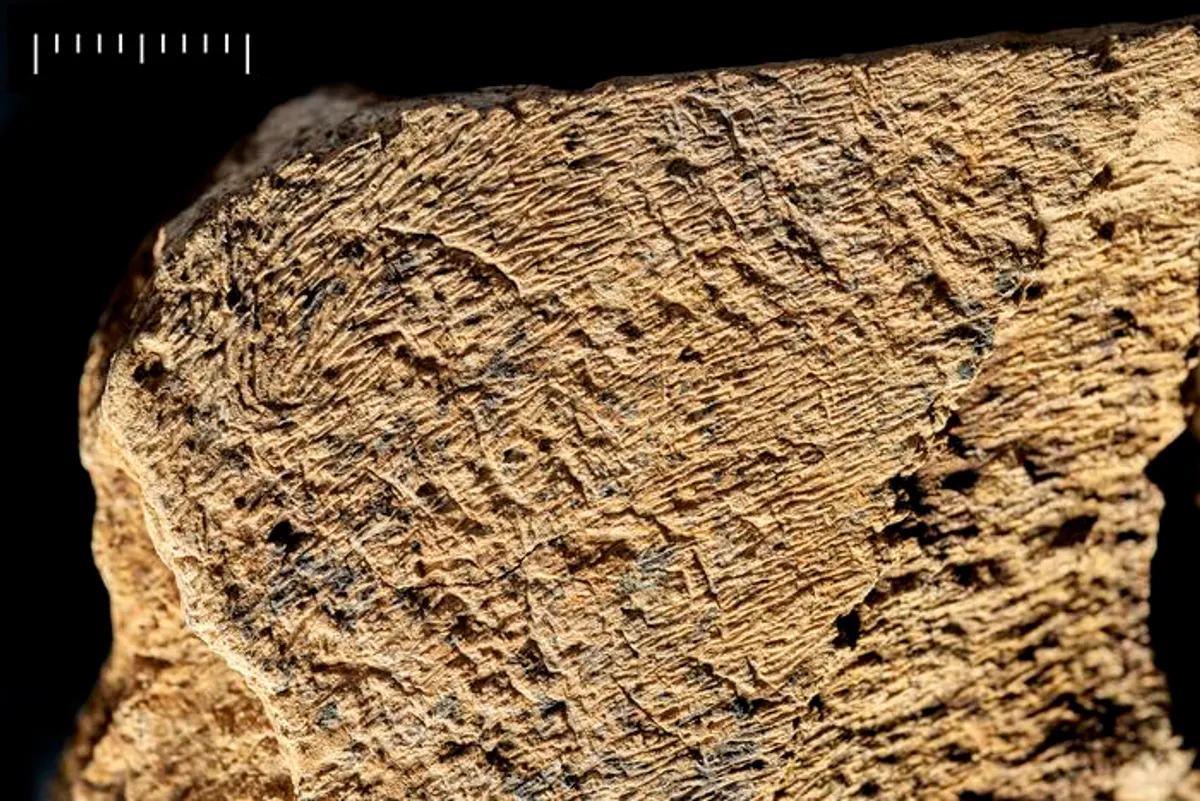
The elephant bone tool’s surface shows marks of it being struck against flint tools.

Early humans were remarkably inventive, crafting tools not only from stone but also from animal bones. One striking example is a primitive hammer made from elephant bone that dates back nearly 500,000 years and was recently identified in southern England.

A new study published in Science Advances highlights the ingenuity of the early human species that used this bone hammer to refine stone tools. Elephant bone, a rare material in prehistoric Britain, proved ideal for tool maintenance because of its thickness and durability. The surface of the hammer bears clear impact marks, showing it was repeatedly struck against stone and revealing a high level of technical skill.

“This extraordinary find demonstrates the creativity and adaptability of our ancient ancestors,” said lead author Simon Parfitt, a research fellow at University College London. “They had an in-depth understanding of local materials and knew how to use them to produce finely crafted stone tools.”

Bone tools and early humans

In Europe, the earliest clear evidence for deliberately made bone tools dates to around 500,000 years ago. Archaeological sites in central and southern Europe have yielded shaped bone implements, some of which were used to resharpen stone tools. Across Eurasia, such bone technologies were likely first developed by Homo heidelbergensis and later adopted and expanded by Neanderthals, reflecting growing technological complexity.

The use of bone tools, however, extends even further back in time. A study published in March 2025 reported the discovery of 1.5-million-year-old tools from Olduvai Gorge in Tanzania, made from the limb bones of large mammals. Early hominins in East Africa mainly used hippopotamus and elephant bones to create elongated, pointed, and notched tools.

The 500,000-year-old hammer discussed in the new study is the oldest elephant bone tool ever identified in Europe. Although the bone fragment was excavated in the early 1990s at the Boxgrove site in the UK, it was only recently recognized as a tool following renewed analysis.

“Elephant bone would have been a rare yet highly valuable resource, and this object was likely an important and well-used tool,” Parfitt said.

Researchers examined the artifact using 3D scanning and electron microscopy, which revealed notches and impact marks consistent with hammering. Tiny fragments of flint embedded in these notches further confirmed that the bone had been repeatedly used to strike stone.

Sharpening stone tools

The team suggests that either early Neanderthals or Homo heidelbergensis made the tool, although the fragment is too incomplete to identify the exact elephant species. The markings indicate the bone was relatively fresh when it was used, but it remains unclear whether it came from a hunted elephant or a scavenged carcass.

The triangular hammer likely functioned as a “retoucher,” used to resharpen dulled stone handaxes and other tools by carefully chipping away flakes. Elephant bone was particularly well suited to this task: softer than stone for precise work, yet strengthened by a dense outer layer of cortical bone that made it more durable than most other animal bones.

“Our ancestors showed a sophisticated understanding of tool use,” said co-author Silvia Bello of the Natural History Museum in London. “Selecting and shaping an elephant bone fragment, then repeatedly using it to maintain stone tools, reflects advanced planning, abstract thinking, and an impressive ability to make the most of available resources.”

Greek: The language that bridges millennia

UNESCO’s recognition of International Greek Language Day affirms Greek as a living, global vessel of culture, knowledge and civilisation

UNESCO's decision to designate 9 February as International Greek Language Day recognises the enduring contribution of Greek to thought, science, and culture.

The Greek language is a singular and foundational system of human communication, with a history stretching back more than 2,500 years. It forms part of humanity’s intangible cultural heritage, enduring, migrating, and evolving across time. Greek serves as a bridge linking centuries, nations, and cultures, and as a repository for philosophy, science, art, and intellectual thought. It acts as a civilisational binding force, connecting the ancient, medieval, and modern worlds.

On November 12, 2025, during its 43rd General Conference in Samarkand, Uzbekistan, UNESCO officially designated February 9 as International Greek Language Day—a decision carrying strong symbolic and educational weight. The Greek language also aligns with UNESCO’s 2003 Convention on Intangible Cultural Heritage, which recognises it as a living cultural practice transmitted across generations and essential to storytelling, poetry, philosophy, politics, and scientific inquiry.

A date rich in meaning

The selected date is highly symbolic. February 9 marks the anniversary of the death of Dionysios Solomos, Greece’s national poet. In fact, Greece had already recognised this date as Greek Language Day since 2017. UNESCO characterises Greek as a “vessel of values and ideas”—a language that connects generations, bridges cultures, and illuminates the development of human thought.

Greek stands out as an almost uninterrupted linguistic system. It has been the framework and driving force of Greek philosophy, from Socrates, Plato, Aristotle, and Epictetus to Philo, and later became the language of the New Testament. With an oral tradition spanning roughly 40 centuries and a written tradition extending over 35 centuries, Greek is the oldest known Indo-European language. Its influence runs deeply through science, medicine, mathematics, literature, and philosophy, shaping the intellectual foundations of the Mediterranean world, Asia Minor, the Middle East, and Western Europe.

Greek and the Diaspora: duty and innovation

UNESCO’s proclamation extends beyond symbolism and serves as a call to action, particularly for Greek-language schools in the Diaspora. The Greek Ministry of Education has proposed a range of educational initiatives designed to revitalise ancient linguistic forms through creative methods. These include vocabulary-based games, myth dramatizations, digital dictionaries, storytelling activities, virtual archaeological tours, and structured debates—approaches intended to transform Greek from a classroom subject into a lived experience.

Schools worldwide are encouraged to take part in the celebrations by submitting digital postcards and short videos under the theme “My favourite Greek word,” reinforcing the idea that language thrives through the voices of children, no matter where they live.

Greek encircling the world once more

A central aim of International Greek Language Day is to ensure its global reach. This will be supported through online discussions with university Chairs of Hellenic Studies, educational video screenings, and digital initiatives that highlight the worldwide impact of Greek. The objective is not only to preserve the language, but to renew and expand it, demonstrating its relevance in the modern world.

International Greek Language Day represents a commitment to continuity—a promise that Greek will endure, as it has for more than two millennia, while continuing to evolve, adapt, and interact with diverse cultures. Across the global Diaspora, Greek will remain a living force, nurturing creativity and sustaining its rich cultural legacy.

Opinion Three centuries of Roman limescale reveals a dirty secret about Pompeii’s public baths

Carbon isotope ratios suggest that pre-aqueduct, the water was often contaminated with human waste

Archaeology isn’t always about glamorous discoveries like gold, jewels, or perfectly preserved swords—the kind that capture headlines. More often, researchers work with subtle clues, teasing out history from the most ordinary or overlooked materials. A striking example comes from Germany, where scientists have used Roman limescale to trace Pompeii’s ancient water supply.

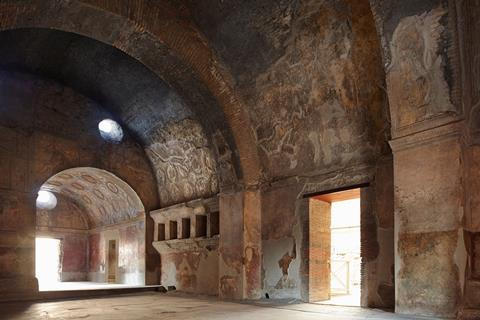
Pompeii is one of archaeology’s most iconic sites. The eruption of Mount Vesuvius in 79 CE buried the city almost instantly, preserving everything—from human bodies frozen in ash to buildings adorned with vibrant murals. The ruins provide a unique snapshot of Roman life in the first century CE, capturing both its grandeur and its human tragedies.

Supplying the Roman baths

Among the city’s remains are remarkably intact bath complexes, which reveal how sophisticated public bathing was in Roman society. Pompeii had three main public baths: the Republican, Stabian, and Forum Baths. Yet water was never abundant. Before the first century CE, residents relied on deep wells—up to 40 meters—and rainwater cisterns. Even when lifted by hand-powered devices, this water was not suitable for drinking.

Around 1 CE, the Aqua Augusta aqueduct was constructed, channeling water from springs 30–40 km away. This reliable supply could provide potable water and freed the city from dependence on deep wells, causing the Republican Baths to fall out of use.

As with all natural water sources, minerals dissolved in the water formed calcium carbonate deposits—limescale—on the walls of wells, cisterns, baths, and bronze heating devices. Preserved for centuries, these deposits provide a detailed record of Pompeii’s water sources and quality over nearly 300 years, with some crusts reaching 3 cm in thickness.

Reading the chemical record

The secret lies in the water’s chemistry. By comparing modern groundwater near Pompeii with spring water from the aqueduct, researchers identified distinctive patterns. Trace metals like copper and zinc reflect the use of bronze heating equipment. More revealing, however, are the ratios of stable carbon (δ¹³C) and oxygen (δ¹⁸O) isotopes, which differ depending on the geology of the water source and microbial activity.

In the Republican Baths, δ¹³C levels drop between the well deposits and those in the baths themselves, suggesting contamination from human waste and microbes. This indicates that bath water was replaced infrequently—likely no more than once a day—making late-evening dips somewhat unpleasant.

The Stabian Baths show a similar pattern in their older sections, which were fed by wells. Later sections, however, display isotopic signatures matching the aqueduct water. This innovation allowed for more frequent water replacement, improving hygiene and overall cleanlinessall information gleaned from ancient limescale.

Gloucestershire village set to appear on BBC series after special discovery

A Roman settlement was uncovered on the banks of the River Severn during an archaeological dig

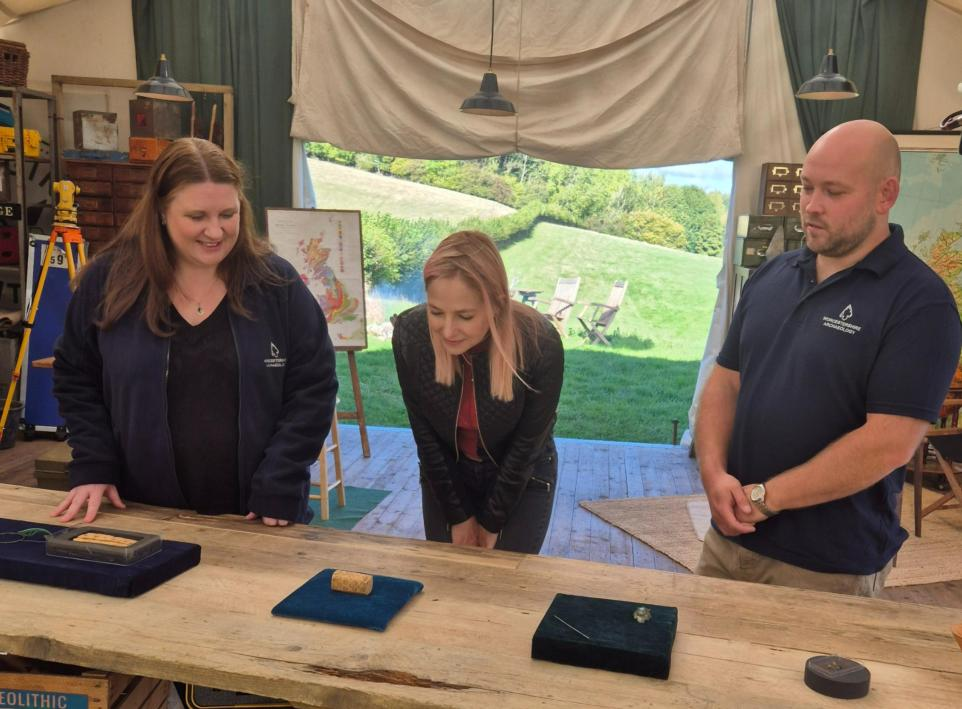
A village in Gloucestershire will feature on BBC Two’s Digging For Britain later this month after archaeologists uncovered a significant Roman settlement on the banks of the River Severn.

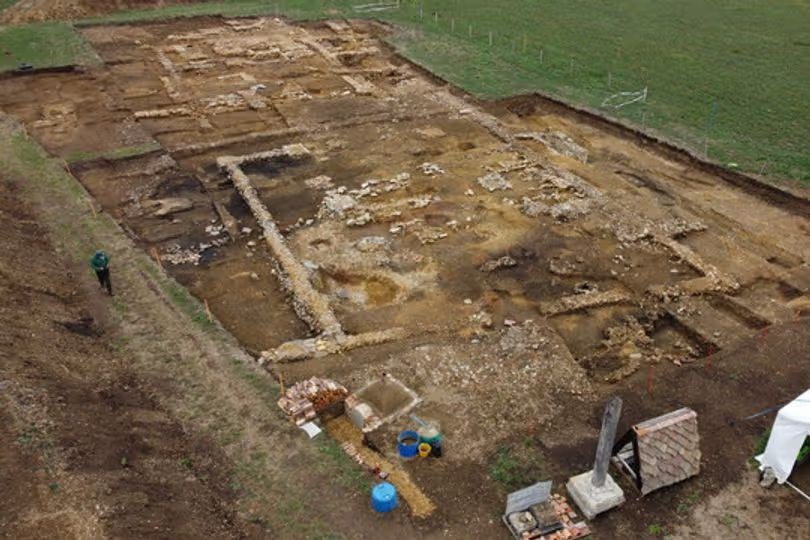
The excavation at Slimbridge revealed what may be a previously unknown Roman port. The dig was led by the Ernest Cook Trust, an educational charity and landowner, working alongside professional archaeologists and volunteers.

The TV episode will showcase the Trust’s Estate Forester, Lee James, who manages the project and has a long-standing interest in Iron Age and Roman history. He highlighted the site’s significance, suggesting it was first occupied by Iron Age Britons who traded with Romans before the conquest of Britain in AD 43. He noted that the Romans may have known their trading partners, possibly allowing for a peaceful takeover of the strategically placed site, which offered access south to the open sea and north to Gloucester.

James emphasized the community value of the project, alongside its contribution to understanding Britain’s history. He also plans to take Roman mosaic pieces from the site to Slimbridge Primary School so children can create their own mosaics using authentic Roman tiles.

In the episode, palaeontologist and lecturer Tori Herridge visits the 80m by 40m site with James and archaeologist Tony Roberts of Archeoscan to examine the discoveries. These include a Roman bathhouse, an unusual sign of wealth and luxury for the early Roman occupation of Britain. Coins date the site’s use to roughly AD 80–170.

Additional finds include finely crafted objects such as a bird-of-prey ornament from a box, a carved leaf from a statue, a bronze writing stylus for wax tablets, and a surgical bronze scalpel.

James expressed excitement at the filming, noting that the site revealed far more than a simple villa—it was a large complex of buildings. Excavations will continue through 2026, allowing time for recording and cataloguing finds. He described the thrill of uncovering objects, knowing they had not been touched for nearly 2,000 years.

The site appears to have started as an Iron Age trading centre before becoming a key Roman regional centre. A report on the project concluded that it was likely overseen by a Roman governor or commandant living in a luxurious compound on a spur of land into the Severn, marking the area as strategically important in early Roman Britain. Further work is required to confirm these initial interpretations.

2,000-year-old love note and gladiator fight scene uncovered on Pompeii wall

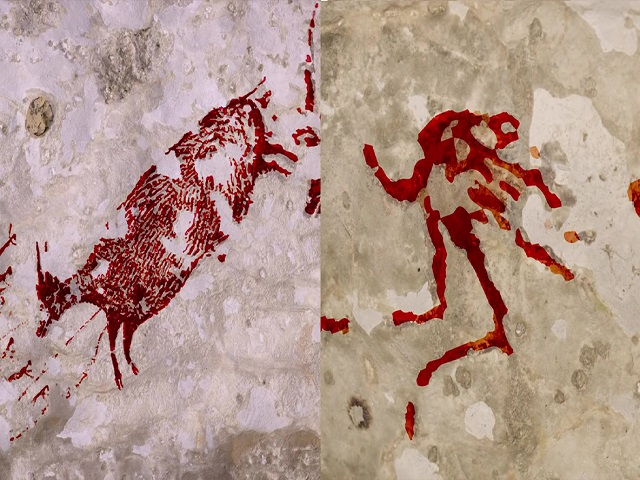
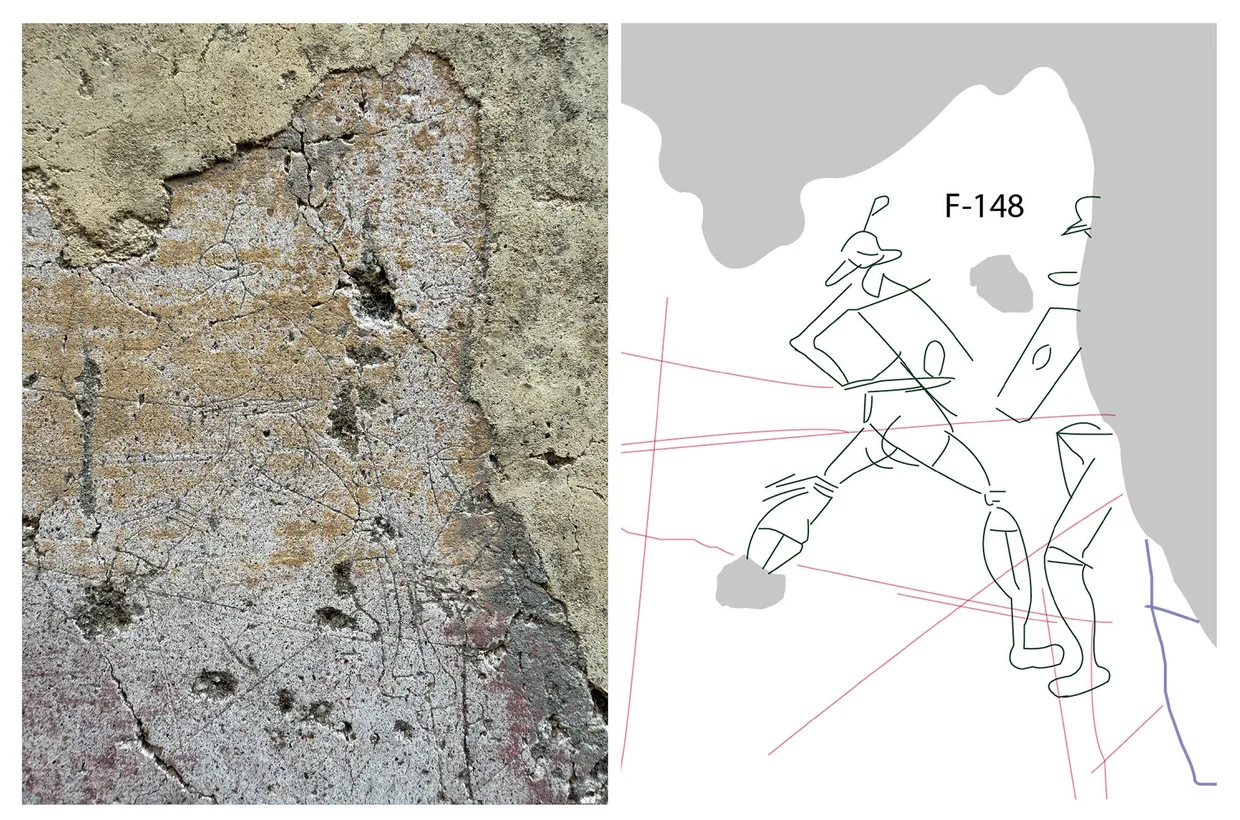
A 2,000-year-old love message and a drawing depicting a gladiator fight are among a series of ancient inscriptions recently revealed on a wall in Pompeii, according to an announcement by the archaeological park this week.

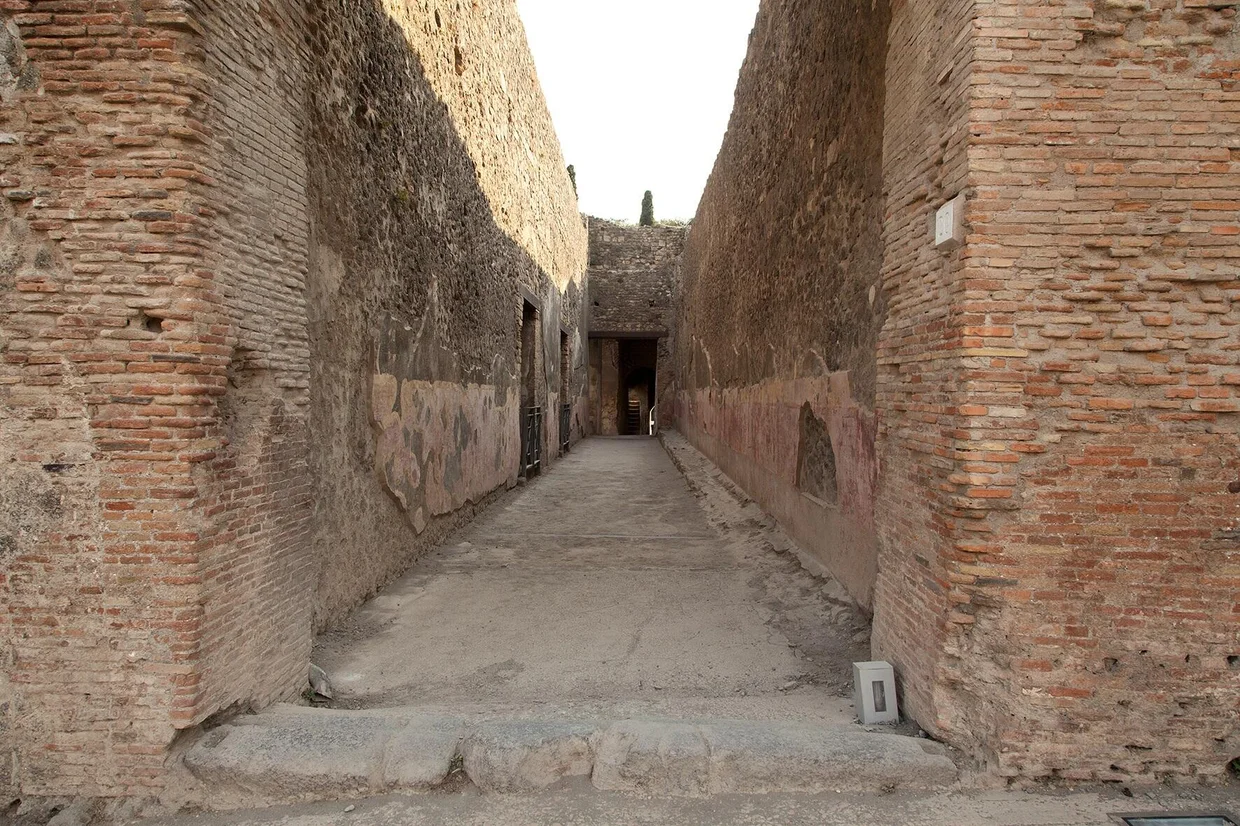
Often described as the graffiti of the ancient world, the inscriptions include accounts of everyday life, sporting events, emotions, and personal insults. They were carved into a passageway linking Pompeii’s theatre district with one of the city’s main roads. Although the wall itself was excavated more than 230 years ago, around 300 inscriptions remained unnoticed until advances in modern technology made them visible.

The rediscovery formed part of a research initiative known as Corridor Rumors, led by Louis Autin and Éloïse Letellier-Taillefer of Sorbonne University in Paris, alongside Marie-Adeline Le Guennec of the University of Quebec in Montreal, in collaboration with the Pompeii Archaeological Park. The team carried out two phases of investigation, first in 2022 and again in 2025, using a combination of archaeological methods and digital imaging techniques to bring the long-hidden messages back to light.

From left, a gladiator fight scene etched into a wall in ancient Pompeii, and researchers' rendering of the illustration.

“One inscription reads, ‘I’m in a hurry; take care, my Sava—make sure you love me!’” the archaeological park reported, adding that the writings “bear witness to the vibrancy, diversity of interactions, and forms of social life that flourished in a public space frequently used by the people of ancient Pompeii.”

Pompeii was once a thriving Roman city in what is now southern Italy, before it was engulfed by volcanic ash and pumice during the eruption of Mount Vesuvius in AD 79. The disaster preserved the city in extraordinary detail, effectively freezing it in time. Today, Pompeii is a UNESCO World Heritage Site, drawing large numbers of visitors and continuing to yield new insights through ongoing archaeological research.

Ancient inscriptions have been uncovered on a wall in Pompeii.

“Technology is the key that unlocks new spaces in the ancient world, and those spaces must be shared with the public,” said Gabriel Zuchtriegel, director of the archaeological park, in a statement on the recent discoveries. He explained that work is underway on a project to safeguard and enhance Pompeii’s inscriptions, which number more than 10,000 across the site and represent an extraordinary cultural legacy. Zuchtriegel added that only through the use of technology can this vast record of everyday life in Pompeii be preserved for the future.

Anglo-Saxon ‘lordly centre’ revealed by excavations near Skipsea Castle

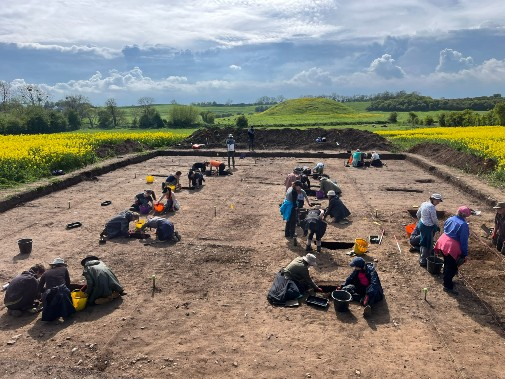
Archaeologists working near Skipsea Castle in East Yorkshire say a series of rare discoveries is transforming understanding of life in the centuries before the Norman Conquest

The discoveries are considered as key indicators of elite or high-status sites in the period

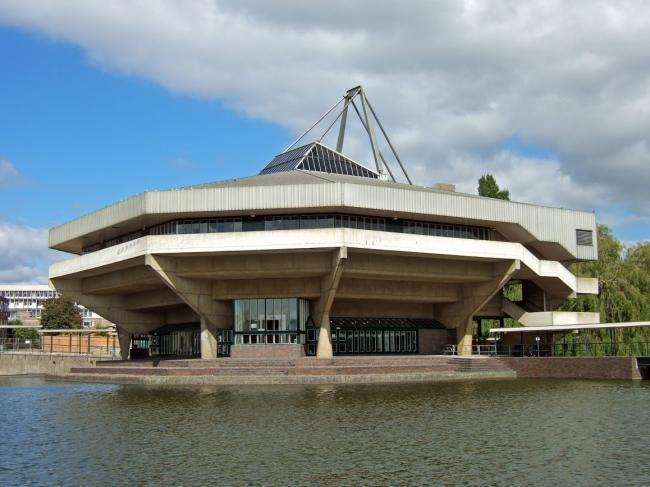
Excavations led by the University of York have revealed evidence of elite Anglo-Saxon buildings and industrial activity, including what may be a malthouse, a timber tower, and a large hall used for feasting and assemblies.

The research is being carried out at Sparrow Croft, a field around 225 metres from the Norman castle at Skipsea, as part of a six-year project that began in 2023.

One of the most important recent discoveries is the remains of a rare early medieval malthouse, dated to around AD 750–850. The structure includes a drying oven and an adjacent clay floor, once housed within a timber-framed building made with wattle and daub.

Timber structures and elite activity

Close by, archaeologists uncovered a square, sunken feature lined with timber and mortar. This is believed to be the cellar of a wooden tower, which may have functioned as a watchtower, bell tower, or possibly a tower-nave church.

Both the malthouse and the tower are uncommon finds in England and are considered strong indicators of a high-status or elite site in the period before the Norman Conquest.

Above the remains of the malthouse, researchers also identified a later, large timber hall, likely used for feasting, drinking, and political gatherings. The hall, which predates the Norman castle, was enclosed within an extensive ditch system. Taken together, the evidence suggests the area functioned as a “lordly centre” within the late Anglo-Saxon landscape.

Links to Anglo-Saxon power

These findings build on earlier discoveries at Skipsea that have already transformed understanding of the site. Nearly a decade ago, University of York archaeologists Dr Jim Leary and Dr Elaine Jamieson demonstrated that the enormous mound on which Skipsea Castle stands—85 metres wide and 13 metres high—was not Norman, as previously believed, but Iron Age in origin.

Radiocarbon dating showed the mound was constructed around 1,500 years before the Norman Conquest, making it unique in Britain.

Dr Leary said that relatively little is known about this period of English history, making discoveries of this kind particularly rare. He added that the site is especially significant because the area later belonged to Harold Godwinson, the last Anglo-Saxon king of England, before becoming the estate centre of the Lords of Holderness after 1066.

Although there is no direct evidence that Harold himself visited Skipsea, the discoveries point to a landscape shaped by power and wealth in the late Anglo-Saxon period.

A much deeper history

The importance of the area extends far earlier still. Skipsea was once surrounded by three freshwater lakes—Skipsea Bail Mere, Skipsea Low Mere, and Skipsea Withow Mere—connected to the River Hull. Formed around 10,000 years ago, these lakes attracted human activity from the Mesolithic period through to medieval times.

Archaeological finds from the former lakes include stone tools, animal remains, and bone harpoons, while Neolithic and Bronze Age buildings and trackways have been identified along their margins.

Today, Skipsea Castle is a Scheduled Monument under the care of English Heritage. Each May, it hosts the University of York’s archaeology field school, involving around 120 undergraduate and postgraduate students.

Dr Elaine Jamieson noted that the project is only halfway complete, and that further discoveries may yet shed more light on how power, industry, and everyday life were organised in eastern England in the centuries leading up to the Norman Conquest.