• MAIN PAGE
  • LATEST NEWS
    • Lost Cities
    • Archaeology's Greatest Finds
    • Underwater Discoveries
    • Greatest Inventions
    • Studies
    • Blog
  • PHILOSOPHY
  • HISTORY
  • RELIGIONS
    • Africa
    • Anatolia
    • Arabian Peninsula
    • Balkan Region
    • China - East Asia
    • Europe
    • Eurasian Steppe
    • Levant
    • Mesopotamia
    • Oceania - SE Asia
    • Pre-Columbian Civilizations of America
    • Iranian Plateau - Central Asia
    • Indus Valley - South Asia
    • Japan
    • The Archaeologist Editor Group
    • Scientific Studies
    • Aegean Prehistory
    • Historical Period
    • Byzantine Middle Ages
    • Predynastic Period
    • Dynastic Period
    • Greco-Roman Egypt
  • Rome
  • PALEONTOLOGY
  • About us
Menu

The Archaeologist

  • MAIN PAGE
  • LATEST NEWS
  • DISCOVERIES
    • Lost Cities
    • Archaeology's Greatest Finds
    • Underwater Discoveries
    • Greatest Inventions
    • Studies
    • Blog
  • PHILOSOPHY
  • HISTORY
  • RELIGIONS
  • World Civilizations
    • Africa
    • Anatolia
    • Arabian Peninsula
    • Balkan Region
    • China - East Asia
    • Europe
    • Eurasian Steppe
    • Levant
    • Mesopotamia
    • Oceania - SE Asia
    • Pre-Columbian Civilizations of America
    • Iranian Plateau - Central Asia
    • Indus Valley - South Asia
    • Japan
    • The Archaeologist Editor Group
    • Scientific Studies
  • GREECE
    • Aegean Prehistory
    • Historical Period
    • Byzantine Middle Ages
  • Egypt
    • Predynastic Period
    • Dynastic Period
    • Greco-Roman Egypt
  • Rome
  • PALEONTOLOGY
  • About us

Archaeologists find ancient evidence of “Lost World” beneath the North Sea

March 16, 2026

Doggerland: A Submerged Prehistoric Heartland of Forests and Wildlife

A Lost Land Beneath the North Sea

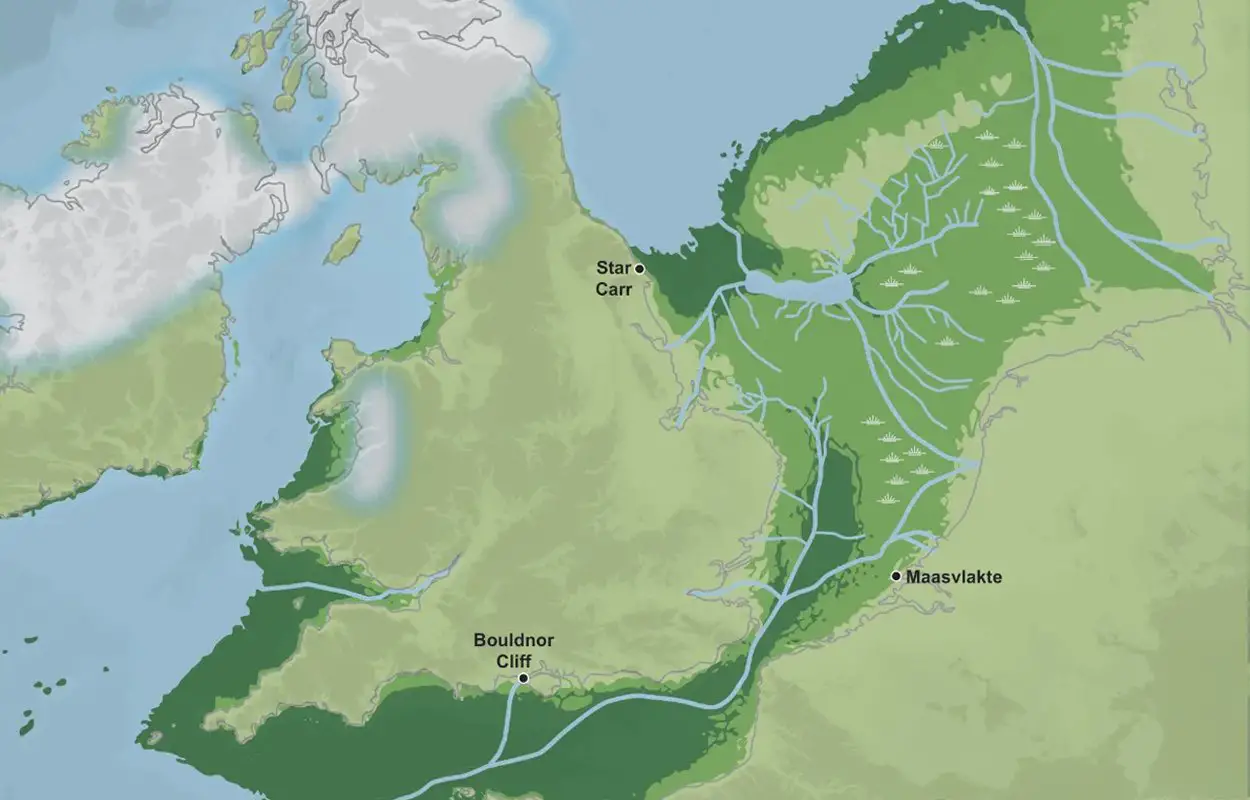
Long before rising seas created the modern North Sea, a vast landmass called Doggerland connected Britain to continental Europe. Traditionally thought to be a cold, barren Ice Age plain, new research suggests that parts of Doggerland were far more hospitable than previously believed—supporting forests, wildlife, and potentially early human communities thousands of years earlier than once assumed.

A study led by researchers at the University of Warwick, published in Proceedings of the National Academy of Sciences, provides the first detailed reconstruction of Doggerland’s ecology using sedimentary ancient DNA (sedaDNA) preserved in marine sediments.

Reconstructing the Ecological History

By analyzing DNA traces from sediments along a prehistoric river system in southern Doggerland, scientists were able to identify plant species that thrived from the end of the last Ice Age until the region was submerged by the North Sea.

The study examined 252 sediment samples from 41 marine cores, revealing that temperate woodland species such as oak, elm, and hazel were established more than 16,000 years ago—thousands of years earlier than pollen records from Britain suggested.

Surprisingly, the team also detected DNA from:

  • Tilia (lime trees): Appearing roughly 2,000 years before it shows up in Britain, indicating warmer conditions.

  • Pterocarya (walnut relative): Believed extinct in northwestern Europe 400,000 years ago, showing it survived in isolated refuges much longer.

These discoveries support the concept of microrefugia—small pockets where temperate plants endured harsh Ice Age conditions, helping explain Reid’s Paradox, or how trees recolonized northern Europe so quickly after glacial retreat.

Doggerland as a Refuge for Early Humans

Temperate forests in Doggerland would have offered abundant resources for both wildlife and humans. Woodland ecosystems likely supported animals such as wild boar and other game, providing food and materials for early Mesolithic communities.

“For many years, Doggerland was often described as a land bridge—only significant as a route for prehistoric settlement of the British Isles. Today, we understand that Doggerland was not only a heartland of early human settlement, but also a refuge for plants and animals, and a key factor in how prehistoric communities settled northern Europe,” said Professor Vincent Gaffney.

According to Professor Robin Allaby, the research shows that Doggerland’s wooded environment could have supported early human communities prior to flooding, helping explain why relatively little early Mesolithic evidence survives on mainland Britain.

A Landscape That Persisted Longer Than Expected

The DNA evidence also challenges previous assumptions about when Doggerland disappeared. Parts of the landmass appear to have survived major flooding events, including the Storegga tsunami around 8,150 years ago, and may have remained above water until roughly 7,000 years ago.

This prolonged existence would have allowed Doggerland to act as a critical ecological and human refuge, shaping settlement patterns across northern Europe long before the emergence of the Maglemosian culture around 10,300 years ago.

A Thriving Ice Age Ecosystem

The study positions Doggerland not merely as a migration corridor but as a thriving ecosystem that played a central role in the environmental and human history of Ice Age Europe. By revealing early forests, wildlife, and habitable landscapes, the research provides a richer understanding of how prehistoric humans interacted with and adapted to this now-submerged world.
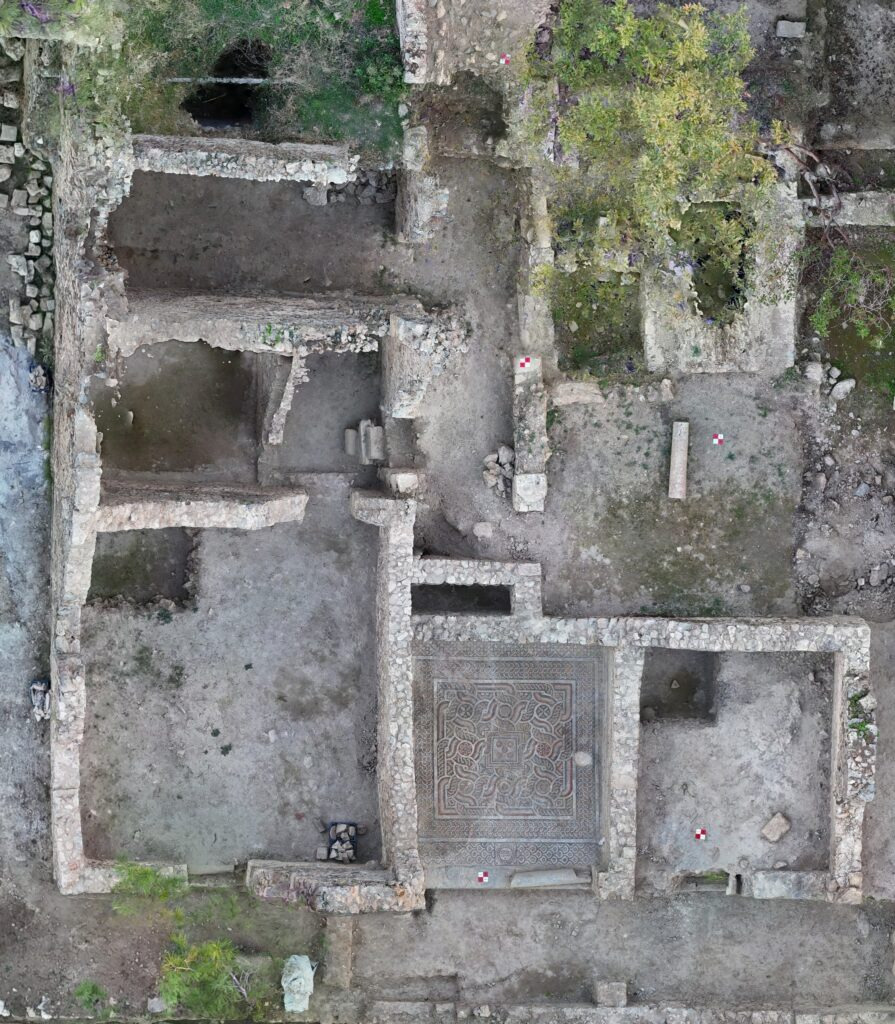
"Let the Envious Burst!”: 1,500-Year-Old Mosaic with Surprising Message Discovered in Türkiye’s Syedra

March 16, 2026

Playful Mosaic Discovered in the Ancient City of Syedra

A Remarkable Find on Türkiye’s Mediterranean Coast

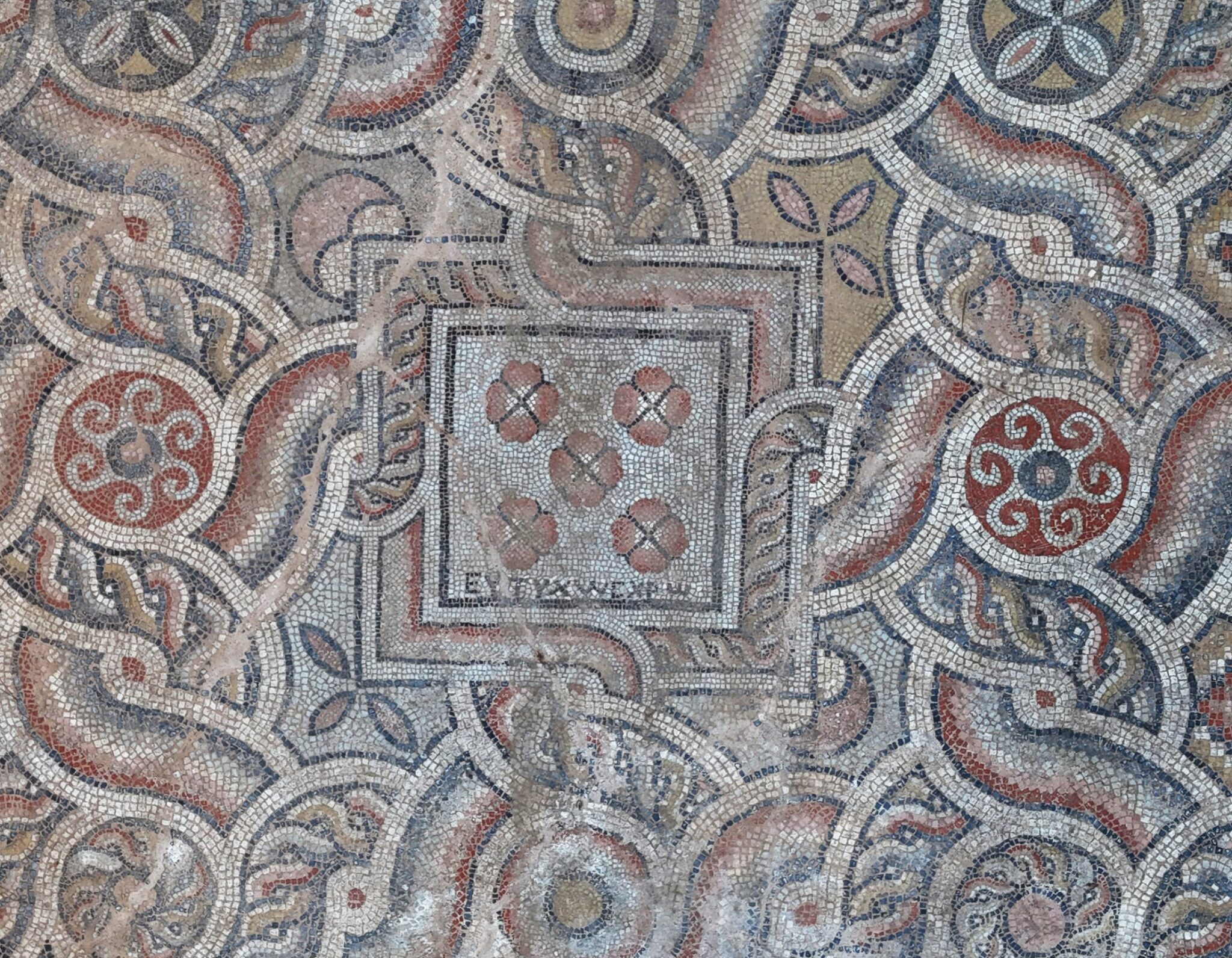
Archaeologists excavating the ancient city of Syedra have uncovered a beautifully preserved mosaic floor dating back roughly 1,500 years. The discovery was made near Alanya, along Türkiye’s Mediterranean coastline.

The mosaic immediately caught researchers’ attention—not only because of its excellent condition but also because of its humorous and expressive Greek inscriptions. Among the phrases are welcoming and playful messages that translate roughly to “Use it with joy” and “May the envious burst with jealousy.”

Part of a National Heritage Project

The discovery comes from ongoing excavations overseen by the Ministry of Culture and Tourism of Türkiye and the General Directorate of Cultural Heritage and Museums.

These excavations are part of the “Heritage for the Future” initiative, a nationwide effort dedicated to preserving and researching important archaeological sites across the country.

The excavation project is led by Ertuğ Ergürer, an associate professor at Alanya Alaaddin Keykubat University. According to Ergürer, the mosaic was uncovered within a large residential complex in the ancient city.

A House That Evolved Over Centuries

Researchers believe the structure where the mosaic was found served as a substantial domestic residence. Evidence suggests the building remained in use for several centuries, undergoing repeated renovations and structural changes.

Archaeological analysis indicates that the complex was occupied from around the 2nd century AD until approximately the 7th century AD, revealing multiple phases of construction and habitation over time.

Details of the Mosaic

The mosaic measures roughly 4.5 by 4.5 meters and likely dates to the 5th or 6th century AD. Positioned near the entrance of the building, the artwork is remarkably intact despite its age.

The floor decoration combines geometric patterns, floral designs, and two Greek inscriptions. One inscription appears in the central panel and offers a friendly greeting similar to “Use it with joy.” Another inscription located on the southern section conveys a more humorous sentiment, interpreted as “Let those who envy burst with jealousy.”

Hospitality, Humor, and Ancient Personality

Messages like these were fairly common in mosaics from the Late Antique period. Homeowners often included inscriptions that reflected hospitality, pride in their property, or lighthearted protection against jealousy and ill wishes.

In this case, the blend of warmth and playful defiance gives a rare glimpse into the personality and social attitudes of the people who once lived there. It suggests that the residents welcomed guests while also displaying a confident sense of humor about their home and status.

Preservation Efforts

After the mosaic was uncovered, specialists carried out conservation and restoration work to stabilize and protect the artwork. These efforts ensure the floor can be preserved for future study and potentially for public viewing.

The Historical Significance of Syedra

Situated on a hill about 20 kilometers east of Alanya, Syedra is one of the most intriguing yet lesser-known archaeological sites along the Mediterranean coast.

The city was originally established during the Hellenistic period and later flourished under the Roman Empire. Between the 1st century BC and the 7th century AD, Syedra developed into an important regional center.

Archaeologists working at the site have uncovered a wide range of structures, including:

  • Defensive city walls

  • Paved streets

  • Public baths

  • Temples and civic buildings

  • A council chamber

  • An impressive colonnaded avenue

One particularly impressive aspect of Syedra is its advanced water management system. Because freshwater sources in the area were limited, the inhabitants built large rock-cut cisterns designed to capture and store rainwater—an engineering solution that allowed the city to thrive despite environmental challenges.

A Window Into Everyday Life

The newly discovered mosaic adds another fascinating chapter to Syedra’s history. Beyond its artistic beauty, the playful inscriptions provide a rare and personal glimpse into the lives of the people who once walked across this floor more than a millennium ago.

As excavations continue, researchers hope to uncover more details about daily life, culture, and architecture in this remarkable Mediterranean city.

Syedra’s Role in Trade and Regional Politics

Historical records indicate that Syedra was not just a quiet coastal settlement—it played an active role in regional commerce and political life. Evidence from coins minted in the city during the Roman era suggests that Syedra supported a prosperous urban population connected to wider Mediterranean trade networks.

These coins reveal strong economic links with other cities around the Mediterranean, highlighting Syedra’s participation in the vibrant exchange of goods, culture, and ideas that defined the ancient world.

The city also gained recognition in antiquity during the reign of Septimius Severus. Historical accounts report that the emperor honored the city’s residents after they successfully resisted pirate attacks that had been threatening coastal communities in the region. Their defense of the area earned imperial appreciation and reinforced Syedra’s reputation as a loyal and resilient city within the Roman Empire.

A Scenic Site Overlooking the Mediterranean

Today, Syedra’s location remains as impressive as it was in ancient times. The city sits high on a hill roughly 20 kilometers east of Alanya, offering sweeping views of both the Mediterranean Sea and the rugged Taurus Mountains.

Because of its dramatic setting and well-preserved ruins, the site is not only valuable to archaeologists but also a visually striking destination for visitors interested in ancient history.

Insights Into Daily Life in Late Antiquity

Finds like the recently discovered mosaic provide an important glimpse into everyday life during the later centuries of antiquity, particularly during the transition from the Roman Empire to the Byzantine Empire.

While monumental buildings such as temples, baths, and theaters reveal the public face of ancient cities, residential structures tell a more personal story. Homes show how people decorated their living spaces, welcomed guests, and expressed their cultural identity.

The witty inscriptions preserved in the Syedra mosaic demonstrate that even 1,500 years ago, homeowners enjoyed greeting visitors with humor while subtly protecting their households from jealousy or ill will. These playful messages remind us that despite the centuries that separate us, the human desire for hospitality, pride in one’s home, and a touch of humor has remained remarkably consistent throughout history.

'Golden Retriever Personality' May Hold Some Truth as Humans Share Same Genetic Roots

March 16, 2026

From Wolves to Companions: What Dog Genetics Reveal About Behavior

The Ancient Origins of Dogs

It may seem surprising, but every modern dog breed traces its ancestry back to wolves. From tiny pugs and chihuahuas to massive Great Danes, all dogs evolved from a now-extinct population of Grey wolf.

This transformation likely began around 30,000 years ago, near the end of the Pleistocene. During this time, certain wolves started forming close relationships with human hunter-gatherers. Over generations, these animals gradually adapted to living alongside people, eventually becoming the domesticated dogs we know today.

According to the Natural History Museum, dogs were among the very first animals to undergo domestication. At that stage in human history, people still relied mainly on hunting large animals for survival. Other domesticated species—such as cattle, pigs, and sheep—appeared later, after agriculture became a central part of human life.

Surprising Genetic Connections Between Dogs and Humans

Recent research has revealed something even more fascinating: dogs and humans may share genetic influences that shape behavior and emotional responses.

Scientists studying Golden Retriever behavior found that traits such as trainability, fearfulness, and aggression toward other dogs are connected to specific genes. Remarkably, several of these same genes are also linked to aspects of human behavior.

For example:

  • PTPN1: In dogs, this gene is associated with aggression. In humans, it has been connected to intelligence and depression.

  • A particular genetic variant found in fearful golden retrievers also influences whether humans tend to dwell on embarrassing memories.

  • ROMO1: This gene relates to how easily dogs can be trained and, in people, is linked to emotional sensitivity.

These overlaps suggest that both species may be biologically predisposed to experience and react to the world in certain ways.

As researcher Enoch Alex explained, genetics can strongly influence behavior. Some dogs may naturally be more sensitive to stress, and negative experiences can amplify this tendency. What might appear to owners as “bad behavior” could actually be a sign that the animal is feeling overwhelmed or anxious.

How Scientists Studied Dog Behavior

To explore the relationship between genetics and behavior, researchers turned to one of the largest long-term canine research projects: the Golden Retriever Lifetime Study.

Using data from this project, scientists examined more than 1,300 golden retrievers between the ages of three and seven. Dog owners completed detailed surveys describing over 70 different behaviors, including reactions to strangers, sensitivity to loud noises, and even panic triggered by household appliances like vacuum cleaners.

Researchers then organized these behaviors into 14 categories. Afterward, they compared the behavioral patterns with each dog’s full genetic profile.

By scanning the animals’ entire genome, the team looked for genetic variants that appeared more frequently in dogs displaying certain behavioral traits. This large-scale comparison helped scientists identify genes involved in emotional regulation, stress responses, and sensitivity to environmental stimuli.

What the Findings Mean for Dogs—and People

The results suggest that genetics play a major role in shaping a dog’s emotional tendencies, much like they do in humans. This insight could have practical benefits for both species.

For veterinarians, understanding genetic links between canine fear responses and human anxiety-related genes may lead to more targeted treatments or medications. Meanwhile, dog owners may benefit from recognizing that behavior often reflects underlying emotional states rather than simple disobedience.

According to animal behavior expert Daniel Mills, dogs living with humans share more than just our homes. They may also experience psychological pressures similar to those people face in modern life.

Because of this connection, pets could even serve as valuable models for studying certain human mental health conditions linked to emotional stress.

A Deeper Understanding of Our Closest Animal Companion

The study highlights just how closely dogs and humans are connected—not only through thousands of years of shared history but also through biology. By uncovering the genetic foundations of canine behavior, researchers are helping people better understand their pets while also gaining insights into human emotional health.

As science continues to explore the bond between humans and dogs, it becomes increasingly clear that our relationship with these loyal companions runs deeper than anyone once imagined.

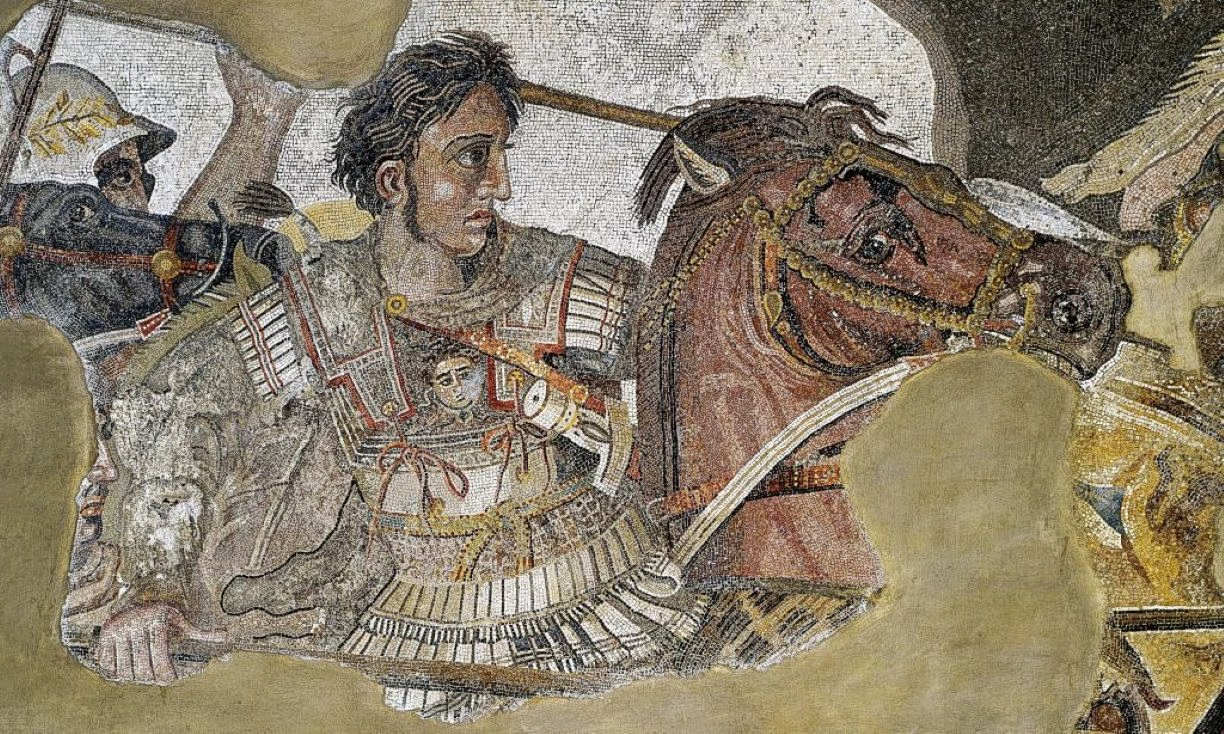
Alexander the Great: 2,000 Year-Old Lost City Confirmed in Iraq

March 16, 2026

The Rediscovery of Alexandria on the Tigris: A Lost City of Alexander the Great

A Legendary Conqueror and His Cities

Alexander the Great is widely regarded as one of history’s greatest military strategists. During his remarkable campaigns across Asia and the conquest of the Persian Empire, he established numerous cities—many of them named Alexandria in his honor. Historians estimate that more than 70 settlements bearing his name were founded during his lifetime.

One of these cities, long believed lost to history, has now been rediscovered by archaeologists after more than two millennia.

The Discovery of Alexandria on the Tigris

The ancient city, known as Alexandria on the Tigris, has been confirmed at a strategic location in southern Iraq, close to the Persian Gulf. The city stood along the Tigris River, one of the two great rivers that defined the civilization of Mesopotamia.

Founded in the 4th century BC by Alexander himself, the city served as a vital trading center. Its location allowed it to link the commercial networks of India, Mesopotamia, and the Mediterranean, making it an important hub for merchants and travelers moving between East and West.

Sixteen Years of Archaeological Investigation

The rediscovery was the result of a long-term archaeological project that lasted 16 years. Researchers used modern tools such as high-resolution aerial imaging and drones to examine the landscape and identify buried structures.

These technologies allowed archaeologists to map the city’s defensive walls and street layout. The results revealed a carefully planned urban grid and the impressive scale of what was once a thriving metropolis.

Remarkably Preserved Despite Flooding

According to archaeologist Stefan R. Hauser, the site experienced repeated flooding over the centuries. Surprisingly, these natural events did not completely destroy the settlement.

Instead, much of the ancient city remained preserved beneath layers of sediment. Hauser described the survival of the ruins as almost miraculous.

Temples, Workshops, and Urban Life

Excavations have uncovered several important structures, including temples, workshops, kilns, and furnaces. These discoveries provide insight into both the religious practices and industrial activities of the city’s inhabitants.

One of the most striking findings is the unusually large size of the city blocks. According to Hauser, the blocks are even larger than those found in major capitals of the period, such as Seleucia on the Tigris and Alexandria.

A Vast Ancient Metropolis

Archaeologists estimate that Alexandria on the Tigris covered approximately 2.5 square miles, a size that Hauser describes as enormous for an ancient city.

Geophysical surveys have also revealed that many structures lie just beneath the surface. Because of this shallow depth, researchers were able to identify building walls quickly, leading to exceptionally clear results during exploration.

A New Chapter in Ancient History

The rediscovery of Alexandria on the Tigris provides valuable insight into the urban planning, trade networks, and influence of Alexander’s empire. More importantly, it highlights how advanced archaeological techniques can bring long-lost cities back into the historical record.

As excavation continues, researchers hope to learn even more about daily life in this once-bustling center of commerce—one of the many cities that carried the legacy of Alexander the Great across the ancient world.

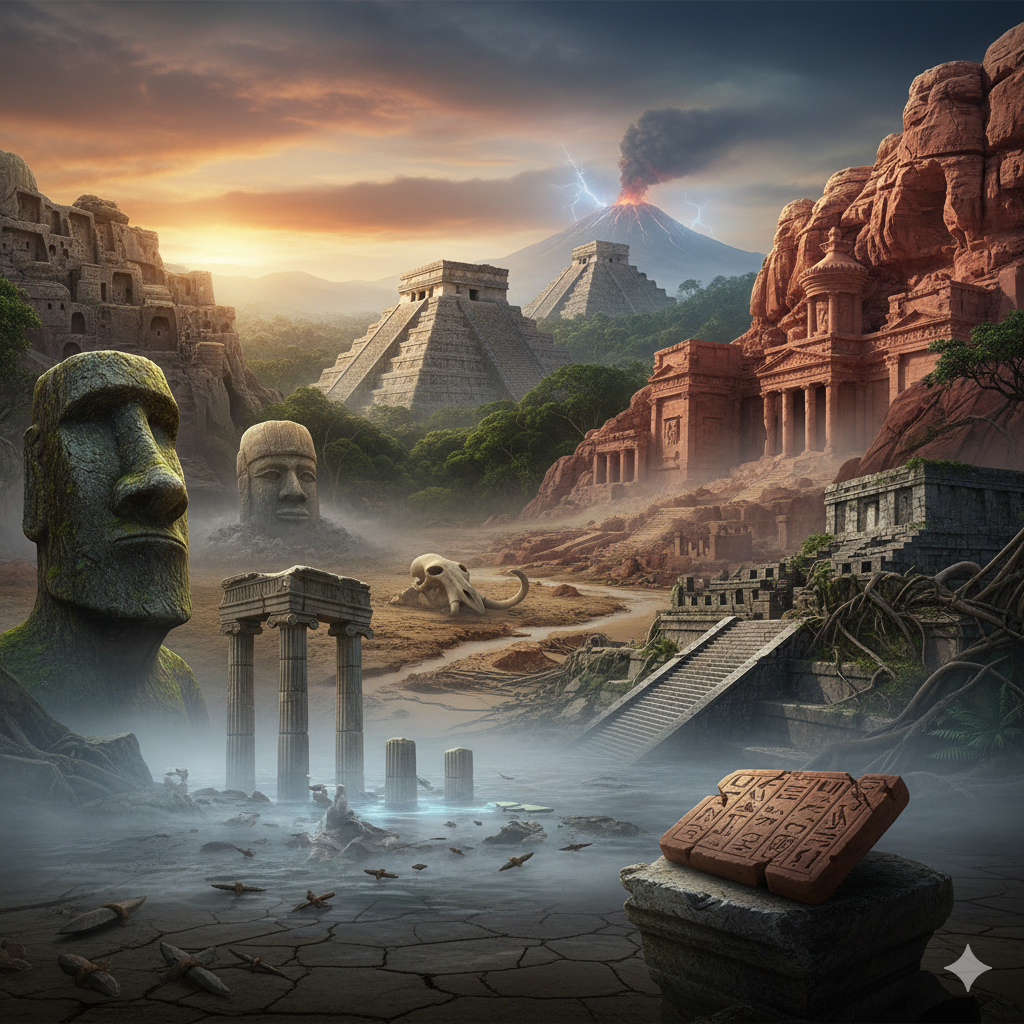
Desert Civilizations That Vanished Without a Trace

March 16, 2026

Life in Harsh Landscapes

Deserts may seem like inhospitable places, yet throughout history many civilizations thrived in these challenging environments.

Through ingenuity and adaptation, desert communities developed ways to survive in regions with extreme temperatures and limited water.

Innovative Survival Strategies

To thrive in desert conditions, ancient cultures developed remarkable techniques.

They built irrigation systems to capture scarce rainfall, created underground water channels, and cultivated crops suited to arid climates.

These innovations allowed communities to flourish in landscapes that might otherwise seem uninhabitable.

Trade Across the Sands

Desert civilizations often became important centers of trade.

Caravan routes crossing vast deserts connected distant regions, allowing merchants to exchange valuable goods such as spices, textiles, metals, and rare minerals.

These trade networks helped transform remote settlements into thriving cultural hubs.

Mysterious Disappearances

Despite their success, some desert civilizations eventually vanished.

Archaeological remains suggest that once-bustling settlements were abandoned, leaving behind ruins buried by sand.

The reasons for these disappearances remain debated.

Possible Explanations

Researchers have proposed several theories for why desert cultures disappeared.

Climate changes may have reduced water supplies, making agriculture impossible. Trade routes might have shifted, cutting off economic lifelines.

In some cases, conflict or migration could have forced communities to relocate.

Echoes Beneath the Sands

Today, archaeologists continue to uncover traces of these lost civilizations.

Their ruins reveal stories of resilience, innovation, and adaptation in some of the world’s most difficult environments.

The deserts still hold many secrets, waiting to reveal the histories of cultures that once thrived under the scorching sun.

The Guardians of Knowledge: Ancient Library Traditions

March 16, 2026

Preserving Human Memory

Long before digital storage and printed books, knowledge was preserved through handwritten texts.

Ancient libraries played a vital role in protecting stories, scientific discoveries, religious teachings, and historical records.

Without these early institutions, much of humanity’s intellectual heritage might have been lost.

The Work of Scribes

At the heart of ancient libraries were scribes—skilled individuals trained to read and write.

Scribes copied texts by hand, ensuring that important works could survive beyond a single manuscript. Their training required years of study, and their work demanded extreme accuracy.

In many cultures, scribes held respected positions within society.

Centers of Scholarship

Ancient libraries were not merely storage rooms for books.

They often served as centers of learning where scholars gathered to study, debate ideas, and produce new writings.

Philosophers, historians, and scientists depended on these collections to expand their knowledge.

One of the most famous examples is the Library of Alexandria, which sought to collect knowledge from across the ancient world.

Preserving Myths and Science

Libraries stored a wide range of texts, including mythology, poetry, astronomy, medicine, and mathematics.

By preserving these works, ancient scholars ensured that important ideas could be shared across generations.

These collections helped shape intellectual traditions that would influence later civilizations.

Knowledge as Power

Control over written knowledge gave libraries and scholars significant influence.

Rulers often supported these institutions because they helped strengthen cultural identity and political authority.

By preserving records and teachings, libraries became guardians of civilization’s collective memory.

The Legacy of Ancient Libraries

Though many ancient libraries were eventually destroyed or lost, their impact continues.

Modern libraries and research institutions owe much to these early traditions of preserving and sharing knowledge.

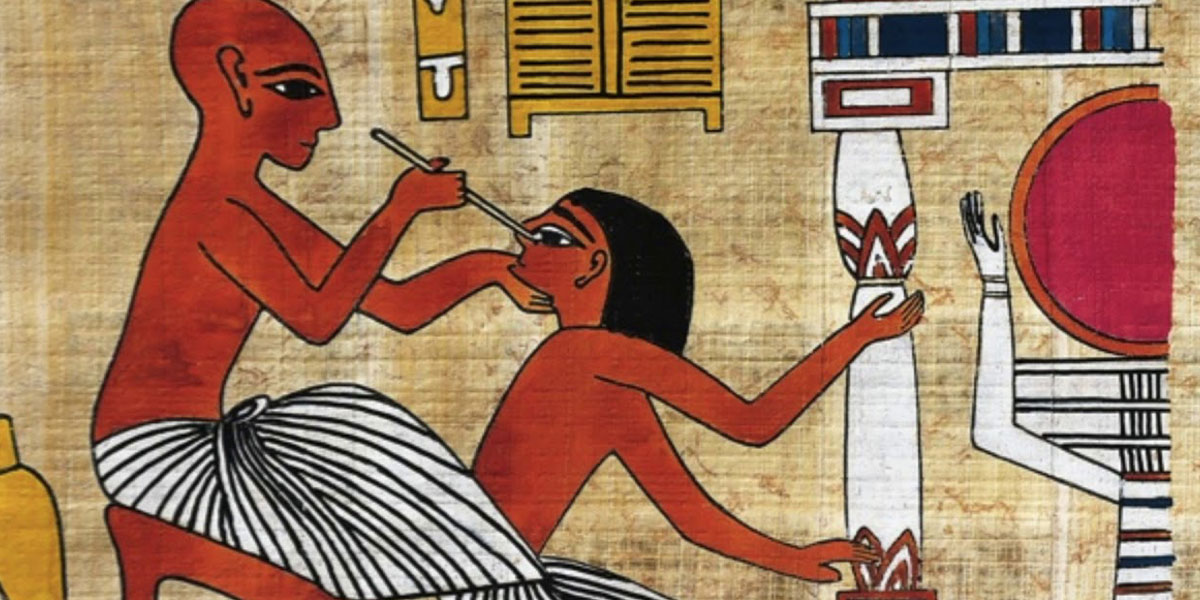
Ancient Healing Practices and Sacred Medicine

March 16, 2026

Medicine at the Crossroads of Science and Spirituality

In ancient societies, healing was rarely separated from religion. Medical knowledge combined practical observation with spiritual beliefs about the body, nature, and divine forces.

Early healers often served as both physicians and spiritual leaders within their communities.

Herbal Knowledge and Natural Remedies

One of the foundations of ancient medicine was the use of plants.

Healers studied the properties of herbs, roots, and minerals, developing treatments for wounds, infections, and digestive problems.

This knowledge was often passed down through generations and formed the basis for many traditional medical systems.

Rituals and Spiritual Healing

In addition to physical treatments, many healing practices included rituals intended to restore spiritual balance.

Chants, prayers, and symbolic gestures were believed to remove harmful influences or appease supernatural forces thought to cause illness.

Patients might participate in ceremonies designed to strengthen both body and spirit.

Early Medical Techniques

Ancient practitioners developed surprising medical skills.

Evidence suggests they performed basic surgeries, treated fractures, and created tools for medical procedures.

Though limited by the scientific knowledge of their time, these healers relied on careful observation and practical experience.

Healing as a Community Practice

Medical care was often deeply connected to community traditions.

Healing rituals could involve family members, religious leaders, and other participants who supported the patient’s recovery.

These practices reinforced social bonds and shared beliefs.

The Roots of Modern Medicine

While ancient medicine sometimes included supernatural explanations, many techniques were based on careful study of the natural world.

The herbal knowledge and observational skills of early healers laid important foundations for later medical discoveries.

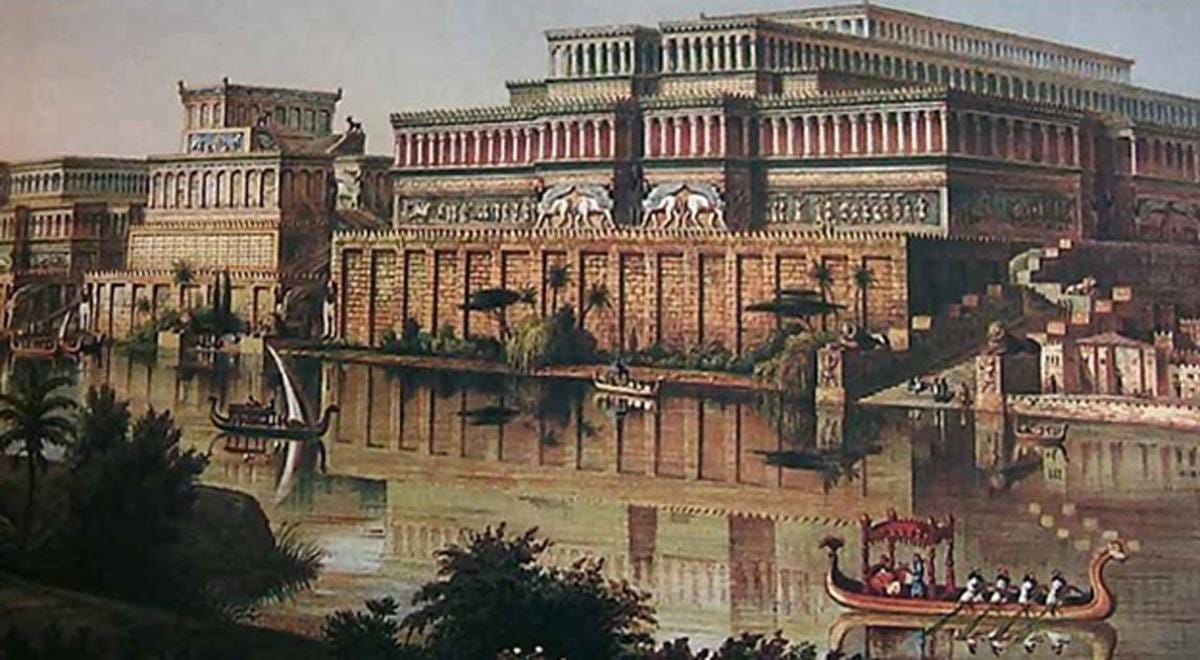
The Mysterious Architects of Ancient Palaces

March 13, 2026

Symbols of Power and Prestige

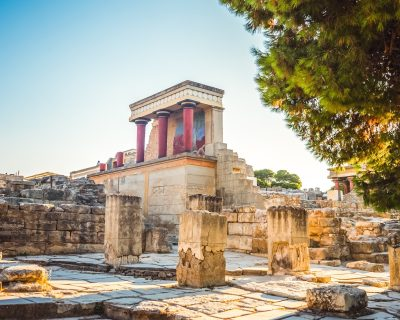
Ancient palaces were more than luxurious residences. They were political centers, cultural landmarks, and powerful symbols of authority.

These massive structures required extraordinary planning, engineering, and artistic skill—yet the identities of the people who designed and built them are often unknown.

Engineering on a Monumental Scale

Constructing early palaces demanded impressive technical knowledge.

Builders had to plan complex layouts, transport massive materials, and create durable structures that could support large halls, courtyards, and ceremonial spaces.

Without modern tools or machinery, ancient engineers relied on clever techniques involving ramps, pulleys, and coordinated labor.

Artistic Mastery

Palaces were also showcases of artistic achievement.

Walls were decorated with detailed carvings, paintings, and relief sculptures. These artworks often depicted royal ceremonies, military victories, and mythological scenes that celebrated the power of the ruling elite.

Every design element served both aesthetic and symbolic purposes.

Who Built These Structures?

Although kings and rulers commissioned these buildings, the true architects were skilled craftsmen, engineers, and artisans.

These specialists may have belonged to organized guilds or worked within royal workshops supported by the palace itself.

Their expertise allowed them to create structures that would stand for centuries.

Cultural and Political Centers

Ancient palaces often served as administrative hubs where officials managed trade, diplomacy, and taxation.

Within their walls, decisions were made that shaped entire kingdoms.

At the same time, ceremonial halls hosted rituals and celebrations that reinforced the ruler’s authority.

Monuments to Human Ingenuity

Even today, ancient palaces inspire awe. Their scale and craftsmanship reveal the remarkable abilities of early builders.

Though the architects themselves remain largely anonymous, their creations continue to tell the story of human ambition, creativity, and political power.

Divine Kingship: When Rulers Were Seen as Gods

March 13, 2026

Power Beyond the Throne

In many ancient societies, kings were not viewed as ordinary human leaders. Instead, they were believed to possess divine authority or even be living gods. This concept—known as divine kingship—shaped politics, religion, and social order across several early civilizations.

From the monumental pyramids of ancient Egypt to the sacred temples of Mesoamerica, rulers often stood at the center of both government and spiritual life.

Pharaohs and the Divine Order

In Ancient Egypt, the pharaoh was believed to be a divine figure chosen by the gods to maintain cosmic balance.

Egyptians believed the pharaoh served as the earthly representative of the god Horus during life and became associated with Osiris after death. This sacred role meant that ruling was not simply a political duty—it was a religious responsibility to preserve harmony between the heavens and the Earth.

Massive monuments, temples, and burial complexes reinforced the idea that the pharaoh possessed supernatural authority.

Sacred Kings in Mesopotamia

In Mesopotamia, rulers were not always considered gods themselves, but they were believed to govern with divine approval.

Kings often claimed that major gods had chosen them to rule and guide their cities. Temples and palaces worked closely together, and religious ceremonies reinforced the king’s sacred legitimacy.

By presenting themselves as protectors of divine order, rulers strengthened their authority over their subjects.

God-Kings of the Americas

In ancient civilizations of Mesoamerica, rulers also held powerful spiritual roles.

Kings were often seen as intermediaries between humans and the gods. Through elaborate rituals, sacrifices, and ceremonies, they maintained the balance of the universe.

Royal bloodlines were believed to carry sacred power, reinforcing the belief that leadership came directly from divine forces.

Why Divine Kingship Worked

Divine kingship provided stability for early societies.

If rulers were believed to be chosen by the gods—or even part divine themselves—then their authority became unquestionable. This belief discouraged rebellion and helped unify large populations under a single leader.

Religion and politics therefore became deeply intertwined.

The Legacy of Sacred Rulers

Though modern governments rarely claim divine authority, echoes of divine kingship remain in cultural traditions and historical memory.

The idea that leadership carries a sacred responsibility continues to influence how societies think about power, duty, and legitimacy.

The Forgotten Sea Peoples: Raiders of the Ancient World

March 13, 2026

A Sudden Wave of Destruction

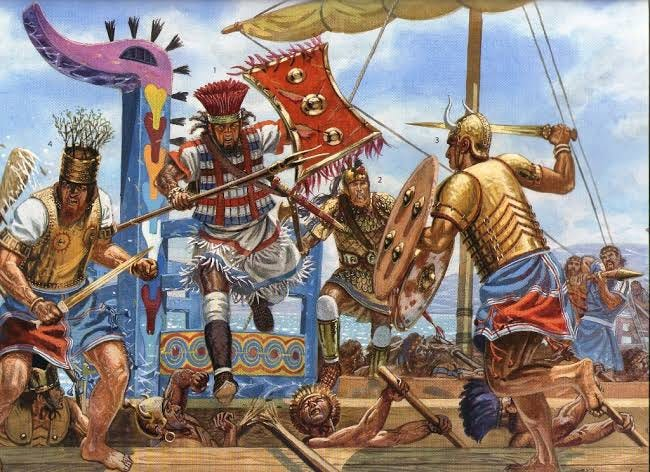
Around the end of the Bronze Age, several powerful civilizations around the Mediterranean experienced dramatic upheaval. Cities were destroyed, trade routes collapsed, and long-standing empires began to weaken.

Ancient records from this period mention mysterious attackers known today as the Sea Peoples.

These groups appeared suddenly in historical accounts, launching raids against coastal regions and powerful kingdoms.

Attacks on Major Civilizations

Texts and inscriptions describe the Sea Peoples attacking important centers throughout the eastern Mediterranean.

They are known to have clashed with powerful states that dominated the region at the time. Their raids contributed to widespread instability during a period historians now call the Bronze Age collapse.

Some cities were abandoned entirely after these attacks.

Who Were the Sea Peoples?

The true identity of the Sea Peoples remains one of history’s most intriguing mysteries.

Ancient records mention several different groups that may have been part of this coalition. Scholars believe they could have been migrating communities, displaced populations, or warrior groups searching for new territories.

Because archaeological evidence is limited, their exact origins remain uncertain.

Possible Causes of Their Movements

Historians have proposed several explanations for the sudden appearance of the Sea Peoples.

Some theories suggest climate changes or droughts forced populations to migrate. Others propose that political conflicts and economic disruption drove communities to seek new lands.

It is also possible that several different groups moved simultaneously, creating a wave of instability across the region.

Their Mysterious Disappearance

Just as suddenly as they appeared, the Sea Peoples seem to vanish from historical records.

Some scholars believe they eventually settled in new territories and became part of emerging cultures. Others suggest they were gradually absorbed into existing societies.

Because the evidence is limited, the final fate of these groups remains uncertain.

A Turning Point in Ancient History

The arrival of the Sea Peoples marked a dramatic moment in ancient history. Their raids coincided with the decline of major Bronze Age civilizations and the transformation of political landscapes across the Mediterranean.

Though many details remain unclear, the story of the Sea Peoples highlights how migrations and conflicts can reshape entire regions.

The Oldest Rituals Known to Humanity

Rituals at the Dawn of Culture

Long before written language or organized religion, humans were performing rituals. These structured actions—repeated across generations—helped early communities make sense of life, death, and the forces of nature.

Archaeological discoveries suggest that ritual behavior may have existed tens of thousands of years ago.

Prehistoric Ceremonies

Evidence of early rituals appears in caves, burial sites, and ancient gathering places.

Cave paintings, carefully arranged objects, and decorated tools suggest that early humans created symbolic ceremonies connected to hunting, fertility, or spiritual beliefs.

These activities were likely performed by groups rather than individuals, strengthening social bonds within early communities.

Rituals Surrounding Death

One of the clearest examples of early ritual behavior involves burial practices.

Some prehistoric graves contain carefully placed objects such as tools, ornaments, or food. Bodies were sometimes positioned in specific ways, suggesting deliberate ceremonial preparation.

These practices indicate that early humans were already developing beliefs about death and the possibility of an afterlife.

Rituals and the Natural World

Early rituals often focused on natural cycles.

Seasonal ceremonies may have celebrated the return of spring, the success of hunts, or the changing positions of the sun and stars.

These rituals helped communities organize their activities around environmental rhythms that were essential for survival.

The Social Power of Ritual

Rituals served more than spiritual purposes. They also helped organize communities and reinforce shared identities.

By participating in ceremonies together, members of a group strengthened their sense of belonging and cooperation.

These traditions laid the foundation for later religious systems.

The Roots of Religion

The oldest rituals show that humanity’s search for meaning began long before written history.

Through ceremony, symbolism, and shared experience, early humans expressed curiosity about life, nature, and the unseen forces they believed shaped the world.

These ancient traditions eventually evolved into the complex religious cultures that developed in later civilizations.

The Origins of Sacred Geometry

March 13, 2026

Patterns That Reflect the Universe

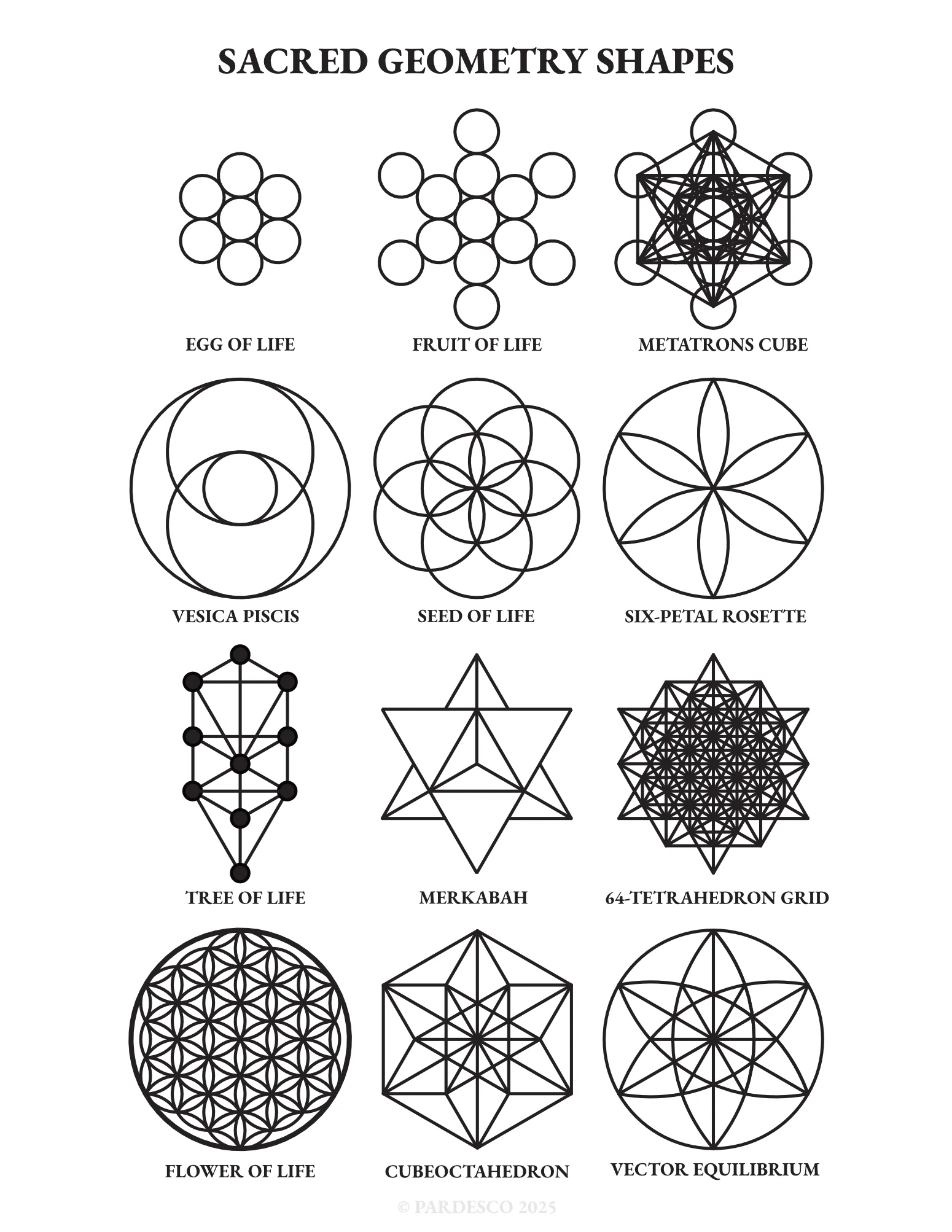
Throughout history, certain geometric shapes have appeared repeatedly in temples, artwork, and sacred architecture. Circles, triangles, spirals, and symmetrical patterns were not chosen randomly.

Ancient builders believed these shapes represented deeper truths about the structure of the universe. This tradition became known as sacred geometry.

Sacred geometry reflects the idea that mathematical patterns reveal the hidden order of the cosmos.

Geometry in Ancient Architecture

Many ancient temples were designed using precise geometric proportions.

Builders used careful measurements to create structures that reflected balance and harmony. The placement of walls, columns, and doorways often followed mathematical relationships believed to hold spiritual significance.

These designs created spaces that felt orderly and harmonious—qualities that ancient people associated with divine power.

Geometry in Art and Symbolism

Sacred geometric patterns also appeared in decorative art.

Artists incorporated repeating shapes and symmetrical designs into carvings, mosaics, and sacred symbols. These patterns were believed to mirror the natural patterns found in the world around them.

For ancient observers, geometry served as a bridge between human creativity and the structure of nature.

Cosmic Meaning

Many cultures believed that geometric forms reflected the organization of the cosmos itself.

For example, circles could represent eternity or the cycles of time. Triangles might symbolize balance between different cosmic forces. Spirals often reflected growth, movement, or transformation.

Through these shapes, ancient societies expressed philosophical ideas about life, order, and creation.

Knowledge Shared Across Cultures

Evidence suggests that geometric principles were understood by many ancient civilizations across different regions.

Though the details varied, the underlying idea remained similar: mathematics was not only practical but also spiritual.

Geometry became a language through which humans attempted to understand the deeper structure of reality.

The Enduring Legacy of Sacred Patterns

Sacred geometry continues to influence architecture, art, and philosophy today.

The patterns discovered by ancient builders remind us that mathematics has long been connected to humanity’s search for meaning and harmony in the universe.

Buried Temples Beneath Modern Cities

March 13, 2026

Ancient Sacred Spaces Beneath Our Feet

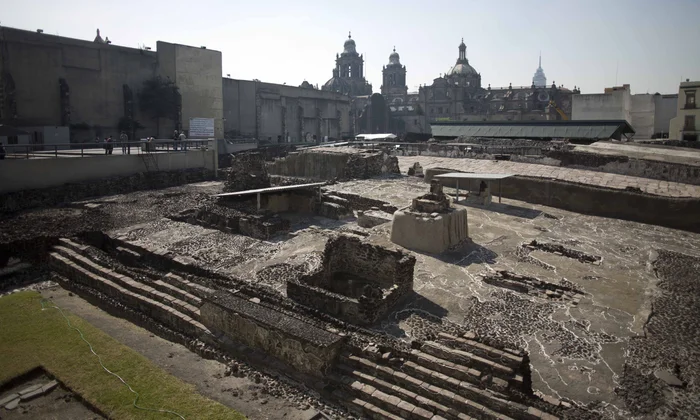
Modern cities often appear to represent the newest chapter of human history. Yet beneath busy streets and towering buildings, archaeologists frequently uncover remnants of much older worlds.

Hidden under many urban centers are the remains of ancient temples—sacred places where earlier civilizations worshiped their gods and practiced religious rituals.

These discoveries reveal that many modern cities grew directly on top of ancient religious landscapes.

Layers of History

Cities often expand continuously over thousands of years. When older buildings collapse or are abandoned, new structures are constructed above them.

Over time, this process creates layers of history buried beneath the ground. Temples that once stood at the center of ancient communities may now lie several meters below modern streets.

Excavations sometimes reveal entire temple complexes preserved beneath later construction.

Discoveries in Unexpected Places

Archaeologists have uncovered ancient temples under markets, residential neighborhoods, and government buildings.

These discoveries often occur during construction projects when workers accidentally expose ancient walls, statues, or ceremonial spaces.

Once excavated, these structures provide valuable insights into the religious life of earlier civilizations.

What These Temples Reveal

The remains of buried temples offer clues about early spiritual beliefs and social organization.

Architectural designs reveal how rituals were performed. Carvings and inscriptions provide information about the gods worshiped by ancient communities.

Artifacts found within temples—such as statues, offerings, and ceremonial tools—help researchers reconstruct religious traditions that may have disappeared centuries ago.

Sacred Centers of Ancient Cities

In many early civilizations, temples served as more than religious buildings. They were often the heart of political, economic, and cultural life.

Priests might oversee festivals, maintain records, or manage resources connected to the temple.

By studying these structures, historians gain a deeper understanding of how religion shaped the development of early cities.

A Hidden World Beneath the Present

Every buried temple represents a doorway into a forgotten era.

These discoveries remind us that modern cities are built upon thousands of years of human activity. Beneath the noise and movement of modern life lie sacred spaces that once guided the spiritual lives of ancient communities.

The Secret Languages of the Ancient Priesthoods

March 13, 2026

Words Reserved for the Sacred

In many ancient civilizations, language was more than a tool for communication—it was a powerful instrument of religion, authority, and mystery. Certain words, phrases, and even entire languages were reserved for priests and religious specialists. These sacred vocabularies formed secret linguistic systems used in rituals, ceremonies, and spiritual teachings.

By controlling these languages, priesthoods preserved knowledge that was considered too powerful or too sacred for everyday use.

Ritual Languages and Sacred Speech

Ancient priests often spoke or recited prayers in languages that ordinary people did not fully understand. These ritual languages sometimes represented older forms of speech preserved long after they disappeared from everyday conversation.

This separation created a sense of reverence and mystery during ceremonies. When sacred words were spoken, listeners believed they carried divine power capable of communicating with gods or spiritual forces.

In some traditions, the exact pronunciation of ritual words was believed to influence their effectiveness, making precise recitation essential.

Codes Hidden Within Religious Texts

Beyond special vocabularies, some priesthoods used coded writing systems to record sacred knowledge.

These texts might include symbolic language, layered meanings, or metaphors that only trained initiates could interpret. Religious instruction therefore required years of study before a student could fully understand the teachings.

By embedding knowledge within symbolic language, ancient scholars ensured that sacred teachings were preserved without being easily misused.

Preserving Knowledge Across Generations

Secret languages also served a practical purpose: protecting knowledge across centuries.

Priests acted as guardians of religious traditions, historical records, and scientific observations. By keeping certain teachings within their institutions, they created systems that passed knowledge from teacher to student through careful training.

This approach allowed religious communities to maintain continuity even during times of political change or cultural upheaval.

The Power of Sacred Language

To ancient societies, words were not merely descriptive—they were believed to shape reality itself. Ritual chants, prayers, and sacred names were thought to influence the natural and spiritual worlds.

Because of this belief, language became a sacred tool requiring discipline and respect.

Echoes in Modern Traditions

Even today, many religious traditions maintain sacred languages used in ceremonies and prayers. These traditions preserve the ancient idea that certain words carry spiritual meaning beyond ordinary speech.

The secret languages of ancient priesthoods remind us that language has long been intertwined with faith, power, and the preservation of knowledge.

The First Astronomer-Priests

March 13, 2026

Watching the Skies

In many ancient cultures, religious leaders were also skilled observers of the heavens.

These astronomer-priests studied the movement of the sun, moon, and stars to understand the rhythms of the universe.

Tools and Observations

Early astronomer-priests used simple but effective tools.

They tracked celestial movements by marking shadows, aligning structures with the horizon, and recording patterns in the night sky.

Over time, these observations became increasingly precise.

Calendars and Agriculture

Understanding the sky allowed these scholars to create calendars.

Accurate calendars were essential for agriculture, helping communities know when to plant and harvest crops.

Astronomical knowledge therefore played a critical role in sustaining early societies.

Prophecy and Ritual

Celestial events were often interpreted as divine messages.

Eclipses, planetary movements, and unusual astronomical events could influence religious ceremonies and political decisions.

Astronomer-priests were therefore both scientists and spiritual leaders.

The Legacy of Ancient Skywatchers

The work of these early observers laid the foundation for astronomy.

Their careful study of the heavens helped humanity begin to understand the vast and complex universe beyond Earth.

Ancient Roads That Shaped the World

March 13, 2026

Pathways Across Continents

Long before modern highways, ancient roads connected distant communities and civilizations.

These routes allowed people to travel, trade, and share ideas across vast regions.

Early Engineering

Building roads required significant planning and effort.

Some routes were simple paths worn into the ground by repeated travel. Others were carefully engineered with stone paving and drainage systems.

These roads made long-distance travel safer and more efficient.

Trade and Pilgrimage

Ancient roads often served both commercial and spiritual purposes.

Merchants transported goods such as spices, textiles, metals, and precious stones. At the same time, pilgrims traveled these routes to reach sacred temples and shrines.

Cultural Exchange

Road networks allowed languages, technologies, and religious beliefs to spread between distant regions.

Ideas could travel just as easily as goods, shaping cultures across entire continents.

The Foundations of Global Connection

Ancient roads laid the groundwork for the interconnected world we live in today.

They remind us that human societies have always relied on movement, exchange, and communication.

Treasures of Lost Kingdoms Unearthed

March 13, 2026

Discoveries Beneath the Earth

Archaeological discoveries continue to reveal artifacts from forgotten kingdoms.

These treasures provide valuable insights into ancient craftsmanship, culture, and everyday life.

Extraordinary Craftsmanship

Many artifacts from ancient kingdoms demonstrate remarkable skill.

Metalwork, jewelry, pottery, and carved stone objects show a high level of artistic and technical ability.

These items were often created for royal courts, religious ceremonies, or elite members of society.

Everyday Objects with Hidden Stories

Not all discoveries are grand treasures.

Tools, household items, and simple ornaments can reveal just as much about ancient cultures.

They help archaeologists understand how people lived, worked, and interacted with their environment.

Cultural Significance

Artifacts also carry symbolic meaning.

Religious symbols, ceremonial objects, and decorative motifs provide clues about beliefs and social structures.

Each discovery helps reconstruct the story of a kingdom that may have been forgotten by history.

Rebuilding the Past

Through careful study of these artifacts, archaeologists can piece together the political systems, trade networks, and artistic traditions of ancient societies.

Each object adds another piece to the puzzle of humanity’s past.

The Mythic Ages Before Humans

March 13, 2026

Imagining a Time Before Humanity

Many ancient cultures told stories about eras that existed before humans appeared on Earth.

These myths described divine ages filled with gods, giants, and cosmic battles that shaped the world.

The Golden Age

In several traditions, the earliest era of existence was a Golden Age.

This mythical time was often described as peaceful and harmonious. Nature provided everything people needed, and conflict was unknown.

The Golden Age represented a perfect world that later generations believed had been lost.

The Age of Titans and Giants

Some myths describe powerful beings who ruled the world before humans.

These figures were often portrayed as enormous and immensely strong, representing raw cosmic forces.

Stories of epic battles between gods and these ancient beings symbolized the struggle between order and chaos.

Divine Epochs

Many mythologies divided time into sacred periods governed by different gods.

Each era ended with a dramatic transformation—sometimes through disaster, war, or divine intervention.

These cycles explained why the world changed over time and why humanity existed in its current state.

What These Myths Meant

Myths about pre-human ages helped ancient cultures explain creation and the origins of the universe.

They also reflected philosophical ideas about decline, progress, and humanity’s relationship with divine powers.

Stories That Shaped Worldviews

Though mythical, these stories reveal how early societies imagined time itself.

They created vast cosmic histories that placed human life within a much larger narrative.

Echoes of the Stone Age: Monuments Older Than Civilization

March 13, 2026

Ancient Structures Before Cities

Long before cities, farming societies, or written language, humans were already building large and complex monuments.

These prehistoric structures challenge traditional ideas about when organized architecture first appeared.

Monumental Construction in the Stone Age

Archaeologists have discovered massive stone circles, carved pillars, and ceremonial sites dating back thousands of years before the rise of civilization.

These monuments were often constructed by hunter-gatherer communities, suggesting that early societies were capable of remarkable cooperation and planning.

Possible Ritual Purposes

Many of these ancient sites appear to have served spiritual or ceremonial roles.

Their layouts often align with astronomical events such as solstices or star positions. This suggests that early builders were closely observing the skies and incorporating celestial cycles into their rituals.

The Mystery of Their Construction

One of the most fascinating questions surrounding these monuments is how they were built.

Without metal tools, wheels, or large domestic animals, prehistoric builders still managed to transport and arrange enormous stones.

The techniques used remain subjects of ongoing research and debate.

Rethinking Early Societies

These monuments reveal that early human communities were far more organized and culturally complex than once believed.

Even before agriculture transformed human life, people were capable of building impressive structures and developing shared traditions.

Voices from Deep Time

Stone Age monuments stand as silent witnesses to humanity’s distant past.

They remind us that creativity, cooperation, and spiritual curiosity existed long before civilization as we know it.

The Oldest Maps Ever Created

March 13, 2026

Humanity’s First Attempts to Understand the World

Maps are among the most powerful tools humans have ever created. They help us understand landscapes, navigate unfamiliar territory, and imagine distant places.

The earliest maps were simple but remarkable attempts to represent the world visually.

Maps Carved in Stone

Some of the oldest maps were carved directly into stone surfaces.

These early carvings may have shown rivers, hunting grounds, or paths used by ancient communities.

Although simple, they reveal that prehistoric people were already thinking spatially about their environment.

Clay Tablet Maps

Later civilizations began recording maps on clay tablets.

These maps often depicted cities, nearby rivers, and surrounding territories. They were sometimes used for administrative purposes, helping rulers organize land and resources.

Clay tablets also preserved maps of the broader world as people understood it.

Early Star Maps

Ancient cultures were also deeply interested in the sky.

Star maps helped track celestial patterns that were important for agriculture, navigation, and religious rituals.

These early astronomical maps reveal how ancient people connected the heavens with events on Earth.

What Early Maps Reveal

The oldest maps show how people perceived their place in the world.

They highlight what early societies considered important—water sources, sacred locations, trade routes, and celestial movements.

Even when inaccurate by modern standards, these maps reveal remarkable creativity and observation.

Mapping the Human Journey

The development of maps represents a key moment in human intellectual history.

By drawing the world around them, ancient people began transforming space into knowledge—a tradition that continues in modern cartography today.

The Secret Schools of Antiquity

March 13, 2026

Hidden Centers of Knowledge

In the ancient world, knowledge was often considered sacred. Certain teachings were shared only with those who were carefully chosen or initiated.

These institutions, sometimes called mystery schools, preserved spiritual, philosophical, and scientific knowledge.

Initiation and Secrecy

Mystery schools often required initiation rituals before students could learn their teachings.

Participants might undergo symbolic ceremonies, tests of character, or periods of preparation before being accepted.

The secrecy surrounding these schools helped protect their teachings and gave them an aura of mystery.

The Role of Priests and Philosophers

Priests, scholars, and philosophers were often responsible for preserving and transmitting these hidden teachings.

They studied subjects such as astronomy, mathematics, ethics, and spiritual philosophy.

Because these fields were closely tied to religion and governance, knowledge itself became a powerful form of authority.

Esoteric Knowledge

The teachings of mystery schools often explored deeper philosophical questions about the universe and human existence.

Students were encouraged to seek wisdom beyond everyday experience, including ideas about the soul, cosmic order, and the nature of reality.

Some traditions believed that true understanding required both intellectual study and personal transformation.

Influence on Later Traditions

Though many ancient mystery schools disappeared over time, their influence continued.

Philosophical ideas, symbolic rituals, and spiritual traditions from these schools shaped later religious and intellectual movements.

Their legacy reminds us that knowledge has often been viewed as something both powerful and sacred.

← Newer Posts Older Posts →
Featured
image_2026-04-07_231824684.png
Apr 7, 2026
Mythic Cities Mentioned Only in Oral Traditions
Apr 7, 2026
Read More →
Apr 7, 2026
image_2026-04-07_231653415.png
Apr 7, 2026
The Origins of Ancient Desert Kingdoms
Apr 7, 2026
Read More →
Apr 7, 2026
image_2026-04-07_231344329.png
Apr 7, 2026
The Oldest Metal Tools Ever Forged
Apr 7, 2026
Read More →
Apr 7, 2026
image_2026-04-07_231417616.png
Apr 7, 2026
The Lost Animal Cults of Prehistoric Europe
Apr 7, 2026
Read More →
Apr 7, 2026
image_2026-04-07_231315746.png
Apr 7, 2026
Ancient Storm Gods and Their Global Influence
Apr 7, 2026
Read More →
Apr 7, 2026
image_2026-04-07_231214863.png
Apr 7, 2026
The First Astronomers of the Stone Age
Apr 7, 2026
Read More →
Apr 7, 2026
read more

Powered by The archaeologist