When Did Europeans Begin Hunting With Bows and Arrows?

TÜBINGEN, GERMANY—A SciNews report indicates that modern humans may have used bows and arrows during the early Upper Paleolithic, around 40,000 to 35,000 years ago. Previously, it was believed that Europeans hunted primarily with thrusting spears, only advancing to spear-throwers roughly 20,000 years ago and bows and arrows about 12,000 years ago, based on artifacts from Paleolithic sites.

Keiko Kitagawa and colleagues at the University of Tübingen conducted experiments by attaching replica stone, antler, and bone points to shafts and launching them as arrows, spears, and darts. They then compared the resulting wear patterns with those on prehistoric points. The findings suggest that early humans may have used multiple types of weapons simultaneously, adapting their hunting strategies to different environments and prey.
The researchers noted that the study highlights the complex nature of reconstructing prehistoric projectile technology, much of which relied on perishable materials.

Earliest Human Ancestor May Have Walked on Two Legs

A fossil belonging to an ancient hominin that lived seven million years ago bears the hallmarks of bipedalism, according to a new study

Aside from our large brains, one of the defining features that sets humans apart from other animals is our ability to walk upright on two legs—a form of movement unmatched elsewhere in the animal kingdom. Exactly when this trait first appeared in our ancestors has long been debated, but new fossil research suggests that the earliest known hominin was already developing traits linked to bipedalism.

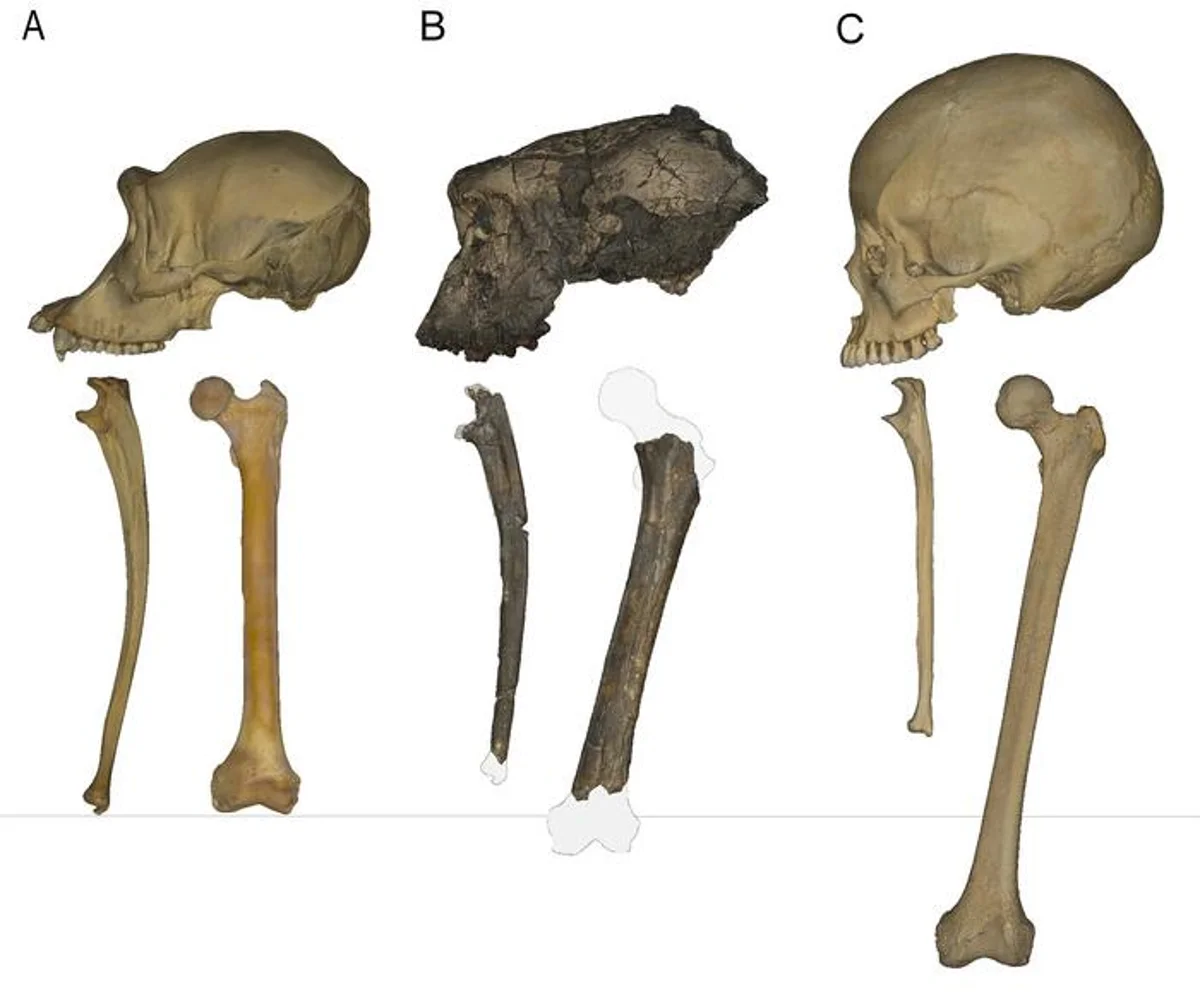
Sahelanthropus tchadensis lived in north-central Africa about seven million years ago, around the time the hominin lineage diverged from that of chimpanzees and bonobos. When skull fragments of Sahelanthropus were uncovered in Chad in 2001, researchers immediately questioned whether the species walked upright. The position of the opening at the base of the skull, where the spinal cord enters, appeared suitable for supporting the head in an upright posture. However, with only part of a cranium available, the evidence was limited.

Later, scientists determined that a femur found near the skull fragments also belonged to Sahelanthropus. An initial analysis, published in 2020, concluded that the bone showed no signs of bipedalism, casting doubt on earlier interpretations and even on whether the species should be classified as a hominin. “The field is kind of split right now on how to interpret these fossils,” said Scott Williams, a paleoanthropologist at New York University and co-author of the new study, who was not involved in the 2020 research.

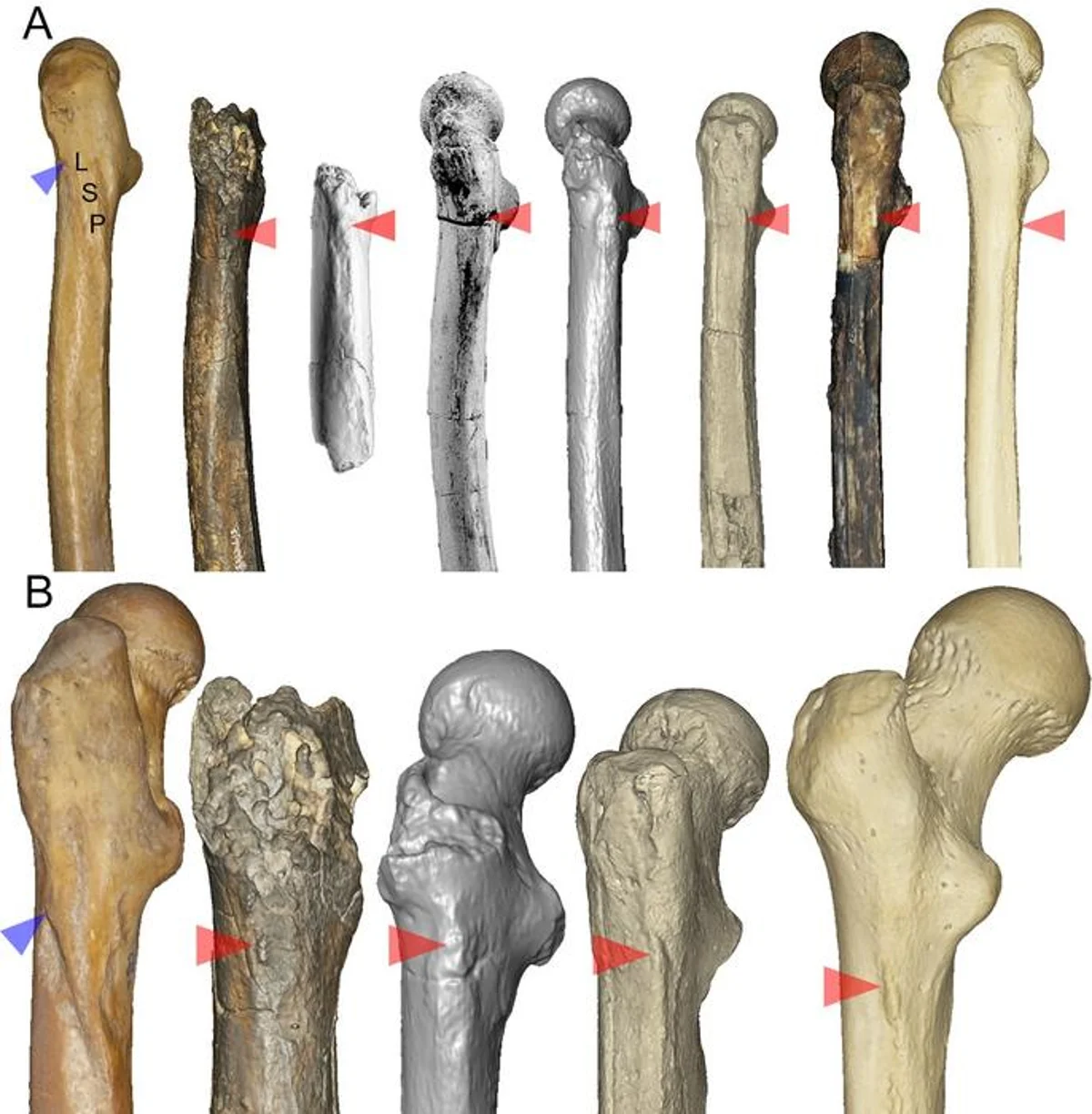
In a new study published in Science Advances, Williams and his colleagues challenge that conclusion. Using three-dimensional geometric morphometrics—a technique that allows precise measurement of fossil shapes—they identified early versions of several anatomical traits associated with bipedalism in later hominins, including Australopithecus and modern humans.

Two of these traits had been noted before: the inward twist of the femur and a small projection where the gluteus maximus muscle would attach. In 2022, a research team led by Guillaume Daver and Franck Guy of the University of Poitiers used these features to argue that Sahelanthropus was a habitual biped, meaning it regularly walked upright, unlike modern humans, who are obligate bipeds.

Williams identified an additional, more subtle feature. While examining the femur, he noticed a small bump where the iliofemoral ligament—a crucial structure for stabilizing upright walking—attaches in humans. “I was super excited about it,” he said. “It’s there; it’s just hard to see.” He later informed Daver and Guy, who independently confirmed the presence of this femoral tubercle.

Not all researchers agree with the interpretation. Marine Cazenave, a paleoanthropologist at the Max Planck Institute for Evolutionary Anthropology in Leipzig, Germany, who co-wrote a rebuttal to Daver and Guy’s 2022 study, argues that the new analysis provides only “weak evidence” for bipedalism. She notes that some primates that do not walk upright also have inward-twisted femurs. Regarding the femoral tubercle, Cazenave says its function remains unclear and that the fossil’s poor state of preservation makes it “impossible to determine the true extent of this feature.”

Even so, Williams maintains that Sahelanthropus was “clearly dependent on trees,” which it likely used for foraging, sleeping, and protection. However, he believes that when on the ground, the species moved on two legs and used its hands to carry food. With such limited fossil evidence, certainty remains elusive. Daver and Guy plan to revisit the original excavation site later this year in hopes of uncovering additional material that may have been overlooked. “Resolving the debate,” they said in a joint statement, “will require the discovery of new remains.”

Scientists Found Opium in an Ancient Egyptian Vase. King Tut May Have Taken It.

An ancient alabaster vase revealed that opium use was part of mainstream society in ancient Egyptian culture.

Here’s what readers will discover in this story:

Chemical evidence of opium found in an ancient Egyptian alabaster vessel suggests the substance was widely used.
Researchers believe even King Tutankhamun may have consumed it.
The findings indicate that opium use spanned different periods and social classes.

An ancient alabaster vase housed in a Yale University museum collection has revealed a long-hidden reality: opium was part of everyday life in ancient Egyptian society.

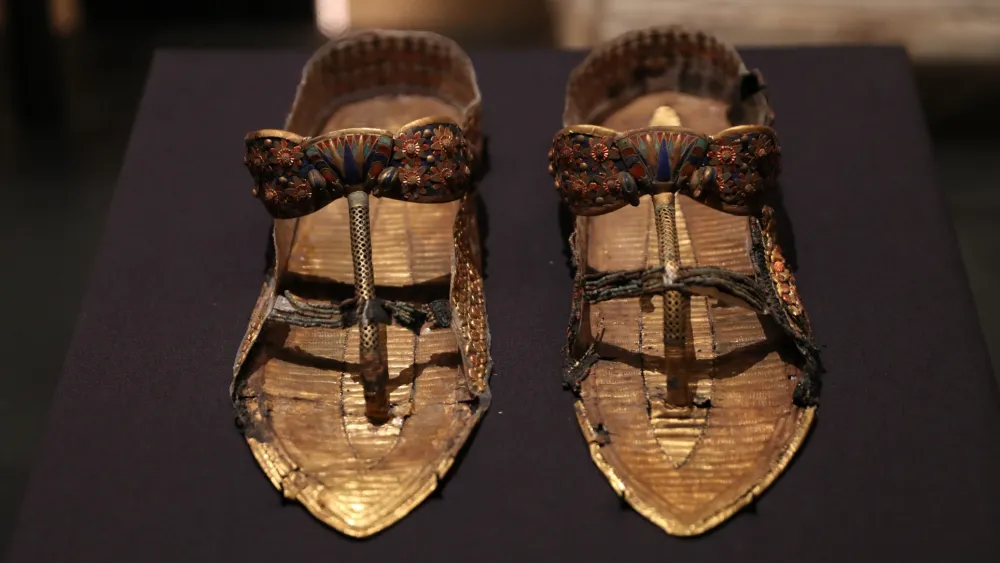
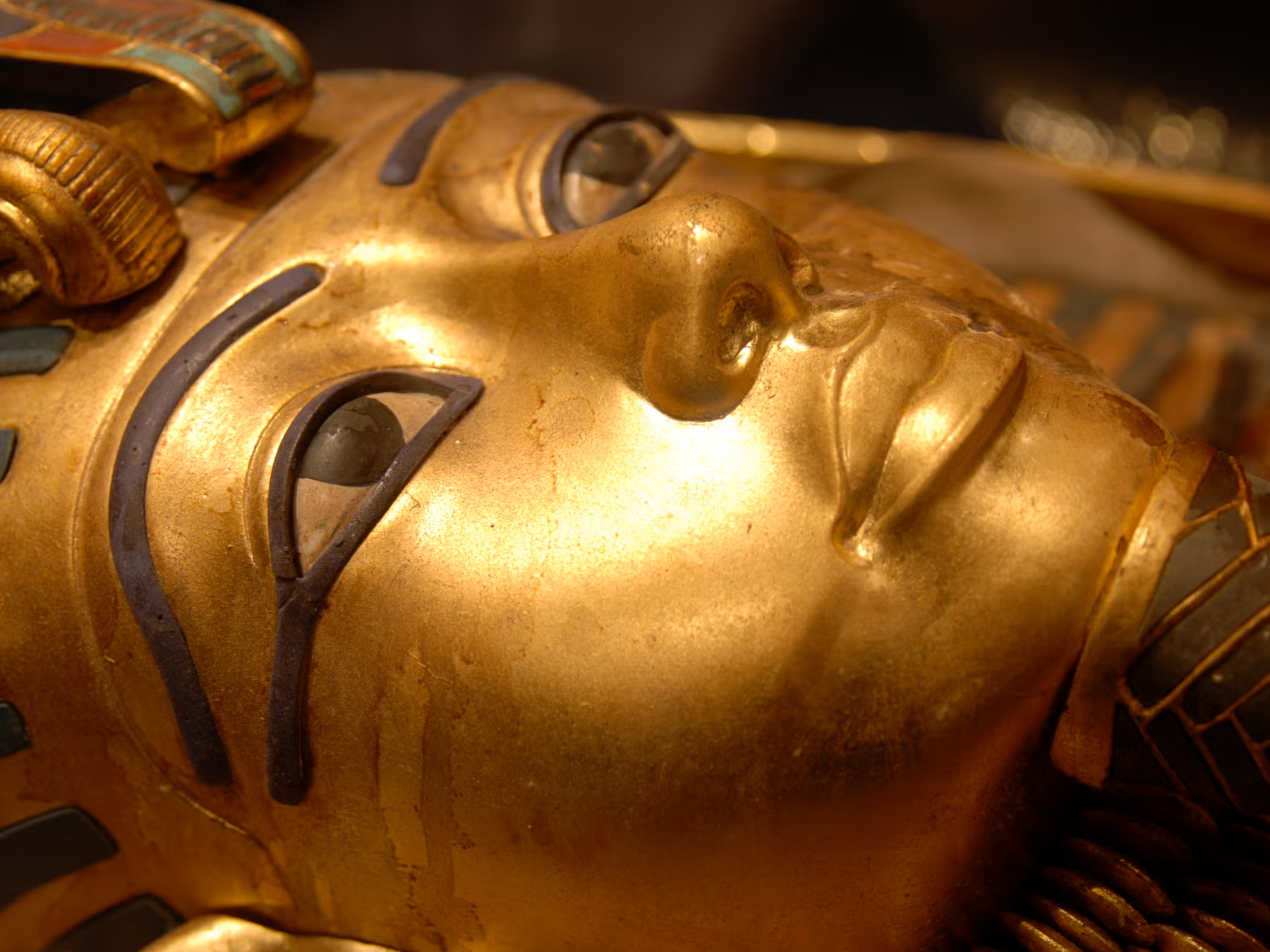
“Our results, together with earlier studies, show that opium use in ancient Egypt and nearby regions was not merely accidental or occasional, but to some extent embedded in daily life,” said Andrew Koh, principal investigator of the Yale Ancient Pharmacology Program and research scientist at the Yale Peabody Museum, in a statement. Researchers suggest its use was likely so widespread that King Tut himself may have partaken. “We believe it is possible, if not likely, that the alabaster jars found in King Tut’s tomb once contained opium, reflecting a long-standing tradition of opiate use that we are only now starting to recognize,” Koh added.

Manchán Magan remembered in participatory artwork at The Dock

A participatory loom artwork invites the public to take part in a collective act of remembrance at The Dock

A collective artwork centered on quiet remembrance is taking shape at The Dock this winter, inviting visitors to slow down, reflect, and participate in a shared act of making.

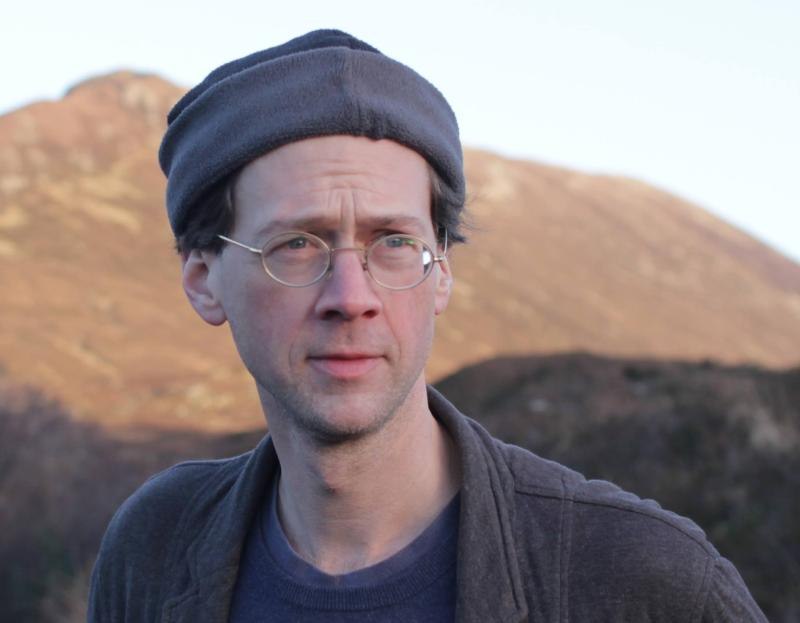
Titled “Bhí mo chuimhneamh ort. I was thinking of you, the work forms part of Waking the Land, an exhibition by the Leitrim-based ^ collective, running from December 6, 2025, to February 14, 2026. The piece is dedicated to the memory of Manchán Magan, whose work engaged deeply with language, place, heritage, and attentive listening to the land.

Manchán Magan was an Irish writer, broadcaster, and documentary-maker known for his focus on language, landscape, and the cultural memory embedded in place. Much of his work explored the Irish language, traditional knowledge, and pre-colonial Irish life, continually questioning how people might live with greater awareness of land, history, and one another.

Across books, television, radio, and public talks, he argued that modern Ireland had lost something essential through its separation from native language, ecology, and inherited ways of knowing. Blending research with personal reflection, his work drew on folklore, etymology, archaeology, and lived experience to reconsider Irish identity beyond simplistic or commercial narratives.

At the heart of the installation is a loom, presented not as a static exhibit but as a shared, participatory space. Visitors are invited to learn basic weaving and add a single thread to the growing textile, with each contribution carrying a personal memory or intention in remembrance of someone or something meaningful.

The artists describe the loom as an entry point into “a space of quiet attention,” where care and slowness shape the experience. The materials are carefully chosen: undyed wool from native Galway sheep, combined with plant material gathered from Benbo Mountain and five meadows tended by the artists. This grounds the work firmly in place, both materially and emotionally.

The textile is intentionally unfinished, evolving over time through the involvement of many hands. Each added thread becomes part of a collective gesture, reflecting themes central to Magan’s work connection to landscape, memory held through language and craft, and the value of shared knowledge.

The ^ collective is an artist-led group based in north Leitrim, comprising Tara Baoth Mooney, Shane Finan, James Kelly, Laura McMorrow, and Sonya Swarte. Working from an experimental studio in Manorhamilton, they have spent the past three years collaborating closely with local communities around themes of environmental grief, care, and land stewardship.

Their practice emphasizes collaboration with one another, with communities, and with the natural world, which they regard as an active participant in meaning-making. This has taken shape through rituals, workshops, symposia, shared meals, walks, and storytelling gatherings rooted in attentiveness to place.

50,000 Years of Island-Hopping Pigs Reveal Ancient Human Migration

Learn how pigs spread across Pacific islands, what their DNA reveals about ancient human journeys, and why their legacy still matters today.

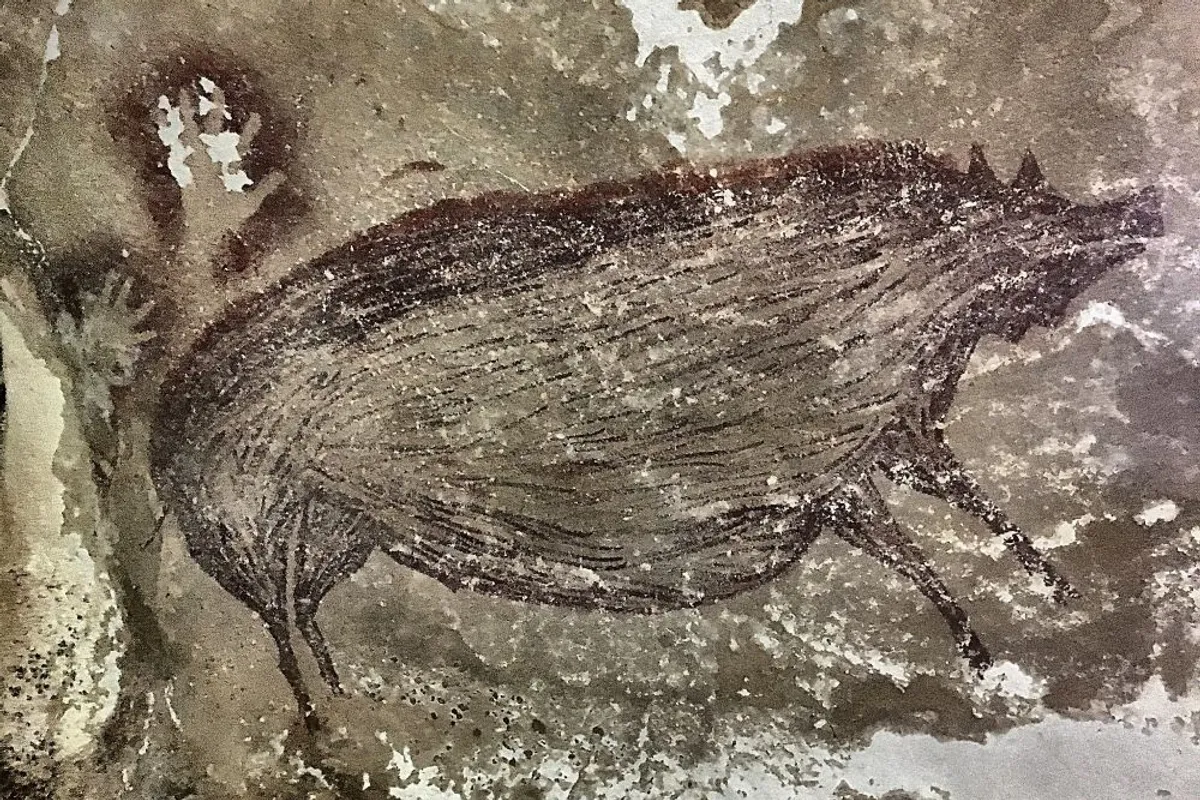
45,000-year-old cave painting of two Sulawesi warty pigs in Indonesia

Pigs have managed to cross some of the planet’s toughest natural barriers, reaching islands where most mammals never ventured. From Southeast Asia to remote Pacific islands, they are found on both sides of the Wallace Line — a biogeographic boundary that usually limits wildlife distribution.

A recent genomic study in Science explains this phenomenon. By examining DNA from over 700 modern and archaeological pigs, researchers discovered that humans have been transporting pigs across the Asia-Pacific region for tens of thousands of years. The genetic patterns show that Pacific pig populations reflect repeated human migrations, from early hunter-gatherers to agricultural societies, leaving behind DNA that records when, where, and how people traveled between islands.

“It is very exciting that we can use ancient DNA from pigs to peel back layers of human activity across this megabiodiverse region,” said senior study author Laurent Frantz.