Introduction
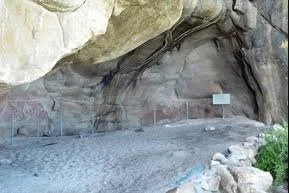
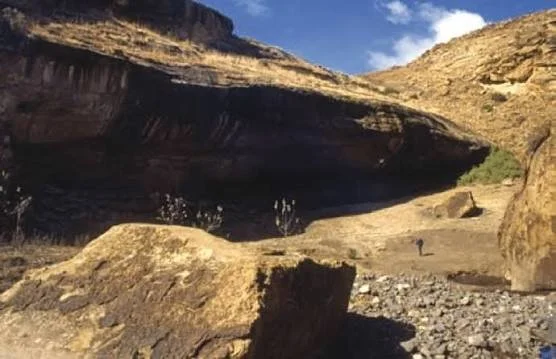
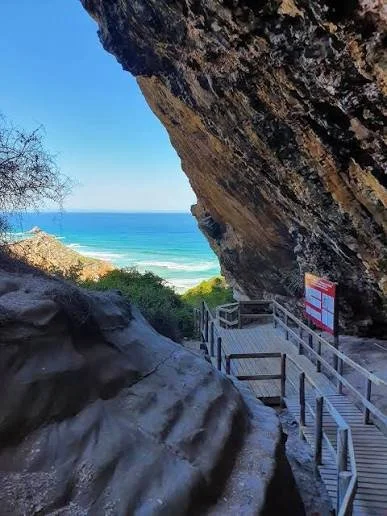
Matjes River Rockshelter, located near Plettenberg Bay in South Africa’s Western Cape, is an important archaeological site for understanding the Later Stone Age and the relationship between coastal communities and marine resources.
The shelter is particularly relevant to the study of shell middens: accumulations of discarded shells and other material left by people who collected and consumed shellfish. These deposits can provide information about diet, settlement patterns, environmental conditions, and the ways communities organised their daily activities.
Shell middens are sometimes described as simple refuse heaps, but they can preserve a complex record of human behaviour. Their contents may include stone tools, animal bones, charcoal, pottery, and other artefacts. Together, these materials help researchers reconstruct how people used the coastal landscape and how their practices changed over time.
What Is a Shellfish Midden?
A shellfish midden is an accumulation of shells produced through human collection and consumption, often mixed with other archaeological materials. In coastal South Africa, middens can contain the remains of mussels, limpets, and other shellfish gathered from rocky shores and nearby marine environments.
The composition of a midden can reflect the species people collected, the local availability of shellfish, and the methods used to obtain them. The sizes of shells may also provide information about collection practices and environmental conditions.
However, not every shell accumulation is necessarily archaeological. Natural processes can concentrate shells along beaches or in sheltered locations. Researchers must look for evidence that distinguishes human activity from natural deposition, including the structure of the deposit, associated artefacts, food-processing remains, and the condition of the shells.
At Matjes River, shellfish remains are part of a wider archaeological record that includes evidence of human occupation and changing resource use.
The Coastal Environment and Human Subsistence
The southern Cape coast offers a combination of rocky shores, estuaries, beaches, and inland habitats. These environments provided access to different resources, including marine foods and terrestrial animals.
Shellfish could be collected without the equipment needed for some forms of hunting, making them a useful food source in suitable coastal settings. Yet collection still depended on tides, weather, species availability, and the accessibility of the shoreline.
Archaeologists investigate whether shellfish were gathered frequently or only during particular periods. The relative abundance of different species, their sizes, and their preservation can provide clues, although each indicator must be interpreted in context.
The presence of a shell midden does not mean that people relied exclusively on marine resources. A community could collect shellfish while also hunting terrestrial animals, gathering plants, and travelling inland for other foods.
Matjes River and the Later Stone Age
Matjes River Rockshelter is part of the archaeological sequence used to investigate the Later Stone Age in southern Africa. The period includes diverse technological traditions, changing settlement patterns, and evidence of the varied ways people adapted to local environments.
Stone tools found in a rockshelter can reveal how people processed materials and carried out daily tasks. Researchers examine artefact shapes, manufacturing techniques, raw materials, and use-wear to investigate the activities represented at a site.
Shellfish remains provide a complementary source of information. While stone tools can reveal aspects of technology, food remains help reconstruct subsistence practices and the relationship between communities and their environment.
Studies comparing southern Cape archaeological sites have noted that Matjes River Shelter is among the locations with significant shellfish remains associated with Oakhurst-period assemblages. This supports the importance of coastal resources in the archaeological record, while also demonstrating that resource use varied between coastal and inland sites. <Cite refs={["turn487166search11"]} />
Reading the Midden Layers
Shell middens can form through repeated visits over many years or through more concentrated periods of activity. Researchers examine the thickness and composition of layers to determine whether a deposit accumulated gradually or through distinct episodes.
Charcoal, animal bones, stone tools, and shell fragments may occur together, but their relationships must be carefully documented. A layer can be disturbed by burrowing animals, water movement, roots, or later human activity.
Radiocarbon dating may help establish the age of suitable organic material within a midden. However, shell dating requires particular care because marine organisms obtain carbon from seawater, which can differ in radiocarbon age from the atmosphere. Researchers must consider marine reservoir effects and use appropriate calibration procedures.
Reliable chronology makes it possible to compare changes in shellfish collection with changes in technology, climate, and settlement patterns.
Shellfish, Seasonality, and Mobility
The study of shell middens can help investigate seasonal mobility. If different resources were available at different times of the year, communities might have moved between coastal and inland environments to take advantage of them.
This possibility has been explored in research on the southern Cape, where archaeological evidence from coastal and inland sites has been used to examine patterns of seasonal movement and resource use. <Cite refs={["turn487166search38"]} />
However, the presence of a particular shellfish species does not automatically identify the season of occupation. Researchers may need to consider shell growth patterns, species ecology, associated food remains, and other environmental evidence.
Likewise, a large midden does not necessarily indicate permanent settlement. It may represent many visits over a long period. Archaeologists must distinguish between the accumulated volume of a deposit and the duration or intensity of occupation during any one episode.
Shell Middens and Environmental Change
Shell middens preserve information about past coastal ecosystems. The species represented can indicate which marine habitats were accessible and how people selected resources.
Changes in shell size or species composition may reflect environmental shifts, but they can also result from changes in human preference, collection methods, or the location of gathering activities. Archaeologists therefore compare midden evidence with independent environmental records wherever possible.
Sea-level change is another important consideration. The position of the ancient shoreline could differ from the modern coastline, changing the distance between a shelter and the marine resources available to its inhabitants.
These changes help explain why coastal archaeology must consider both human behaviour and landscape evolution.
Conservation and Public Value
Shell middens are fragile archaeological deposits. Construction, erosion, uncontrolled collecting, and excavation without proper documentation can destroy evidence that cannot be replaced.
Preservation is important not only for scientific research but also for public understanding of the long history of human settlement along South Africa’s coast. A midden can demonstrate that modern coastal landscapes have supported human communities for thousands of years.
Conclusion
Matjes River Rockshelter is an important site for studying shellfish consumption and coastal life during the Later Stone Age. Its midden deposits provide evidence of food collection, resource selection, and the relationship between human communities and the southern Cape environment.
Research comparing Matjes River with other archaeological sites demonstrates that shellfish use was an important part of some coastal economies, although subsistence practices varied across different landscapes.
By combining shell analysis, stone-tool research, radiocarbon dating, and environmental reconstruction, archaeologists can use the midden to investigate how people adapted to coastal resources and how their lives changed over time.