• MAIN PAGE
  • LATEST NEWS
    • Lost Cities
    • Archaeology's Greatest Finds
    • Underwater Discoveries
    • Greatest Inventions
    • Studies
    • Blog
  • PHILOSOPHY
  • HISTORY
  • RELIGIONS
    • Africa
    • Anatolia
    • Arabian Peninsula
    • Balkan Region
    • China - East Asia
    • Europe
    • Eurasian Steppe
    • Levant
    • Mesopotamia
    • Oceania - SE Asia
    • Pre-Columbian Civilizations of America
    • Iranian Plateau - Central Asia
    • Indus Valley - South Asia
    • Japan
    • The Archaeologist Editor Group
    • Scientific Studies
    • Aegean Prehistory
    • Historical Period
    • Byzantine Middle Ages
    • Predynastic Period
    • Dynastic Period
    • Greco-Roman Egypt
  • Rome
  • PALEONTOLOGY
  • About us
Menu

The Archaeologist

  • MAIN PAGE
  • LATEST NEWS
  • DISCOVERIES
    • Lost Cities
    • Archaeology's Greatest Finds
    • Underwater Discoveries
    • Greatest Inventions
    • Studies
    • Blog
  • PHILOSOPHY
  • HISTORY
  • RELIGIONS
  • World Civilizations
    • Africa
    • Anatolia
    • Arabian Peninsula
    • Balkan Region
    • China - East Asia
    • Europe
    • Eurasian Steppe
    • Levant
    • Mesopotamia
    • Oceania - SE Asia
    • Pre-Columbian Civilizations of America
    • Iranian Plateau - Central Asia
    • Indus Valley - South Asia
    • Japan
    • The Archaeologist Editor Group
    • Scientific Studies
  • GREECE
    • Aegean Prehistory
    • Historical Period
    • Byzantine Middle Ages
  • Egypt
    • Predynastic Period
    • Dynastic Period
    • Greco-Roman Egypt
  • Rome
  • PALEONTOLOGY
  • About us
No results found

Forgotten Sarakatsani Wool Songs in Vikos

November 22, 2026

Wool production in pastoral communities

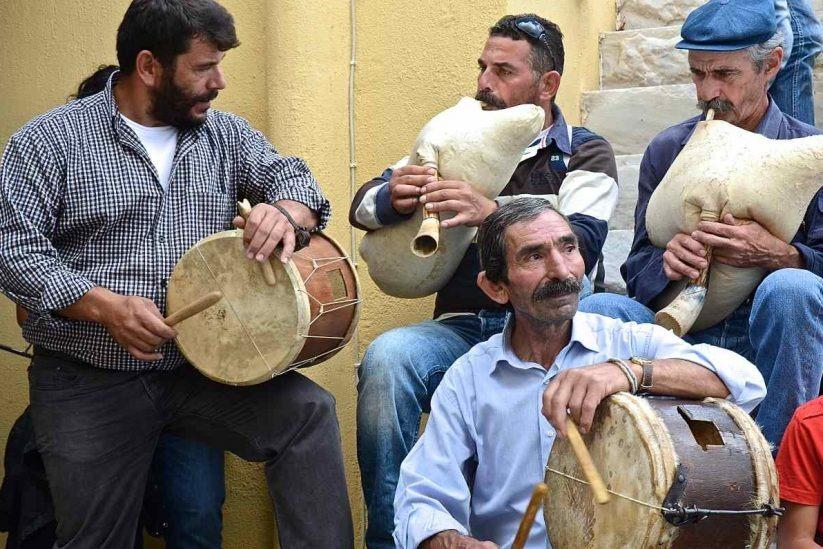
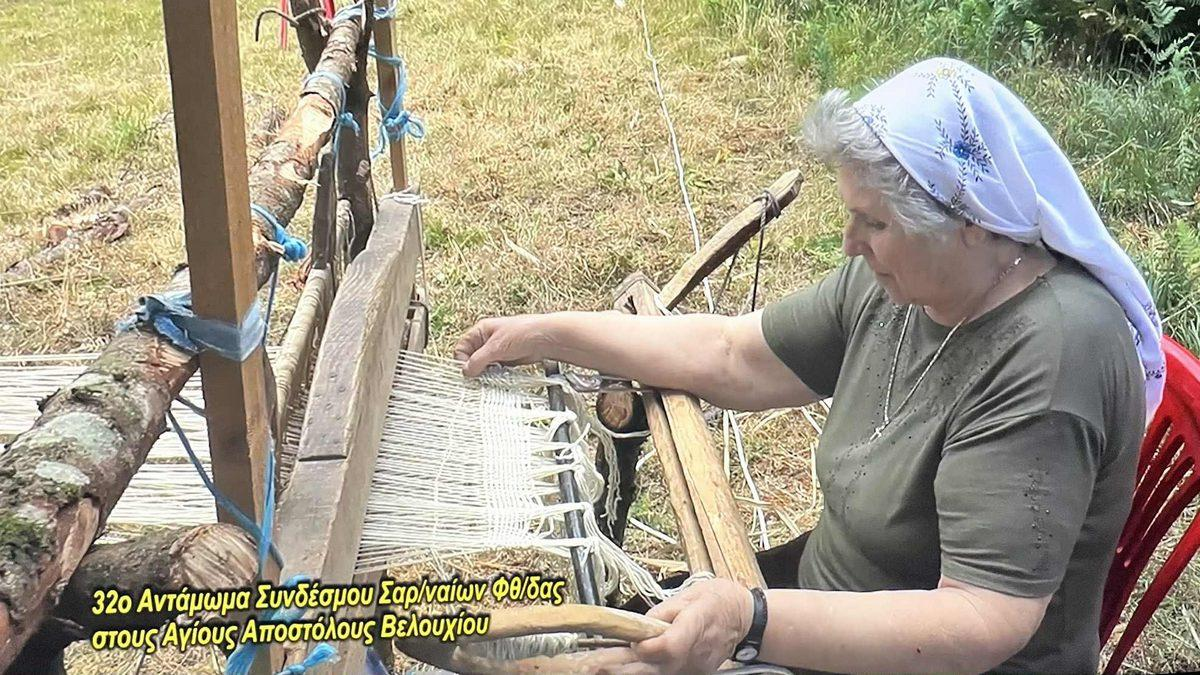
The Sarakatsani are historically associated with pastoral life, livestock movement, and seasonal settlements in the mountainous regions of Greece. Their traditional economy depended heavily on sheep and goats, making wool a significant material resource.

Wool production involved several stages, including shearing, cleaning, sorting, spinning, and weaving. These activities required time, skill, and cooperation within households and communities.

Songs associated with wool work can be studied as part of the broader tradition of work songs, in which rhythm and repetition helped structure labor and provide opportunities for social interaction.

Songs and repetitive work

Spinning and other textile activities could involve repetitive movements. Singing during these tasks offered a way to make work more enjoyable, maintain rhythm, and express personal or communal experiences.

Songs might include themes of love, separation, family, migration, nature, hardship, and daily life. Their content could reflect the experiences of pastoral communities whose lifestyles involved movement between seasonal settlements and periods of separation from relatives.

The association of wool songs with Vikos in this title provides a regional setting for examining pastoral culture in Epirus, but specific songs or local traditions would require documented recordings or ethnographic evidence.

Wool, identity, and household labor

Textile production was more than an economic activity. It was also connected to clothing, identity, household organization, and cultural continuity.

Traditional garments could reflect community identity, regional style, and social status. The production of woolen materials therefore connected practical labor with cultural expression.

Women and other household members often participated in textile-related activities, although the distribution of labor varied according to household structure, resources, and local customs. Studying work songs can help researchers examine the social experiences of people whose daily labor is not always fully represented in historical documents.

Preserving musical traditions

Traditional songs are vulnerable to disappearance when older singers are no longer able to transmit them or when changes in lifestyle reduce the occasions on which they are performed.

Ethnographic recordings, interviews, transcriptions, and community archives can help preserve these traditions. However, documentation should respect the cultural context and the knowledge of the people who maintain the songs.

The study of Sarakatsani wool songs in Vikos would provide an opportunity to explore the relationship between music, labor, pastoral identity, and the cultural memory of mountain communities.

Hidden Pontic Lyra Jams in Thessaloniki Yards

November 22, 2026

The Pontic lyra and musical heritage

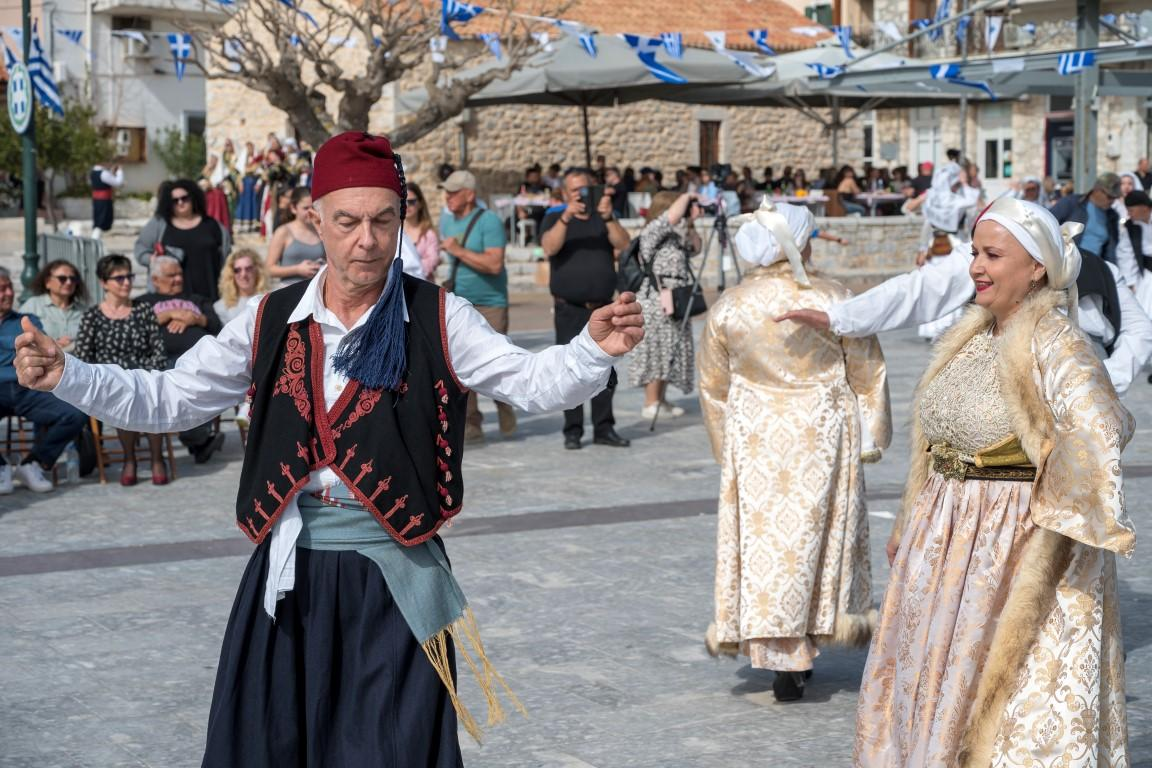
The Pontic lyra is a bowed string instrument associated with the musical traditions of Pontic Greeks. Its sound, playing techniques, and repertoire are central to the expression of Pontic cultural identity.

Pontic music carries memories of the Black Sea region, migration, displacement, community life, and cultural continuity. Following the upheavals and population movements of the twentieth century, Pontic traditions became an important part of cultural life in many Greek communities, including Thessaloniki.

The lyra is often associated with dances and songs that express emotion, historical memory, celebration, and collective identity.

Informal music gatherings

The phrase "lyra jams" suggests informal musical gatherings in which musicians play together outside formal performances. Such gatherings may take place in homes, courtyards, community spaces, or celebrations.

Informal music sessions are important because they provide opportunities for musicians to learn from one another, develop improvisational skills, share repertoire, and maintain musical traditions.

The courtyard setting is particularly evocative of neighborhood social life. In urban environments, private yards and shared outdoor spaces may provide opportunities for people to gather, celebrate, and maintain connections with family or community members.

Thessaloniki and Pontic cultural identity

Thessaloniki has a significant history of migration and cultural diversity. Pontic Greek communities contributed to the city's social, cultural, and artistic life through associations, music, dance, food, storytelling, and commemorative activities.

Musical gatherings can serve as informal forms of cultural preservation. They allow younger generations to encounter traditional instruments and repertoire in a social setting rather than only through formal instruction or staged performances.

The lyra can therefore function as a bridge between historical memory and contemporary identity.

Music as cultural continuity

The preservation of Pontic music does not require traditions to remain unchanged. Musicians may adapt repertoire, introduce new arrangements, or combine traditional styles with contemporary influences while continuing to recognize the instrument and musical heritage as culturally meaningful.

A hypothetical study of hidden Pontic lyra gatherings in Thessaloniki courtyards would be valuable for exploring how music is practiced privately, how traditions move between generations, and how cultural identity is maintained through informal social interaction.

Obscure Maniot Knife Dances in a Mystras Hamlet

November 22, 2026

Dance and regional identity in the Mani

The Mani region of the Peloponnese is known for its distinctive architecture, social history, traditions of family identity, and strong regional cultural character. Folklore concerning bravery, honor, conflict, and community solidarity has often been associated with Maniot cultural narratives.

Traditional dances can reflect these themes through their movements, rhythm, formations, costumes, and performance contexts. Some Greek dances incorporate objects or props, although specific knife dances and their meanings vary widely between regions and documented traditions.

The title places the practice in a Mystras hamlet, but a specific local knife dance in that setting cannot be assumed without evidence.

The knife as a symbolic object

In traditional societies, knives could serve practical purposes related to agriculture, livestock, food preparation, and everyday work. In some cultural contexts, knives also acquired symbolic associations with masculinity, courage, protection, status, or historical conflict.

When a knife appears in a dance, it may represent a historical memory, a dramatic narrative, or a display of skill. However, it is important not to automatically interpret every knife-related performance as a reenactment of violence.

Dance can transform an object associated with practical or dangerous use into a symbolic element of artistic expression.

Performance and communal memory

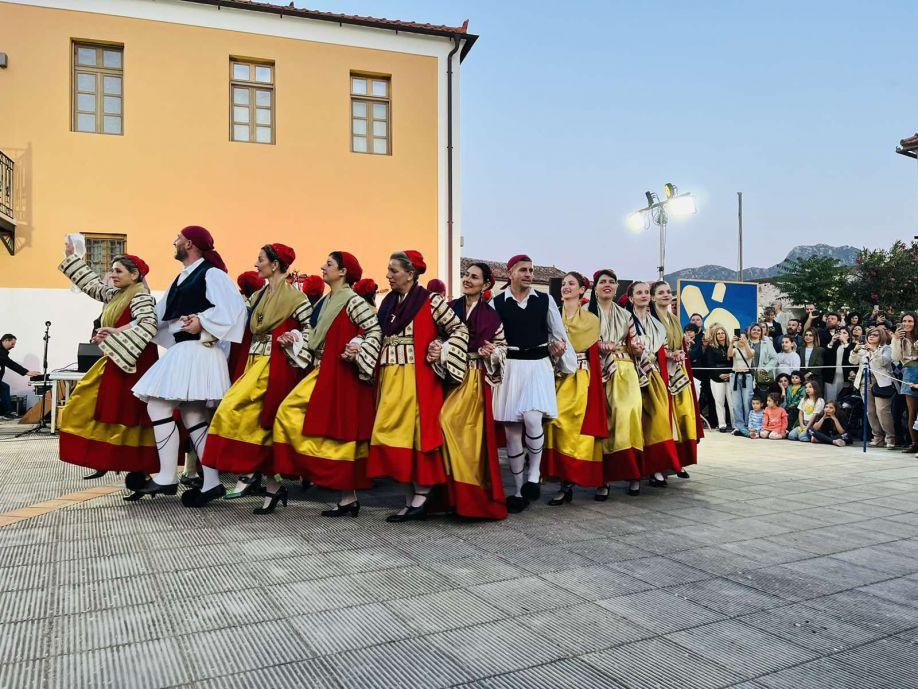
Traditional dances are often performed at weddings, festivals, celebrations, and community gatherings. These events provide opportunities for people to express regional identity and participate in collective cultural practices.

The movements of a dance may be preserved through oral teaching and imitation. Differences between local versions can emerge as dances are transmitted between villages and generations.

A dance involving knives, if documented, would require careful analysis of its choreography, music, historical references, and community interpretations.

Cultural documentation

Research into Maniot dance traditions could include interviews with dancers, musicians, cultural associations, and older community members. Video recordings and descriptions of movement would help document performance variations and their cultural meaning.

A hypothetical knife dance in a Mystras hamlet would be significant as a subject of folklore research because it could illustrate how regional identity, symbolic objects, historical memory, and performance interact. It should not, however, be presented as an established tradition solely because the title suggests it.

Forgotten Epirote Healing Springs in Vitsa

November 22, 2026

Springs and traditional healing practices

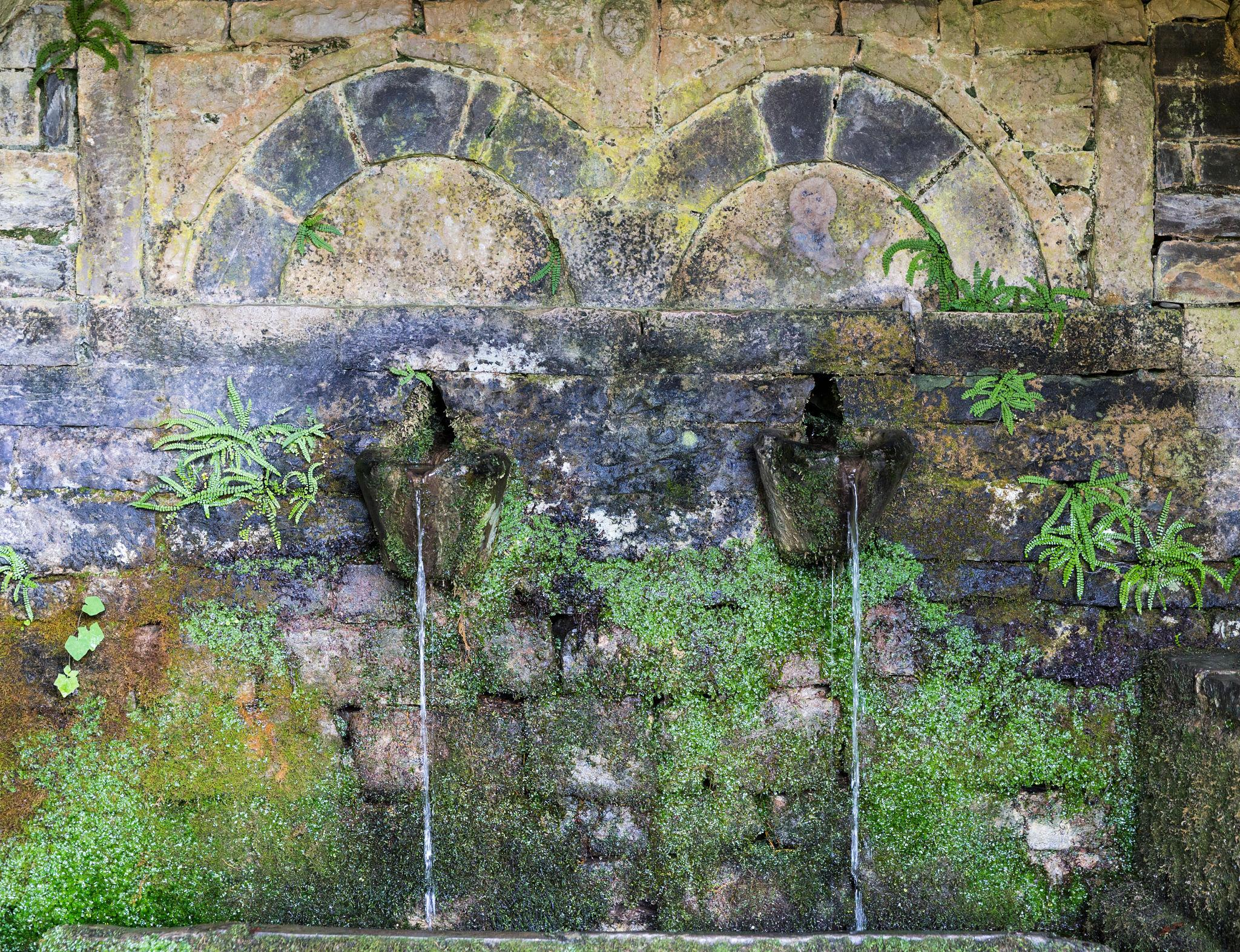
Water has held practical, religious, and symbolic importance throughout Greek history. Natural springs, wells, rivers, and fountains were often essential to settlements and could become associated with local beliefs about health, purity, fertility, and protection.

In rural communities, springs sometimes acquired reputations for particular benefits. Such beliefs could be connected to the taste, temperature, mineral content, appearance, or perceived effects of the water.

The village of Vitsa in the Zagori region of Epirus is situated within a landscape characterized by mountainous terrain, stone architecture, and historical settlement patterns. Water sources would have been important to everyday life, agriculture, livestock, and the organization of village spaces.

Healing beliefs and local knowledge

Traditional healing practices often combined practical knowledge with spiritual or symbolic beliefs. People might visit a spring for bathing, drinking, prayer, or rituals intended to support recovery from illness.

In some traditions, water was believed to possess special qualities at particular times or under certain conditions. These beliefs could involve saints, religious feast days, local legends, or stories about the origins of the spring.

However, historical healing beliefs should be distinguished from scientifically established medical effects. The cultural significance of a spring does not establish that its water can cure disease.

Springs as social spaces

Water sources were also gathering places. People visiting a spring might exchange news, socialize, carry water, wash materials, or tend livestock. These activities created social relationships that connected the spring to the wider life of the community.

The physical environment could reinforce the importance of a water source. A spring located near a path, settlement entrance, church, or agricultural area might become a familiar point of daily interaction.

Ethnographic importance

A study of traditional healing springs in Vitsa would involve documenting oral histories, local place names, legends, ritual practices, and the physical characteristics of the springs.

Such research could reveal how environmental resources became part of cultural memory and how communities interpreted the relationship between nature, health, religion, and everyday life.

The subject would also be relevant to the conservation of traditional water infrastructure, especially where older springs and fountains have been replaced, abandoned, or altered.

Hidden Tsakonian Harvest Chants in Leonidio

November 22, 2026

Tsakonian language and cultural identity

Tsakonia, located in the southeastern Peloponnese, is associated with a distinctive cultural and linguistic tradition. Tsakonian is a language variety descended from ancient Doric Greek, and it has attracted linguistic interest because of its historical development and distinctive features.

The Tsakonian cultural landscape includes local customs, oral traditions, agricultural practices, and community celebrations. Leonidio is an important center within the region and provides a setting for examining the relationship between language, agriculture, and local identity.

Harvest chants, if documented in Tsakonian communities, would be important evidence of the relationship between agricultural work and oral expression.

Chants and agricultural labor

Harvesting was traditionally a demanding activity that required coordination, physical endurance, and cooperation. Songs and chants could help establish rhythm, provide entertainment, and create a sense of shared effort.

Agricultural songs might include references to crops, weather, labor, love, family, seasonal changes, and the challenges of rural life. Their content could reflect the economic conditions and social relationships of the people who performed them.

The rhythm of a chant could also be adapted to repetitive movements associated with harvesting, gathering, sorting, or processing crops.

Language preservation through song

Songs are particularly important in preserving languages because they transmit vocabulary, pronunciation, expressions, and cultural references. A song may retain linguistic features that have become less common in ordinary conversation.

For communities facing language decline, recorded songs can provide valuable material for linguistic analysis and cultural preservation.

Tsakonian songs could be examined for their vocabulary, grammatical structures, poetic forms, and relationship with Greek-language traditions in neighboring communities.

Harvest traditions and community identity

Agricultural celebrations often mark the end of a demanding season. Such events can include food, music, dancing, and gatherings that reinforce community relationships.

A hypothetical collection of Tsakonian harvest chants from Leonidio would be valuable for documenting local musical traditions and examining the role of language in cultural identity. It could also provide insight into how agricultural labor was transformed into a shared social and cultural experience.

Obscure Arcadian Goat Calls in Menalon Woods

November 22, 2026

Communication between shepherds and livestock

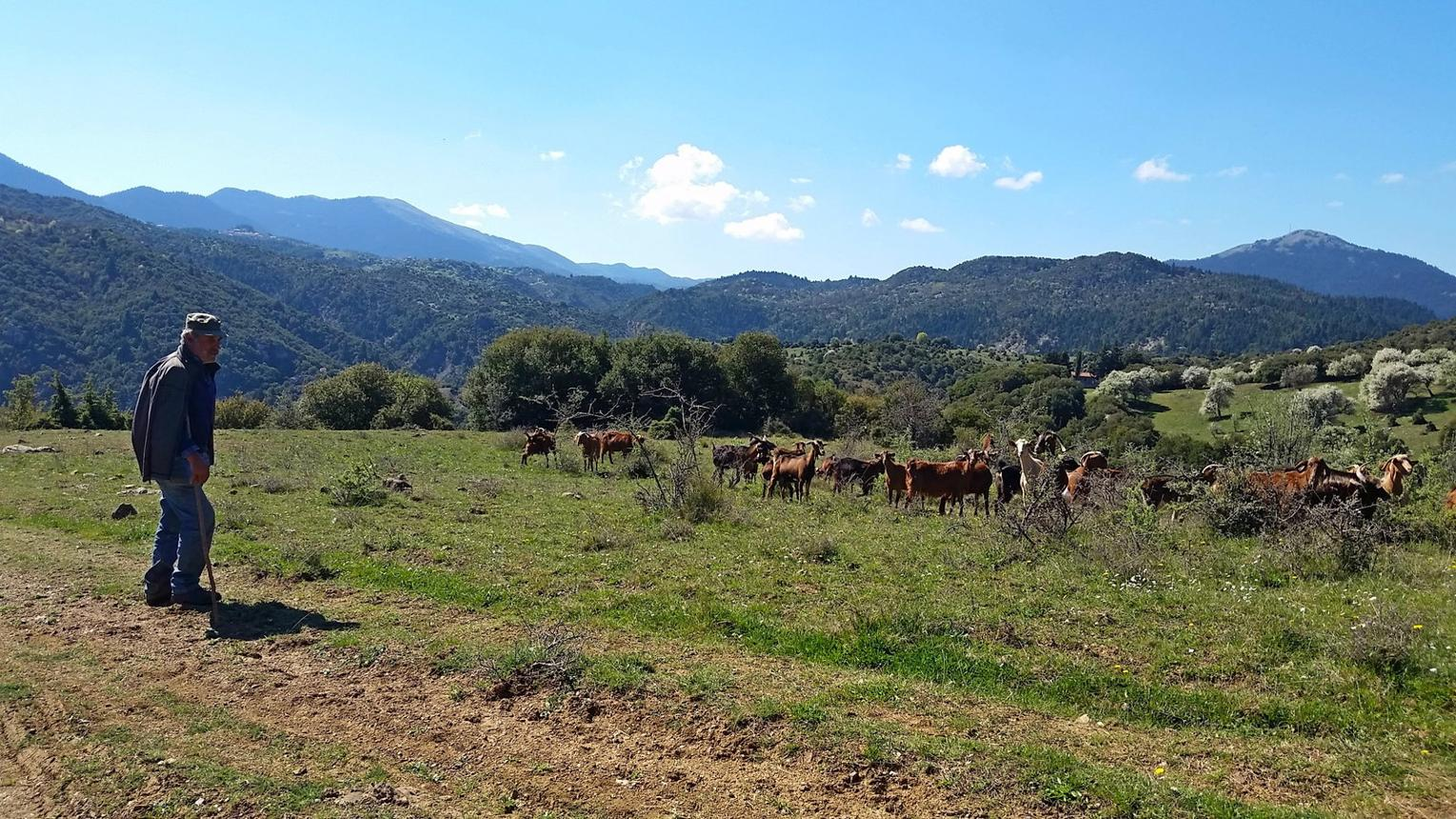
Goat herding requires close attention to animal behavior, movement, grazing conditions, and the surrounding environment. Shepherds often develop specific vocal signals, whistles, calls, and sounds to guide animals or attract their attention.

Such calls may be learned through practical experience and passed down through families or local communities. Their effectiveness can depend on pitch, rhythm, repetition, tone, and the animals' familiarity with the shepherd.

In mountainous areas such as Menalon, where terrain can be uneven and visibility limited, vocal communication may be especially useful.

Calls as part of pastoral knowledge

Animal calls are not necessarily standardized. Different shepherds may use different sounds, and their calls can vary according to the animals, local conditions, and personal habits.

Some calls may be used to gather goats, direct movement, encourage animals to follow, or signal the presence of food. Other sounds may be associated with particular animals or situations.

The study of these calls could reveal how shepherds develop practical communication systems through experience and observation.

Oral tradition and sound culture

Traditional shepherd calls may also have cultural significance beyond their immediate function. They can become recognizable sounds of a landscape and contribute to the cultural identity of pastoral communities.

The sounds of bells, whistles, animal voices, and human calls form part of the acoustic environment of rural life. Recording and studying these sounds could preserve knowledge that is rarely represented in written sources.

Ethnographic research in Menalon

A study of goat calls in the Menalon forests could involve sound recordings, interviews with shepherds, observation of herd behavior, and comparisons between different local calling systems.

Researchers could investigate whether specific calls are associated with particular tasks, whether younger shepherds continue to use them, and how modern livestock management affects their use.

The topic would demonstrate that folklore and cultural heritage include not only stories, songs, and rituals but also practical sounds and communication methods developed through everyday work.

Hidden Thracian Fire Walking in Serres Villages

November 22, 2026

Fire and ritual traditions in northern Greece

Fire has been an important symbol in religious and cultural traditions across many societies. It can represent purification, transformation, renewal, protection, danger, and the boundary between ordinary and sacred experience.

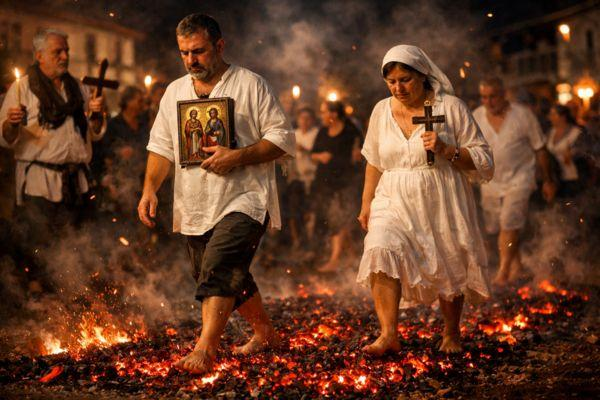
In northern Greece, the Anastenaria tradition is associated with ritual dancing on embers and the veneration of saints, particularly Saints Constantine and Helen. The tradition is documented in particular communities and is commonly discussed in relation to ritual performance, religious devotion, music, community identity, and inherited practices.

However, the exact form, history, and local variations of fire-related rituals must be established through ethnographic documentation. The title's reference to hidden fire walking in Serres villages does not independently confirm a specific ceremony in any village.

Fire walking and religious devotion

Fire walking in ritual contexts is often interpreted by participants through religious or spiritual meanings. The experience may be connected to faith, devotion, the protection of sacred figures, and the continuity of community traditions.

Music, movement, and collective participation can contribute to the ritual atmosphere. The event may involve a defined sequence of preparations, processions, prayers, dances, and other activities.

Anthropological interpretation should not reduce such traditions to spectacle. Understanding them requires examining participants' beliefs, community histories, ritual rules, and the meaning of the event within their lives.

The role of community

Rituals can strengthen social relationships by bringing people together around shared beliefs and practices. They may also connect participants with family histories and memories of previous generations.

The transmission of fire-related rituals often involves learning through participation, observation, and community membership. Such traditions may remain meaningful even when the social and economic conditions of the community change.

Documentation and safety

Research into fire walking should prioritize participant perspectives, historical documentation, and observation of ritual contexts. It should not encourage people to imitate the practice.

Walking on hot embers can cause serious burns and injury. Traditional ritual participation should not be treated as a safe activity for recreation or experimentation.

A study of fire walking in Serres would be useful for exploring ritual, religious devotion, folklore, and community identity, provided the specific local practice is verified rather than assumed.

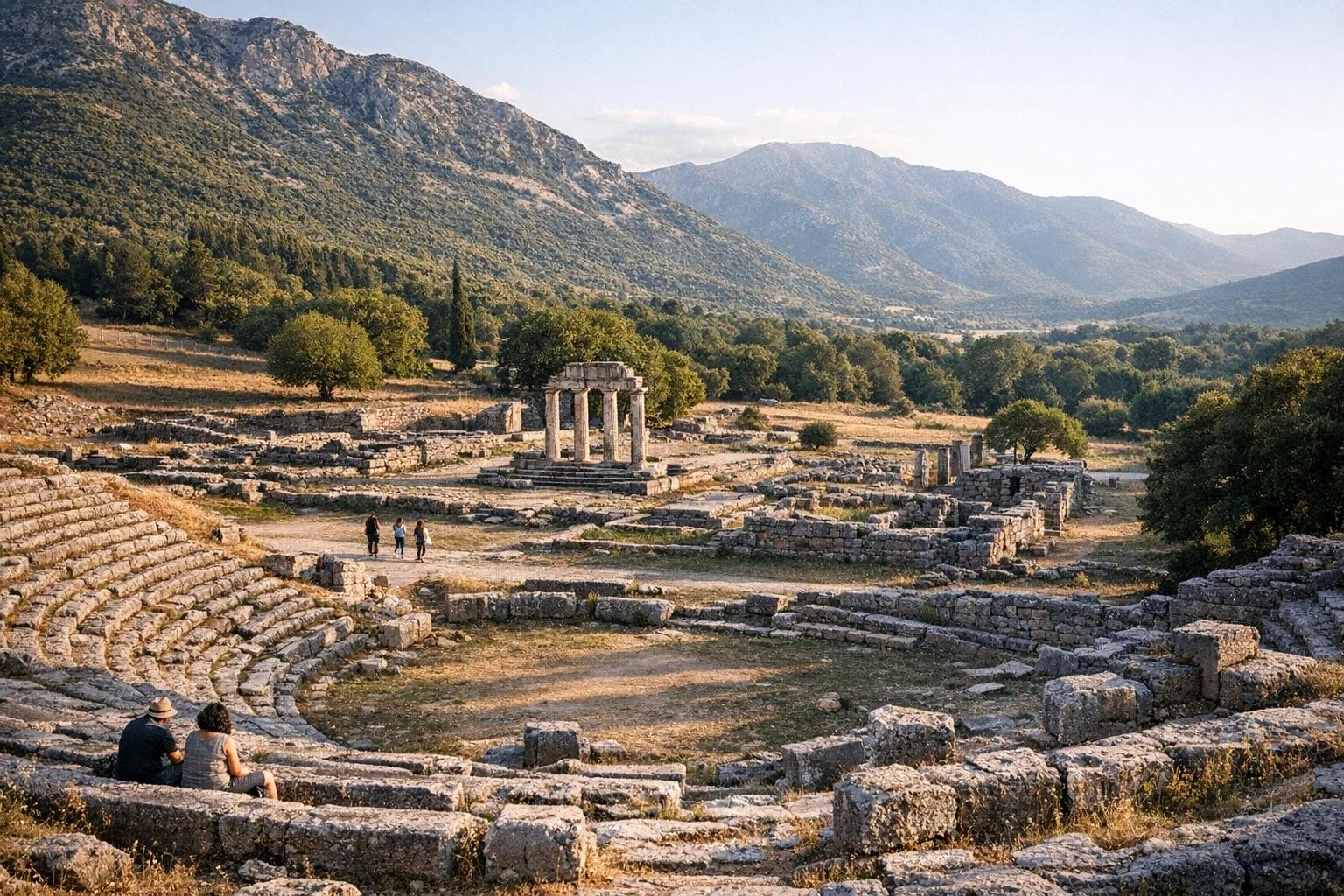
Forgotten Dodona Whispers in an Ioannina Village

November 22, 2026

Dodona and the ancient practice of divination

Dodona, in Epirus, was one of the important ancient Greek centers of divination. The sanctuary was associated with Zeus and a sacred oak, through which divine messages were believed to be interpreted.

Ancient traditions describe the interpretation of sounds connected with the sacred tree, including the rustling of leaves and other sounds associated with the sanctuary. These sounds were understood within the religious framework of the oracle and its practices.

Dodona was important because it represented a form of divination in which natural sounds and sacred landscape were connected to the communication of divine knowledge.

The interpretation of whispers

The idea of forgotten whispers in a village near Ioannina can be understood as a theme of cultural memory inspired by the ancient sanctuary. Whispers may symbolize hidden knowledge, local stories, forgotten beliefs, or the survival of religious motifs within oral traditions.

However, there is no reason to assume that an ancient Dodona practice continued unchanged in a modern village. The continuity of a tradition must be demonstrated through historical, ethnographic, or archaeological evidence.

Stories about trees, springs, unusual sounds, and sacred landscapes may nevertheless preserve local memories or reflect the enduring symbolic significance of the region's natural environment.

Nature and religious experience

In ancient religious traditions, natural features could become sacred places. Trees, mountains, rivers, caves, and springs were sometimes associated with divine presence, ritual activity, and prophecy.

The landscape was not merely a physical environment. It could also serve as a medium through which people interpreted divine power and experienced religious meaning.

The Dodona oak is particularly significant because it connects divination with the natural world. It illustrates how the sounds and characteristics of an environment could become part of a religious system.

Oral memory in the Ioannina region

Local folklore may contain stories about sacred trees, unusual sounds, dreams, omens, and places associated with spiritual experiences. Such stories can be studied as expressions of cultural memory, even when they are not direct survivals of ancient religious practices.

A hypothetical study of Dodona-inspired whispers in an Ioannina village would examine how ancient sacred landscapes influence modern folklore, how stories are transmitted between generations, and how local communities reinterpret historical religious traditions.

It would be especially important to distinguish documented local legends from contemporary imaginative interpretations of Dodona's ancient oracle.

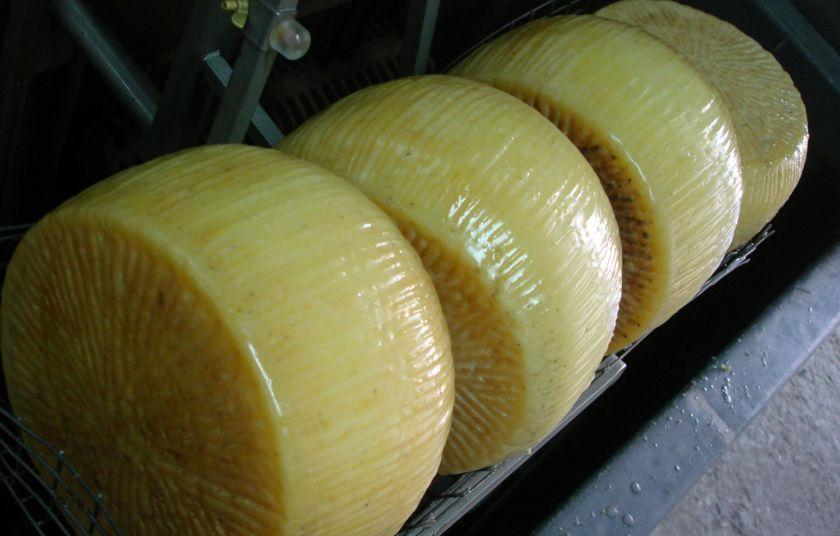
Obscure Sfakian cheese spells in Anogia

November 22, 2026

Cheese making and traditional beliefs

Cheese production has long been an important part of rural life in Crete. Sheep and goat farming provided milk, meat, wool, and other resources that supported household economies, particularly in mountainous communities where pastoral activities were closely connected with seasonal movement and local environmental conditions.

Traditional cheese making required knowledge of milk handling, temperature, fermentation, curd formation, salting, aging, and storage. These processes depended on experience and environmental observation, and the techniques were commonly transmitted through families and local communities.

The idea of cheese spells in Anogia can be explored through the broader relationship between traditional food production and folk beliefs. In rural societies, the success of dairy production could be considered dependent not only on practical skill but also on luck, protection, religious blessing, and the avoidance of misfortune.

Rituals associated with dairy production

Traditional beliefs surrounding food production sometimes involved prayers, symbolic actions, protective practices, or spoken expressions intended to ensure favorable results. Such practices could be associated with livestock health, the quality of milk, the success of fermentation, and the preservation of food.

Cheese making was especially important because milk was a valuable resource. Spoilage, poor yields, or unsuccessful production could affect household food security and income.

However, specific spells or rituals connected with cheese making in Anogia would require direct ethnographic documentation. The title alone does not establish that such practices were historically performed there.

Anogia and pastoral culture

Anogia, situated in the mountainous region of central Crete, is strongly associated with pastoral traditions, music, local craftsmanship, and cultural identity. Mountain communities developed practical knowledge of livestock management, food preservation, and the use of available resources.

Traditional dairy practices could reflect the relationship between local environmental conditions and household economies. The production of cheese allowed milk to be preserved and consumed over longer periods, making it particularly valuable for pastoral communities.

Folklore and food heritage

A study of cheese-related beliefs in Anogia would provide an opportunity to examine how food production became connected with cultural identity, religious beliefs, oral traditions, and household practices.

Food folklore is significant because it often preserves knowledge that was transmitted through informal teaching rather than written instruction. It also reveals how people understood uncertainty and sought to protect essential activities through symbolic and cultural practices.

Obscure Fluorite in a Dirfi Cave

November 19, 2026

Fluorite and its mineral properties

Fluorite is a mineral composed primarily of calcium fluoride. It is known for its wide range of colors, including purple, green, blue, yellow, and colorless varieties. Some specimens display multiple colors within a single crystal.

Fluorite commonly forms cubic crystals, although other crystal shapes and aggregates may occur. It has a relatively low hardness compared with many common minerals, making it susceptible to scratching and damage.

Its distinctive appearance and crystal structure have made it an important mineral in geological collections and scientific research.

Mineral formation and geological conditions

Fluorite commonly forms from mineral-rich fluids moving through fractures and cavities in rocks. These fluids may deposit fluorite under suitable chemical and physical conditions.

The formation of fluorite depends on the availability of calcium and fluorine, fluid chemistry, temperature, and the geological environment.

Fluorite deposits may occur in association with hydrothermal systems, veins, carbonate rocks, and other geological settings.

Dirfi and the geological environment of Euboea

Mount Dirfi is located on the island of Euboea and is associated with a varied geological landscape, including mountainous terrain and different rock formations.

Caves in mountainous areas can develop through geological processes involving dissolution, fractures, erosion, and changes in groundwater movement. Their mineral contents depend on the surrounding rocks and the chemistry of water passing through the cave.

The title's reference to fluorite in a Dirfi cave is hypothetical. The presence of fluorite in a specific cave would need to be confirmed by geological investigation.

Scientific importance of cave minerals

Cave minerals can provide information about the geological environment, groundwater chemistry, and the processes that formed the cave.

Mineral deposits may also help researchers investigate changes in water movement and chemical conditions over time.

A hypothetical fluorite discovery in a Dirfi cave would be relevant to mineralogical research, geological mapping, and the study of cave formation. Such a discovery would require careful documentation to establish the mineral's identity, origin, and relationship to the surrounding rock.

Because cave environments can be fragile, geological investigation should also consider the protection of mineral formations and cave ecosystems.

Hidden Zeolite in Aeolian Coastal Cliffs

November 19, 2026

Zeolite minerals and volcanic environments

Zeolites are a group of minerals characterized by porous structures that can accommodate water molecules and certain ions. They are commonly associated with volcanic rocks, particularly environments involving volcanic ash and glass that have undergone alteration.

Zeolite formation may occur when volcanic materials interact with water over time. Chemical changes can transform the original volcanic glass into zeolite minerals, depending on temperature, pressure, fluid composition, and the surrounding geological conditions.

These minerals are scientifically important because their structures and chemical properties make them useful in studying geological alteration and in a range of industrial applications.

Zeolite formation in coastal cliffs

Coastal cliffs can expose layers of volcanic materials that have experienced different forms of alteration. Erosion may reveal mineralized zones, fractures, cavities, and other structures.

If zeolites were present in Aeolian coastal cliffs, their occurrence could reflect the geological history of the volcanic material and its interaction with water.

The identification of zeolite requires more than visual inspection. Mineralogical analysis is necessary to determine the specific mineral species and distinguish it from other materials that may have similar appearances.

The geological significance of Aeolian landscapes

The Aeolian Islands are associated with volcanic activity and distinctive geological formations. Their landscapes provide opportunities to study lava flows, volcanic deposits, erosion, mineral alteration, and the interaction between geological processes and marine environments.

The presence of zeolite minerals in a particular coastal cliff would need to be confirmed through geological mapping and laboratory analysis.

Scientific and practical importance

Zeolites are studied for their porous structure and chemical properties. Their applications include water treatment, adsorption, catalysis, agriculture, and various industrial processes.

A hypothetical study of zeolite in Aeolian coastal cliffs would contribute to understanding volcanic alteration, mineral formation, and the geological evolution of coastal environments.

It could also highlight the relationship between geological resources and sustainable management, particularly where mineral deposits occur within sensitive coastal landscapes.

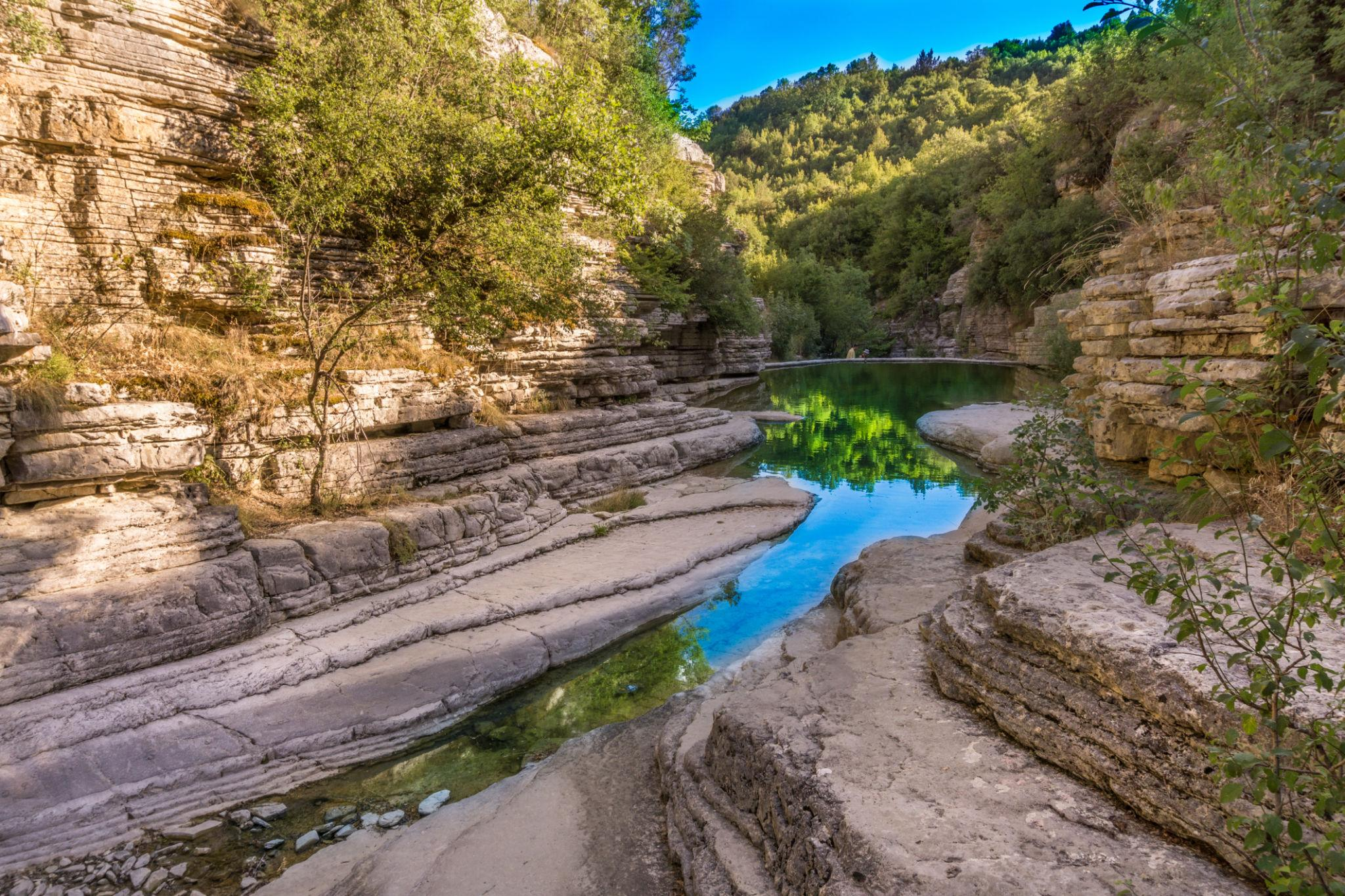
Obscure Travertine Terraces in Voidomatis

November 19, 2026

Travertine and carbonate deposition

Travertine is a type of limestone formed through the precipitation of calcium carbonate from water. It commonly develops around springs, rivers, caves, and other environments where carbonate-rich water undergoes chemical changes.

Travertine formation is influenced by temperature, pressure, dissolved carbon dioxide, water chemistry, biological activity, and flow conditions.

As calcium carbonate precipitates, it may accumulate in layers, creating terraces, mounds, coatings, and other distinctive structures.

The formation of terraces

Travertine terraces can develop where water flows across a surface and deposits carbonate material. Over time, repeated deposition can create stepped or layered formations.

Changes in water flow, mineral concentration, vegetation, and the position of channels may influence the shape of the terraces.

The process can be relatively continuous in active environments, although the rate of deposition varies considerably.

The Voidomatis landscape

The Voidomatis River is known for its clear water and distinctive landscape in the Epirus region. The river is associated with limestone terrain, natural springs, and the wider geological environment of the Zagori area.

The presence of specific travertine terraces along the Voidomatis would require geological confirmation. The title should therefore be treated as a research topic rather than a verified description of a particular formation.

Environmental significance

Travertine formations can provide information about past and present water conditions. Their layers may record changes in mineral deposition, water flow, and environmental processes.

Research into a hypothetical travertine terrace system along the Voidomatis could contribute to understanding carbonate deposition, river environments, landscape development, and the interaction between geology and water.

Because such formations can be sensitive to changes in water quality and flow, their study may also have implications for environmental conservation.

Submerged Basalt Columns in a Saronic Cove

November 19, 2026

Basalt and volcanic rock formation

Basalt is a dark-colored volcanic rock commonly formed when relatively low-viscosity lava cools at or near the Earth's surface.

Under certain cooling conditions, basalt can develop columnar jointing. This phenomenon occurs when contraction during cooling produces fractures that divide the rock into polygonal columns.

Columnar joints are often associated with volcanic lava flows, although similar structures can occur in other types of igneous rock.

The formation of columnar structures

As lava cools, it contracts. If the cooling and contraction occur relatively evenly, fractures can develop in patterns that create columns.

The shape and size of the columns depend on several factors, including the cooling rate, the thickness of the lava body, the composition of the rock, and the thermal conditions.

Many columnar formations display polygonal cross-sections, frequently hexagonal, but the geometry can vary.

Submerged geological environments

Basalt columns can occur along coastlines and underwater where volcanic formations have been affected by marine processes, sea-level changes, erosion, or the inundation of former land surfaces.

A submerged formation may be difficult to interpret because marine erosion, sediment accumulation, biological growth, and water movement can obscure its structure.

The presence of column-like rocks in a Saronic cove would not automatically establish that they are basalt. Their composition and geological origin would need to be examined.

Geological importance

A hypothetical submerged basalt formation in the Saronic Gulf would be significant because it could contribute to understanding the regional geological history, volcanic processes, and changes in coastal environments.

Geologists would investigate the rock through field observations, sampling where permitted, petrographic analysis, mapping, and comparison with regional geological formations.

The subject also illustrates the importance of underwater geological research, which can reveal formations that are not easily accessible through land-based surveys.

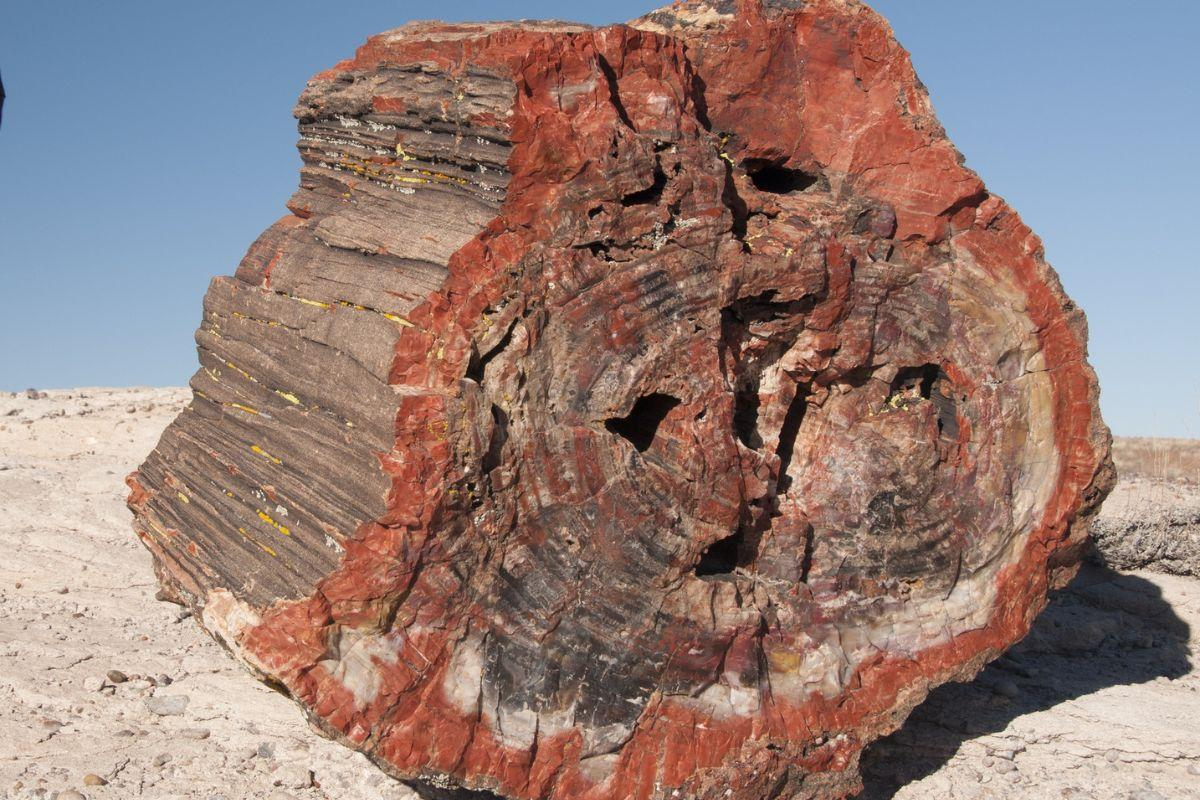
Hidden Petrified Trees Near Meteora’s Base

November 19, 2026

Petrified wood and the preservation of ancient forests

Petrified wood is formed when buried wood is gradually replaced or impregnated by minerals, allowing its structure to survive long after the original organic material has decayed. This process can preserve features such as growth rings, cellular structure, and the general shape of the original tree.

Petrification commonly occurs when wood is buried in sediment and exposed to mineral-rich groundwater. Over long periods, mineral deposition and chemical changes may preserve the structure of the wood in a fossilized form.

The resulting specimen can retain remarkably detailed features of the original plant, providing information about ancient vegetation and environmental conditions.

Geological conditions required for petrification

The preservation of petrified wood depends on several factors. Rapid burial may protect the wood from decay, while groundwater carrying dissolved minerals can contribute to its preservation.

The mineral composition of the petrified material varies. Silica is common in petrified wood, although other minerals may also occur depending on the geological environment.

The process does not necessarily preserve every part of the original tree equally. Different conditions can produce varying degrees of mineral replacement and structural preservation.

The geological landscape around Meteora

Meteora is famous for its towering rock formations, monasteries, and distinctive geological landscape. The region's rocks and landforms reflect long-term processes involving sediment deposition, geological uplift, erosion, and weathering.

The presence of petrified trees near the base of Meteora, as suggested by the title, would require independent geological verification. Petrified wood is not established simply by the presence of unusual rock fragments or tree-like shapes.

Scientific significance of a hypothetical discovery

If petrified wood were found in a securely documented geological context near Meteora, it could contribute to the study of ancient vegetation, sedimentary environments, and the region's geological history.

Researchers would need to examine the specimens, identify their mineral composition, document their structure, and determine the geological formation in which they occur.

Such a discovery would be valuable because fossilized wood can provide evidence of past ecosystems, climatic conditions, and the environmental history of a region.

Obscure Thracian Plough Blessings in Drama

November 19, 2026

Ploughing and agricultural traditions

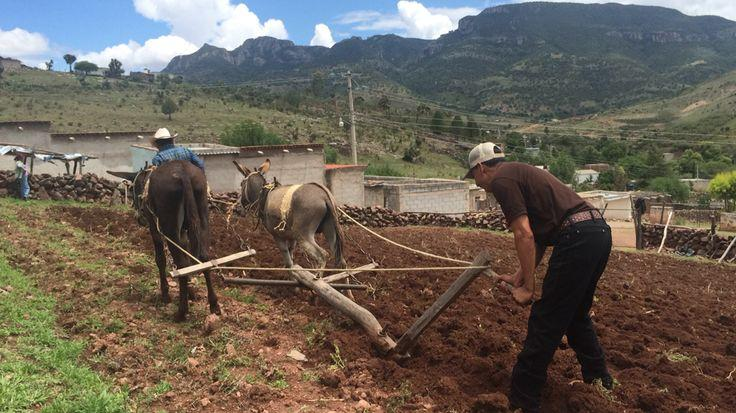
Ploughing was an essential activity in many agricultural societies. It prepared the soil for planting and was connected with seasonal cycles, crop production, animal management, and the organization of rural labor.

The success of agriculture depended on environmental conditions, including rainfall, soil quality, temperature, and the availability of labor and animals.

Because farming was essential to food production, agricultural activities often became associated with rituals and symbolic practices intended to encourage fertility, protect crops, and ensure prosperity.

Blessings and seasonal rituals

Traditional agricultural blessings may involve prayers, symbolic actions, processions, offerings, or the use of sacred objects.

Such practices could be connected with the beginning of ploughing, planting, harvesting, or other important moments in the agricultural calendar.

In Christian communities, agricultural rituals could incorporate prayers to saints, church blessings, or celebrations connected with particular feast days.

The exact form of these practices would vary between regions and communities.

Drama and rural traditions

Drama and the surrounding region of northern Greece have a history of agriculture and rural settlement. The local landscape and climatic conditions have shaped agricultural activities and community life.

Traditional farming practices could include the use of animals, seasonal labor, tools, and knowledge transmitted between generations.

A hypothetical study of Thracian plough blessings in Drama would examine how agricultural work became connected with religion, folklore, and community identity. It would require direct documentation of the specific practice before it could be described as an established local tradition.

Agricultural ritual as cultural memory

Rituals connected with ploughing can express the relationship between people and the land. They may reflect hopes for productivity, protection from hardship, and continuity of household life.

These practices are important to folklore research because they reveal how communities interpreted the uncertainty of agricultural production and incorporated symbolic actions into everyday work.

Hidden Minoan Dances in Rethymno Valleys

November 19, 2026

Dance in Minoan artistic representations

Minoan art includes depictions of human figures engaged in activities that may be connected with ceremony, performance, religious practice, or social interaction.

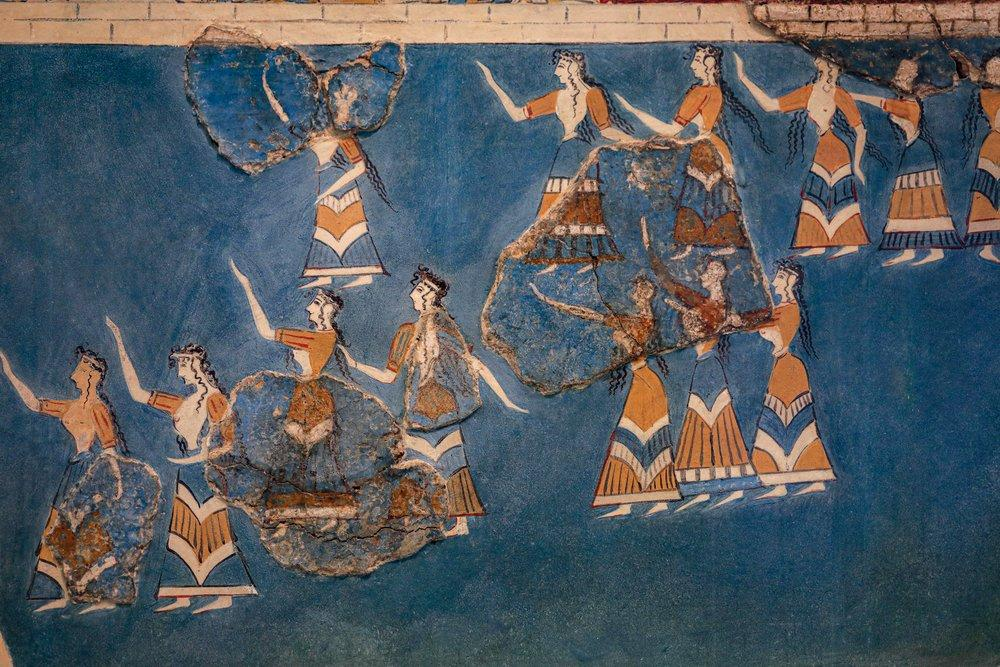
Frescoes, figurines, seal images, and other archaeological objects provide evidence for the representation of movement, gestures, and bodies in Bronze Age Crete.

Some images have been interpreted as depicting dance or ritual activity, although the precise meaning of individual scenes can be difficult to establish.

Dance, ritual, and community

Dance can serve several functions in society. It may accompany religious ceremonies, celebrations, social gatherings, rites of passage, or expressions of collective identity.

Movement can be connected with music, rhythm, symbolic gestures, and the organization of participants within a performance.

For Minoan Crete, the interpretation of dance scenes must be approached carefully because artistic representations may be symbolic rather than direct depictions of ordinary performance.

Rethymno and the Minoan landscape

The wider Rethymno region contains archaeological sites and landscapes associated with different periods of Cretan history. Research in the region contributes to the study of prehistoric settlement, agricultural activity, architecture, and religious practices.

The reference to hidden Minoan dances in Rethymno valleys is a hypothetical theme rather than a verified discovery of an ancient dance tradition preserved in a specific valley.

Reconstructing prehistoric performance

Researchers can study ancient dance through visual representations, musical instruments, ritual objects, architectural settings, and comparisons with documented traditions.

However, the reconstruction of prehistoric choreography is highly uncertain. Images may not show the exact movement sequence, and later dances cannot be assumed to preserve Minoan choreography without evidence.

A study of Minoan dances in the Rethymno region would therefore focus on the interpretation of archaeological imagery, the possible role of movement in ritual, and the relationship between performance and social identity.

Obscure Byzantine Chants in Kythira Churches

November 19, 2026

Byzantine chant and liturgical tradition

Byzantine chant is a form of liturgical music associated with the Eastern Orthodox Christian tradition. It is primarily vocal and is organized through musical modes, melodic formulas, and a repertoire connected with the church calendar and liturgical texts.

The tradition developed over centuries and has been transmitted through manuscripts, oral instruction, and later printed collections.

Chant is not simply music performed in a religious building. It is an integral part of worship, helping communicate theological texts and organize the liturgical experience.

Churches and musical transmission

Churches have played an important role in the preservation of Byzantine chant. Cantors and other trained singers learned the repertoire through instruction and practice.

Musical manuscripts and notation systems have allowed many chants to be transmitted across generations, although oral interpretation remains important.

The relationship between notation and performance is complex. A written musical sign may require knowledge of traditional interpretation, melodic development, and the conventions of the chant system.

Kythira and religious heritage

Kythira has a long religious and cultural history. Its churches, monasteries, icons, and local traditions contribute to the island's heritage.

Different churches may preserve distinctive liturgical practices, musical repertoires, or local interpretations. These variations can reflect historical relationships with wider ecclesiastical centers and regional traditions.

The title's reference to obscure Byzantine chants in Kythira suggests a research interest in lesser-known musical material, but particular chants or local compositions would need to be identified through church archives, manuscripts, recordings, or interviews with knowledgeable singers.

Chant as cultural continuity

Byzantine chant provides a link between religious practice, language, music, historical memory, and community identity.

Its continued performance demonstrates how traditions can survive through regular practice rather than only through preservation in museums or archives.

Research into Kythira's chant traditions could explore the relationship between local religious life and the wider Byzantine musical heritage, as well as the challenges of preserving musical knowledge in changing communities.

Hidden Arcadian Flutes in Dimitsana Festivals

November 19, 2026

Flutes and traditional Greek music

Flutes and other wind instruments have a long history in Greek musical traditions. Wind instruments can be used for dance, celebration, pastoral activities, ritual performances, and entertainment.

Different instruments vary in their construction, playing techniques, range, and musical function. Their sounds can be associated with particular regions, styles, or performance settings.

The title's reference to hidden flutes in Dimitsana can be interpreted as an interest in lesser-known instrumental traditions and the preservation of local musical heritage.

Music at village festivals

Festivals provide opportunities for music, dancing, communal meals, and the celebration of cultural identity. Musicians may perform traditional melodies, dance tunes, and songs that have been passed down through generations.

Wind instruments may be used to accompany dancing, create melodic phrases, or establish the musical character of a celebration.

The repertoire of a festival can include both traditional and newer compositions. Music may be adapted over time while retaining elements of regional style.

Dimitsana and Arcadian cultural life

Dimitsana, located in the mountainous region of Arcadia, is known for its traditional architecture, historical importance, and connection with the wider cultural landscape of the Peloponnese.

Local festivals can reflect community traditions, religious celebrations, seasonal events, and regional identity.

The study of music in Dimitsana could help researchers understand how instruments, musicians, and performance traditions contribute to cultural continuity.

Preserving instrumental traditions

Traditional instruments can be preserved through performance, teaching, repair, craftsmanship, recordings, and cultural associations.

Research into lesser-known flute traditions would involve identifying the instrument, documenting its construction, recording its musical repertoire, and interviewing performers about how they learned and use it.

A hypothetical study of Arcadian flutes in Dimitsana festivals would provide an opportunity to examine the relationship between instrumental music, rural traditions, festivals, and cultural memory.

Obscure Cycladic Shoulder Songs in Naxos

November 19, 2026

Songs connected with physical work

The phrase "shoulder songs" can be interpreted as songs associated with carrying loads, agricultural labor, water collection, or other activities involving physical effort.

Traditional communities often developed work songs that helped establish rhythm, reduce the monotony of repetitive tasks, and create opportunities for shared expression.

Carrying loads on the shoulder was a common activity in environments where people transported water, agricultural products, firewood, and household materials without modern mechanical equipment.

The role of music in everyday labor

Work songs can contain simple rhythms and repeated phrases that are easy to remember and perform while working. Their lyrics may reflect the physical activity itself, but they can also include themes of love, humor, hardship, social relationships, and personal experience.

The songs may have been performed individually or in groups. Their musical structure could vary depending on the activity and the community.

Naxos and the Cycladic landscape

Naxos has a long history of settlement, agricultural production, maritime connections, and cultural development. Its landscape includes villages, terraces, fields, mountains, and coastal environments.

Traditional work in such landscapes involved a range of tasks, including farming, livestock management, water collection, construction, and transport.

The study of work songs could provide insight into how music became part of the daily rhythm of island life.

Cultural and historical significance

A hypothetical collection of shoulder songs from Naxos would be relevant to folklore research because it would connect music with physical labor, social relationships, and the organization of everyday life.

Researchers could examine the lyrics, rhythm, vocabulary, performance contexts, and the memories of people who learned the songs from older generations.

Such a study would help preserve traditions that might otherwise disappear as work practices and rural lifestyles change.

Hidden Ottoman Coffee Divination in Kavala

November 19, 2026

Coffee and social life during the Ottoman period

Coffee became an important part of social life across Ottoman territories. Coffeehouses and domestic coffee preparation created spaces for conversation, hospitality, storytelling, business discussions, and social interaction.

Coffee was not merely a beverage. Its preparation and serving could be connected with etiquette, household customs, social relationships, and shared cultural practices.

In communities such as Kavala, which experienced centuries of Ottoman cultural influence, coffee traditions form part of the broader historical context of everyday life.

Coffee-ground divination

Coffee-ground divination, often known as tasseography, involves interpreting the patterns left by coffee grounds in a cup. People may look at shapes, lines, symbols, or arrangements of grounds and associate them with future events, personal concerns, or symbolic meanings.

The interpretations are generally informal and can vary among individuals and cultural settings. Symbols may be associated with travel, relationships, opportunities, obstacles, or changes in life.

Coffee divination is a form of folk belief rather than a scientifically established method of predicting the future.

Coffee, conversation, and social relationships

The act of preparing and drinking coffee can create a setting for personal conversation. Fortune-telling may become a form of social interaction in which participants discuss their concerns, hopes, fears, and expectations.

The ritual can be meaningful even when the predictions are not taken literally. It may provide entertainment, emotional reassurance, or an opportunity to discuss personal experiences.

In some social settings, coffee reading can also function as a way of strengthening relationships and creating a sense of familiarity.

Kavala and cultural exchange

Kavala has a complex history shaped by ancient, Byzantine, Ottoman, and modern developments. Its architecture, food traditions, and social customs reflect multiple historical influences.

A hypothetical study of Ottoman coffee divination in Kavala would examine the relationship between coffee culture, household traditions, social interaction, and cultural exchange.

It would also explore how practices associated with the Ottoman period have been preserved, adapted, or reinterpreted within modern Greek society.

← Newer Posts Older Posts →
Featured
image_2026-11-19_214108362.png
November 22, 2026
Forgotten Roman Chain Links in a Skiathos Cove
November 22, 2026
Read more →
November 22, 2026
image_2026-11-19_214326666.png
November 22, 2026
Hidden Cycladic Pegs in a Seriphos Attic Beam
November 22, 2026
Read more →
November 22, 2026
image_2026-11-19_214513977.png
November 22, 2026
Hidden Hellenistic Bricks in Kozani Side Streets
November 22, 2026
Read more →
November 22, 2026
image_2026-11-19_214554639.png
November 22, 2026
Forgotten Minoan Pits in a Petras Garden
November 22, 2026
Read more →
November 22, 2026
image_2026-11-19_214632804.png
November 22, 2026
Hidden Fresco Underpaint in an Ikaria Chapel
November 22, 2026
Read more →
November 22, 2026
image_2026-11-19_214710478.png
November 22, 2026
Obscure Road Pegs in a Serifos Field Path
November 22, 2026
Read more →
November 22, 2026
read more

Powered by The archaeologist