• MAIN PAGE
  • LATEST NEWS
    • Lost Cities
    • Archaeology's Greatest Finds
    • Underwater Discoveries
    • Greatest Inventions
    • Studies
    • Blog
  • PHILOSOPHY
  • HISTORY
  • RELIGIONS
    • Africa
    • Anatolia
    • Arabian Peninsula
    • Balkan Region
    • China - East Asia
    • Europe
    • Eurasian Steppe
    • Levant
    • Mesopotamia
    • Oceania - SE Asia
    • Pre-Columbian Civilizations of America
    • Iranian Plateau - Central Asia
    • Indus Valley - South Asia
    • Japan
    • The Archaeologist Editor Group
    • Scientific Studies
    • Aegean Prehistory
    • Historical Period
    • Byzantine Middle Ages
    • Predynastic Period
    • Dynastic Period
    • Greco-Roman Egypt
  • Rome
  • PALEONTOLOGY
  • About us
Menu

The Archaeologist

  • MAIN PAGE
  • LATEST NEWS
  • DISCOVERIES
    • Lost Cities
    • Archaeology's Greatest Finds
    • Underwater Discoveries
    • Greatest Inventions
    • Studies
    • Blog
  • PHILOSOPHY
  • HISTORY
  • RELIGIONS
  • World Civilizations
    • Africa
    • Anatolia
    • Arabian Peninsula
    • Balkan Region
    • China - East Asia
    • Europe
    • Eurasian Steppe
    • Levant
    • Mesopotamia
    • Oceania - SE Asia
    • Pre-Columbian Civilizations of America
    • Iranian Plateau - Central Asia
    • Indus Valley - South Asia
    • Japan
    • The Archaeologist Editor Group
    • Scientific Studies
  • GREECE
    • Aegean Prehistory
    • Historical Period
    • Byzantine Middle Ages
  • Egypt
    • Predynastic Period
    • Dynastic Period
    • Greco-Roman Egypt
  • Rome
  • PALEONTOLOGY
  • About us
No results found

Barkly East Rock Art: South Africa's Freehand Paintings

October 4, 2026

Introduction

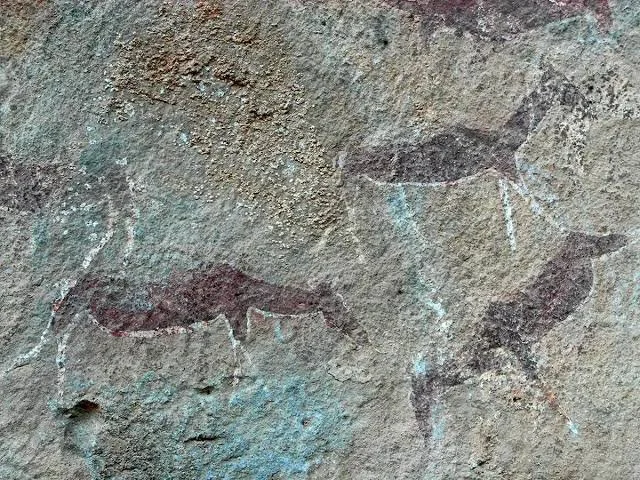
Barkly East, situated in South Africa’s Eastern Cape, lies within a mountainous landscape of rugged ridges, sandstone formations, river valleys, and open grasslands. The wider region forms part of a significant archaeological landscape where rock shelters and exposed rock surfaces have preserved traces of Indigenous artistic expression. Rock paintings in the Eastern Cape contribute to the broader record of southern African rock art, especially traditions associated with San hunter-gatherer communities.

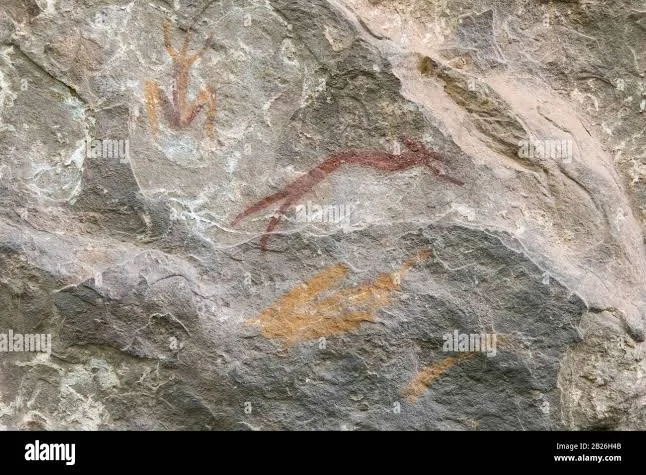
The phrase “freehand paintings” refers to images created directly on rock surfaces without the use of mechanical templates or modern drawing instruments. Such paintings demonstrate the ability of artists to represent animals, people, movement, and abstract forms using pigments and carefully controlled brushwork or other application techniques.

However, a specific account of Barkly East rock art must distinguish between documented sites in the wider Eastern Cape and individual shelters whose locations, images, and dates have been formally recorded. The region’s broader archaeological importance provides a valuable context, but the age and meaning of a particular painting must be established through site-specific evidence.

The Landscape of Barkly East

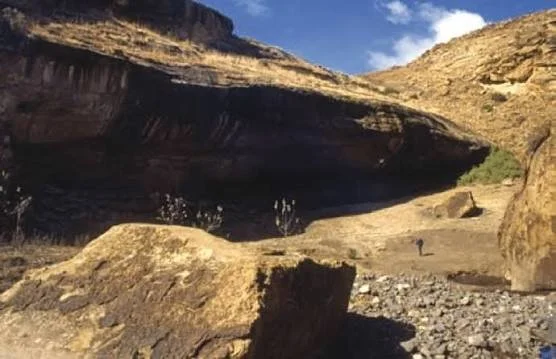
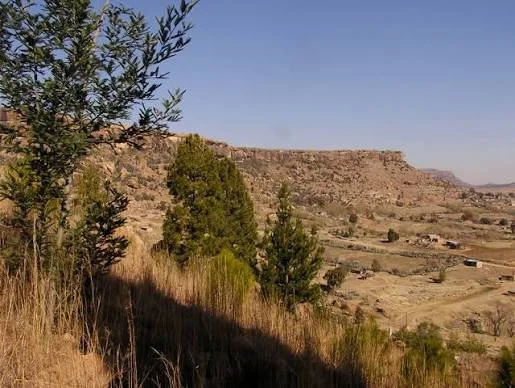
Barkly East lies in the highland environment of the Eastern Cape, where mountain slopes, rocky outcrops, and sheltered valleys create a diverse landscape. The region’s geology includes sedimentary rock formations that weather into cliffs, overhangs, and shallow shelters.

Rock shelters can provide protection from rain, wind, and direct sunlight. They may also lie near water sources, animal routes, and areas where people could collect plants or hunt game. These characteristics made many southern African shelters useful places for human activity.

The preservation of rock paintings depends partly on the conditions of the rock surface. A sheltered overhang may protect pigment from direct rainfall and sunlight, while moisture, salt crystallisation, biological growth, and repeated temperature changes can gradually damage an image.

The archaeological value of a shelter therefore depends on both its history of human use and the physical processes that affected the artwork after it was created.

What Makes Freehand Rock Painting Significant?

Freehand painting requires artists to control the application of pigment across an irregular surface. Unlike modern paper, rock has natural variations in colour, texture, and shape. Artists had to work with these features, using the surface as part of the composition.

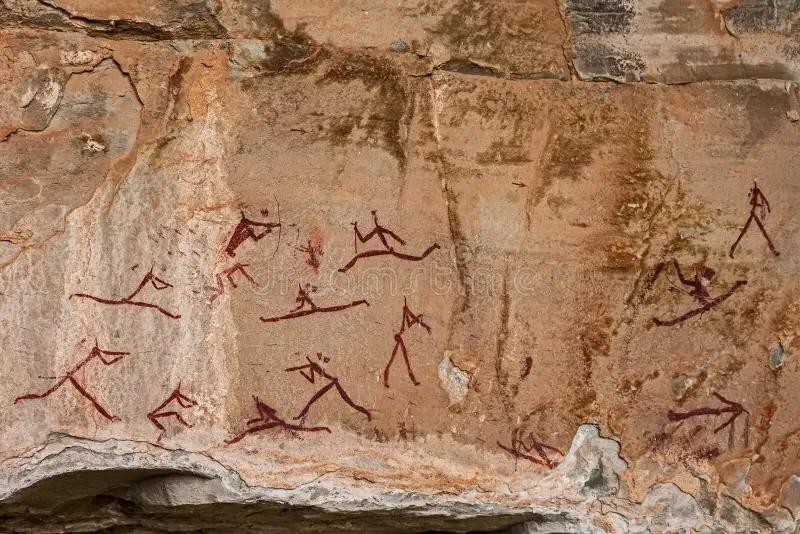
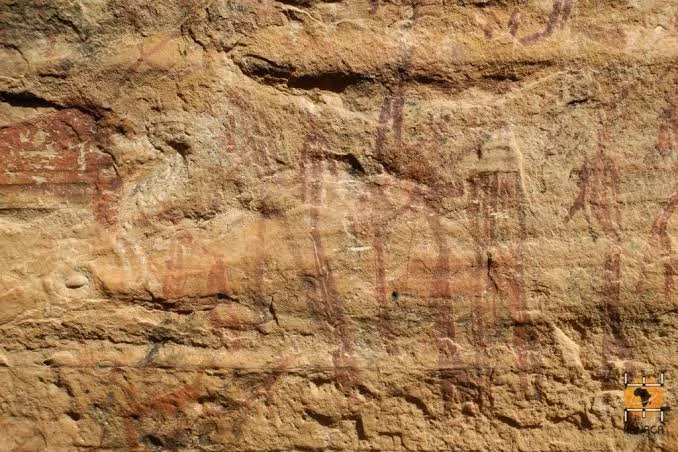
Southern African rock paintings often include animals, human figures, and combinations of figures that appear to be engaged in movement or unusual activities. Artists could communicate action through posture, body orientation, relative scale, and the arrangement of figures.

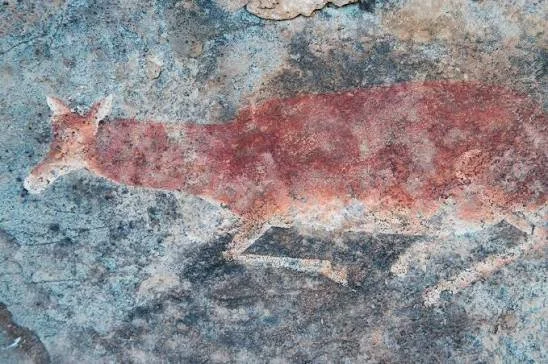
Some paintings are naturalistic, depicting the bodies and distinctive features of animals with considerable care. Others are more stylised, using simplified shapes or unusual combinations of human and animal characteristics.

These differences demonstrate that rock art was not a single, uniform artistic tradition. Images varied across locations and periods, reflecting different artistic choices, cultural practices, and possible purposes.

Pigments and Painting Techniques

Prehistoric rock artists used materials available in their surroundings. Red and yellow ochres, derived from iron-rich minerals, were widely used in southern African painting traditions. White pigments could be obtained from suitable mineral sources, while dark pigments could include charcoal or mineral compounds.

Preparing a pigment involved more than selecting a coloured stone. Artists needed to produce a material that could be spread across the surface and remain visible after application. Pigments might be ground and mixed with a liquid or binding material, although the precise recipes used at an individual site cannot be assumed without evidence.

The application method also influenced the appearance of an image. Fine lines, broader strokes, filled shapes, and layered colours could produce different visual effects. Some images may have been created using brushes made from plant fibres or animal hair, while other techniques may have involved fingers or other simple applicators.

Researchers study pigment composition, the condition of the painted surface, and the sequence of overlapping lines to investigate how paintings were made. Sampling must be limited and carefully controlled because removing pigment can damage the artwork.

Animals, People, and the Representation of Movement

Animals are prominent in many southern African rock-art traditions. Their depiction may reflect close observation of wildlife and knowledge of animal anatomy, behaviour, and movement.

Human figures may appear alone, in groups, or alongside animals. Their posture can suggest running, bending, reaching, dancing, or other forms of movement. Nevertheless, an image’s appearance does not always reveal its original meaning.

A group of figures may be interpreted as a hunting scene, a social gathering, a ceremony, or a symbolic composition. Researchers compare the images with other rock art and with relevant ethnographic accounts, but they must avoid treating any one interpretation as universally applicable.

San rock art has been studied in connection with spiritual beliefs, healing practices, and ritual experiences. Such interpretations are important, but the meaning of an individual painting must be considered within its own cultural and archaeological context.

Dating Rock Paintings

Determining the age of a rock painting is difficult because many pigments do not contain material that can be dated directly. Researchers may use indirect evidence, including the relationship between paintings and archaeological deposits, comparisons with other sites, and scientific analysis of suitable mineral layers.

The age of a rock shelter itself does not determine the age of the art. A shelter may have been used by different communities over thousands of years, and a painting could have been added long after the first occupation.

Stylistic comparison can provide clues, but similar images may have been produced during different periods. Weathering also cannot serve as a simple clock because the rate of surface deterioration depends on local environmental conditions.

A reliable date therefore requires several lines of evidence where possible, together with a clear explanation of the limitations.

Cultural Continuity and Indigenous Heritage

San communities have deep historical connections with southern Africa, and their artistic traditions form an important part of the region’s Indigenous heritage. Rock paintings should not be treated merely as anonymous prehistoric decorations. They are cultural records created by people with knowledge, beliefs, social relationships, and histories.

Modern San communities are diverse, and contemporary traditions cannot automatically be assumed to reproduce the exact beliefs of every ancient artist. Nevertheless, Indigenous knowledge can provide important perspectives when researchers interpret the significance of rock art.

Respectful research involves acknowledging these communities, protecting sensitive sites, and avoiding unsupported claims about the beliefs represented in individual images.

Conservation and Public Education

Rock paintings are fragile. Touching the surface can transfer oils and dirt, while graffiti, deliberate damage, uncontrolled tourism, and poorly planned construction can destroy archaeological evidence.

Conservation requires documenting the artwork’s condition, managing access, reducing avoidable damage, and educating visitors about the importance of the site. Digital photographs and three-dimensional records can support research, but they do not replace the protection of the original painting.

Conclusion

Barkly East and the wider Eastern Cape form part of a landscape important to the study of southern African rock art. Freehand paintings provide evidence of artistic skill, detailed observation of animals, and cultural traditions that developed across generations.

The age and meaning of each image must be established through careful research rather than inferred from its appearance alone. By combining archaeological documentation, scientific analysis, Indigenous perspectives, and conservation, researchers can better understand the artistic heritage of the region while ensuring that these fragile records survive for future generations.

Wildebeestkuil: South Africa's Game Drive Traps

October 4, 2026

Introduction

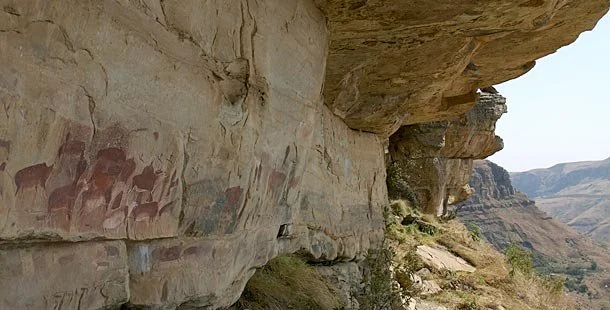
Wildebeestkuil Rock Art Centre, near Kimberley in South Africa’s Northern Cape, is an important heritage site associated with the region’s extensive tradition of rock engravings. The site is known for engraved images on exposed rock surfaces and for its role in interpreting the cultural heritage of Indigenous communities in the area.

The title “Game Drive Traps” raises a question about the relationship between rock art and traditional hunting practices. A game drive is a hunting method in which people guide or direct animals toward a selected area, sometimes using natural barriers or constructed features to help capture them. Such practices have been documented in various societies, but a rock engraving does not automatically demonstrate that a game drive or trap existed at the place where it appears.

Wildebeestkuil should therefore be discussed first as a documented rock-art locality. Any claim that particular engravings depict hunting traps or mark the location of a game drive must be supported by archaeological or ethnographic evidence specific to the interpretation.

The Landscape Around Wildebeestkuil

Wildebeestkuil lies within the semi-arid environment of the Northern Cape, a region characterised by open landscapes, seasonal water availability, and extensive areas of exposed rock. The wider Kimberley region is associated with a long history of human activity and a rich archaeological record.

Rock surfaces in this environment can provide suitable places for engravings. Artists may have selected naturally exposed stone because it offered a durable surface for pecking or incising images. The visibility of an engraving depends on the rock’s colour, texture, weathering, and the angle of sunlight.

The site’s modern interpretation centre helps visitors understand the engravings within the wider cultural and historical landscape. Such centres can play an important role in explaining why rock art should be treated as heritage rather than simply as a collection of unusual marks.

How Rock Engravings Are Made

Rock engravings differ from paintings because the artist physically alters the stone. Common techniques include pecking, in which repeated impacts create small depressions; incising, in which a line is cut into the surface; and abrasion, in which the rock is rubbed to create a groove or smooth area.

The appearance of an engraving depends on the technique, the type of rock, and the extent of weathering. A pecked figure may have a rough interior, while an incised line may appear narrow and continuous.

Engravings can depict animals, tracks, geometric patterns, and abstract forms. Some images are recognisable representations of the natural world, while others are more difficult to interpret. A design may have been meaningful to the artist and their community even if its significance is no longer apparent to modern observers.

Archaeologists record the location, shape, dimensions, and condition of each image. Photography, measured drawings, and digital surface recording can help researchers compare motifs and monitor deterioration.

Rock Art and Traditional Hunting

Hunting was an important activity for many hunter-gatherer communities in southern Africa. It required detailed knowledge of animal behaviour, seasonal movement, water sources, and the physical characteristics of the landscape.

A game drive typically involves coordinated movement intended to influence where animals travel. Depending on the environment and the species being hunted, hunters might use natural barriers, carefully selected terrain, or constructed features. Such strategies require cooperation, planning, and knowledge of the local ecosystem.

However, evidence of hunting in a region is not the same as evidence that a particular engraving depicts a game drive. Researchers must distinguish between images that may represent animals, tracks, hunting equipment, or abstract designs. The meaning of an image cannot be established solely by connecting it to a known hunting technique.

Archaeological evidence for hunting practices may also come from animal bones, stone tools, projectile points, and the spatial distribution of remains. These sources can be compared with rock art to investigate whether a hunting interpretation is plausible.

The Limits of Interpreting Images

Rock art can be difficult to interpret because its creators did not leave written explanations of every image. A figure that appears to depict an animal or hunting activity may have had a broader symbolic meaning.

Some southern African rock art traditions are associated with spiritual beliefs and ritual practices, while other images may relate to observation, social memory, or aspects of daily life. Different interpretations may apply to different sites or periods.

It is therefore important not to present the term “game drive traps” as a confirmed description of Wildebeestkuil unless a documented source establishes that connection. The phrase can serve as a subject for investigating how rock art and hunting archaeology relate, but it should not replace site-specific evidence.

Archaeological Context and Cultural Attribution

The Northern Cape contains a complex history of Indigenous communities and changing patterns of settlement and resource use. Archaeological interpretations must consider this diversity rather than assigning every image to one people or one period.

Cultural attribution may involve comparisons with other art sites, the archaeological materials found nearby, historical documentation, and relevant Indigenous knowledge. Each source has limitations, and the conclusions should reflect the strength of the available evidence.

The Wildebeestkuil Rock Art Centre provides an opportunity to communicate these complexities to the public. Visitors can learn not only how engravings were produced, but also how researchers evaluate competing interpretations.

Conservation and Heritage Management

Rock engravings are vulnerable to direct physical damage. Walking on engraved surfaces, touching the marks, scratching new designs, or applying substances to improve their visibility can cause lasting harm.

Effective conservation involves controlled access, clear visitor guidance, regular condition monitoring, and community participation. Local heritage interpretation can also help visitors understand why protecting the site matters.

The preservation of Wildebeestkuil is important both for scientific research and for the cultural heritage of the communities connected with the region.

Conclusion

Wildebeestkuil is a significant rock-art locality near Kimberley, known for its engraved surfaces and its role in presenting the heritage of the Northern Cape. It provides a valuable setting for exploring the relationship between rock art, hunting knowledge, and the archaeological study of Indigenous life.

The title’s reference to game drive traps should not be treated as proof that the engravings document a particular trapping system. Establishing that connection would require specific evidence from the site and a clear explanation of how the interpretation was reached.

By studying the engravings alongside archaeological evidence and Indigenous perspectives, researchers can investigate the many ways people represented animals and understood their environments while preserving an important part of South Africa’s cultural heritage.

Drakensberg San Art: South Africa's 4,000-Year Scenes

October 4, 2026

Introduction

The Drakensberg Mountains of South Africa contain one of the most important concentrations of San rock paintings in southern Africa. Shelters beneath sandstone cliffs preserve images of animals, human figures, and complex scenes that provide evidence of Indigenous artistic traditions and cultural beliefs.

The phrase “4,000-Year Scenes” refers to the possibility of a long chronological history for the region’s rock art. However, it should not be taken to mean that every painting in the Drakensberg is exactly four thousand years old. The art was created over a range of periods, and the age of individual images can be difficult to establish.

The Drakensberg paintings are especially important because they combine detailed observation of the natural world with images that may express spiritual ideas, ritual practices, and relationships between humans and animals. They also demonstrate that the mountain landscape was not simply a physical environment but a place of cultural meaning.

The Drakensberg Landscape

The Drakensberg forms part of the Great Escarpment of southern Africa. Its high cliffs, deep valleys, grasslands, and sandstone shelters create a varied landscape that has supported human activity over long periods.

The shelters offer protection from wind and rain, while the surrounding mountains and valleys provide habitats for wildlife and plant resources. Water sources and routes through the landscape would also have influenced where people travelled and gathered.

The rock surfaces inside sheltered overhangs can preserve pigment better than exposed cliff faces. Nevertheless, moisture, mineral deposits, biological growth, and changes in temperature can gradually damage paintings.

The distribution of rock art across the Drakensberg suggests repeated human engagement with particular locations. However, the presence of paintings does not by itself prove that a shelter was permanently occupied. Some places may have been visited intermittently or used for specific activities.

The San and Their Artistic Traditions

The San are Indigenous peoples with deep historical connections to southern Africa. Their communities have diverse histories, languages, and cultural traditions, and the archaeological record should not be treated as a single, unchanging San culture.

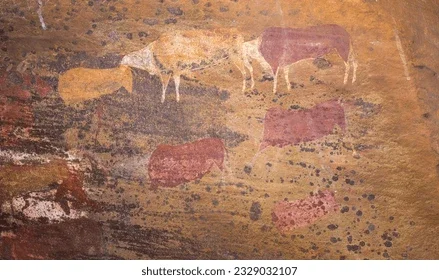
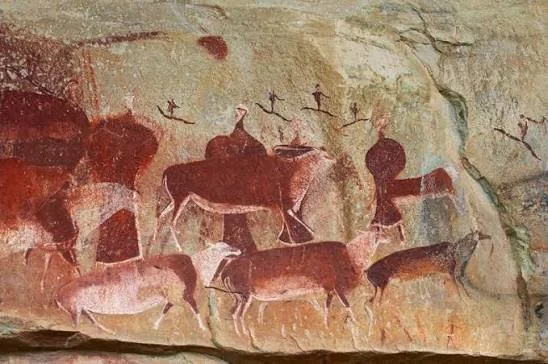
San rock paintings in the Drakensberg often depict eland and other animals, human figures, and scenes that combine people and animals in unusual ways. Some figures appear to be dancing, bending, running, or interacting with animals. Other images are more difficult to interpret.

The artists demonstrated considerable skill in representing animal anatomy and movement. Their paintings can communicate action through body posture, relative size, and the arrangement of figures. Such details provide evidence of close observation and sophisticated artistic practice.

However, the meaning of a painting cannot always be recovered from its visual appearance. Researchers must consider the archaeological context and relevant cultural knowledge before deciding whether a scene represents hunting, ritual activity, or another subject.

Why Eland Appear So Frequently

Eland are among the most recognisable animals in Drakensberg rock art. These large antelope held important roles in several documented San belief systems and appear frequently in southern African paintings.

Eland may be depicted in naturalistic form, with recognisable body proportions, horns, and movement. In some compositions, the animal appears alongside human figures or within scenes interpreted as ritual or symbolic.

Ethnographic research among San communities has helped scholars understand the spiritual significance that eland held in some traditions. In certain accounts, the animal is associated with potency, healing, and ceremonial life.

These interpretations provide important context, but they should not be applied automatically to every image. The significance of an animal could vary by community, period, and setting. Researchers must distinguish evidence from a particular tradition from broader assumptions about all San rock art.

The Relationship Between Art and Spiritual Practice

Some Drakensberg paintings have been interpreted in relation to San spiritual beliefs and healing ceremonies. Human figures may appear in unusual postures, and certain compositions combine human and animal characteristics in ways that do not correspond directly to ordinary observation.

Researchers have connected some of these images with beliefs involving spiritual potency, transformation, and interactions between different aspects of existence. In some documented San traditions, ritual specialists entered altered states of consciousness during healing ceremonies, and rock art has been studied as a possible expression of related experiences.

Nevertheless, not every unusual figure should be labelled a shaman or every scene interpreted as a ceremony. A careful analysis considers the full composition, the location of the art, patterns repeated at other sites, and the limits of the ethnographic evidence.

The original meanings of many paintings may remain uncertain. Recognising that uncertainty does not diminish the art’s significance; it acknowledges that ancient artists worked within cultural systems that cannot always be reconstructed completely.

Dating the Paintings

The age of Drakensberg rock art varies. Some paintings may be several thousand years old, while others were produced more recently. The phrase “4,000-year” therefore describes a broad chronological possibility, not a universal date for all scenes.

Dating rock paintings is challenging because pigments often lack suitable organic material for direct radiocarbon analysis. Researchers may use scientific analyses of pigment or mineral deposits, the relationship between art and archaeological layers, and comparisons with other documented works.

Stylistic differences can help researchers organise paintings into broad traditions, but style alone does not provide an exact date. Similar motifs may persist over long periods, and paintings can be added to the same shelter by different artists.

The result is a chronological record that must be assembled from multiple sources of evidence rather than from the visual appearance of an image alone.

What the Scenes Reveal About Daily Life

Not all rock art is necessarily religious. Some images may reflect hunting, animals, human movement, or other aspects of life. The distinction between practical and symbolic imagery is not always clear, however, because the natural world could also have spiritual significance.

Animal depictions demonstrate knowledge of wildlife, while human figures can reveal how artists represented bodies, groups, and movement. The choice of shelter and the arrangement of paintings may also have influenced how images were viewed by people visiting the site.

Archaeologists compare rock art with stone tools, animal remains, and other evidence of occupation. This approach helps situate paintings within the wider history of the region without assuming that every image has one obvious meaning.

Conservation and Indigenous Perspectives

Drakensberg rock art is vulnerable to weathering, vandalism, uncontrolled visitation, and accidental damage. Pigment can deteriorate when surfaces are touched or exposed to unsuitable cleaning methods.

Conservation includes documenting the paintings, controlling access where necessary, monitoring environmental changes, and educating visitors. The involvement of Indigenous communities and relevant heritage organisations is essential when interpreting and protecting culturally significant places.

San heritage should also be presented as part of a living history. Contemporary San communities should not be portrayed as remnants of a vanished past, and ancient paintings should not be used to make unsupported assumptions about modern identities.

Conclusion

Drakensberg San art is a major part of South Africa’s cultural and archaeological heritage. Its paintings reveal sophisticated artistic techniques, close observation of animals, and cultural traditions that connected people with the surrounding landscape.

The reference to four-thousand-year-old scenes should be understood cautiously because the paintings span different periods and cannot all be assigned the same date. Their interpretation requires a combination of archaeological evidence, scientific analysis, and relevant Indigenous knowledge.

By preserving these works and explaining them responsibly, researchers and heritage organisations can help future generations understand the Drakensberg not only as a mountain landscape but also as a place of enduring cultural significance.

Giant's Castle: South Africa's Eland Paintings

October 4, 2026

Introduction

Giant’s Castle, located within the uKhahlamba-Drakensberg region of KwaZulu-Natal, is one of South Africa’s important destinations for understanding San rock art. The surrounding mountain landscape contains numerous rock shelters and painted surfaces, including images of animals and human figures associated with Indigenous artistic traditions.

Eland are especially prominent in Drakensberg rock art. These large antelope were important in the lives and belief systems of several San communities, and their depictions have become central to scholarly discussions about the relationship between animals, ritual, and symbolic meaning.

The significance of Giant’s Castle lies not simply in the presence of animal paintings, but in the opportunity to study these images within their physical and cultural setting. The age and meaning of an individual painting must still be assessed carefully, because rock shelters were often visited repeatedly and their surfaces could receive images from different periods.

The Landscape of Giant’s Castle

Giant’s Castle lies within the dramatic highlands of the Drakensberg. Sandstone cliffs and overhangs create sheltered spaces, while grasslands, streams, and mountain slopes support diverse wildlife and plant communities.

For people living in or travelling through this landscape, shelters could provide protection from weather and a place to pause during movement between different areas. Their proximity to water and other resources may have influenced where people chose to visit or stay.

The rock faces also offered surfaces for painting. Sheltered areas could protect pigment from direct rainfall, although changes in moisture, mineral deposits, and temperature could still affect the artwork over time.

The Eland in San Art

The eland is a large antelope with a distinctive body shape and long, spiralled horns. Its size and recognisable appearance made it an important subject for artists observing the wildlife of southern Africa.

In the Drakensberg, eland paintings may appear as isolated figures or within larger compositions involving people and other animals. Their representation can be naturalistic, with attention to body proportions and posture, or stylised in ways that emphasise particular features.

The importance of the eland extended beyond its role as a source of food. Ethnographic research has documented its symbolic significance in several San traditions, including associations with ritual potency, healing, and ceremonial activity.

These interpretations help researchers understand why the animal appears so frequently in some rock-art traditions. However, the same symbolic meaning should not automatically be assigned to every eland image. The significance of a painting depends on its cultural context and the wider composition.

Hunting, Ritual, and Symbolism

Eland were valuable animals for hunter-gatherer communities because they provided meat, hides, and other resources. Their size and behaviour also meant that hunting them required knowledge of the animal and its environment.

Yet an eland painting should not automatically be interpreted as a record of a hunt. The animal might be depicted in a symbolic context, and a composition containing human figures could represent ritual activity rather than an ordinary encounter with wildlife.

Some scholars have interpreted particular Drakensberg paintings in relation to healing ceremonies and spiritual experiences. These interpretations draw partly on ethnographic accounts of San ritual practices. They are valuable, but researchers must distinguish documented cultural parallels from certainty about the intentions of a prehistoric artist.

Painting Techniques and Preservation

San artists used mineral pigments to create images on rock surfaces. Ochres provided red and yellow colours, while other mineral materials could produce white or darker pigments.

Artists had to adapt their techniques to the uneven surface of the rock. The thickness of the pigment, the width of the line, and the arrangement of colours influenced the appearance of an image. Even small changes in posture or outline could make an animal appear to be standing, moving, or turning.

Preservation varies considerably. Some paintings remain relatively clear, while others have faded or been damaged by moisture and biological growth. Modern photography and digital recording help document the artwork, but conservation must prioritise the original surface.

Dating and Interpretation

The age of a particular eland painting cannot be established simply from its subject. Different artists may have painted similar animals across long periods, and a single shelter may contain works from several generations.

Researchers may use scientific analysis of suitable materials, comparisons with dated archaeological contexts, and stylistic study to establish broad chronological frameworks. Each method has limitations, and an interpretation should make clear how secure the proposed date is.

Conclusion

Giant’s Castle provides an important setting for appreciating the eland paintings of the Drakensberg. These images reveal artistic skill and offer opportunities to explore the relationships between animals, the environment, and San cultural traditions.

The eland’s symbolic significance in several San traditions helps explain its prominence, but the meaning of any individual image must be considered within its own context. Protecting these paintings and interpreting them carefully allows the artistic heritage of the Drakensberg to remain accessible to future generations.
Kamberg Rock Art: South Africa's Shaman Scenes

October 4, 2026

Introduction

Kamberg, in the KwaZulu-Natal Drakensberg, is internationally recognised for its San rock art and the opportunity it provides to investigate the artistic and spiritual traditions of southern Africa’s Indigenous hunter-gatherer communities.

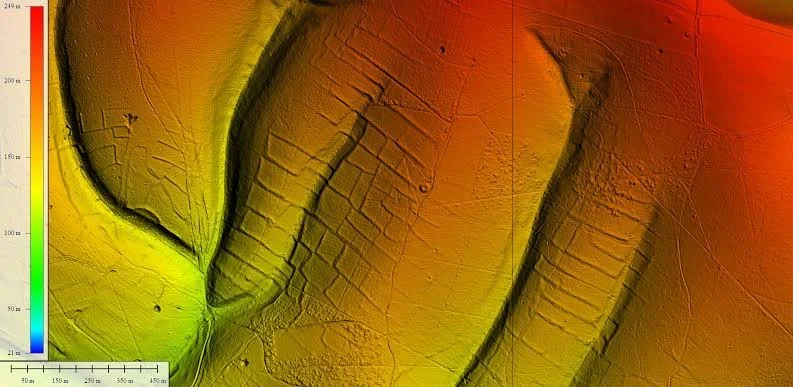
Some Drakensberg paintings have been interpreted as depictions of ritual specialists engaged in healing ceremonies or spiritual experiences. These interpretations have led to the frequent use of the term “shaman scenes” when discussing particular compositions.

The term requires care. It is an analytical label used by researchers and does not necessarily reflect the terminology or categories used by the original artists. Moreover, not every unusual human figure in San rock art represents a shaman or a ritual specialist. The interpretation of a scene depends on its visual features, archaeological context, and relevant cultural evidence.

The Kamberg Landscape

Kamberg lies among the grasslands, sandstone cliffs, and sheltered valleys of the Drakensberg. The landscape contains rock shelters that provided protection and places for human activity.

The location of a shelter may have influenced its use. Access to water, views across the surrounding landscape, and the availability of nearby resources could all have been important. A painted shelter might also have carried cultural significance beyond its practical function.

Rock art survives unevenly because of differences in the rock surface and local conditions. Sheltered paintings may be protected from direct rainfall, while dampness, mineral deposits, and changes in temperature can cause deterioration.

What Are Shamanic Interpretations?

In anthropology, the term shamanism is often used to describe traditions in which ritual specialists enter altered states of consciousness or interact with spiritual forces as part of healing or other ceremonies. The term has been applied to several Indigenous traditions around the world, but it should not be used as though all societies share the same beliefs.

Research on San rock art has connected some Drakensberg images with accounts of healing dances and spiritual potency. In certain documented San traditions, ritual specialists were believed to engage with forces associated with animals, illness, and the spiritual world.

Some paintings contain figures in unusual postures, with bent bodies, outstretched arms, or features that appear partly human and partly animal. These characteristics have been interpreted by some researchers as possible expressions of ritual transformation or altered states of consciousness.

Such interpretations can be informative, but they remain interpretations. An unusual figure could have more than one possible meaning, and not every image can be connected securely to a known ritual practice.

Reading the Images Carefully

Rock-art interpretation begins with careful observation. Researchers record the shape of figures, the direction in which they face, the relationship between figures, and the presence of animals or other motifs.

The placement of a painting within a shelter can also matter. Images may be grouped into compositions, overlap earlier paintings, or occupy surfaces that are difficult to see from certain positions.

Researchers then compare the artwork with other images and relevant ethnographic information. The comparison must account for differences between communities and historical periods. A belief recorded in one San community cannot automatically be assumed to explain every painting across the Drakensberg.

A responsible interpretation distinguishes direct observations from explanations that depend on cultural comparison.

Ritual, Healing, and the Eland

Eland appear frequently in Drakensberg rock art and are associated with significant symbolic meanings in several documented San traditions. Researchers have investigated whether eland imagery in particular compositions relates to ritual potency, healing, and the spiritual experiences of ritual specialists.

Some paintings appear to combine human figures and animal characteristics. These have sometimes been interpreted as visual representations of transformation or relationships between different forms of existence.

However, the presence of an eland alongside a human figure does not by itself establish that a healing ceremony is being depicted. The interpretation becomes more persuasive only when multiple features of the composition and relevant cultural evidence support it.

The Importance of Ethnographic Evidence

Ethnographic research has played an important role in understanding San rock art. Accounts from San people can explain the meanings of animals, ceremonies, and spiritual concepts that might otherwise be difficult for archaeologists to interpret.

Nevertheless, ethnographic evidence has limitations. Communities change over time, and the beliefs recorded by researchers may not represent every group or historical period. Some accounts were also collected under unequal social conditions, requiring scholars to consider the circumstances in which the information was recorded.

Indigenous knowledge should be treated as an important source of understanding, not as a simple code that reveals the meaning of every ancient image.

Conservation and Respect

Kamberg’s paintings are fragile cultural records. Touching the rock surface, applying substances, tracing outlines, or creating new marks can cause irreversible damage.

Conservation involves monitoring the condition of the paintings, managing access, and explaining the importance of the site to visitors. Interpretive material should also acknowledge the living heritage of San communities and avoid portraying them as people who exist only in the distant past.

Conclusion

Kamberg rock art provides a valuable opportunity to investigate the relationship between artistic expression and spiritual traditions in southern Africa. Some paintings have been interpreted as scenes involving ritual specialists, healing, and spiritual transformation, but these meanings must be supported by careful analysis.

The term “shaman scenes” is best understood as an interpretive category rather than a definitive description of every unusual figure. Through responsible research, conservation, and engagement with Indigenous perspectives, Kamberg can continue to contribute to a deeper understanding of San artistic and cultural heritage.

Main Caves: South Africa's Battle Paintings

October 4, 2026

Introduction

Main Caves, in the Giant’s Castle area of the Drakensberg, is associated with an important concentration of San rock paintings. The site provides a setting for examining how Indigenous artists represented animals, people, and events within the mountain landscape.

The title “Battle Paintings” points to one category of imagery found in southern African rock art: scenes that appear to depict conflict between groups of people. Such images can be valuable records of historical encounters, but interpreting them requires caution. A scene that resembles a battle may depict a real event, a symbolic narrative, or an activity whose original meaning is no longer fully understood.

The distinction between older San rock art and later historical paintings is particularly important. The Drakensberg contains works produced during different periods, and not every image belongs to the same artistic tradition or historical context.

Main Caves and the Drakensberg Landscape

The Giant’s Castle area lies within the central Drakensberg, where sandstone cliffs create shelters that protect painted surfaces from some forms of weathering. The surrounding grasslands and valleys have supported wildlife and human activity for long periods.

A rock shelter could serve several purposes, including temporary refuge, a stopping place during travel, or a location of cultural significance. Its archaeological history must be reconstructed from the evidence rather than assumed from its physical form.

The survival of rock paintings depends on the stability of the rock surface and the environmental conditions within the shelter. Water, mineral deposits, and biological growth can damage pigments, while human contact may accelerate deterioration.

Recognising a Battle Scene

A painting may be interpreted as a battle scene when it contains groups of human figures positioned in apparent opposition, sometimes with weapons, shields, or other objects. Differences in posture and the direction of movement may suggest confrontation.

However, visual resemblance is not sufficient to establish a historical battle. The figures could represent hunting, a ceremonial performance, a symbolic narrative, or another activity. Researchers need to examine the entire composition and compare it with other evidence.

When a painting appears to depict a historically recognisable event, scholars may investigate whether the equipment, clothing, or other details correspond to a known period. Such comparisons can sometimes provide chronological clues, but they must be based on identifiable features rather than general resemblance.

San Rock Art and Historical Conflict

San rock art traditions include many depictions of animals and human figures, with some compositions interpreted in relation to hunting or ritual practice. The Drakensberg also contains historical paintings that may relate to encounters between different groups during later periods.

The region’s history includes changing relationships among hunter-gatherers, herding communities, agricultural societies, and colonial settlers. These relationships involved exchange, movement, competition, and conflict, although the circumstances varied from place to place.

A painting that appears to show armed confrontation may contribute to the study of this history if its date and context can be established. It should not, however, be used to construct a detailed narrative of a battle without corroborating evidence.

Dating Historical Paintings

The age of a painting can sometimes be investigated through its subject matter and the material culture depicted. The appearance of particular weapons or other historically distinctive objects may provide a broad chronological clue.

Researchers may also study pigment composition, overlapping images, and the relationship between paintings and archaeological deposits. Yet these methods rarely provide an exact date for every figure.

A shelter can contain several generations of paintings, and later artists may have added images beside or over earlier ones. Consequently, a group of figures that appears to form a single scene may not necessarily have been painted at the same time.

What Battle Imagery Can Reveal

Where a conflict interpretation is well supported, battle imagery can contribute to understanding how people represented violence, group identity, and social relationships. The positioning of figures and the inclusion of particular objects may indicate what the artist considered important about the event.

Even then, a painting is not a neutral photograph. Artists select details, simplify forms, and communicate through the conventions of their own traditions. A scene may emphasise certain participants or actions while leaving other aspects unrepresented.

Researchers should therefore compare visual evidence with historical records, oral traditions, archaeological findings, and the broader chronology of the region.

Conservation and Interpretation

Battle scenes and other rock paintings are vulnerable to vandalism and environmental damage. Conservation efforts should prioritise the preservation of the original surface and the accurate recording of the images.

Public interpretation must also avoid presenting uncertain readings as established facts. Descriptions should explain why researchers consider a scene to be a battle, what evidence supports the interpretation, and what remains uncertain.

Conclusion

Main Caves forms part of the Drakensberg’s important rock-art landscape. Images interpreted as battle scenes can offer insight into historical conflict and the ways people represented encounters between groups, but each interpretation requires careful examination.

The term “battle paintings” should not obscure the diversity of the site’s artistic record or the possibility that some images have different meanings. Through detailed documentation and comparison with independent evidence, researchers can explore the historical significance of these paintings while respecting their cultural and archaeological value.

Didima: South Africa's Mythological Figures

October 4, 2026

Introduction

Didima, in the KwaZulu-Natal Drakensberg, is associated with the region’s rich heritage of San rock paintings. The surrounding mountains contain numerous sandstone shelters in which Indigenous artists created images of animals, human figures, and unusual combinations of human and animal characteristics.

Some of these images have been interpreted as mythological or spiritual figures. They are particularly interesting because they challenge the idea that rock art simply records everyday activities. A painting may communicate ideas about animals, spiritual forces, healing, transformation, or relationships between people and the natural world.

However, the term “mythological figures” requires careful interpretation. The original meanings of many images are not known with certainty, and a figure that appears supernatural to a modern viewer may have had a different significance within the artist’s cultural tradition.

The Didima Landscape

The Didima area lies within the dramatic mountain environment of the Drakensberg. Sandstone cliffs, valleys, grasslands, and streams created a landscape that supported wildlife and offered shelter to human communities.

Rock shelters could be used for temporary refuge, rest, or other activities. Some may also have held particular cultural significance. The relationship between a shelter and its surrounding landscape can help researchers understand why people repeatedly visited particular locations.

The rock surfaces themselves influenced the preservation and appearance of the paintings. Pigments applied to sheltered walls could survive for centuries or longer, although moisture, mineral deposits, and natural weathering gradually alter their appearance.

Human and Animal Figures

San rock art in the Drakensberg includes many images of eland and other animals, alongside human figures in a variety of postures. Some compositions contain figures whose bodies appear partly human and partly animal, or whose movements differ from ordinary activities.

These unusual characteristics have encouraged interpretations involving spiritual transformation and ritual experience. In some documented San traditions, animals held spiritual significance beyond their practical value as food. Certain ceremonies involved beliefs about healing, potency, and interactions between human and spiritual worlds.

Such cultural information helps researchers interpret the art, but it does not provide a definitive explanation for every figure. Different communities could attach different meanings to similar images, and traditions changed over time.

What Does Mythological Mean?

In everyday language, mythological often refers to supernatural beings or stories involving gods and extraordinary events. In the study of Indigenous art, however, the term must be used with care.

A figure that appears unusual may represent a spiritual being, a ritual specialist, a symbolic transformation, or an artistic convention. It may also be difficult to identify because parts of the painting have faded or disappeared.

Researchers therefore begin by describing the visible evidence. They examine body shape, posture, associated animals, the arrangement of figures, and the location of the painting within the shelter. They then compare these observations with other rock art and relevant cultural knowledge.

This approach reduces the risk of imposing modern assumptions on an image whose original meaning may have been very different.

Rock Art and Spiritual Experience

Some scholars interpret particular Drakensberg paintings in relation to healing ceremonies and altered states of consciousness. In certain San traditions documented by ethnographers, ritual specialists participated in ceremonies involving dancing, healing, and spiritual potency.

Researchers have suggested that some unusual figures and compositions may represent experiences associated with these practices. Animal-human combinations, for example, have been examined as possible expressions of transformation or relationships between different forms of existence.

Nevertheless, these interpretations remain dependent on context. Not every animal-human figure depicts a ritual specialist, and not every unusual posture indicates an altered state. The strongest interpretations are those supported by several features of the artwork and by relevant cultural evidence.

Dating and Preserving the Paintings

The age of individual paintings at Didima cannot be established solely from their appearance. Different images may have been produced during different periods, and some shelters contain overlapping paintings.

Researchers may use pigment analysis, archaeological context, stylistic comparison, and other suitable scientific methods to develop chronological estimates. Each method has limitations, so conclusions should distinguish between established dates and broader estimates.

Conservation is equally important. Rock art can be damaged by touching, graffiti, uncontrolled access, and environmental changes. Photography and digital documentation help preserve a record of the paintings, but the original surface must also be protected.

Conclusion

Didima’s rock-art heritage provides a valuable opportunity to study how San artists represented animals, human figures, and possible spiritual concepts. Images interpreted as mythological figures demonstrate the richness of southern Africa’s artistic traditions, but their meanings cannot always be reconstructed with certainty.

Careful observation, archaeological research, and respect for Indigenous perspectives are essential to understanding these paintings. By preserving the artworks and explaining the limits of interpretation, researchers can help ensure that Didima remains an important part of South Africa’s cultural heritage.

Injisuthi: South Africa's Procession Friezes

October 4, 2026

Introduction

Injisuthi, located in the central Drakensberg of KwaZulu-Natal, forms part of a landscape known for its San rock paintings. The region’s shelters contain images of animals, human figures, and complex arrangements that preserve evidence of artistic practice and Indigenous cultural traditions.

A frieze is a series of figures or designs arranged along a continuous surface. In rock art, a procession-like frieze may appear to show several people or animals moving in the same direction or arranged in a repeated sequence.

The title “Procession Friezes” provides a useful starting point for examining how figures are organised in rock paintings. However, an arrangement that resembles a procession does not necessarily depict a formal ceremony. The meaning of a composition must be established through its visual details and archaeological context.

The Injisuthi Environment

Injisuthi lies among the Drakensberg’s high cliffs, valleys, and grasslands. Sandstone shelters provided protected surfaces on which artists could apply pigments, and the wider landscape offered resources that supported human activity.

The relationship between a shelter and its surroundings may have influenced its use. A location near water or a route through the mountains could have practical importance, while a particular rock surface might have held cultural significance.

Rock paintings are affected by the environment in which they survive. Moisture, changes in temperature, mineral deposits, and biological growth can alter pigment and make some figures difficult to distinguish.

Understanding a Procession Frieze

A procession-like composition may consist of a series of human figures, animals, or both. The figures might face in a common direction, repeat similar postures, or appear to move across the rock surface.

The arrangement can create a sense of movement even when the images are static. Artists can suggest motion by varying the position of limbs, changing the direction of bodies, or placing figures in a sequence.

Nevertheless, the visual impression of a procession does not establish what the figures were doing. The composition could represent movement between locations, a hunting activity, a gathering, a dance, or a symbolic narrative. It could also contain figures painted at different times.

Researchers examine differences in pigment, style, overlapping lines, and the condition of the rock to determine whether the figures belong to a single composition.

Social and Ritual Interpretations

Human figures arranged in groups are often discussed in relation to collective activities. These may include hunting, dancing, ceremonies, or other forms of social interaction.

Some San rock paintings have been interpreted through ethnographic evidence concerning healing ceremonies and ritual practices. Such research provides important context for understanding certain images, particularly when the composition contains unusual postures or combinations of human and animal forms.

However, not every group of figures should be described as a ritual procession. Researchers must distinguish what is visible in the painting from the explanation proposed for it.

A careful interpretation considers the entire composition, comparable works from other sites, and the limitations of the available evidence.

Artistic Technique and Composition

Creating a long sequence of figures requires attention to spacing, proportion, and the relationship between images. Artists worked on irregular rock surfaces, adapting the composition to the shape of the shelter wall.

Differences in figure size may reflect perspective, artistic convention, or the relative importance of particular figures. They do not necessarily indicate the actual physical size of the people represented.

Pigment analysis and detailed recording can help identify the order in which images were produced. When one figure overlaps another, the overlapping relationship may show which image was painted later, although weathering and damage can complicate the analysis.

Conservation

Procession-like compositions can be especially vulnerable when figures extend across a broad section of a shelter wall. Damage to one area may obscure the relationship between individual figures and make the overall composition more difficult to interpret.

Conservation measures include documenting the entire painted surface, monitoring environmental changes, controlling visitor access, and preventing vandalism. Digital photography can help researchers compare the condition of a painting over time.

Conclusion

Injisuthi’s rock-art landscape provides an opportunity to investigate how artists arranged figures to create movement and visual relationships. Procession-like friezes can raise questions about social life, ritual, and artistic composition, but their meanings must be established through careful analysis.

The importance of these paintings lies in their ability to preserve visual traditions that are not fully represented in written historical records. Responsible interpretation and conservation can help protect this heritage while acknowledging the uncertainty that remains about the original purpose of particular scenes.

Sehonghong Shelter: Lesotho's 4,000-Year Rock Art

October 4, 2026

Introduction

Sehonghong Shelter is an important archaeological locality in Lesotho, known for its contribution to research on prehistoric settlement, stone-tool technology, and the history of human occupation in the region. It is part of a wider southern African archaeological landscape in which caves and shelters preserve evidence of people adapting to mountain and highland environments.

The title refers to rock art approximately four thousand years old. That age should be treated as a claim requiring site-specific confirmation, rather than a date that can automatically be assigned to every painting or archaeological deposit at Sehonghong. A shelter may have been visited over a long period, and its archaeological deposits may contain material from different episodes of occupation.

The site’s broader importance lies in its archaeological record and its position within Lesotho’s highland environment. Rock art, where documented, must be considered alongside the evidence for settlement, subsistence, and technological change.

The Highland Environment

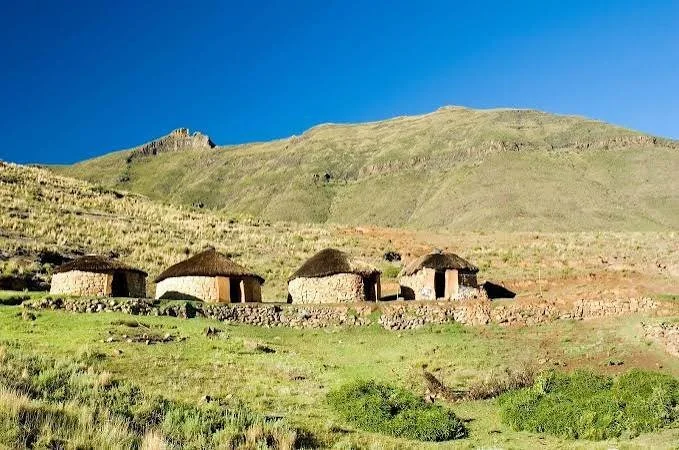
Lesotho’s landscape is dominated by highlands, steep valleys, river systems, and mountain slopes. These environments offered access to water, plant resources, and animals, while also presenting challenges associated with cold temperatures, changing weather, and difficult travel routes.

Shelters could provide protection from wind and rain. Their locations may have made them useful during movement through the highlands or during particular seasonal activities.

The surrounding landscape has changed over thousands of years. Climate fluctuations influenced vegetation and animal distributions, while erosion and other geological processes shaped the terrain. Archaeologists use environmental evidence to reconstruct the conditions under which people lived.

Archaeological Importance

Sehonghong is known in southern African archaeology for its deposits and the evidence they provide about long-term human occupation. Archaeological sequences from shelters can contain stone artefacts, animal remains, charcoal, and other materials introduced through human activity or natural processes.

Stone tools reveal how people selected raw materials and shaped them into implements. Animal remains can provide information about hunting and the availability of food resources. Sediment layers help establish the sequence in which these materials accumulated.

A long archaeological sequence does not necessarily indicate continuous occupation. People may have visited the shelter repeatedly, with long intervals between visits. Researchers therefore examine the structure of the deposits and the dating evidence before reconstructing patterns of settlement.

Rock Art and Its Chronology

Rock art is an important source of evidence for Indigenous artistic traditions in southern Africa. Painted images may depict animals, human figures, and abstract or symbolic forms.

However, the age of a shelter is not the same as the age of its paintings. A location may have been used long before an image was created, and later visitors may have added new paintings beside older ones.

Dating rock art is challenging because pigments do not always contain material suitable for direct analysis. Researchers may rely on pigment studies, comparisons with other sites, and relationships with dated archaeological deposits. These methods may establish a broad range rather than an exact year.

For Sehonghong specifically, any claim that particular images date to four thousand years ago should be supported by a documented study that identifies the paintings and explains the dating method.

Art, Environment, and Cultural Memory

Rock art can reflect close observation of the natural world, but its meaning may extend beyond a simple record of animals or daily activities. Images can carry symbolic significance and may be associated with particular places in the landscape.

The highland setting is relevant because the environment shaped how people moved, found food, and interacted with other communities. Yet the location of a painting alone cannot reveal whether it was created for practical, social, or spiritual reasons.

Researchers should distinguish direct evidence from interpretations based on comparisons with other traditions. Indigenous knowledge may offer important perspectives, but similarities between images do not necessarily establish identical meanings.

Conservation in Lesotho

Rock shelters and their archaeological deposits are vulnerable to erosion, uncontrolled collecting, vandalism, and damage caused by visitors. Once a layer is disturbed, the relationships between artefacts and sediment may be lost.

Conservation involves recording sites, managing access, preserving collections, and working with heritage authorities and local communities. It is also important to communicate the significance of archaeological sites without overstating what is known about them.

Conclusion

Sehonghong Shelter is an important part of Lesotho’s archaeological heritage and contributes to understanding human occupation of southern Africa’s highlands. Its archaeological record offers opportunities to investigate technology, subsistence, and environmental adaptation.

The specific claim of four-thousand-year-old rock art should be verified through evidence that directly relates to the images in question. By distinguishing the age of the site from the age of individual artworks, researchers can produce a more reliable account of Lesotho’s past while protecting its cultural heritage.

Metolong Dam Sites: Lesotho's Iron Age Villages

October 4, 2026

Introduction

The Metolong Dam project in western Lesotho led to extensive archaeological investigations before the development of the reservoir and associated infrastructure. These investigations are significant because large construction projects can affect archaeological sites that might otherwise remain undocumented.

The archaeological work around Metolong revealed evidence of human activity from different periods, contributing to research on prehistoric settlement and the development of farming communities in Lesotho. The region’s record includes evidence relevant to the Later Stone Age and later periods, including the Iron Age.

The phrase “Iron Age Villages” refers to an important subject within this broader archaeological history: the development of communities that used iron technology, cultivated crops, and, in many cases, kept domestic animals. However, the presence of Iron Age material at a locality does not automatically mean that every site was a permanent village. Settlement patterns must be established from the archaeological evidence.

The Metolong Landscape

Metolong lies within the western highlands of Lesotho, where valleys and watercourses provided resources for human communities. The area’s position made it part of a wider landscape through which people could move between settlements, grazing areas, and agricultural land.

The construction of a dam can transform a landscape by creating a reservoir and altering river systems. Before construction, archaeological surveys and excavations are often undertaken to identify and document sites that may be affected.

This kind of work is commonly called development-led or rescue archaeology. It aims to record archaeological evidence before it is disturbed or submerged, although excavation cannot preserve every aspect of a site in its original condition.

Archaeological Surveys and Excavations

Archaeologists investigating an area such as Metolong begin by identifying locations likely to contain evidence of past human activity. Surface artefacts, geological features, historical information, and local knowledge can all help guide survey work.

Excavation then reveals the relationships between artefacts, structures, and sediment layers. Researchers record the position of stone tools, pottery, animal bones, hearths, and other materials.

These relationships are essential for determining whether a site represents a temporary camp, a repeated occupation location, or a more permanent settlement. A collection of artefacts found near one another does not automatically prove that they were used at the same time.

Understanding the Iron Age

The Iron Age in southern Africa is associated with the development and spread of communities that used iron technology and practised forms of farming and livestock keeping. Pottery, metal objects, domestic animal remains, and settlement features can provide evidence of these activities.

Iron technology made it possible to produce tools and other objects with properties different from those of stone. However, ironworking required specialised knowledge and access to suitable materials, fuel, and technical processes.

Iron Age communities were not identical. Their economies, settlement arrangements, and relationships with neighbouring groups varied according to local conditions and historical circumstances.

Researchers therefore avoid treating the Iron Age as a single uniform culture. The term is a broad chronological and technological category that covers many different communities.

What Makes a Village?

Archaeologists identify villages through combinations of evidence rather than a single artefact type. Possible indicators include the remains of houses, repeated domestic activity areas, storage features, hearths, pottery assemblages, and evidence of food production.

Settlement patterns can also be investigated through the spatial distribution of artefacts and structures. If domestic activities occurred repeatedly in the same area, the evidence may suggest sustained or recurrent occupation.

However, the distinction between a village and a temporary settlement is not always straightforward. Seasonal occupation can leave substantial deposits, while permanent settlements may preserve relatively little evidence if conditions are unfavourable.

For this reason, claims about Iron Age villages around Metolong should be tied to the specific excavated features and their chronology.

Agriculture, Livestock, and Exchange

Iron Age farming communities often combined crop cultivation with livestock keeping and other activities. Crops provided food, while domestic animals could supply meat, milk, hides, and other products.

The balance between farming, herding, hunting, and gathering varied by region. Communities could also exchange goods and knowledge with neighbouring groups, creating networks that connected settlements across the landscape.

Pottery styles, metal objects, and other artefacts can provide clues about these relationships. Yet an object made elsewhere does not necessarily prove that its owner travelled to that place. It may have reached the settlement through trade, exchange, inheritance, or several stages of movement.

Why the Metolong Project Matters

The Metolong archaeological investigations demonstrate the importance of documenting heritage before major development changes a landscape. Without survey and excavation, some sites could be lost beneath a reservoir or affected by construction without a scientific record.

The findings also contribute to a broader understanding of Lesotho’s history. Archaeology can show that the region was connected to wider patterns of technological development, farming, settlement, and exchange rather than existing in isolation.

Conclusion

The Metolong Dam archaeological sites provide valuable evidence for the long history of human occupation in western Lesotho. The Iron Age material is particularly relevant to the study of farming, livestock keeping, iron technology, and settlement patterns.

However, not every archaeological locality should automatically be described as an Iron Age village. That classification depends on evidence of settlement structures, domestic activities, and a secure chronology.

Through careful excavation and documentation, the Metolong project has helped preserve information about Lesotho’s past that might otherwise have been lost during major infrastructure development.

Liphofung Cave: Lesotho's San Paintings

October 4, 2026

Introduction

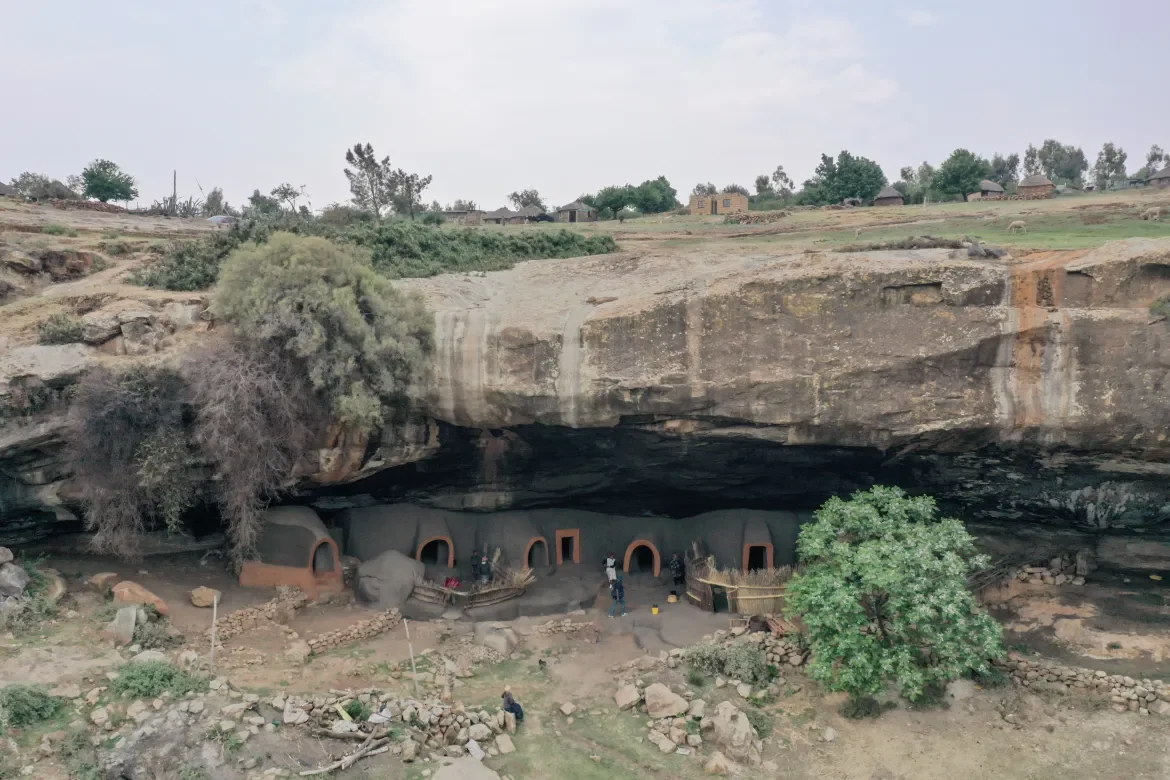
Liphofung Cave, located in northern Lesotho, is an important cultural and historical site. Its rock shelter is associated with San rock paintings and provides an opportunity to explore the artistic traditions of Indigenous hunter-gatherer communities in southern Africa.

The cave also holds significance within Lesotho’s broader heritage landscape. It demonstrates how natural shelters can preserve artistic evidence while also serving as places connected to the movement and activities of people across the highlands.

San paintings should not be viewed simply as decorative images on stone. They can provide evidence of artistic skill, environmental knowledge, and cultural traditions. Some have been interpreted in relation to spiritual beliefs and ritual activities, although the meaning of any individual painting must be considered carefully.

The Physical Setting

Liphofung is a sandstone shelter in a landscape of highlands, valleys, and mountain slopes. Such shelters offered protection from the weather and could provide convenient places to stop during movement through the region.

The shelter’s rock surfaces offered a durable medium for painting. Where the surface remained relatively dry and protected, pigments could survive for long periods. Nevertheless, weathering, moisture, and biological growth can cause gradual deterioration.

The cave’s location is also important for understanding its heritage value. Natural shelters often occupy positions within wider routes and resource landscapes, making them relevant to studies of mobility and settlement.

San Artistic Traditions

San rock art is among the most important bodies of Indigenous artistic evidence in southern Africa. Paintings may depict animals, human figures, and unusual combinations of forms that invite questions about their original meanings.

Artists used mineral pigments, including ochres, to create images on the rock. The choice of colour, the shape of a figure, and the arrangement of several images could all contribute to a composition.

Some paintings display detailed observation of animal anatomy and movement. Others use simplified or stylised forms. These differences reflect the diversity of artistic practice and should not be reduced to a single style.

The people who produced the paintings belonged to communities with their own knowledge, social relationships, and traditions. Although modern researchers can document the physical characteristics of an image, its full cultural meaning may not be recoverable.

Animals and Human Figures

Animals are prominent in many San rock paintings, and the eland is particularly significant in several documented traditions. Human figures may appear alone or in groups, sometimes alongside animals or in unusual postures.

These images have been interpreted in different ways. Some may relate to hunting or the observation of wildlife, while others may have symbolic or ritual significance.

Ethnographic research has helped scholars understand the importance of healing practices and spiritual potency in some San traditions. However, those interpretations should not be applied automatically to every painting at Liphofung. A particular figure’s meaning depends on its context and the evidence available.

Dating and Documentation

The age of the paintings at Liphofung must be distinguished from the age of the cave itself. A shelter may have been used repeatedly over thousands of years, and the paintings may represent several episodes of artistic activity.

Researchers may examine pigment composition, the condition of the surface, overlapping images, and relationships with archaeological deposits. Depending on the evidence available, these methods may provide broad chronological estimates rather than exact dates.

Careful documentation is essential. Photographs, measured drawings, and digital records can preserve information about the paintings’ condition and allow future researchers to compare changes over time.

Cultural Heritage and Conservation

Liphofung’s paintings are fragile and irreplaceable. Touching the painted surface, adding graffiti, or attempting to clean the rock can damage the artwork.

Conservation involves protecting the site, managing visitor access, recording changes, and educating the public about the importance of the paintings. Local communities and heritage authorities have important roles in decisions about interpretation and preservation.

The San should also be recognised as living Indigenous peoples with diverse contemporary communities. Ancient rock art forms part of a wider cultural history, not merely a vanished past.

Conclusion

Liphofung Cave is an important part of Lesotho’s cultural heritage and contributes to the study of San artistic traditions in southern Africa. Its paintings preserve evidence of artistic expression and provide opportunities to investigate the relationships between people, animals, and the landscape.

The interpretation of individual images requires caution, particularly when assigning dates or spiritual meanings. By combining archaeological research with respectful heritage management, Liphofung can continue to provide a valuable connection to the region’s long history.

Quthing District: Lesotho's Rock Engravings

October 4, 2026

Introduction

Quthing District, in southern Lesotho, forms part of a highland landscape rich in archaeological and historical significance. The district’s valleys, rocky slopes, and natural shelters have supported human activity over long periods, creating opportunities for the preservation of artefacts and other traces of the past.

The title “Rock Engravings” refers to images made by cutting, pecking, or abrading a rock surface. Rock engravings are distinct from paintings, which use pigments applied to stone. Both forms of rock art occur across southern Africa, but their distribution, age, and cultural associations vary.

Before attributing a particular set of engravings to a specific location in Quthing, the relevant site records and archaeological descriptions should be verified. The district’s broader archaeological importance provides context, but individual claims about motifs, dates, and meanings require site-specific evidence.

The Landscape of Quthing

Quthing lies within Lesotho’s southern highlands and foothills. The landscape contains river valleys, exposed rock surfaces, and sheltered locations that could have been used by people travelling through the region.

The natural environment influenced both human activity and the preservation of archaeological material. Shelters provided protection, while exposed rock surfaces could serve as places for engraving. Erosion, weathering, and changes in moisture affected how well such marks survived.

Rock engravings may remain visible for long periods, but their appearance changes as the surrounding surface weathers. Some marks become faint, while others are difficult to distinguish from natural cracks or accidental damage.

How Engravings Are Created

Engravings are made by physically altering the rock. Artists may use repeated pecking to create a series of small depressions, incise lines into the surface, or abrade areas to form shapes.

The technique affects the final appearance. Pecked images may have rough interiors, while incised lines can appear narrow and continuous. The type of stone also matters because some surfaces are easier to work than others.

Researchers examine the form and depth of the marks, the sequence of overlapping lines, and the relationship between the image and the surrounding rock. These details can help establish whether the marks were deliberately made.

Modern documentation may include scaled photographs, measured drawings, and three-dimensional surface recording. Such records are useful for comparing images and monitoring their condition.

Possible Subjects and Meanings

Southern African engravings can depict animals, tracks, geometric patterns, and abstract forms. Some images are recognisable, while others are difficult to interpret.

An animal engraving might reflect observation of wildlife, but it could also carry symbolic significance. Geometric forms may have had meanings that are no longer understood, particularly when there is little contextual information.

It would be inappropriate to assign a single purpose to all engravings in Quthing. Different images may have been created by different communities, at different times, and for different reasons.

The most reliable interpretations begin with the visible features of the image and then consider relevant archaeological and cultural evidence.

Dating Rock Engravings

Dating engravings is difficult because the marks themselves often lack material suitable for direct radiocarbon dating. Researchers may investigate mineral deposits that formed over or beneath an engraving, examine its relationship with archaeological layers, or compare it with other documented images.

Each method has limitations. A mineral crust may constrain the age of an engraving without establishing the exact date it was made. Stylistic similarities may suggest a broad relationship between images but cannot independently prove that they are contemporary.

The age of a shelter should also not be confused with the age of its engravings. A site may have been used long before the marks were made, and later visitors may have added new designs.

Archaeological Context and Indigenous Heritage

Rock art must be interpreted within the wider history of the communities who used the landscape. Archaeological evidence can help researchers investigate settlement, mobility, technology, and relationships between groups.

However, cultural attribution should not be based solely on the appearance of an image. Researchers need to consider the site’s documented history, the archaeological material associated with it, and relevant Indigenous knowledge where available.

The meaning of a design may not be fully recoverable, and acknowledging that uncertainty is part of responsible archaeological interpretation.

Conservation

Rock engravings are vulnerable to vandalism, graffiti, uncontrolled collecting, and damage caused by people walking or climbing over the rock surface. Attempts to trace or deepen the marks can permanently alter the original evidence.

Conservation involves documenting the site, protecting vulnerable surfaces, managing access, and informing visitors about the importance of the artwork. Digital records can help preserve detailed information, but the original surface remains irreplaceable.

Conclusion

Quthing District forms part of Lesotho’s wider archaeological landscape, where natural shelters and rock surfaces preserve evidence of human activity. Rock engravings, where securely documented, can provide information about artistic practice and the ways people engaged with their environment.

The interpretation of specific engravings requires verified site information, careful dating, and respect for the cultural context. By combining documentation, archaeological research, and conservation, researchers can protect this heritage while developing a more complete understanding of Lesotho’s past.

Moyeni Rock Art: Lesotho's Hunter Scenes

October 4, 2026

Introduction

Moyeni is associated with the historical and cultural landscape of southern Lesotho. The title “Hunter Scenes” points to an important subject in the study of southern African rock art: images that appear to depict people, animals, and activities related to hunting.

Hunting scenes can provide insight into how artists represented animals and human movement. However, the interpretation of a particular image requires care. A group of human figures near animals may depict a hunt, a symbolic narrative, or another activity. The visual resemblance alone cannot establish its original purpose.

For Moyeni specifically, claims about particular paintings should be connected to documented archaeological evidence. The wider regional history of rock art provides context, but it cannot substitute for a verified record of the individual site.

The Southern Lesotho Landscape

Southern Lesotho contains mountain slopes, river valleys, grasslands, and rocky shelters. These environments supported a range of human activities and provided access to wild animals, plants, and water.

A shelter could offer protection and serve as a stopping point during movement through the landscape. Its location near a valley or route might have made it useful for activities associated with hunting or resource gathering.

The environment also influenced the preservation of rock art. Sheltered rock surfaces can protect pigment from direct rainfall, although moisture and mineral growth may still damage paintings over time.

Hunting in the Archaeological Record

Hunting required detailed knowledge of animals and their environments. Hunters needed to understand where animals gathered, how they moved through the landscape, and how their behaviour changed according to season and weather.

Archaeological evidence for hunting can include animal bones, stone tools, projectile points, and traces of processing. Cut marks and other modifications on bones may help researchers determine whether animals were butchered by people.

Rock art provides a different kind of evidence. It records images selected and arranged by artists, potentially preserving aspects of how people understood animals and hunting. Yet the paintings do not necessarily document a particular hunt in the same way that a collection of butchered bones might document animal processing.

Identifying a Hunting Scene

A composition may be interpreted as a hunting scene if it contains figures carrying apparent weapons, animals positioned in relation to human figures, or body postures that suggest pursuit.

Even these features require careful assessment. Objects that resemble weapons may be difficult to identify, and human figures may represent activities other than hunting. Artists may also have used symbolic conventions that are not immediately obvious to modern viewers.

Researchers compare the composition with other paintings and examine the archaeological context. When possible, they also consider Indigenous knowledge and relevant historical accounts.

The interpretation should explain which features support the hunting hypothesis and which aspects remain uncertain.

Hunting, Symbolism, and Spiritual Meaning

Hunting was a practical activity, but animals could also have cultural or spiritual significance. In some San traditions, particular animals held symbolic roles associated with healing, potency, or ritual practice.

Consequently, an image of an animal and a human figure may have meanings that extend beyond the act of hunting. A scene could combine observation of wildlife with cultural beliefs about the relationship between humans and animals.

This possibility does not mean that every hunting-like image is spiritual. The purpose of a painting must be evaluated from the full composition and available contextual evidence.

Dating the Artwork

The age of a hunting scene can be difficult to determine. Pigments may not be suitable for direct dating, and the same type of scene could be produced during different periods.

Researchers may study pigment composition, the relationship between images and archaeological layers, and similarities with paintings from other sites. Overlapping images can sometimes establish relative order, but they do not necessarily provide an absolute date.

Any specific claim about the age of the Moyeni paintings should therefore be supported by documented research.

Conservation and Cultural Respect

Rock paintings are vulnerable to natural deterioration and human damage. Touching the surface, applying chemicals, or adding new marks can destroy evidence.

Conservation involves recording the artwork, managing access, and working with heritage authorities and local communities. Interpretive material should acknowledge uncertainty and avoid presenting Indigenous traditions as though they were uniform across all places and periods.

Conclusion

Moyeni Rock Art provides a useful subject for exploring the relationship between hunting and artistic representation in Lesotho’s wider cultural landscape. Hunter scenes, when securely documented, can reveal how artists represented animals, movement, and human activity.

However, the meaning of a particular composition cannot be established from appearance alone. Archaeological context, careful dating, and relevant cultural knowledge are necessary to distinguish a likely hunting scene from other possible interpretations.

Maseru District Shelters: Lesotho's Pastoral Art

October 4, 2026

Introduction

Maseru District, which includes Lesotho’s capital and surrounding rural areas, occupies a landscape of valleys, foothills, and highland routes. The region has a long history of human activity, including hunting and gathering, farming, livestock keeping, and settlement.

The title “Pastoral Art” suggests rock art connected with herding communities or imagery associated with domestic animals and pastoral life. This is an interesting subject because the introduction and development of livestock keeping changed the ways communities used land and organised their economies.

However, the term should not be treated as confirmation that a specific set of paintings in Maseru District depicts pastoralism. Each shelter and artwork requires site-specific documentation before particular subjects, dates, or cultural associations can be assigned.

The Landscape and Its Shelters

The Maseru region contains varied terrain, including river valleys, rocky slopes, and areas suitable for cultivation and grazing. Natural shelters could provide temporary protection for people moving through the landscape.

For pastoral communities, access to water and grazing land was especially important. The location of a shelter near a route or resource area might have made it useful during seasonal movement, although the presence of a shelter alone does not prove that it was used by herders.

Archaeological research examines the location of sites alongside the evidence found within them. Stone tools, pottery, animal remains, and other materials may help establish how a place was used and during which period.

What Is Pastoral Art?

The term pastoral art generally refers to artistic representations of herding, livestock, and rural life. In the context of archaeological rock art, it may describe images that appear to depict domestic animals, people managing herds, or other activities associated with pastoral communities.

Such imagery can be valuable because it may preserve evidence of changes in subsistence and social life. Yet identifying a domestic animal in a painting can be difficult, particularly when the image is faded or stylised.

A convincing interpretation requires attention to anatomical details, the arrangement of figures, and the archaeological context. Researchers may compare the painting with documented representations from other sites, but similarities do not automatically prove that the images were created by the same community.

Pastoralism in Southern Africa

Pastoralism involves the management of domestic animals such as sheep or cattle. Herding can provide meat, milk, hides, and other resources, but it also requires knowledge of grazing, water availability, animal health, and seasonal movement.

In southern Africa, pastoralism developed within a wider history of interaction among communities with different economic practices. Hunting and gathering continued alongside herding in some places, and people could exchange goods and knowledge across community boundaries.

This history should not be represented as a simple replacement of hunter-gatherers by pastoralists. Communities adopted and combined different practices according to local conditions, social relationships, and historical circumstances.

Can Rock Art Prove Pastoral Activity?

A painting that appears to show livestock may provide evidence relevant to pastoralism, but its interpretation depends on the identification of the animals and the age of the image.

The presence of domestic animals in a painting could indicate familiarity with herding, but it does not by itself establish whether the artist was a herder, whether the shelter was used as a livestock camp, or how the animals were managed.

Archaeological evidence from animal bones, pottery, settlement features, and other materials may help provide a more secure context. The chronology is especially important because an image may have been created long after the first introduction of livestock into the region.

Dating and Cultural Attribution

Dating rock art is difficult because pigments do not always contain material suitable for direct analysis. Researchers may rely on indirect evidence, including archaeological context, comparisons with other sites, and analysis of suitable mineral deposits.

Cultural attribution also requires caution. A painting may reflect contact between communities rather than the identity of the artist. People could adopt new artistic subjects or techniques through exchange and interaction.

For the Maseru District shelters, any claim about pastoral art should identify the documented shelter and explain the evidence that supports the interpretation.

Heritage Protection

Rock art can be damaged by weathering, vandalism, and uncontrolled visitation. Conservation includes documenting the paintings, protecting vulnerable surfaces, and providing accurate information to visitors.

Local communities are important partners in heritage protection. Their knowledge of the landscape and its history can contribute to the interpretation and preservation of archaeological sites.

Conclusion

The idea of pastoral art in Maseru District offers a way to explore the relationship between rock imagery and the history of livestock keeping in Lesotho. Pastoralism shaped resource use, mobility, and social relationships across southern Africa, making it an important subject for archaeological research.

Nevertheless, specific claims about pastoral paintings must be supported by verified site records. By combining rock-art analysis with evidence from settlements, animal remains, and other archaeological materials, researchers can investigate the history of herding while avoiding unsupported interpretations.

Thaba Bosiu: Lesotho's Moshoeshoe Fortress

October 4, 2026

Introduction

Thaba Bosiu is one of Lesotho’s most important historical and cultural landmarks. Located near Maseru, this flat-topped sandstone plateau is closely associated with Moshoeshoe I, the founder of the Basotho nation, and the formation of the Basotho kingdom during the nineteenth century.

Unlike the prehistoric rock-art shelters discussed in the preceding articles, Thaba Bosiu is primarily significant as a historical stronghold and a place of national memory. Its importance comes from the role it played in political leadership, defence, community organisation, and the survival of the Basotho during a period of regional upheaval.

The name Thaba Bosiu is commonly translated as “Mountain at Night.” Historical tradition connects the name with the mountain’s defensive reputation and the difficulty opponents faced when attempting to attack it. The site remains an important symbol of Lesotho’s history and national identity.

Moshoeshoe I and the Formation of the Basotho Kingdom

Moshoeshoe I emerged as a major leader during a period of profound change in southern Africa. During the late eighteenth and early nineteenth centuries, political competition, population movement, conflict, and economic disruption affected many communities across the region.

Moshoeshoe built relationships with different groups and brought communities together under his leadership. His approach combined diplomacy, alliance-building, military organisation, and the establishment of a defensible centre from which he could protect his people.

Thaba Bosiu became closely associated with this process. Its elevated position and relatively accessible plateau made it a strategic location where communities could seek refuge and organise their defence.

The development of the Basotho kingdom was not an isolated event. It occurred within a wider regional history involving neighbouring African polities, expanding settler communities, and changing patterns of trade and warfare.

The Geography of a Fortress

Thaba Bosiu’s physical form contributed significantly to its defensive value. The plateau rises above the surrounding landscape, and its steep sides restrict the number of practical approaches.

A strong defensive position could make it difficult for an attacking force to approach in large numbers. The elevated terrain also provided visibility over surrounding routes and settlements.

The mountain’s usefulness depended on more than geography, however. Defence required organised leadership, knowledge of the terrain, access to food and water, and the cooperation of the people living there.

Thaba Bosiu therefore represents the combination of a natural stronghold and a human system of political and military organisation.

Conflict and Regional Politics

During Moshoeshoe I’s leadership, the Basotho faced multiple challenges, including conflict with neighbouring groups and expanding colonial forces. The history of Thaba Bosiu is closely connected to the efforts made to protect the emerging kingdom and maintain its political independence.

The mountain provided refuge during periods of conflict, but its importance should not be reduced to military defence alone. It was also a centre of leadership and a place where political relationships were negotiated.

Moshoeshoe’s diplomatic strategy was an important part of his leadership. He sought alliances and negotiated with neighbouring powers when doing so could protect his people. These efforts unfolded within a changing political environment in which military strength, land, trade, and recognition were closely connected.

Thaba Bosiu and the Basotho Identity

Thaba Bosiu has become a powerful symbol of Basotho history and identity. Its association with Moshoeshoe I links the landscape to the formation of the nation and to the experiences of communities that sought security during a period of upheaval.

Historical sites often serve as places where national memory is maintained. Stories about leaders, battles, and collective survival are transmitted through education, oral traditions, commemorations, and public ceremonies.

These traditions are important, but historical research also examines how stories developed and how different sources describe the same events. Oral traditions, written records, archaeology, and the physical landscape can provide complementary perspectives.

A balanced history recognises the significance of national memory while continuing to investigate the details of the past.

The Historical Landscape

Thaba Bosiu contains places associated with the history of Moshoeshoe and the Basotho kingdom. The mountain and its surrounding landscape can help researchers investigate how people used natural features for defence and settlement.

Archaeological evidence may provide information about occupation, material culture, and the use of space, while historical documents and oral accounts contribute information about political events and community relationships.

The interpretation of the site should distinguish between what is supported by historical documentation and what belongs to later tradition. This distinction does not diminish the cultural significance of the mountain; it helps explain how historical knowledge is developed.

Preservation and Cultural Heritage

Thaba Bosiu is a place of national significance, and its preservation is important for historical research, education, and cultural continuity.

Heritage management involves protecting archaeological features, maintaining visitor access responsibly, and ensuring that development does not damage important parts of the landscape. Public interpretation should communicate the site’s history accurately and recognise its significance to Basotho communities.

Visitors can learn about the mountain not only as a military stronghold but also as a place associated with leadership, diplomacy, resilience, and the formation of a kingdom.

Conclusion

Thaba Bosiu stands as one of Lesotho’s most important historical landmarks. Its association with Moshoeshoe I and the formation of the Basotho kingdom makes it central to understanding the country’s nineteenth-century history.

The mountain’s natural defences helped provide a secure base, but its historical importance also depended on leadership, diplomacy, and the organisation of communities. Today, Thaba Bosiu remains a place where geography, political history, and national memory come together.

Preserving the site and interpreting it responsibly ensures that its significance continues to be understood by future generations, both as a historical stronghold and as an enduring symbol of Basotho heritage.

Ntsuanatsatsi: Lesotho's Initiation Lodges

October 4, 2026

Introduction

Lesotho's cultural landscape contains a rich history of settlement, community organization, and traditional education. Among the subjects that invite closer investigation are the places associated with initiation, a significant institution in many Southern African societies. The title Ntsuanatsatsi: Lesotho's Initiation Lodges raises important questions about how traditional communities prepared young people for adulthood, transmitted cultural knowledge, and maintained social responsibilities across generations.

However, it is important to distinguish between documented initiation traditions and the archaeological identification of particular buildings as initiation lodges. Without clear site-specific evidence, Ntsuanatsatsi should not automatically be described as a confirmed archaeological complex of initiation structures. Instead, it can be explored within the broader history of Basotho settlement, customary education, and the cultural significance of places used for instruction and community ceremonies.

Initiation as a Cultural Institution

In many Southern African societies, initiation has historically served as an important transition between childhood and adulthood. Rather than representing a single ceremony, initiation can involve a period of instruction, discipline, social preparation, and the transmission of knowledge. Participants may learn about family obligations, community expectations, respect for elders, appropriate conduct, and their future responsibilities.

Such traditions have often connected individual development with the well-being of the wider community. Becoming an adult was not simply a matter of reaching a particular age. It also involved learning how to contribute to family life, participate in community affairs, and uphold shared values.

Among Basotho communities, customary institutions developed within a broader social system shaped by kinship, chiefly authority, pastoralism, agriculture, and the historical formation of the Basotho nation. These institutions changed over time in response to Christianity, colonial administration, formal schooling, urbanization, and other social developments.

The Importance of Place

A location associated with initiation may possess cultural significance beyond its physical structures. Seclusion, distance from everyday activities, privacy, and a connection to the surrounding landscape can all influence the selection of ceremonial or instructional places.

If archaeological evidence were to establish the existence of initiation facilities at Ntsuanatsatsi, researchers would need to examine the site's layout, construction methods, associated artefacts, and relationship to nearby settlements. Archaeologists might investigate whether the buildings were domestic dwellings, communal structures, livestock enclosures, or spaces used for specialized activities.

The presence of a stone enclosure or isolated building would not, by itself, prove that initiation took place there. Stronger conclusions would require several forms of evidence, potentially including oral histories, historical documentation, architectural comparisons, and archaeological deposits consistent with the proposed function.

This distinction is particularly important because cultural activities do not always leave distinctive material remains. Teaching, storytelling, singing, and oral instruction may have occurred in temporary structures or ordinary buildings that later generations used for different purposes.

Oral Tradition and Community Knowledge

Oral history can help researchers understand how places acquired meaning. Community elders, cultural practitioners, and local historians may preserve accounts of historical gatherings, traditional practices, and the people associated with particular landscapes.

Such knowledge should be approached respectfully and in collaboration with the communities concerned. Researchers should not treat oral traditions as inferior to written documents simply because they are transmitted differently. At the same time, interpretations should recognize that memories may vary between families and generations, and that traditions can evolve as communities respond to new circumstances.

Where a site is associated with restricted cultural knowledge, consultation should also establish what information may appropriately be recorded or published. Not every culturally important practice should be made public for academic or tourism purposes.

Archaeology, Heritage, and Preservation

Potential initiation-related sites can contribute to a broader understanding of how Basotho communities organized education, identity, and social continuity. Their protection may also help younger generations engage with cultural history in ways that go beyond written textbooks.

Preservation requires attention to both tangible and intangible heritage. Stone structures, pottery, pathways, and settlement remains may be physically vulnerable to erosion, construction, agricultural activity, and the removal of building materials. Cultural knowledge can face different pressures, including the loss of fluent knowledge holders and the weakening of opportunities for intergenerational teaching.

Documentation should therefore combine archaeological recording with community-led interpretation. Any restoration or tourism development should be planned carefully so that the site's significance is not reduced to an attractive collection of ruins.

Conclusion

Ntsuanatsatsi provides an opportunity to explore the relationship between place, initiation, and cultural education in Lesotho. Although the specific identification of archaeological structures as initiation lodges requires reliable evidence, the wider subject reveals how traditional institutions have helped communities transmit knowledge and prepare younger generations for adult responsibilities.

A responsible interpretation brings archaeology, oral history, and contemporary community knowledge together. By doing so, it recognizes that heritage is not only about surviving buildings or ancient objects. It is also about the values, relationships, and memories that give places their enduring meaning.

Makoaneng: Lesotho's Stone-Built Kraals

October 4, 2026

Introduction

Across the highlands and foothills of Lesotho, stone construction offers an important way to investigate how people adapted their settlements to a rugged environment. Stone walls, livestock enclosures, terraces, and the remains of domestic structures can reveal how communities organized space and managed the relationship between households, animals, and agricultural land.

The title Makoaneng: Lesotho's Stone-Built Kraals focuses attention on kraals, or enclosures commonly associated with livestock management. In a society where cattle and other domestic animals have long held economic, social, and cultural importance, these structures can provide valuable evidence of everyday life. However, the exact age and historical function of particular enclosures at Makoaneng would need to be established through site-specific research rather than inferred from their appearance alone.

What Is a Kraal?

A kraal is generally an enclosure used to contain livestock. In Southern African pastoral and agro-pastoral settings, kraals have served practical purposes such as keeping animals together, protecting them from predators, controlling their movement, and making it easier for people to supervise and manage herds.

Their design varies according to the landscape, available building materials, livestock species, household needs, and local traditions. Some enclosures are constructed from timber or thorn branches, while others use stone, particularly where suitable rock is readily available.

A stone kraal may consist of a circular or irregular wall built from locally gathered stones. Its entrance may be narrow to control the movement of animals. Larger settlement complexes can contain multiple enclosures, suggesting that livestock management formed part of a wider system of household organization.

Nevertheless, shape alone cannot establish a structure's age. A stone enclosure may have been built recently, reused over generations, or modified several times.

Livestock and Basotho Society

Livestock has played a significant role in the history of Basotho communities. Cattle can provide milk, meat, hides, and other resources, while also carrying social and symbolic importance. Animals may be involved in exchanges between families, ceremonial obligations, bridewealth arrangements, and the expression of wealth or status.

Herd ownership has never been distributed equally across all households. Differences in livestock holdings could influence a family's economic security, relationships with other households, and ability to recover from drought, disease, or conflict.

Kraals therefore represent more than simple architectural features. They are connected to household economies and social relationships. A well-maintained enclosure could protect valuable animals, while the organization of several enclosures might reflect the needs of a larger household or community.

It would nevertheless be incorrect to assume that every large enclosure belonged to a wealthy chief or that every small enclosure represented a poor household. Such interpretations require supporting evidence from the wider settlement.

Stone Construction and the Landscape

Lesotho's mountainous terrain provides abundant examples of how people have used local stone in building. Stone walls can withstand weathering better than some temporary materials, although they remain vulnerable to erosion, frost damage, vegetation, and the removal of stones for modern construction.

Building with stone also requires considerable labor. Constructing an enclosure involves selecting suitable material, transporting it, arranging the stones, and maintaining the wall over time. The labor may have been performed by individual households, extended families, or larger groups cooperating for a shared purpose.

Researchers examining Makoaneng would consider the relationship between kraals and nearby dwellings, water sources, grazing areas, cultivated fields, and routes through the surrounding terrain. A location that provides convenient access to pasture and water may have been especially useful for livestock management.

The arrangement of structures can also reveal whether the settlement developed according to a single plan or expanded gradually as households grew and land use changed.

Archaeological Investigation

Archaeologists can investigate stone kraals by recording their dimensions, construction techniques, wall thickness, entrances, and relationship to other structures. Mapping the entire settlement is essential because an enclosure's meaning often becomes clearer when it is studied alongside nearby features.

Surface artefacts may include pottery fragments, stone tools, metal objects, or evidence of domestic activity. If suitable deposits survive, scientific dating methods may help establish when particular phases of occupation occurred. Organic material associated with a structure can sometimes provide a more reliable date than the wall itself.

Researchers must also account for reuse. A kraal might have been repaired, enlarged, or repurposed long after its original construction. The age of a nearby artefact does not automatically establish the age of the enclosure.

Oral histories and local knowledge can help identify traditional land uses and remembered settlement patterns. These accounts are particularly valuable when combined with careful archaeological documentation.

Preservation and Heritage Value

Stone kraals can be damaged by road construction, housing expansion, agriculture, uncontrolled tourism, and the removal of stones. Because their materials may appear ordinary, they are sometimes overlooked in heritage assessments.

Protecting these structures means documenting them before they disappear and consulting local communities about their significance. Conservation plans should also recognize that some enclosures may remain part of active rural landscapes rather than being abandoned archaeological monuments.

Conclusion

Makoaneng's stone-built kraals offer a useful framework for examining livestock management, household organization, and architectural adaptation in Lesotho. Their importance lies not only in the walls themselves but also in the economic and social activities they supported.

To establish the history of any particular kraal, researchers must combine architectural evidence, archaeological dating, landscape analysis, and community knowledge. With this careful approach, stone enclosures can help reconstruct the practical decisions through which generations of Basotho households managed animals, land, and community life.

Ha Thetsane: Lesotho's Iron Age Pottery

October 4, 2026

Introduction

Pottery is among the most informative forms of archaeological evidence for understanding past communities. Unlike many organic materials that decay over time, fired clay can survive for centuries or even millennia under suitable conditions. Fragments of pots may reveal how people prepared food, stored grain, transported liquids, exchanged goods, and expressed cultural identity through decoration.

The title Ha Thetsane: Lesotho's Iron Age Pottery places this important material evidence within the archaeological history of Lesotho. The Iron Age is generally associated with communities that practiced farming and livestock keeping and made use of iron technology, although the timing and character of these developments varied across Southern Africa. The presence of pottery at a site does not, by itself, prove that every associated activity belongs to a single Iron Age occupation.

Understanding the Iron Age in Southern Africa

The term Iron Age is an archaeological classification rather than a claim that iron was the only important material used by a society. Communities classified within the Iron Age could also use stone tools, wooden implements, bone, clay, and other materials.

In Southern Africa, the development and spread of farming, livestock keeping, ironworking, and pottery production occurred through complex processes involving migration, interaction, local innovation, and the exchange of knowledge. These processes did not happen everywhere at the same time.

Archaeologists therefore study individual regions carefully rather than assuming that a single timeline applies to the entire subcontinent. In the highlands of present-day Lesotho, settlement patterns were influenced by elevation, climate, water availability, grazing opportunities, and access to agricultural land.

Pottery provides one way to investigate how communities living in this environment organized their domestic activities and maintained connections with neighboring groups.

How Ancient Pottery Was Made

Traditional pottery production involved several stages. First, potters collected clay from suitable deposits. They might process it to remove stones and other unwanted material, then mix it with temper, such as crushed rock or other substances, to alter its working properties and reduce cracking during drying and firing.

Vessels could be formed by pinching, coiling, or combining techniques. Coiling involved adding successive rolls of clay and smoothing them together to create the desired shape. The potter then refined the vessel's walls, rim, base, and surface.

Decoration could be applied using impressions, incisions, grooves, ridges, or other techniques. These patterns were not merely aesthetic. They may reflect learned traditions, individual choices, practical requirements, or the influence of neighboring communities.

The vessel was dried before firing. In many traditional production systems, firing took place in an open fire or a relatively simple firing arrangement rather than a large permanent kiln. Differences in temperature, oxygen supply, fuel, and the vessel's position could influence its final color and strength.

What Pottery Can Reveal

Pottery fragments are valuable because they preserve evidence of both technology and behavior. The thickness of a vessel's walls, its rim shape, and the composition of its clay can help researchers infer how it was made and used.

Large, sturdy vessels may have been suitable for storage or cooking, while smaller vessels could have served other domestic or ceremonial purposes. However, function should not be assigned from size alone. Residue analysis, wear patterns, vessel shape, and comparison with ethnographic evidence can strengthen an interpretation.

Decoration can also help researchers identify similarities between assemblages from different sites. If vessels from Ha Thetsane resemble pottery from other parts of Lesotho or neighboring regions, this may indicate shared manufacturing traditions or interaction between communities.

Such similarities do not necessarily prove direct migration. Ideas and styles can spread through exchange, intermarriage, visits, imitation, and the movement of individual craftspeople.

Pottery and Everyday Life

The manufacture and use of pottery were closely connected to household routines. Cooking vessels helped transform cultivated crops and animal products into meals. Storage containers could protect food from moisture, insects, and other sources of spoilage, depending on their design and the conditions in which they were kept.

Pottery also provides a window into labor and knowledge. Producing a durable vessel requires familiarity with clay, moisture, shaping, drying, and firing. Such expertise may have been passed between generations through observation and practice.

A pottery assemblage can therefore reveal aspects of daily life that written records rarely describe. Even a small fragment may preserve a rim profile, decorative pattern, or manufacturing mark that helps researchers reconstruct a broader technological tradition.

Dating and Archaeological Context

The archaeological context of pottery is essential. A fragment found on the surface may have been moved from its original location by erosion, farming, construction, or later occupation. A fragment recovered from a carefully excavated layer provides stronger contextual information.

Pottery itself is not always directly datable. Researchers often establish its age through associated charcoal, seeds, bones, or other materials that can be dated using appropriate scientific methods. The reliability of the date depends on whether the dated material genuinely belongs to the same occupation.

Archaeologists must also consider that a settlement may have been occupied repeatedly. Pottery from different periods can become mixed, especially where later people dug into earlier deposits.

Conservation and Research

Pottery fragments are vulnerable to careless handling, weathering, and the loss of their archaeological context. Collecting objects without recording where they were found can destroy information that may be more valuable than the object itself.

Systematic recording, photography, specialist analysis, and collaboration with local heritage institutions can preserve this evidence for future study.

Conclusion

Ha Thetsane's pottery offers a valuable subject through which to explore technology, food preparation, household organization, and cultural interaction in Lesotho's past. The significance of the material lies in the combination of its physical characteristics and the archaeological context in which it is found.

When carefully studied, pottery can help researchers reconstruct how communities adapted to their environment, maintained craft traditions, and interacted with others. It reminds us that ordinary objects used in daily life often provide some of the clearest evidence for understanding the complexity of the past.

Machong: Lesotho's Early Farming Site

October 4, 2026

Introduction

The history of farming in Lesotho is part of a much wider story about how communities across Southern Africa adapted to changing environments, developed new food-production strategies, and organized increasingly complex relationships with land and livestock. The title Machong: Lesotho's Early Farming Site invites an exploration of these transformations and the archaeological evidence that can help explain them.

It is important, however, to distinguish between the general history of early farming in the region and claims about a specific archaeological site. To establish Machong's precise role in the development of agriculture, researchers would need reliable excavation records, dated material, and evidence of farming-related activities. The broader context nevertheless shows why early farming sites are so valuable for understanding Lesotho's settlement history.

From Foraging to Food Production

For thousands of years, human communities in Southern Africa relied on diverse combinations of hunting, gathering, fishing, and other ways of obtaining food. These strategies required detailed knowledge of seasonal resources, animal behavior, edible plants, water sources, and changing weather conditions.

The introduction and development of farming did not mean that all earlier subsistence practices immediately disappeared. Communities often combined cultivation and livestock keeping with hunting and gathering. Different activities could provide food at different times of the year and reduce the risks associated with drought, crop failure, or fluctuations in animal populations.

Food production therefore developed through gradual and varied processes rather than a single universal transition. Communities adapted agricultural practices to local conditions, and the resulting systems differed according to rainfall, soil, elevation, available crops, and access to grazing.

In Lesotho, the highland environment presented particular challenges. Shorter growing seasons in some areas, cold winters, steep slopes, and uneven access to arable land influenced where cultivation was practical and how households managed their resources.

Farming in the Lesotho Landscape

Agriculture depends on more than the presence of seeds and suitable soil. Farmers must understand rainfall patterns, soil fertility, seasonal temperature, water availability, and the risks posed by pests and extreme weather.

In mountainous landscapes, cultivated fields may be concentrated in valleys and gentler slopes, while steeper terrain is more useful for grazing or other activities. The relationship between fields, water, houses, and livestock enclosures can reveal how a community organized its daily work.

Livestock keeping could complement cultivation by providing milk, meat, hides, manure, and social or economic resources. Animals also required access to grazing and water, making seasonal movement an important part of land management.

These systems involved decisions about labor. Preparing fields, planting, weeding, harvesting, processing grain, caring for animals, and maintaining buildings all required time and cooperation. Household members may have specialized in different tasks according to age, experience, seasonal demands, and social expectations.

An archaeological site associated with early farming could preserve evidence of several of these activities, although not every activity would necessarily leave identifiable remains.

What Archaeologists Look For

Researchers investigating an early farming settlement may search for charred seeds, grain impressions in pottery, grinding stones, animal bones, storage features, domestic structures, and tools associated with food processing.

Charred plant remains are especially valuable because they can survive when ordinary plant material decays. They may reveal which crops were present, although the small quantities preserved at a site do not necessarily represent the full range of plants cultivated by its inhabitants.

Grinding stones can indicate food processing, but their interpretation requires care because they may have been used for several purposes. Similarly, animal bones can provide information about diet and animal management, but identifying domesticated species and reconstructing herd composition requires specialist analysis.

The position of these materials matters. Seeds recovered from a storage feature may have a different significance from seeds scattered in a hearth or deposited by later natural processes.

Scientific dating can help establish when particular activities occurred. Researchers must also consider whether different layers represent separate periods of occupation rather than a single continuous settlement.

Settlement and Social Organization

Farming can influence the relationship between people and place. Cultivated fields require repeated attention, and investments in soil preparation, storage, and buildings can encourage people to return to the same locations over successive seasons.

Yet farming does not automatically create permanent villages. Some communities may have maintained seasonal mobility, moving people or animals between different areas while cultivating selected fields.

The form of a settlement can help researchers examine these possibilities. Closely grouped houses, storage areas, and enclosures may indicate a different pattern of organization from scattered dwellings connected by paths and shared agricultural spaces.

Researchers should avoid assuming that every settlement had a uniform social structure. Household size, access to land, ownership of animals, and relationships with neighboring communities could vary considerably.

Climate, Risk, and Adaptation

Farming in mountainous regions requires flexibility. Rainfall can vary between seasons, while cold conditions and frost can damage crops. A household dependent on a single crop or a narrow range of resources may be especially vulnerable when conditions deteriorate.

Diversification can reduce these risks. Combining cultivation with livestock keeping, collecting wild foods, storing grain, and exchanging goods with neighboring communities may improve resilience.

Archaeological evidence can help researchers investigate whether food production became more important over time or whether households continued to rely on mixed subsistence strategies. Changes in animal remains, plant remains, storage features, and settlement locations can reveal shifts in how people responded to environmental pressures.

Why Machong Matters

If Machong is investigated as an early farming site, its significance would depend on the quality of its archaeological evidence and how that evidence compares with other settlements in Lesotho. A well-documented site could help clarify when particular farming practices were introduced, how households combined cultivation with livestock keeping, and how communities adapted agricultural techniques to local terrain.

Such research would also contribute to a more nuanced understanding of regional history. The development of farming was not simply a replacement of one lifestyle by another. It involved the combination of new practices with established environmental knowledge and social traditions.

Conclusion

Machong provides a useful starting point for exploring the history of early farming in Lesotho. By studying plant remains, animal bones, tools, pottery, settlement layouts, and environmental evidence, archaeologists can reconstruct how people obtained food and managed the risks of life in a demanding landscape.

The strongest interpretation of Machong will depend on verified site-specific findings. Within the broader history of Lesotho, however, early farming remains an important subject because it reveals how communities developed practical strategies for sustaining households, managing resources, and adapting to environmental change.

Ntloane: Lesotho's Rock Shelter Village

October 4, 2026

Introduction

Rock shelters are among the most revealing places for investigating human settlement in mountainous environments. Formed by natural geological processes, they can provide protection from rain, wind, and direct sunlight. When people repeatedly use these spaces, archaeological deposits may accumulate beneath the overhang, preserving evidence of activities that occurred over long periods.

The title Ntloane: Lesotho's Rock Shelter Village suggests a relationship between a natural shelter and a wider settlement. The word “village” should be treated carefully, however. A rock shelter may have been occupied by a single household, visited seasonally by small groups, used for specialized activities, or incorporated into a larger settlement system. Its actual role must be established through archaeological evidence.

Why Rock Shelters Attracted People

A rock shelter can offer several practical advantages. Its overhanging roof provides some protection from precipitation, while nearby rock surfaces may reduce exposure to wind. A shelter situated close to water, grazing, wild foods, or travel routes could be especially useful.

The advantages depend on the shelter's orientation, size, accessibility, and surrounding landscape. Some shelters are spacious enough to accommodate repeated domestic activity, while others provide only limited protection.

People may have used shelters differently across seasons. A group could occupy a location temporarily while hunting, gathering plants, tending animals, or traveling between settlements. Other shelters may have been used more intensively or repeatedly over generations.

The discovery of hearths, food remains, tools, and domestic artefacts can help researchers identify activities that took place within a shelter. Yet the presence of a hearth alone does not establish permanent residence, since fires can be used during short visits.

How Archaeological Deposits Form

Everyday activities can leave traces beneath a rock overhang. Ash from fires, fragments of broken pottery, animal bones, discarded tools, plant remains, and sediment carried by wind or water may accumulate over time.

In favorable conditions, the shelter's roof can help protect deposits from some forms of weathering. This does not mean that all archaeological material survives intact. Water movement, animal burrowing, rockfall, erosion, and later human activity can disturb or destroy deposits.

The depth of an archaeological layer does not automatically indicate its age. Sediment can accumulate at different rates, and later disturbances may move older objects into younger layers or bring younger material into earlier deposits.

Careful excavation therefore records the position of each find in relation to the surrounding soil, structures, and other artefacts. This contextual information helps researchers reconstruct the sequence of occupation.

From Shelter to Settlement

The idea of a “rock shelter village” raises an important question: what evidence distinguishes a temporary shelter from part of a larger settlement?

Researchers might investigate whether the shelter is surrounded by the remains of houses, livestock enclosures, pathways, terraces, or other structures. The presence of several nearby shelters may suggest a wider pattern of landscape use, although proximity alone does not prove that all were occupied at the same time.

A settlement can also extend beyond visible buildings. Paths connecting water sources, fields, grazing areas, and sheltered locations may reveal how people moved through the landscape. Archaeological survey can identify features that are difficult to see from a single excavation trench.

If the evidence indicates repeated occupation by different groups over long periods, the site may be better understood as a persistent place within a settlement network rather than a continuously inhabited village.

Rock Shelters and Earlier Communities

Rock shelters throughout Southern Africa are associated with a long record of human activity. Depending on their location and archaeological sequence, they may preserve evidence from hunter-gatherer communities, later farming populations, or more recent historical periods.

In Lesotho, rock shelters are also relevant to the study of San history and rock art. Some shelters contain paintings or other cultural traces, but not every shelter has rock art, and not every archaeological deposit is associated with the same community or period.

San communities should not be represented solely as people of the distant past. Contemporary San communities maintain diverse identities and cultural connections, and archaeological interpretations should acknowledge this continuity rather than suggesting that San history simply ended with the appearance of later populations.

Where rock art is present, it should be studied within its cultural and archaeological context. Researchers should avoid assuming that every image is a straightforward record of hunting or that the meaning of a painting can be determined from appearance alone.

Investigating Ntloane

A detailed investigation of Ntloane would begin with recording the shelter's dimensions, orientation, geological formation, and relationship to nearby natural resources. Researchers would then document visible archaeological material and identify areas where deposits may survive.

Excavation, where appropriate and authorized, could reveal the sequence of occupation. Charcoal, seeds, animal remains, and other suitable materials may help establish dates. Artefact analysis could provide information about tool production, food preparation, craft activities, and contact with other communities.

Oral histories and local knowledge could contribute information about remembered uses of the shelter and its place in the surrounding landscape. Researchers should consult relevant communities before publicizing sensitive information or conducting interventions.

Conservation Challenges

Rock shelters can be vulnerable to vandalism, graffiti, uncontrolled fires, litter, construction, and the removal of artefacts. Visitors may damage fragile deposits by walking across exposed archaeological layers or moving stones to create seating and fire pits.

Protecting a shelter requires both physical conservation and public education. Clear access guidelines, community involvement, and careful monitoring can reduce damage while allowing appropriate research and visitation.

Conclusion

Ntloane offers a compelling subject for examining how natural shelters may have supported human activity in Lesotho's mountainous landscape. Its potential significance lies in the relationship between geology, settlement, subsistence, and movement.

Whether the evidence supports a permanent village, repeated seasonal occupation, or a more specialized role must be determined through systematic research. By combining archaeological excavation, landscape survey, scientific dating, and community knowledge, researchers can develop a more reliable account of how people used rock shelters and incorporated them into the wider geography of everyday life.

← Newer Posts Older Posts →
Featured
images - 2026-10-28T160148.000.jpeg
October 28, 2026
Invisible Field Boundaries: Detecting Ancient Hedgerows with LiDAR
October 28, 2026
Read more →
October 28, 2026
images - 2026-10-28T160035.775.jpeg
October 28, 2026
Paleo-lakeside Cemeteries: Burials at Vanished Shorelines
October 28, 2026
Read more →
October 28, 2026
images+-+2026-10-17T225136.482.webp
October 28, 2026
Submerged Neolithic Causeways in the English Channel
October 28, 2026
Read more →
October 28, 2026
nabta-aggregate.webp
October 28, 2026
The Archaeology of Nightwatch Posts: Small Guard Stations and Social Order
October 28, 2026
Read more →
October 28, 2026
images - 2026-10-28T155920.814.jpeg
October 28, 2026
Reconstructing Ancient Roadside Inns from Faunal and Ceramic Data
October 28, 2026
Read more →
October 28, 2026
mascaras-de-ceramica-3.webp
October 28, 2026
Small-Scale Brick Kilns: Household Ceramic Production in Hinterlands
October 28, 2026
Read more →
October 28, 2026
read more

Powered by The archaeologist