New publication explores Spanish Armada Captain’s remarkable survival after shipwreck off Sligo coast

Extraordinary story of Captain Francisco de Cuéllar who was shipwrecked at Streedagh but survived is told in new joint Irish/Spanish publication

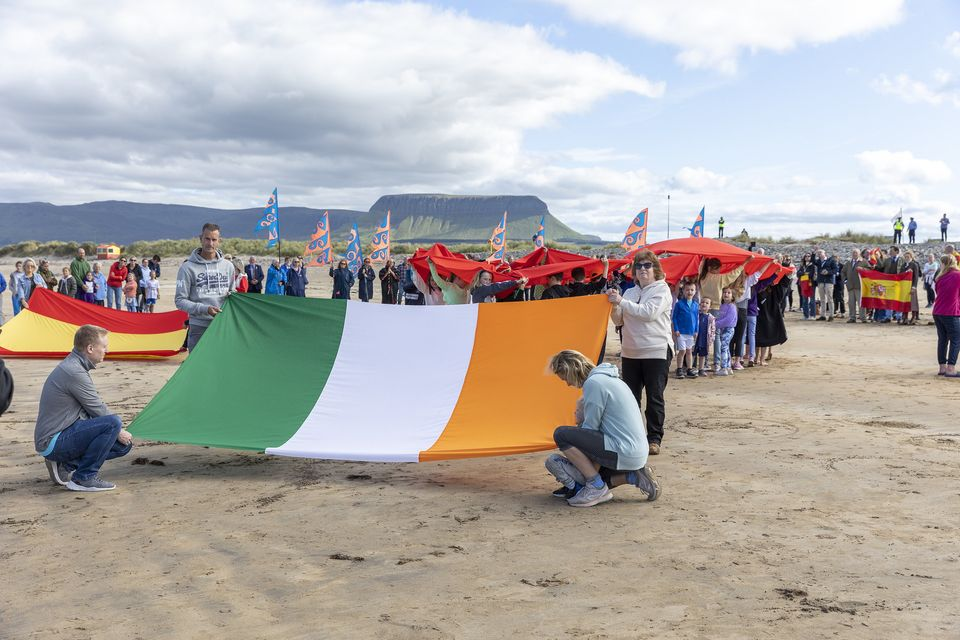
The Spanish Armada is commemorated each year at Streedagh

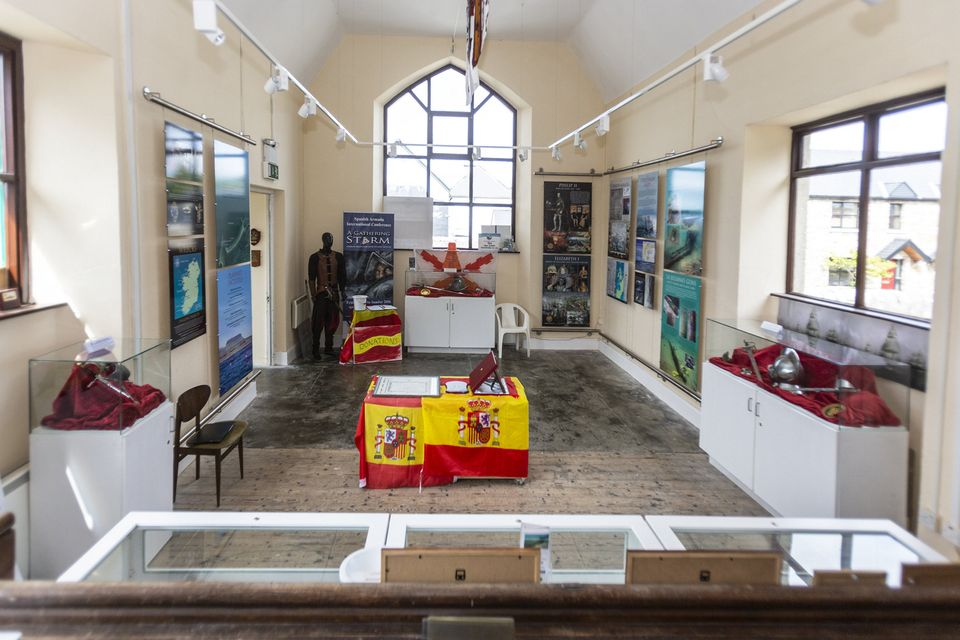
Spanish Armada museum at the former courthouse in Grange

The National Monuments Service of Ireland, in collaboration with the Spanish Ministry of Culture, has released a new publication titled “The Letter from Captain Cuéllar – Shipwrecks of the Spanish Armada in Ireland”. The book examines Captain Francisco de Cuéllar’s firsthand account of surviving the wreck of three Spanish Armada ships—La Juliana, La Lavia, and Santa Maria de Visón—off Streedagh Bay, Sligo, in 1588. It includes contributions from experts in both Ireland and Spain, incorporating contemporary historical records and recent archaeological findings. A facsimile of Cuéllar’s letter, La Carta, is also presented alongside an English translation.

Cuéllar’s letter vividly recounts his extraordinary experiences following the shipwreck. He describes Ireland’s geography, inhabitants, language, and society in the late 16th century, as he navigated a hostile and unfamiliar land after losing his crew and ship. His journey involved traveling through northwestern Ireland, seeking shelter with Gaelic chieftains, evading English forces, and ultimately securing passage to Scotland, then the Spanish Netherlands, and finally back to Spain. In 1589, he wrote a detailed account of these events in a letter to King Philip, offering one of the most valuable firsthand perspectives of the period.

Minister of State for Heritage, Nature and Biodiversity, Christopher O’Sullivan, praised the work of the National Monuments Service in preserving and highlighting Ireland’s Armada heritage. He noted that Ireland’s ratification of the 2001 UNESCO Convention on the Protection of Underwater Cultural Heritage demonstrates a commitment to safeguarding submerged archaeology and fostering international cooperation with Spain.

The archaeological remains of the Armada lie off Streedagh beach. In response to winter storms in 2015, the National Monuments Service recovered nine bronze guns and a cauldron from La Juliana, along with carriage wheels and ship timbers. These artifacts represent the largest collection of Armada guns recovered from a single wreck worldwide.

The Spanish Ambassador to Ireland, Teresa Lizaranzu, highlighted the shared history between the two nations and the courage of Captain Cuéllar and his comrades. Carmen Cabrera, Assistant Deputy Director of Spain’s Ministry of Culture, emphasized that the publication underscores the importance of underwater cultural heritage and promotes ongoing collaboration between Ireland and Spain.

La Juliana, La Lavia, and Santa Maria de Visón sank on 21 September 1588, resulting in over 1,100 fatalities. La Juliana, a 860-ton ship, carried 325 soldiers and 70 crew. Survivors like Pedro Blanco went on to serve in Ireland, while Cuéllar’s detailed letter from 1589 offers insight into his survival and travels across northwest Ireland. He encountered both friend and foe, found refuge under Gaelic lords, and eventually reached Derry, from where he secured passage home.

Cuéllar’s Carta provides a vivid description of Ireland at the time:

“The custom of these savages is to live as the brute beasts among the mountains, which are very rugged in this part of Ireland where we lost ourselves. They live in huts made of straw. The men are all large bodied, and of handsome features and limbs; and as active as the roe-deer. The most of the women are very beautiful, but badly dressed up…wearing no more than a chemise, and a blanket, with which they cover themselves, and a linen cloth, much doubled, over the head and tied in front.” — Captain Cuéllar, Antwerp, October 1589.

Archaeologists Digging Beneath Britain’s Houses of Parliament Discover 6,000-Year-Old Flint Artifacts and a 2,000-Year-Old Roman Altar Fragment

During restorations at the Palace of Westminster in London, excavations have revealed a trove of historic objects, the oldest of which date to around 4300 B.C.E.

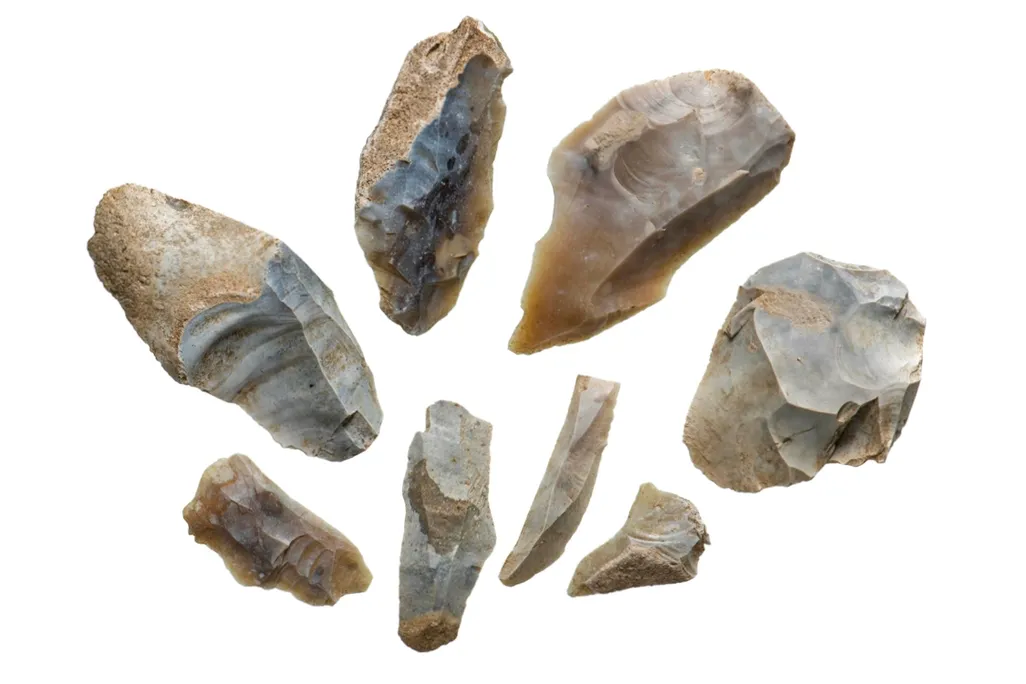
Evidence of prehistoric flint tool-making dating to approximately 4300 B.C.E.

At London’s Palace of Westminster, home to Britain’s Parliament, archaeologists have uncovered a diverse collection of artifacts, ranging from a 19th-century beer jug to prehistoric flint flakes dating back 6,000 years.

The discoveries were made by researchers from the Museum of London Archaeology during excavations commissioned by the Houses of Parliament Restoration and Renewal Program’s Delivery Authority. The digs are part of an ongoing project designed to explore Westminster’s rich history and guide restoration efforts.

“The Palace of Westminster has played a central role in the nation’s story for a thousand years, witnessing events that have shaped the U.K.,” said historian Simon Thurley, chair of the Delivery Authority. “As we carry out major restoration and renewal, we must proceed carefully to preserve and learn from the history lying beneath our feet.”

Archaeologists observing the dig

The 60 prehistoric flint fragments date back to around 4300 B.C.E. The irregularly broken stones indicate tool-making activity from the late Mesolithic or early Neolithic periods, according to the statement. Flint was commonly used during these eras for its sharp edges, and among the fragments discovered in sand deposits near Westminster was a complete tool. These sand layers were once part of Thorney Island, where prehistoric communities fished, hunted, and foraged.

“Although research suggested there might be traces of early human activity here, I was surprised to find direct evidence of flint tool-making from about 6,000 years ago,” said Diane Abrams, archaeology lead for the Delivery Authority. She added that uncovering prehistoric remains in central London is “incredibly rare.”

The excavations also revealed substantial remains of the Lesser Hall, a medieval two-story structure also known as the White Hall. Built in 1167, it originally served as a royal dining hall and later accommodated the Court of Chancery, the Court of Requests, and at times both the House of Commons and House of Lords.

Abrams described the hall’s remains as one of the “most exciting and unexpected” finds of the project. “It was uncertain how much of it would survive beneath the current courtyard and car park,” she said.

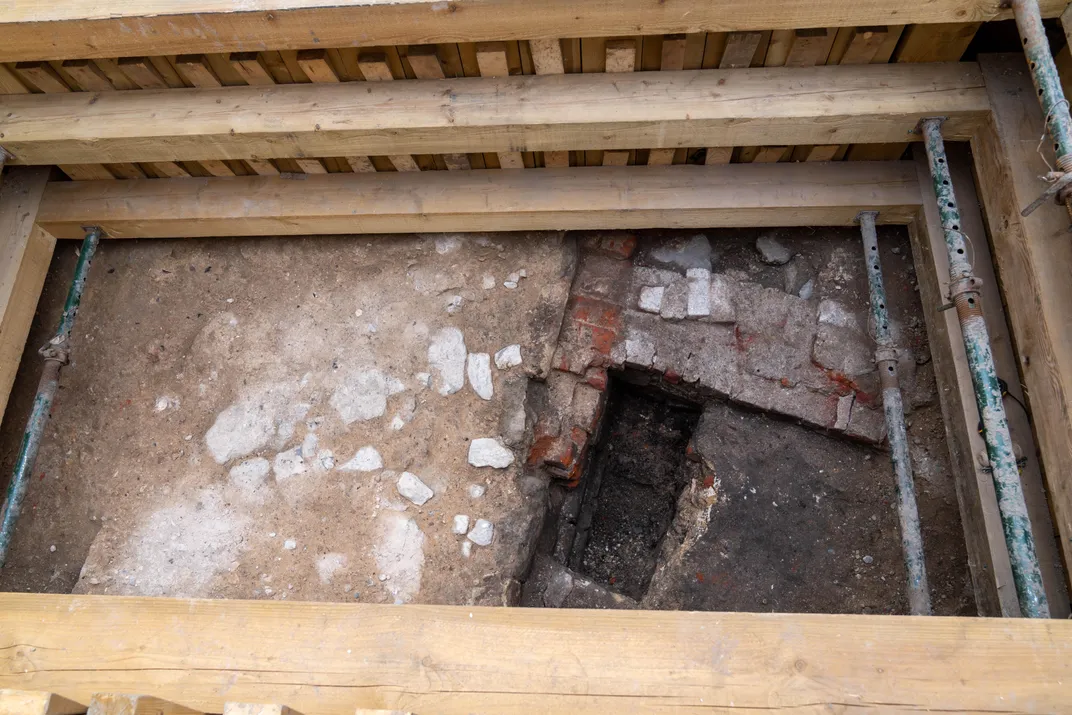
In 1834, while Lesser Hall housed the House of Lords, a fire broke out in the basement furnace room, sparking the Great Fire of 1834. The recent excavation showed that the hall’s medieval stone walls survived the blaze. The building was reroofed and remained in use until its demolition in 1851. According to the statement, these walls are “the most significant discovery of the current archaeological investigations,” offering “vital insights into the layout and preservation of historic structures beneath the modern palace.”

The medieval stone remnants of Lesser Hal.

Abrams told Fox News Digital that the remains of Lesser Hall and other pre-1834 structures at Westminster were meticulously recorded, with some even reconstructed as 3D models, before being reburied for preservation.

Beyond the flints and medieval structures, the team also uncovered a Roman altar fragment, estimated to be about 2,000 years old, which was likely reused in a later building. Other finds included 800-year-old shoe soles, straps, and a leather boot. The archaeologists additionally discovered a lead badge shaped like a flowering heart, a romantic symbol dating to the 14th or 15th century.

A 19th-century five-pint beer jug with the words “Geo Painter"

The team found several artifacts dating to the 19th century, like fragments of clay tobacco pipes probably smoked by the stonemasons working in the wake of the 1834 fire. They also unearthed a five-pint beer jug marked with the words “Ship and Turtle Tavern” and “Geo Painter”—likely referring to George Painter, owner of the tavern.