One of Europe’s largest Iron Age mass graves contains mostly women and children

The grisly burial site in Serbia hints at a complex and turbulent prehistoric era.
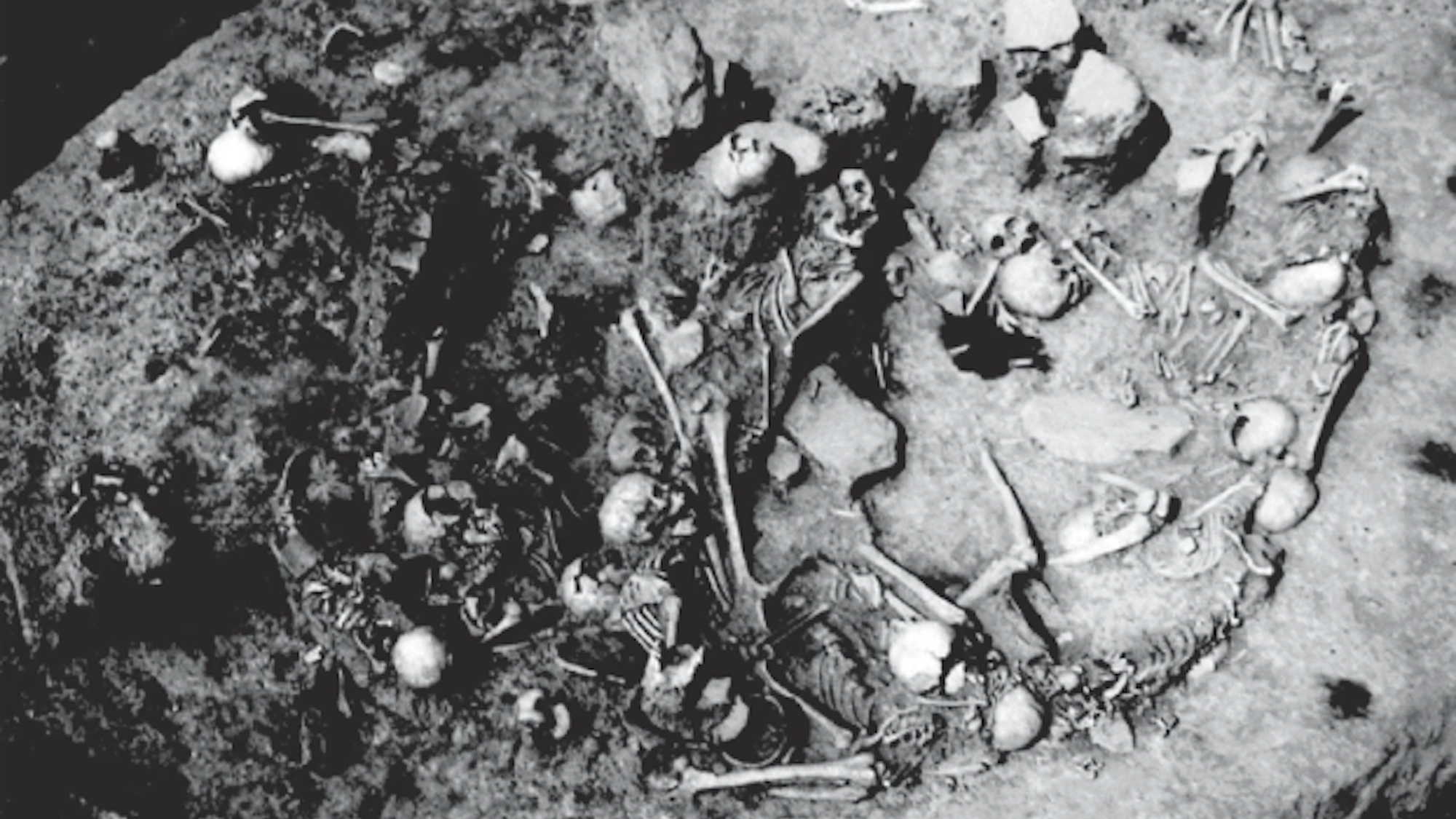
At least 77 individuals were buried at Gomolava, but the vast majority are women and children.

Ancient Mass Grave Discovered in Northern Serbia Reveals a Complex Past

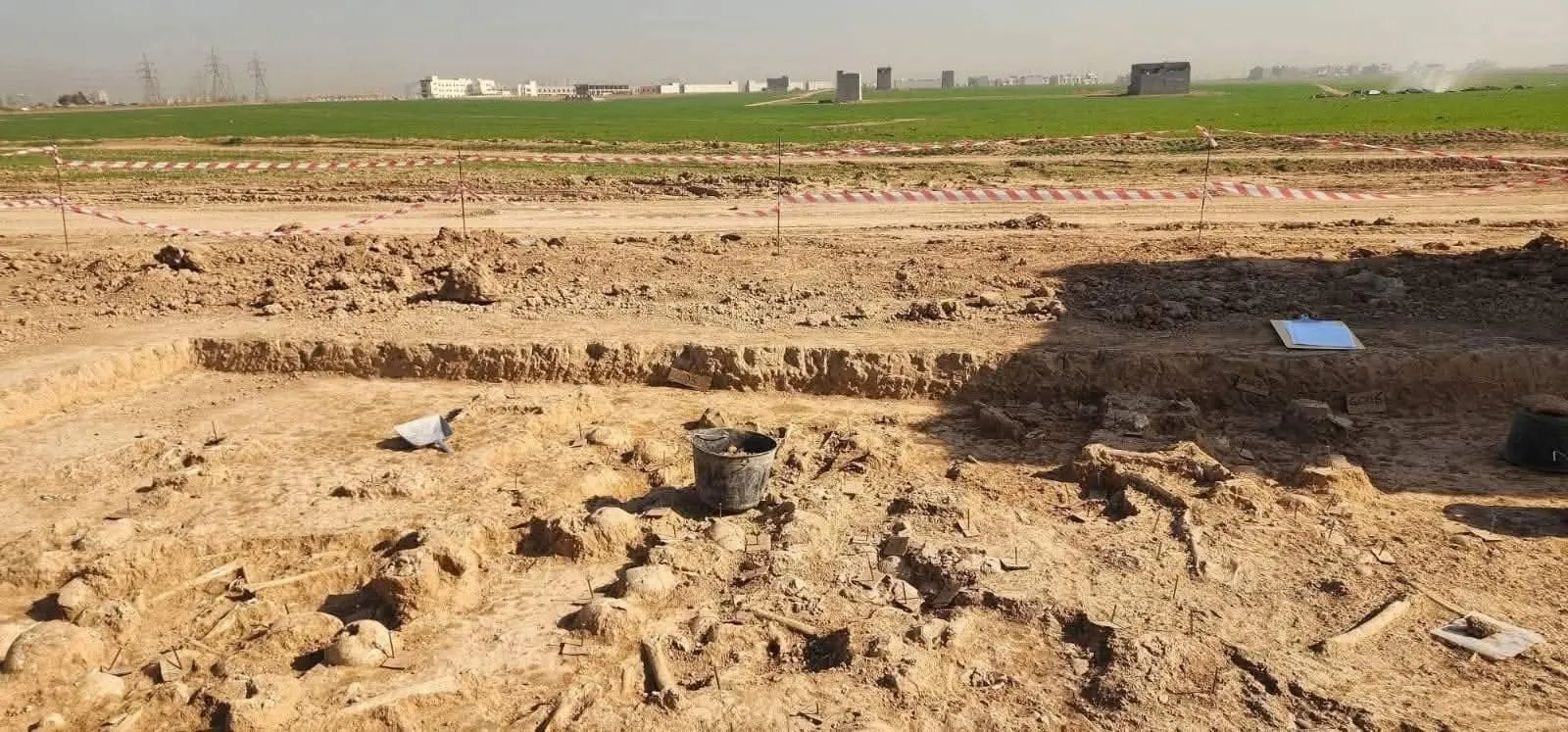
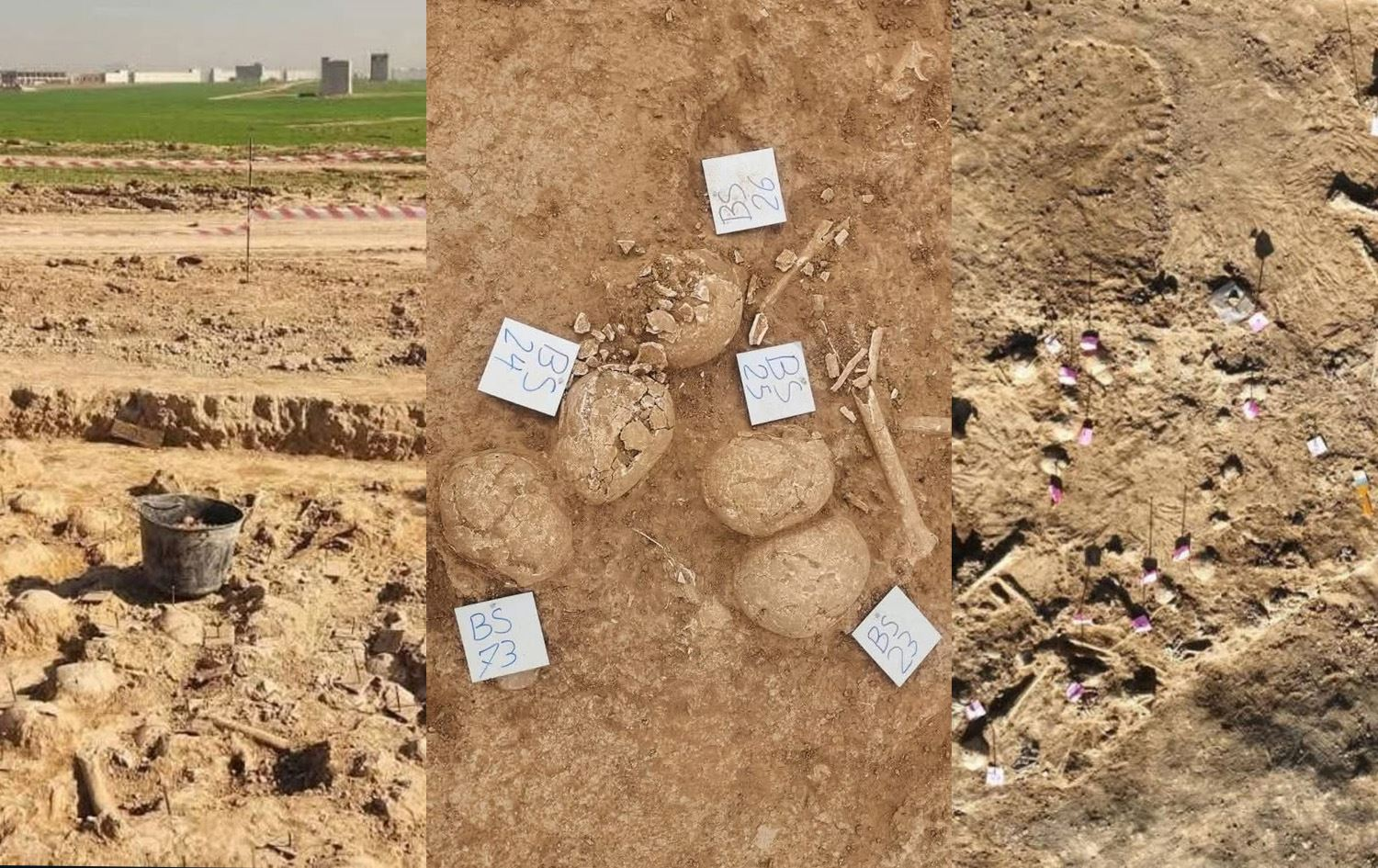
A quiet field in northern Serbia has revealed a deeply unsettling chapter of European prehistory. At the Gomolava archaeological site, located about 35 miles west of Belgrade, researchers uncovered one of the largest known mass burials of its kind, dating back roughly 2,800 years to the Early Iron Age.

The grave contains the remains of at least 77 individuals who appear to have been killed violently. Most of the victims were women and children. The findings, recently published in Nature Human Behaviour, shed new light on a tragic event that unfolded thousands of years ago—while also challenging long-held assumptions about ancient mass graves.

A Disturbing but Significant Discovery

Mass graves are not uncommon in ancient Europe. Many prehistoric burial sites across the continent contain groups of people believed to have died during raids, conflicts, or catastrophic events.

Typically, when archaeologists uncover such graves, the victims are closely related—often members of the same family or community. These patterns usually point to the destruction of a single village or kin group.

But Gomolava tells a different story.

Genetic Analysis Reveals a Surprise

According to Barry Molloy, an archaeologist at University College Dublin and co-author of the study, the team initially expected to find family connections among the victims. Instead, genetic testing revealed something unexpected.

Most of the individuals were not closely related. In fact, the analysis showed that many did not share common ancestors even several generations back.

This finding challenges the common interpretation of prehistoric mass graves as family-based tragedies. Instead, it suggests a more complex social situation—possibly involving people from different groups who were brought together before their deaths.

Rethinking Violence in the Early Iron Age

The discovery at Gomolava raises important questions about conflict, migration, and social organization in Early Iron Age Europe. If the victims were not members of the same extended family, who were they? Were they captives? Refugees? Members of multiple communities caught in a broader regional conflict?

While the evidence clearly points to violence, the broader context remains under investigation. What is certain is that this mass grave does not fit neatly into previously known patterns.

Why the Gomolava Site Matters

The Gomolava archaeological site is already well known to researchers for its long and layered history of settlement. This new discovery adds a dramatic and sobering dimension to its story.

By combining archaeology with advanced genetic analysis, researchers are gaining deeper insight into how ancient societies experienced and responded to violence. The findings not only highlight a tragic moment from nearly three millennia ago, but also reveal how complex and interconnected Early Iron Age communities may have been.

As further research continues, Gomolava may help reshape our understanding of prehistoric conflict in Europe—showing that the past is often far more complicated than it first appears.
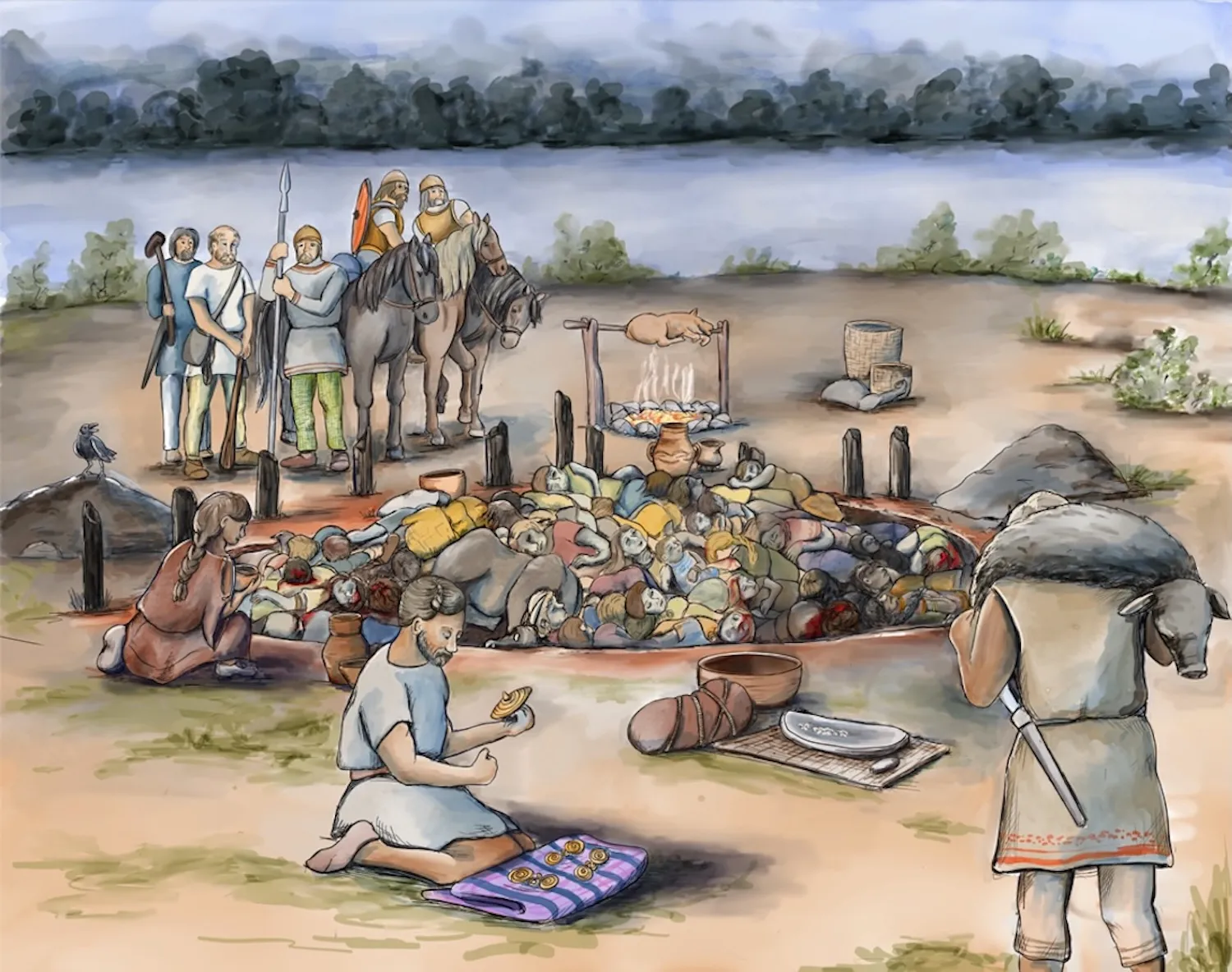
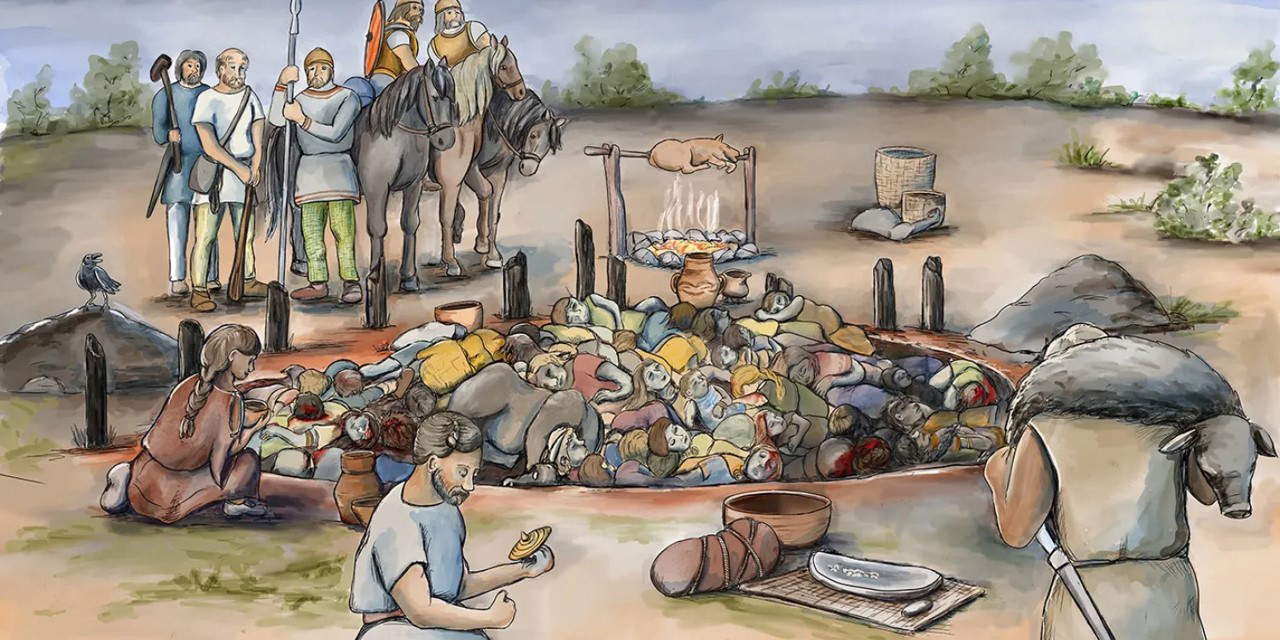
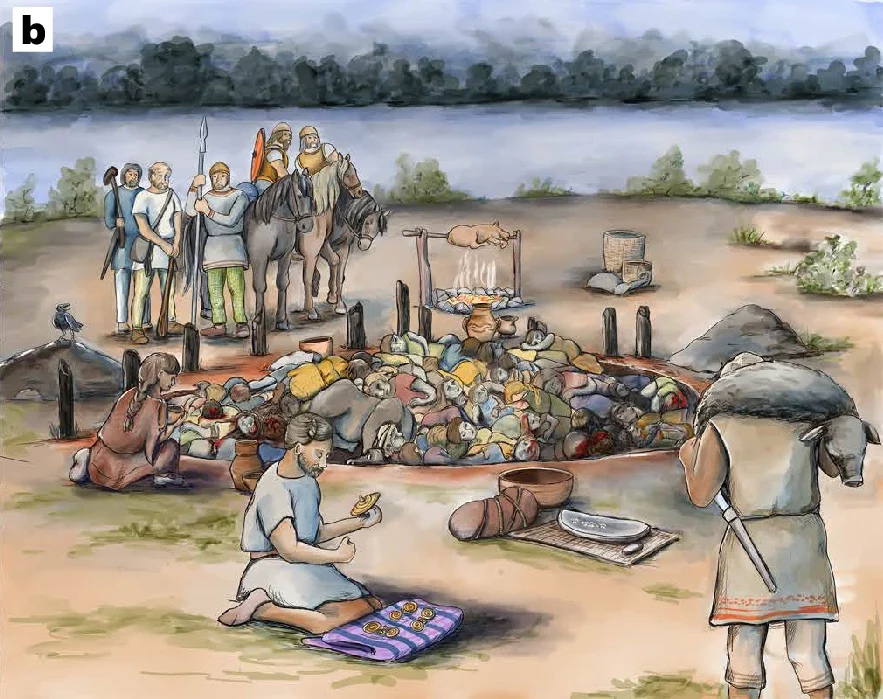
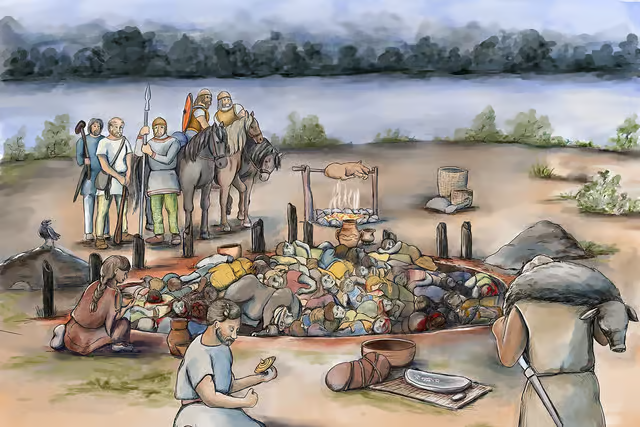
An artist’s interpretation of the scene at Gomolava approximately 2,800 years ago.

Who Were the Victims at Gomolava?

Further analysis of the skeletal remains from the Gomolava mass grave in northern Serbia reveals even more disturbing details. Genetic testing shows the victims were not captured enemy fighters. Instead, the overwhelming majority were women and children.

Approximately 87 percent of the dead were female. Among them were 40 children between the ages of one and 12, 11 adolescents, and 24 adults. Researchers identified only one infant, a boy.

The demographic profile is striking. This was not a battlefield burial. It was something far more deliberate.

Signs of Violence — and Careful Burial

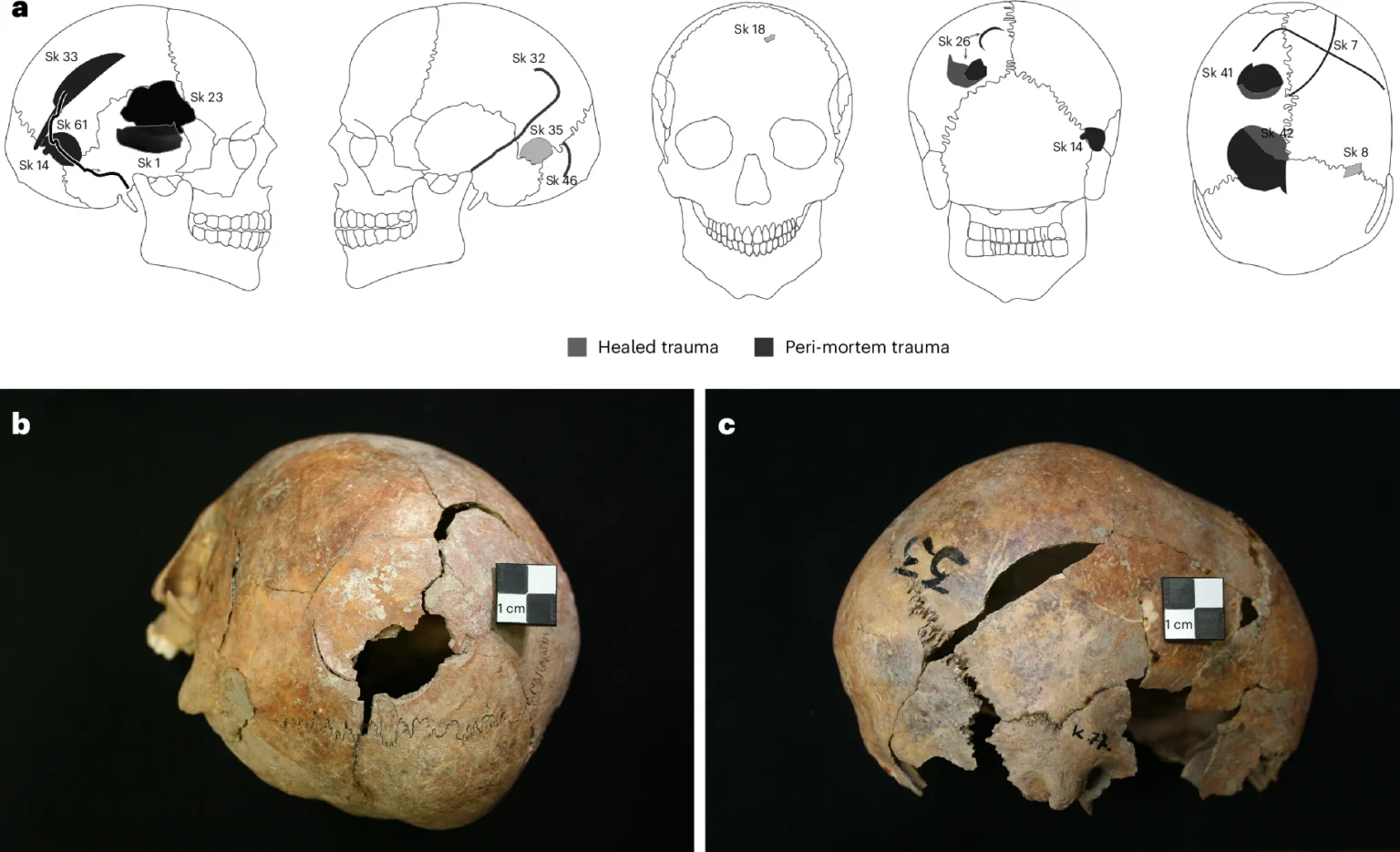
Examinations of the bones show clear evidence of brutal attacks. Many of the victims suffered blunt-force trauma and stab wounds. The killings were violent and intentional.

Yet what followed was unexpected.

In prehistoric Europe, mass graves are often rushed affairs. Bodies are typically thrown into pits with little ceremony, sometimes by survivors, sometimes by attackers. But the burial at Gomolava tells a different story.

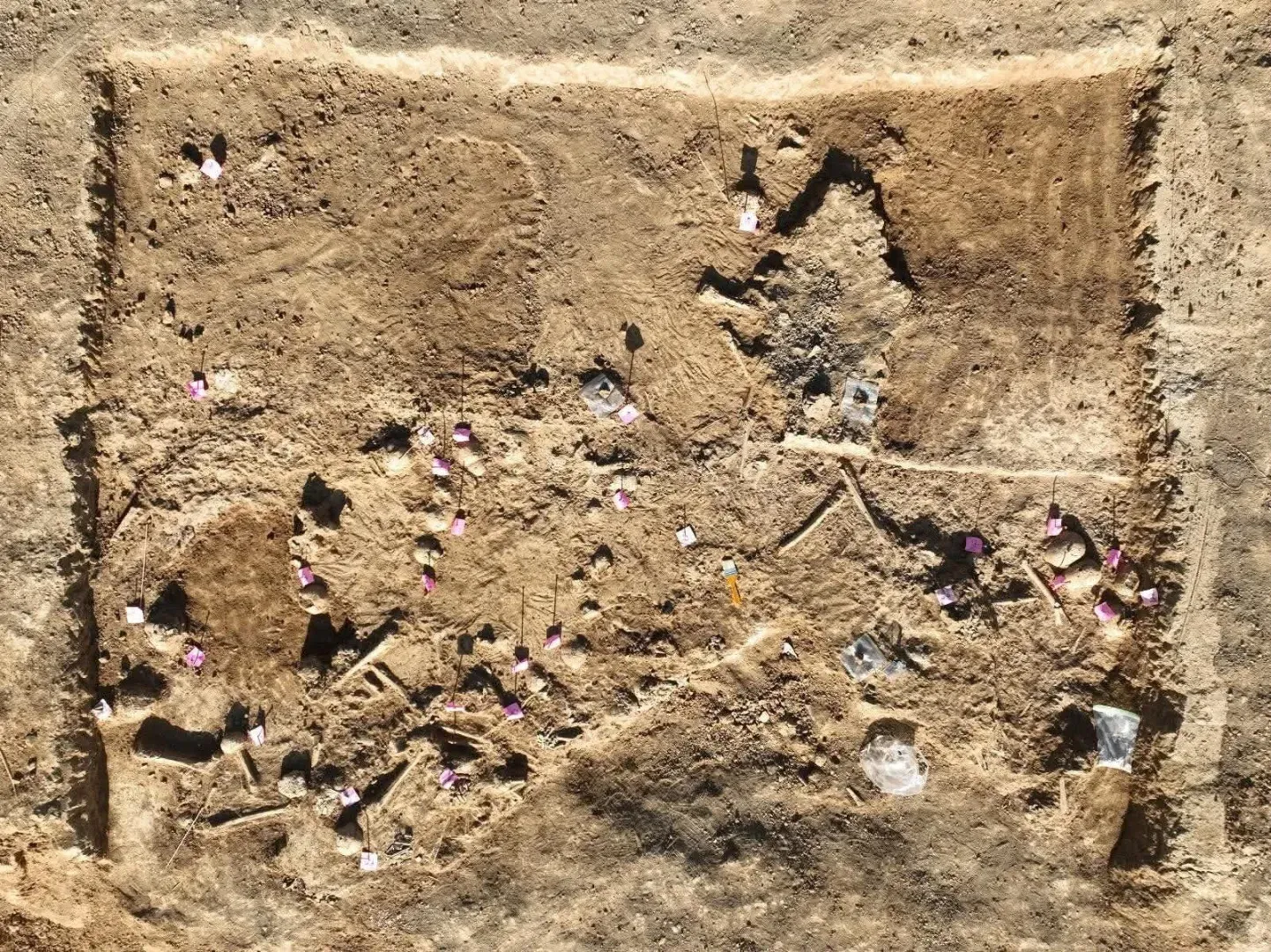
The bodies were placed inside an abandoned semi-subterranean house rather than an open pit. Even more unusual, the victims were not stripped of valuables. Instead, the site shows signs of ritual activity.

Offerings and Ritual Objects

Archaeologists uncovered bronze jewelry, ceramic drinking vessels, and even the remains of a butchered calf placed alongside the dead. These objects were not random debris. They appear to have been intentional offerings.

The time, coordination, and resources required to carry out both the killings and the burial suggest that this was not a chaotic act of violence. It may have been part of a larger symbolic event.

This combination of brutality and ritual care makes the Gomolava site highly unusual among prehistoric mass graves in Europe.

A Message of Power and Control

Researchers believe the massacre may have been intended as a display of dominance. According to study co-author Linda Fibiger of the University of Edinburgh, the killings and the ceremonial burial could represent a calculated attempt to assert control over land, resources, and rival groups.

The violence may have carried a political message.

Given the genetic diversity of the victims and their demographic profile, the research team does not view this event as a typical wartime clash. Instead, it may have been a targeted act meant to intimidate neighboring communities during a period of instability in the Early Iron Age.

Targeting Women and Children

Another possibility is that the attack deliberately focused on women and children to weaken competing groups at their core. Hannes Schroeder of the University of Copenhagen suggests that such violence could have been aimed at disrupting family lines and undermining the long-term strength of rival communities.

In this interpretation, the massacre was not only about immediate power but about reshaping social and territorial control for generations to come.

A Window into Human Behavior in Turbulent Times

The Gomolava mass grave offers more than evidence of a single tragic episode. It provides insight into how societies respond to periods of upheaval and competition.

As communities reorganized during the transition into the Iron Age, control over territory may have involved extreme and highly symbolic acts of violence.

The findings remind us that prehistoric Europe was not only shaped by trade and cultural exchange, but also by conflict, strategy, and displays of power. Gomolava stands as a powerful—and sobering—example of how complex and calculated human behavior could be nearly 3,000 years ago.
Ancient tombs packed with pottery and jewelry unearthed from Egyptian necropolis

New discoveries near city of Aswan reveal burial chambers from Old and Middle Kingdom periods, offering fresh insight into ancient funerary traditions

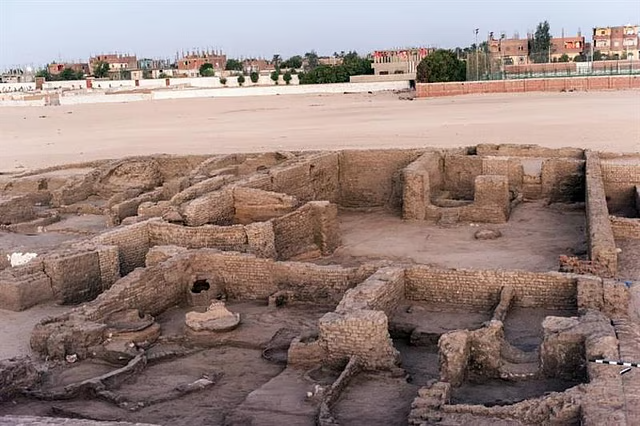
Archaeologists in southern Egypt have announced major new discoveries at Qubbet El-Hawa, one of the country’s most important ancient burial grounds near Aswan.

Working under the Supreme Council of Antiquities, the excavation focused on rock-cut shafts and burial chambers. Two rooms alone contained around 160 pottery vessels — many remarkably well preserved. Some bear inscriptions and are believed to have stored grain and liquids, offering insight into funerary provisioning and storage practices.

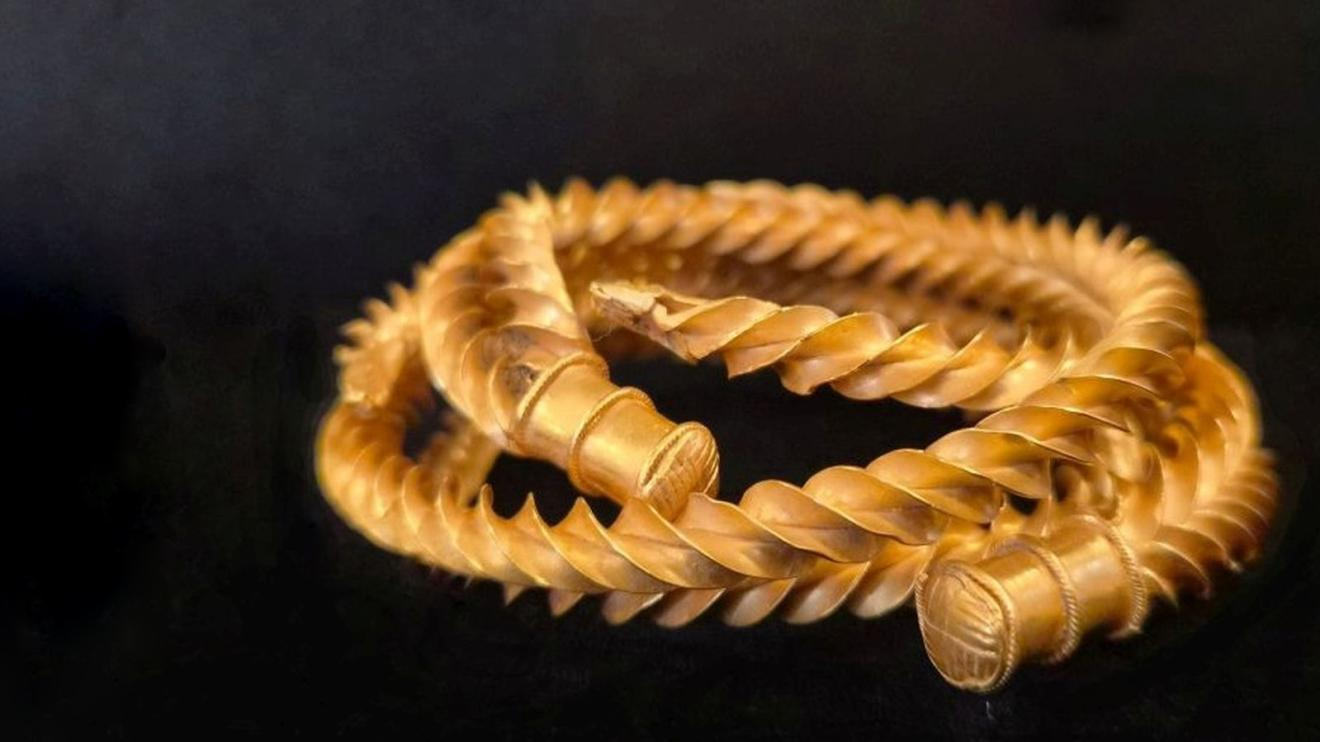
In another tomb, archaeologists uncovered an outer courtyard filled with bronze mirrors, kohl containers, beaded necklaces, and other jewelry dating to the Middle Kingdom. The range of objects suggests both wealth and ritual significance.

Evidence indicates the cemetery was used and reused for centuries, beginning in the Old Kingdom (around 2700–2200 BCE) and continuing through later periods. According to Hisham El-Leithy, secretary general of the antiquities council, further studies will investigate how these tombs were adapted and reused across different eras.

The necropolis, first excavated in the late 19th century, includes nearly 100 cliff-carved tombs belonging to local governors, priests, and dignitaries. Its long lifespan stretches from the Old Kingdom through the Roman period.

Recent years have already produced remarkable finds at Qubbet El-Hawa, including mummified crocodiles in 2019, mud-brick graves in 2020, and additional Old Kingdom tombs containing human remains last year.

Since 2015, a joint conservation and documentation project between the Egyptian Museum and Papyrus Collection in Berlin and the Aswan Inspectorate has also uncovered nine additional tombs in a nearby burial complex.

What makes Qubbet El-Hawa so compelling is its continuity. It’s not just a snapshot of one moment in Egyptian history — it’s a layered archive of evolving burial traditions, political authority, and daily life, carved directly into the cliffs above the Nile.

Edinburgh University uncovers ‘mass killing event of women and children’

The study focused on burials at Gomolava in northern Serbia, dating to around 800 BCE — roughly 2,800 years ago. What researchers uncovered wasn’t a typical cemetery. It was a single-event mass grave, one of the largest prehistoric examples excavated in Europe.
The project, funded by the European Research Council and co-led by the University of Edinburgh, University College Dublin, and the University of Copenhagen, found clear evidence of violent deaths. Many of the victims had injuries consistent with bludgeoning and stabbing. This wasn’t disease. It wasn’t gradual attrition. It was sudden.

More than 77 individuals were buried together in the south Carpathian Basin — and strikingly, the majority were women and children.

And here’s where it gets even more unsettling.

Genetic analysis showed that very few of them were closely related. Isotopic testing of their bones suggested they had grown up in different settlements. In other words, this wasn’t a single extended family wiped out. It appears to have been a group drawn from multiple communities.

That raises difficult possibilities:

  • A raid targeting several settlements

  • Captives gathered and executed

  • A violent conflict event involving displaced populations

What stands out is that despite the brutality, there was intention in the burial. The victims were placed together in a structured way. Someone took time to inter them.

So this wasn’t chaos left where bodies fell. It was violence followed by deliberate action.

Mass graves like this challenge the idea that large-scale organized violence is a “later” development. The Late Bronze Age and Early Iron Age were already politically and socially complex — and clearly capable of coordinated brutality.

It’s sobering stuff. Not just because of the scale, but because the science — genetics, isotopes, trauma analysis — lets us reconstruct something that would otherwise just look like bones in soil.

Burial event artists impression

Dr. Linda Fibiger of the University of Edinburgh explained that the violence at Gomolava appears to have been more than random brutality. The killings — and the way the victims were later buried — may represent a deliberate attempt to rebalance power, assert control over territory, and send a clear message about dominance. The research highlights how gender- and age-selective targeting was used as a strategy of mass violence in prehistoric Europe.

What makes this site especially striking is that, unlike many other mass graves from the same era, it shows clear evidence of planning and ritual investment. The dead were not discarded carelessly. They were buried with personal belongings, including locally produced metal jewellery.

The grave itself was located in a protected setting and contained bronze ornaments, ceramic drinking vessels, and the remains of between 50 and 100 animals. Some of those animals appear to have been slaughtered specifically for the burial event — including a calf placed at the base of the grave pit.

On top of the burial, archaeologists found broken quern stones — ancient tools used to grind grain — along with concentrations of charred seeds. These details suggest ritual acts tied to food production and symbolic destruction.

So this wasn’t just a massacre. It seems to have been followed by a carefully staged funerary event — one that combined violence, ceremony, and symbolic gestures.

That duality is chilling: organized killing paired with equally organized commemoration. It hints at a society where power, memory, and ritual were tightly intertwined — and where even mass death could be transformed into a political statement.

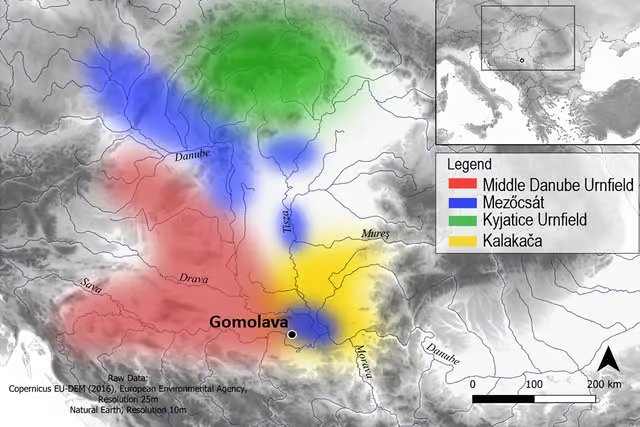
Map of the Gomolava region edited by Barry Molloy.

Researchers say the overwhelming presence of women and children in the Gomolava mass grave is highly unusual for European prehistory and reshapes how we understand Iron Age violence. The careful preparation of the burial — before the victims were covered with soil and stone — suggests the event was meant to be remembered. It wasn’t just disposal; it created a physical place of memory for the community.

The international research team, working alongside specialists from the Museum of Vojvodina, used advanced methods including DNA testing, isotope analysis of tooth collagen and enamel, and bioarchaeological examination of skeletal trauma.

Their findings are stark:

  • 40 individuals were children aged 1–12

  • 11 were adolescents

  • 24 were adults — 87% of whom were female

  • The only infant identified was male

Biomolecular analysis of 25 individuals revealed varied diets and geographic origins. The victims did not appear to be closely related, nor did they seem to have lived long-term in a single settlement. This points toward a broader, multi-community event rather than a single-family tragedy.

Researchers believe the killings occurred during a turbulent period when communities were becoming more territorially fixed — building enclosed settlements, reoccupying Bronze Age mounds, and consolidating power in fortified sites. In that unstable landscape, large-scale conflict may have escalated, and this massacre appears to have been a targeted act within that wider turmoil.

Dr. Barry Molloy of University College Dublin, the project’s principal investigator, emphasized that new scientific techniques — unavailable when the grave was first excavated — now allow researchers to reconstruct not only how these people died, but the social and political circumstances surrounding the event.

He noted that staging the burial atop the settlement mound effectively transformed the site into a lasting monument. The community would have seen it. Remembered it. Lived with it.

And that’s the part that lingers — this wasn’t anonymous violence lost to time. It was turned into something visible, something symbolic. A scar deliberately left in the landscape.